Nighttime Warming Drives Rapid Greening Across Fragile Mountain Ecosystems
Analysis of two decades of satellite and climate data reveals why night temperatures dictate plant growth in karst landscapes while rainfall impact is filtered out.
Nighttime temperatures are rising nearly four times faster than daytime maximums across the ecologically fragile karst landscape of Guizhou Province in Southwest China, driving a significant greening trend that outpaces the impact of shifting rainfall patterns. Between 2000 and 2018, vegetation across more than 80 percent of the province experienced net carbon increases, even though the region’s unique underground drainage system largely decouples surface plant growth from local downpours. These insights come from a detailed spatial analysis published in PLOS One, offering a fresh perspective on how sensitive mountain ecosystems adapt to rapid climate shifts.
How Mountain Ecosystems Responded to Climate Extremes Over Two Decades
To uncover these patterns, researchers analyzed annual net primary productivity, which measures the total carbon absorbed by plants minus what they release through respiration, alongside 12 extreme climate indices derived from daily meteorological station records between 2000 and 2018. They mapped productivity using satellite data from NASA’s MOD17A3HGF product at a resolution of 500 meters, applying non-parametric trend estimators and false discovery rate corrections to identify robust statistical relationships across diverse terrains.
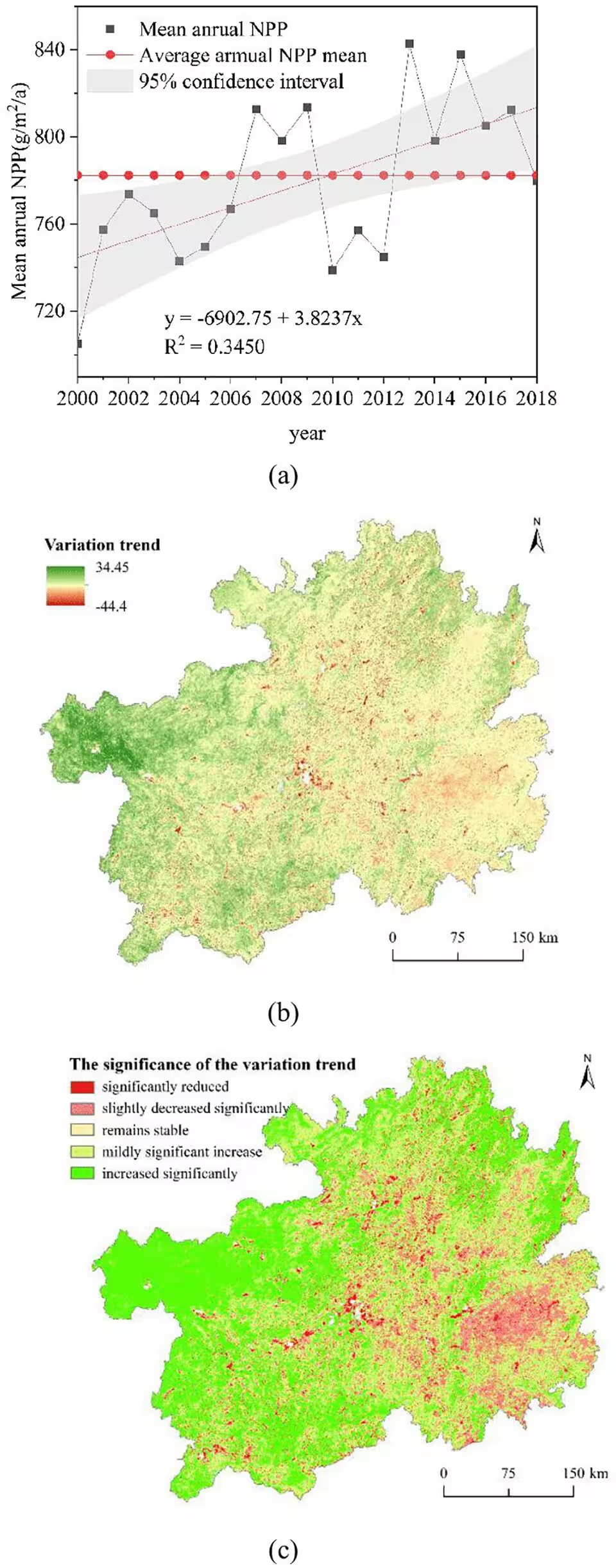
The regional average annual net primary productivity reached 782 grams of carbon per square meter each year, showing an overall upward trajectory over the 19-year study period. Spatially, about 80.56 percent of the provincial area exhibited increasing carbon sequestration trends, with nearly half of those gains proving statistically significant, particularly across western and southwestern zones. Conversely, about 19.34 percent of the territory showed declining productivity, concentrated mostly in central districts where human pressures and environmental constraints intersect.
Why Nighttime Warming Outperforms Daytime Heat in Driving Plant Growth
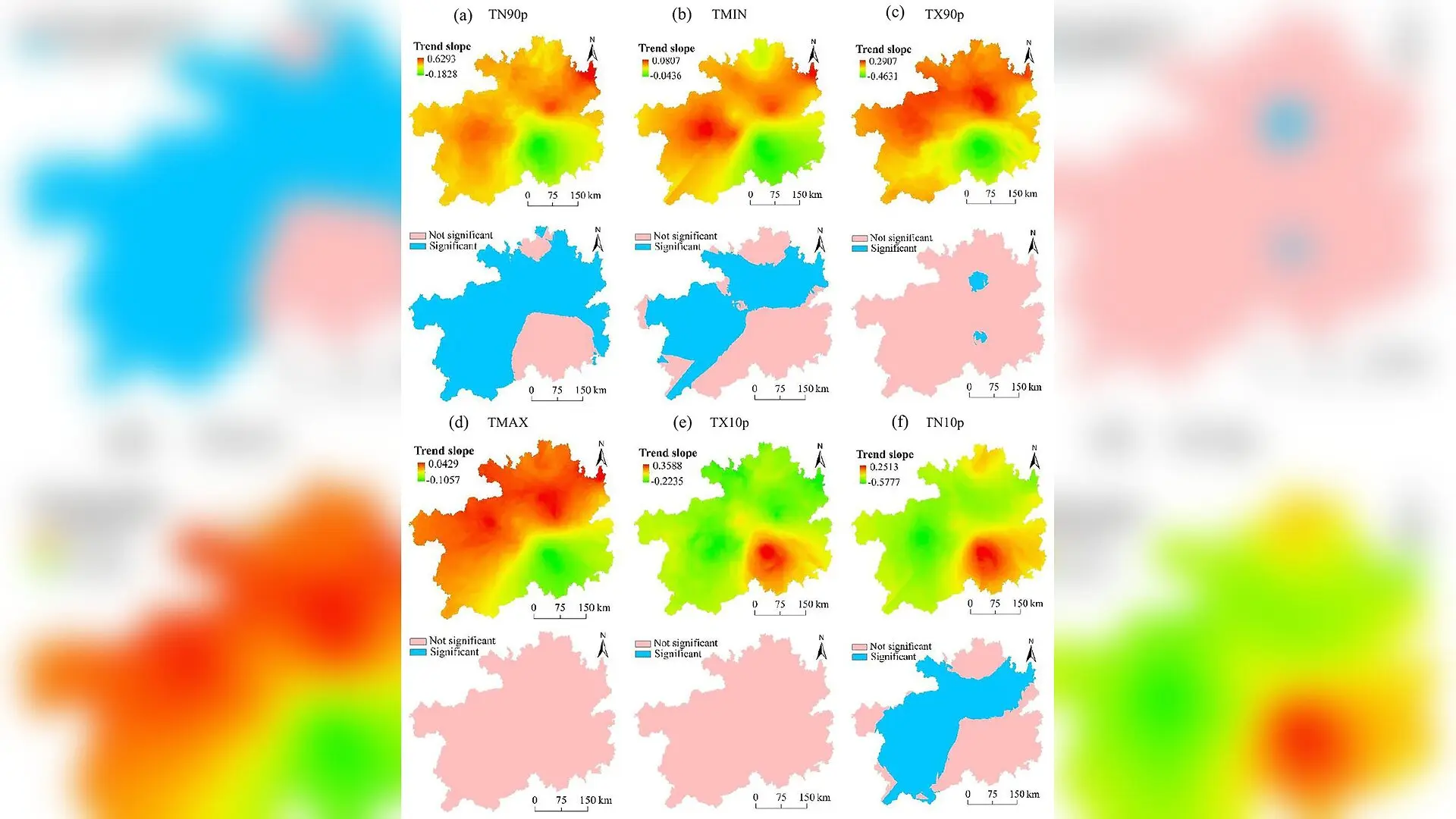
The analysis revealed a striking asymmetry in how extreme temperatures influence vegetation dynamics. Warm night frequency, known technically as TN90p, surged at a rate of 3.6 days per decade, while the annual mean minimum temperature rose by 0.42 degrees Celsius per decade. That nocturnal warming rate was roughly four times faster than the increase in daytime maximum temperatures.
Statistical correlations showed that more than 85 percent of the region’s pixels displayed strong positive relationships between plant productivity and extreme minimum temperatures. Warmer nights reduce plant respiratory carbon losses, protect fragile plant tissues from frost damage, and lengthen the active growing season. Daytime warming, by comparison, played a secondary role in boosting overall annual carbon storage.
The Hidden Hydrological Filtering Effect of Karst Geology
While temperature changes exerted a powerful, uniform control over vegetation, extreme precipitation indices told a very different story. Total annual precipitation and heavy precipitation days increased significantly, particularly in the southeast, but their correlation with plant productivity remained weak and spatially scattered.
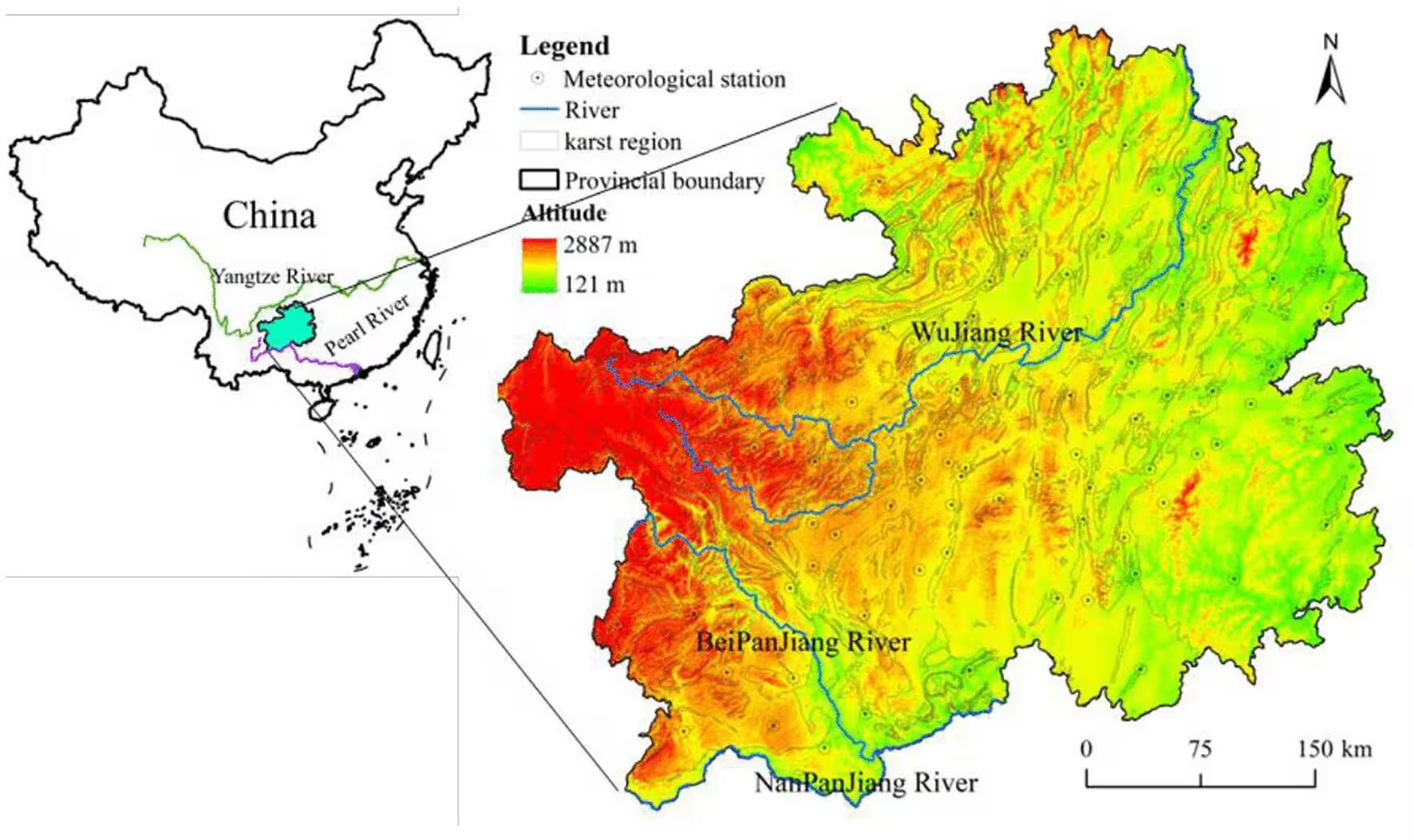
This decoupling happens because Guizhou features a classic karst landscape covering 61.9 percent of its surface, characterized by subterranean drainage networks often described as soil upstairs and water downstairs. Rainwater infiltrates underground conduits so rapidly that surface vegetation can experience water stress despite seemingly abundant rainfall. Furthermore, consecutive wet days showed negative correlations with productivity in half of the study area, likely because prolonged cloud cover cuts down on photosynthetically active radiation.
Management Implications and Limitations of the Findings
These findings suggest that conservation strategies in fragile subtropical regions must account for thermal constraints and asymmetric warming rather than focusing solely on water availability. Western carbon sequestration hotspots require strict protection from fragmentation, while central stagnation zones call for targeted rocky desertification control.
The authors acknowledge several limitations, including the reliance on satellite models without extensive ground-based validation in steep terrain and the challenge of separating climatic drivers from ongoing human afforestation programs. Future research must integrate high-resolution soil moisture measurements to better untangle these complex ecological feedbacks.
The research was published in PLOS One on October 27, 2026.
This article has been fact checked for accuracy, with information verified against reputable sources. Learn more about us and our editorial process.
Last reviewed on .
Article history
- Latest version
Reference(s)
- Yang, Zhiyuan., et al. “Asymmetric response of vegetation NPP to extreme climate over a vulnerable karst Region in Southwest China.” PLOS One, vol. 21, no. 10, October 27, 2026, pp. e0360970 Public Library of Science (PLoS), doi: 10.1371/journal.pone.0360970. <https://doi.org/10.1371/journal.pone.0360970>.
Cite this page:
- Posted by Raj Joshi