Deepest French Shipwreck Found: 16th‑Century Vessel Preserved at 2,567 m
Archaeologists uncover a 16th‑century shipwreck 2,567 m beneath the Mediterranean, its cargo eerily preserved as if frozen in time.
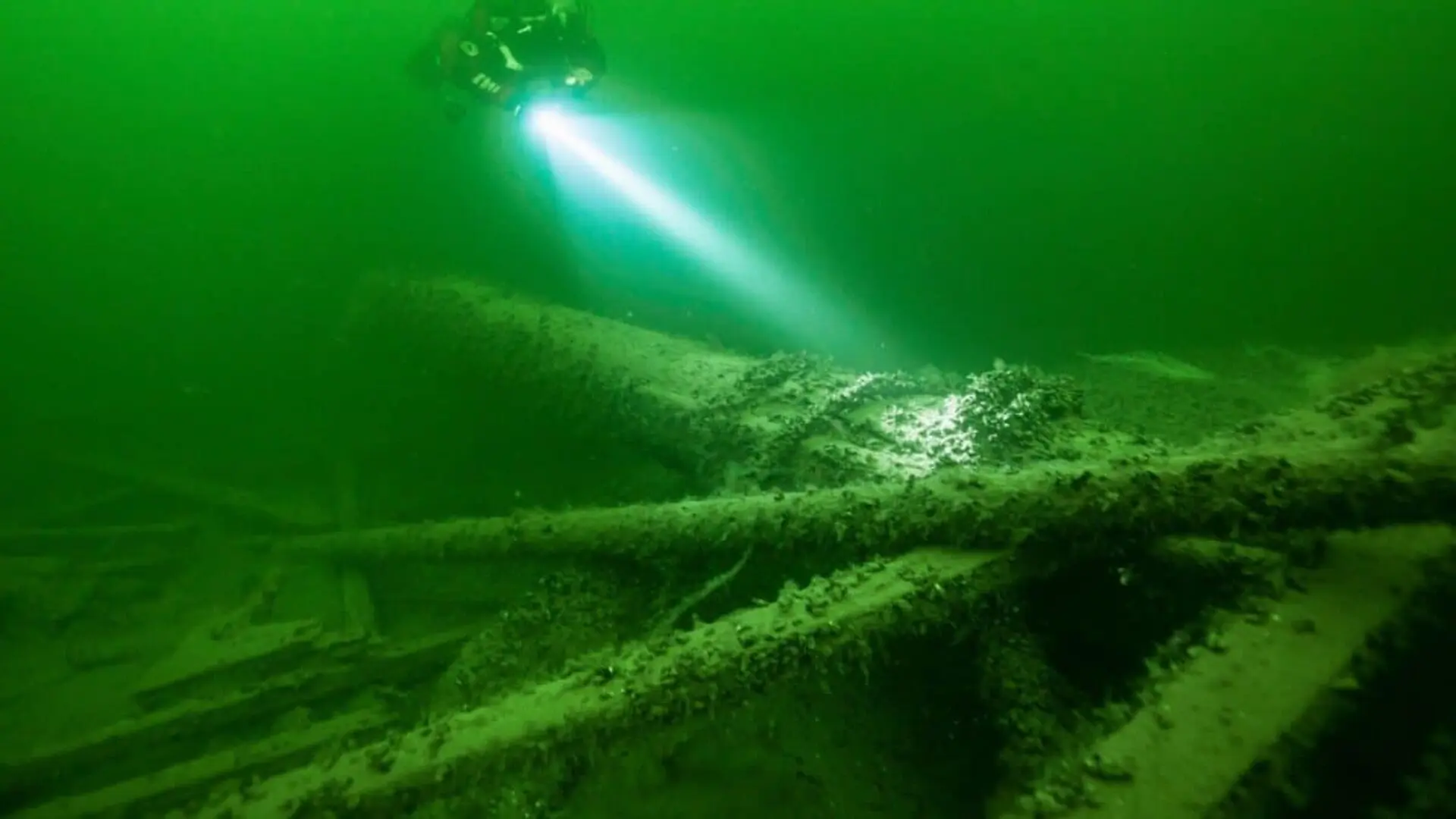
A French naval survey team has pinpointed a 16th‑century merchant vessel resting at roughly 2,567 metres below the surface of the Mediterranean Sea off the coast of Ramatuelle, establishing the deepest known shipwreck within French‑jurisdiction waters.
During a seabed‑mapping mission south of Saint‑Tropez in late February 2025, operators deployed an autonomous underwater vehicle that detected an unusually large sonar echo. On 1 March 2025 the same vehicle returned to the site, capturing initial images that were later supplemented by a remotely operated vehicle for higher‑resolution photography.
The visual data were forwarded to marine archaeologist Arnaud Schaumasse, head of the French Ministry of Culture’s Underwater Archaeology Division. Schaumasse noted that the find represents “the largest shipwreck discovered in French territorial waters,” while acknowledging that the United States Navy has reported larger wrecks in its own jurisdiction.
Deep‑Sea Sonar Pinpoints an Uncharted Wreck
A sonar specialist first reported an “unusual very large target” while operating the government‑run drone tasked with monitoring deep‑water sediments. The detection prompted a rapid response from the maritime prefecture.
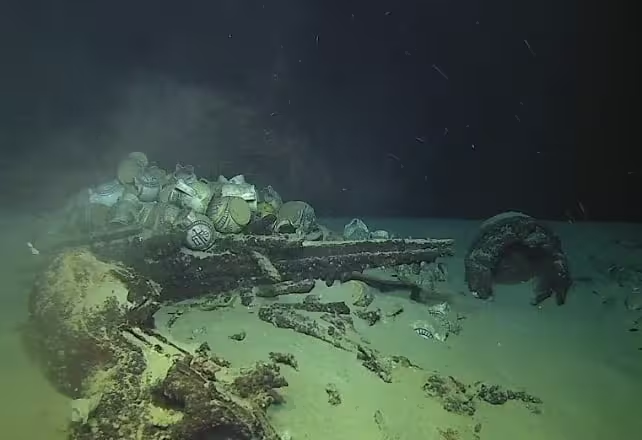
Deputy Maritime Prefect Thiery De La Burgade explained, “The sonar showed something fairly big, we decided to send the camera‑equipped underwater drone back to take photos, and then we followed up with an underwater robot to capture higher quality photos.”
The initial inspection employed an A‑18‑D autonomous deep‑sea vehicle, while a dedicated ROV provided close‑up imagery of the wreck’s structure.
The site has been catalogued as Camarat 4, denoting the fourth maritime cultural asset recorded in this sector of the French maritime heritage inventory.
Ligurian Ceramic Haul Unearthed
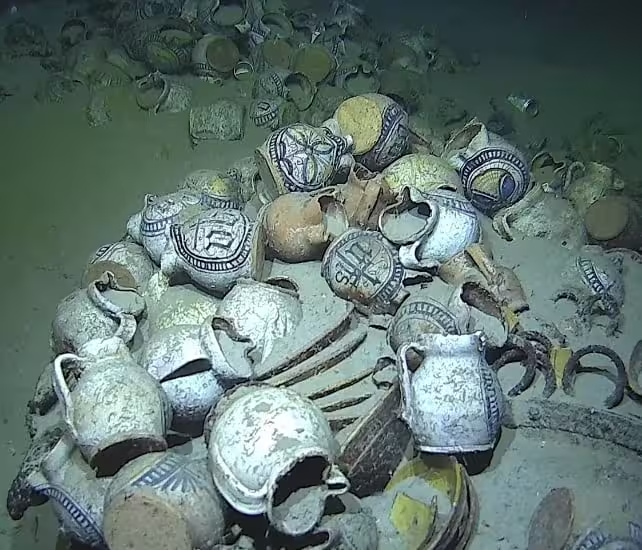
High‑definition frames reveal a substantial cargo of ceramic ware, including roughly two hundred polychrome earthenware jugs with pinched spouts and ribbon‑shaped handles. Many of the vessels bear the Christian monogram “IHS,” while others display plant‑inspired or geometric motifs that align with 16th‑century Ligurian pottery styles.
The assemblage also comprises about one hundred plates, identified as products of the same Ligurian workshops, still stacked on the seabed. Metal bars were observed among the cargo, suggesting a mixed load of trade goods.
Additional artifacts visible on the seafloor include two cauldrons, an anchor and six cannons, while further components remain buried beneath sediment.
Extreme Depth Shields Wreck From Human Interference
The profound depth of Camarat 4 has effectively insulated the wreck from centuries of looting and salvage attempts, preserving the site in a near‑pristine state. Marine archaeologist Marine Sadania remarked, “The site – thanks to its depth which prevented any recovery or looting – has remained intact, as if time froze, which is exceptional.”
Nonetheless, modern pollution has left its mark: camera footage captured a soda can and an empty yoghurt pot amidst the historic cargo.
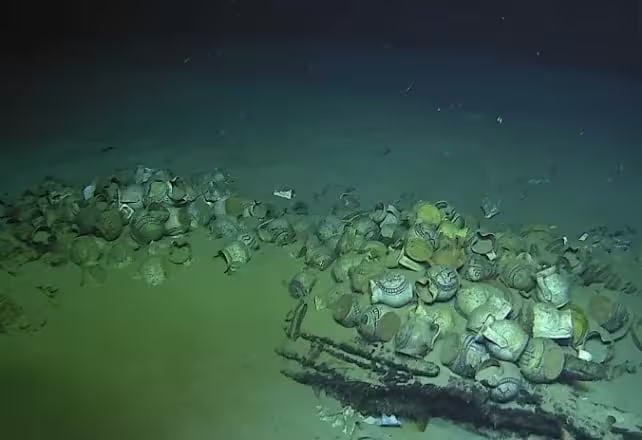
ScienceAlert, citing AFP, highlighted both the modern debris and the metal‑bar cargo, while noting that the previous French deep‑water record belonged to the submarine La Minerve, located in 2019 at about 2.3 kilometres below sea level off Toulon. La Minerve sank in 1968 with fifty‑two navy personnel aboard after a routine mission.
This article has been fact checked for accuracy, with information verified against reputable sources. Learn more about us and our editorial process.
Last reviewed on .
Article history
- Latest version
- Posted by Vikram Desai