Scientists Have Finally Solved The Mystery Of The Phantom Lighthouse Illusion
Scientists have uncovered the atmospheric physics behind the strange phenomenon of lighthouses appearing to float or manifest far out at sea.
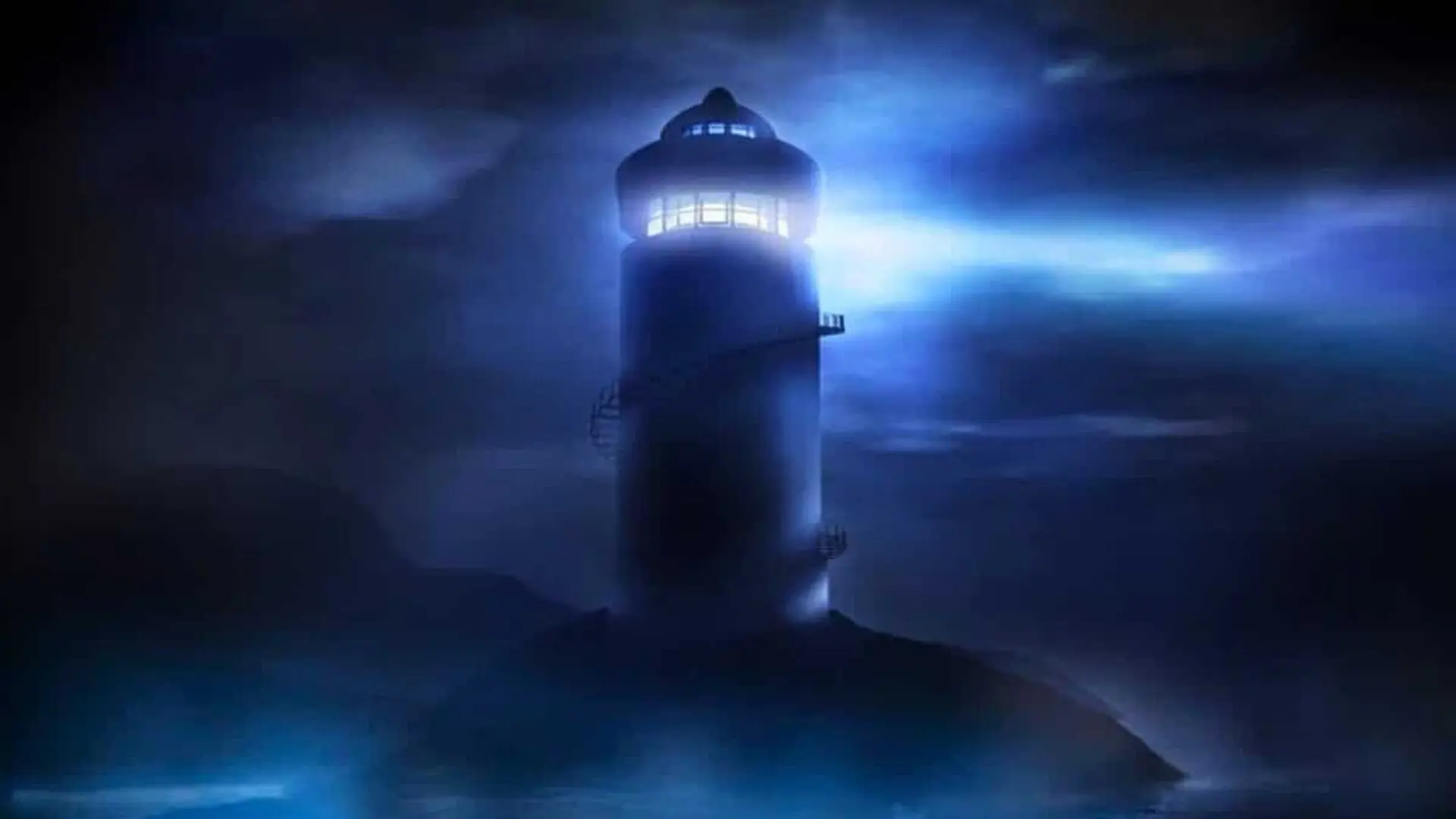
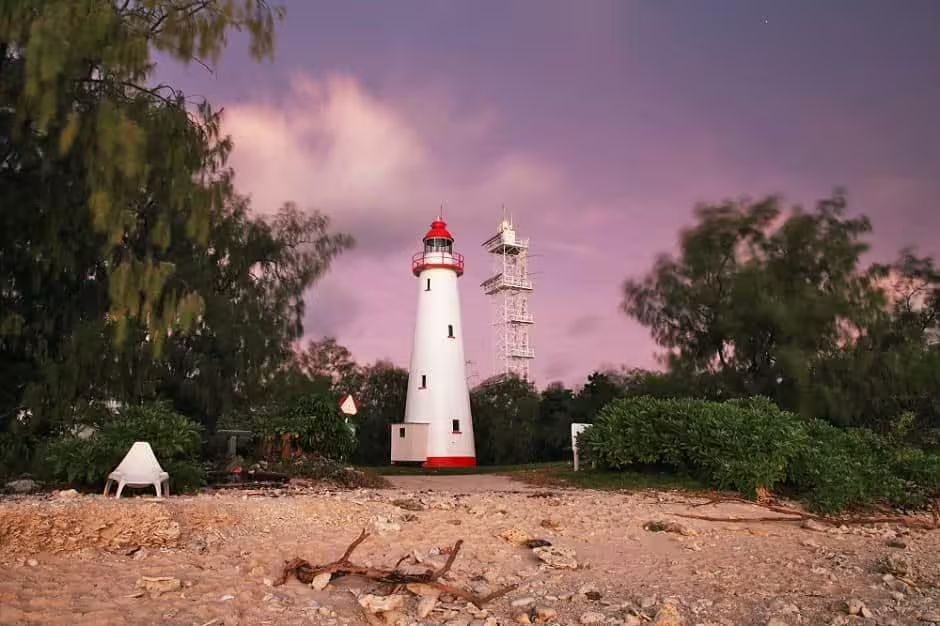
The experience is as disorienting as it is persistent. Observers standing on a coastline often report seeing a lighthouse beam flickering out at sea, sometimes appearing to shift position or travel alongside a vessel. In truth, the source of the light is stationary, located on the land directly behind the viewer. This phenomenon, known as the phantom lighthouse illusion, has puzzled travelers for decades, including University of Melbourne researcher Charles Kemp, who first encountered the visual trick while vacationing on Lady Elliot Island at the edge of the Great Barrier Reef.
Despite the presence of two distinct lighthouses on the island—the original 1873 structure and its modern successor—the illusion is so consistent that it is even documented in local tourist guides. Kemp noted that the perceived light can appear hundreds of meters away from its actual origin. His team has now provided a mathematical explanation for this error in perception, which was recently published in the journal Open Mind.
A Historical Optical Mystery
The phantom lighthouse is not a modern discovery. Scientific literature first addressed the phenomenon in 1937, when researchers G. Colange and Y. Le Grand documented the effect off the coast of Brittany. A follow-up discussion appeared in Nature shortly thereafter. Historically, the illusion has been frequently reported by sailors who maintain a safe distance from shore. Even for those fully aware of the lighthouse’s physical position, the brain remains resistant to correction, stubbornly insisting that the light originates from the water.
How the Brain Misinterprets Distance
To uncover the cause, Kemp collaborated with Simon Cropper of the University of Melbourne and Weilun Xu of EPFL. The researchers utilized a Bayesian model to simulate how the brain integrates incoming sensory data with pre-existing expectations. They concluded that when environmental cues are sparse—such as on a pitch-black night over the ocean—the brain relies heavily on internal assumptions rather than raw visual evidence.
The human brain is conditioned to expect that objects in our immediate line of sight are relatively close, typically within a few hundred meters. A high-powered lighthouse beam, however, defies this expectation by extending far into the distance. By drastically underestimating the reach of that beam, the brain perceives the rotating light as moving much more slowly than it actually is. This slow-motion interpretation creates the false impression that the light is originating from a distant point on the horizon. This same miscalculation is responsible for the bent beam illusion, where perfectly straight beams of light appear to curve toward the earth.
Validating the Theory with Virtual Reality
Unlike previous hypotheses that focused solely on perspective, the Bayesian model provides a measurable threshold for the illusion. It suggests that for a lighthouse of roughly 30 meters in height, the phenomenon should only manifest once an observer is at least 67 meters away. As the observer moves further back, the likelihood of the brain “flipping” the source of the light increases.
The team successfully tested this prediction using virtual reality simulations, which allowed viewers to observe light beams from varying distances. The simulated results aligned with the researchers’ mathematical model, confirming that the phantom lighthouse is a byproduct of the brain attempting to make sense of incomplete information. As Kemp and Cropper noted in The Conversation, the brain essentially fills the sensory void on a dark sea by constructing a light source that simply does not exist.

This article has been fact checked for accuracy, with information verified against reputable sources. Learn more about us and our editorial process.
Last reviewed on .
Article history
- Latest version
Reference(s)
- , doi: 10.1162/OPMI.a.390/138597/A-Bayesian-Account-of-the-Phantom-Lighthouse. <https://direct.mit.edu/opmi/article/doi/10.1162/OPMI.a.390/138597/A-Bayesian-Account-of-the-Phantom-Lighthouse>.
- COLANGE, G.. “Illusion of Convergent Beams of Light - Nature.”, vol. 141, no. 3580, pp. 1059-1059. Nature, doi: 10.1038/1411059d0. <https://www.nature.com/articles/1411059d0>.
- Cropper, Simon. “The phantom lighthouse: new research explains one of Australia’s strangest illusions.”, October 27, 2026 The Conversation, doi: 10.64628/AA.3ef7nxsay. <https://theconversation.com/the-phantom-lighthouse-new-research-explains-one-of-australias-strangest-illusions-294683>.
Cite this page:
- Posted by Karan Das