Stunning Photo Captures a Rare Rainbow Meteor Streaking Past a Comet
A rare, rainbow-colored meteor captured alongside Comet PanSTARRS above France has sparked scientific interest due to its unique, vibrant display.
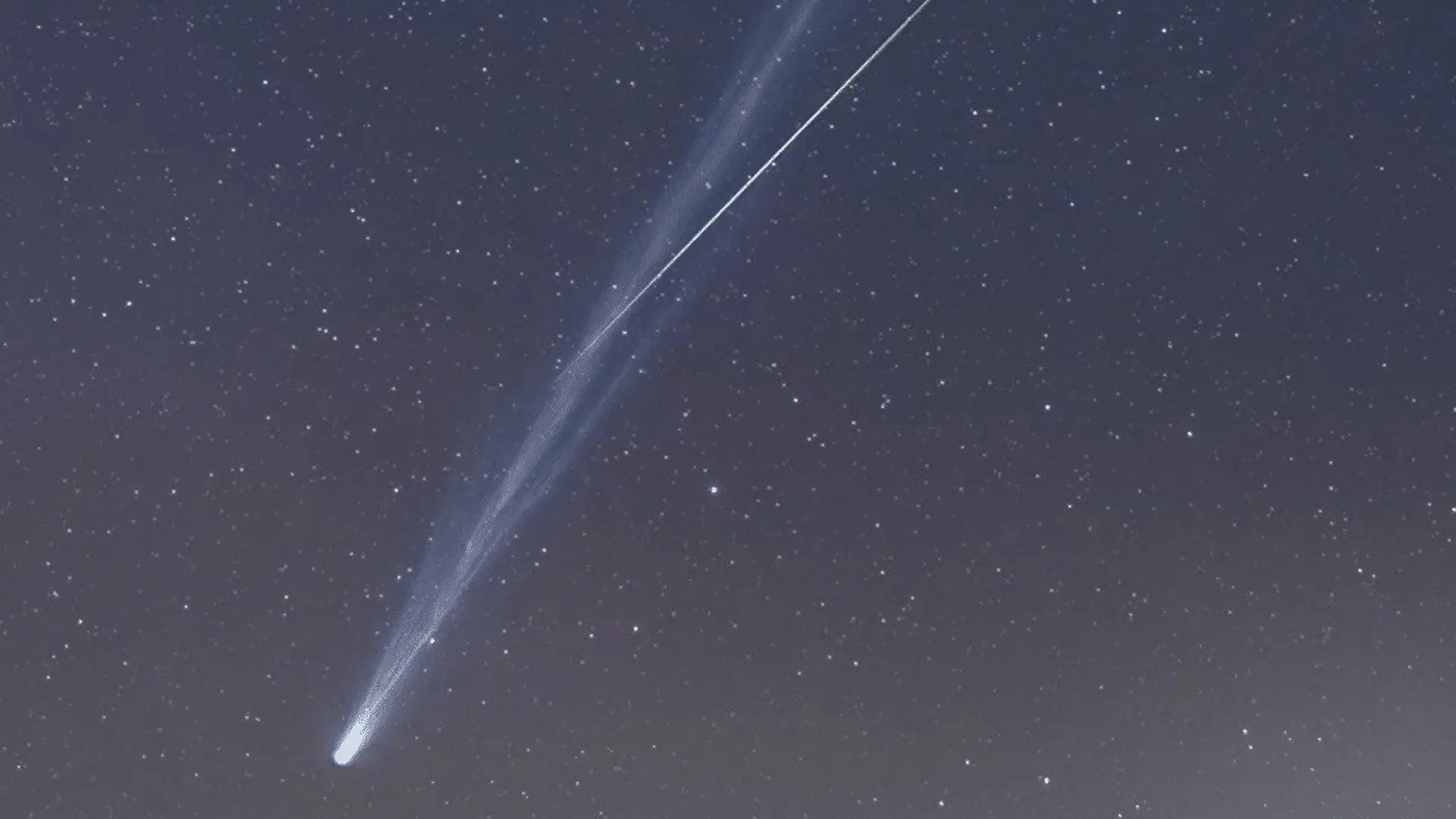
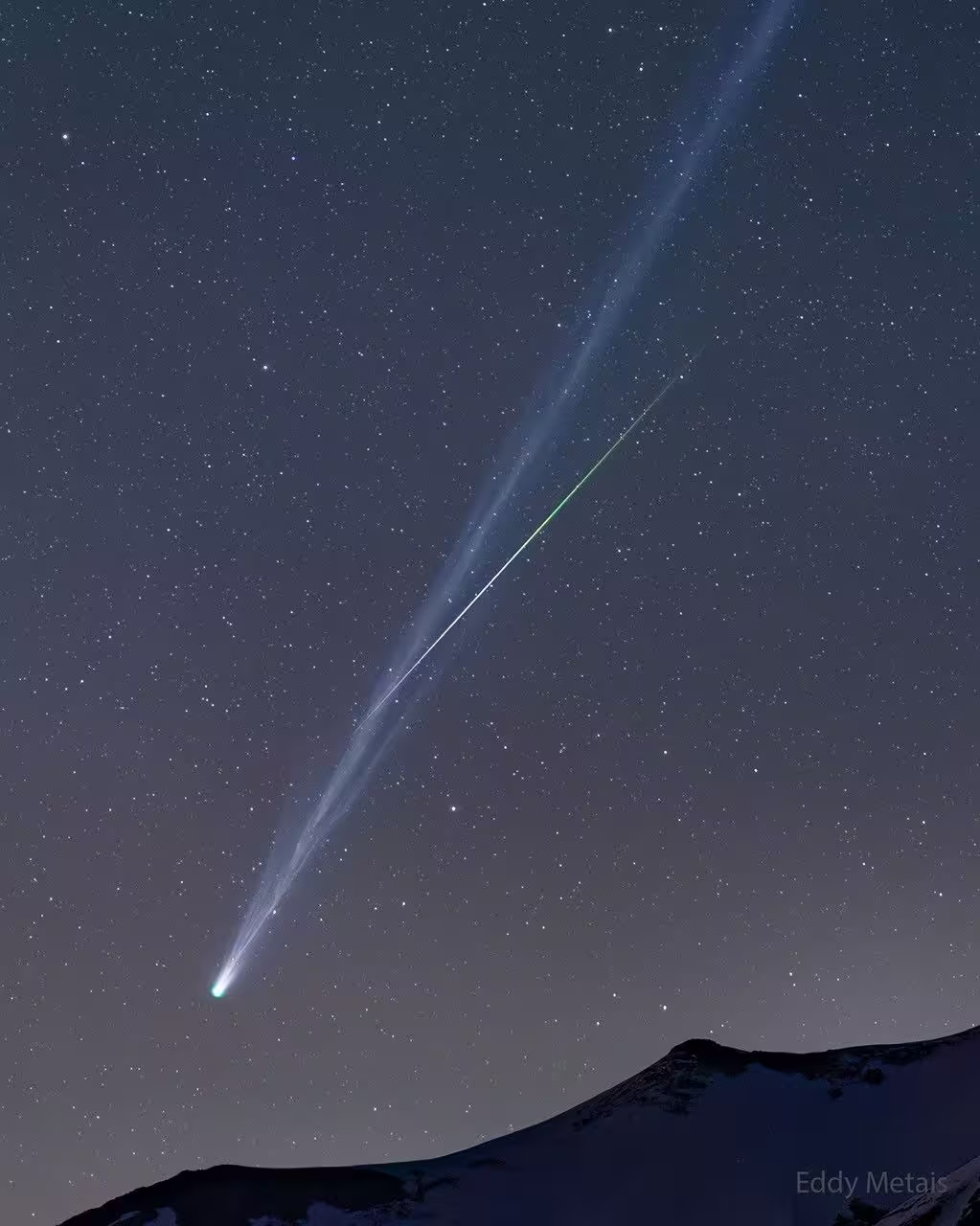
A striking image captured over the French Pyrenees has captivated skywatchers, showcasing a vivid, multi-colored meteor appearing to streak directly alongside the luminous Comet C/2025 R3 (PanSTARRS). While the composition creates the illusion of a single, dramatic celestial event, astronomers emphasize that the two objects are separated by vast distances and share no physical connection.
A Coincidental Alignment in the Night Sky
Photographed in April 2026 from the Hautacam region in France, the image highlights the stark contrast between the two phenomena. The meteor manifests as a sharp, vibrant streak in the foreground, while the distant comet dominates the background with its expansive, ethereal tails. Although the visual alignment is precise, the proximity is purely a matter of perspective. Meteors are fleeting atmospheric events occurring within our own planet’s protective layers, whereas comets are massive, icy bodies orbiting deep within the solar system, thousands or even millions of miles away.
Dissecting the Science of Comet Tails
Comet C/2025 R3 (PanSTARRS) became a focal point for observers during its spring appearance, displaying distinct structural features that reveal the complex interplay between solar energy and cometary material. The comet exhibited two primary tails, each shaped by different physical forces. The blue ion tail is a result of solar ultraviolet radiation ionizing gas particles, which are then swept away by the solar wind. In contrast, the broader, curved dust tail is composed of solid particles pushed outward by the pressure of sunlight, causing them to drift along a slightly different orbital trajectory.
Why the Rainbow Meteor Remains an Enigma
While many meteors are indeed the offspring of comets—the remnants of debris streams shed by icy nuclei as they warm near the Sun—this particular “rainbow” meteor lacks any confirmed link to PanSTARRS. NASA’s Astronomy Picture of the Day notes that establishing a parentage for a meteor requires rigorous orbital tracking, including velocity, entry angle, and timing data. The colorful appearance of the streak likely stems from the unique chemical composition of the meteoroid and the specific atmospheric gases it ionized during its high-speed entry, rather than any material shared with the comet.
The Difference Between Random Flashes and Meteor Showers
The distinction between a chance encounter and a true cometary debris stream is currently relevant as November brings several major meteor showers, such as the Southern and Northern Taurids, linked to Comet 2P/Encke, and the Leonids, produced by the debris of Comet 55P/Tempel-Tuttle. Unlike the random, isolated meteor captured in the French Pyrenees, these events are predictable, long-standing consequences of Earth passing through established orbits of comet dust.
The Hautacam photograph serves as a reminder of the depth of our night sky. It captures a fleeting, high-energy atmospheric flash placed against the backdrop of a distant, evolving comet, demonstrating how a simple trick of perspective can produce one of the most compelling images in modern astronomy.
This article has been fact checked for accuracy, with information verified against reputable sources. Learn more about us and our editorial process.
Last reviewed on .
Article history
- Latest version
Cite this page:
- Posted by Karan Das