Webb Telescope Discovers Tiny Brown Dwarfs That Are Rewriting The Rules Of Star Formation
Webb has discovered record-breaking brown dwarfs just twice the mass of Jupiter, challenging existing theories on how stars and planetary bodies form.
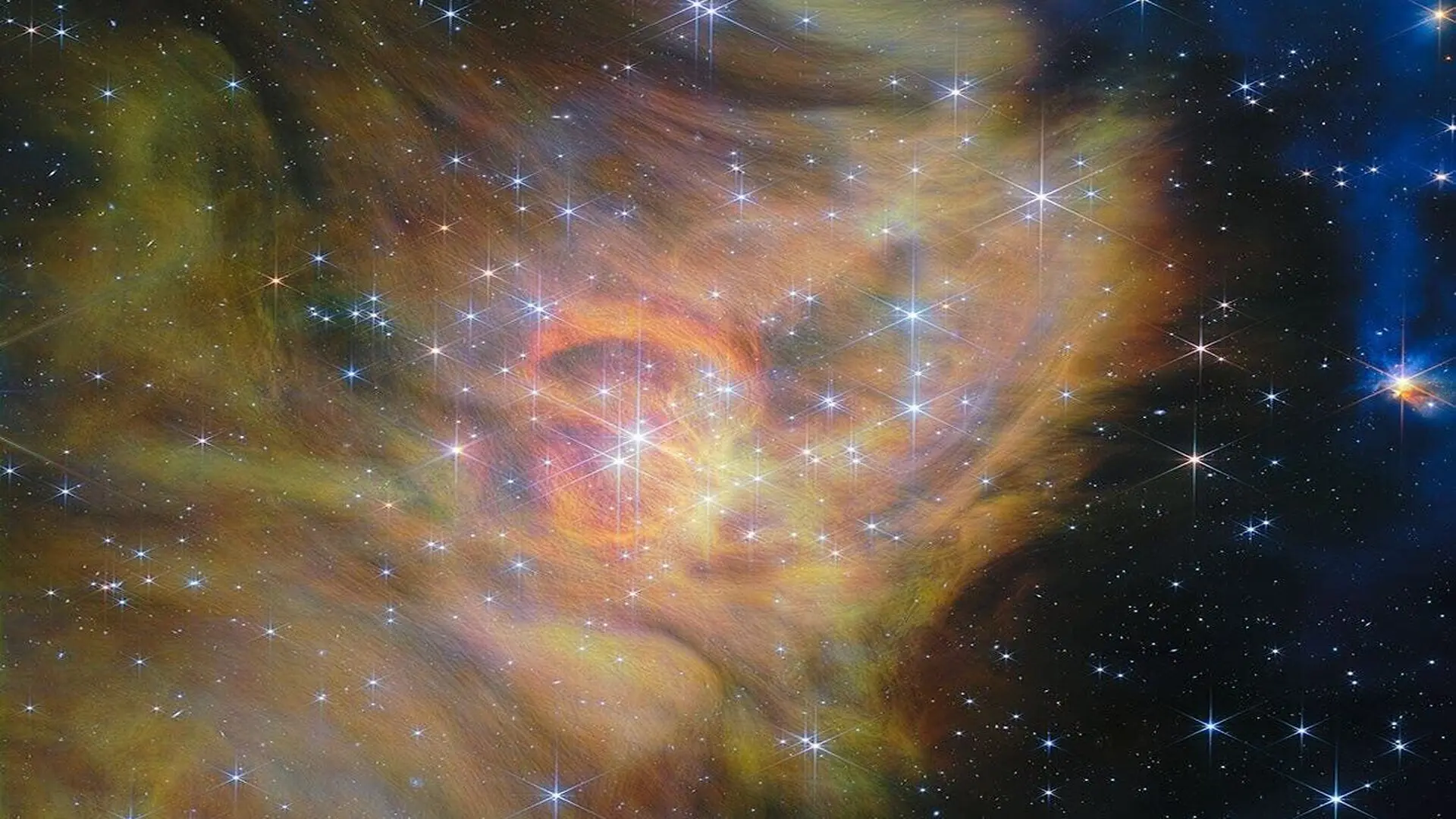
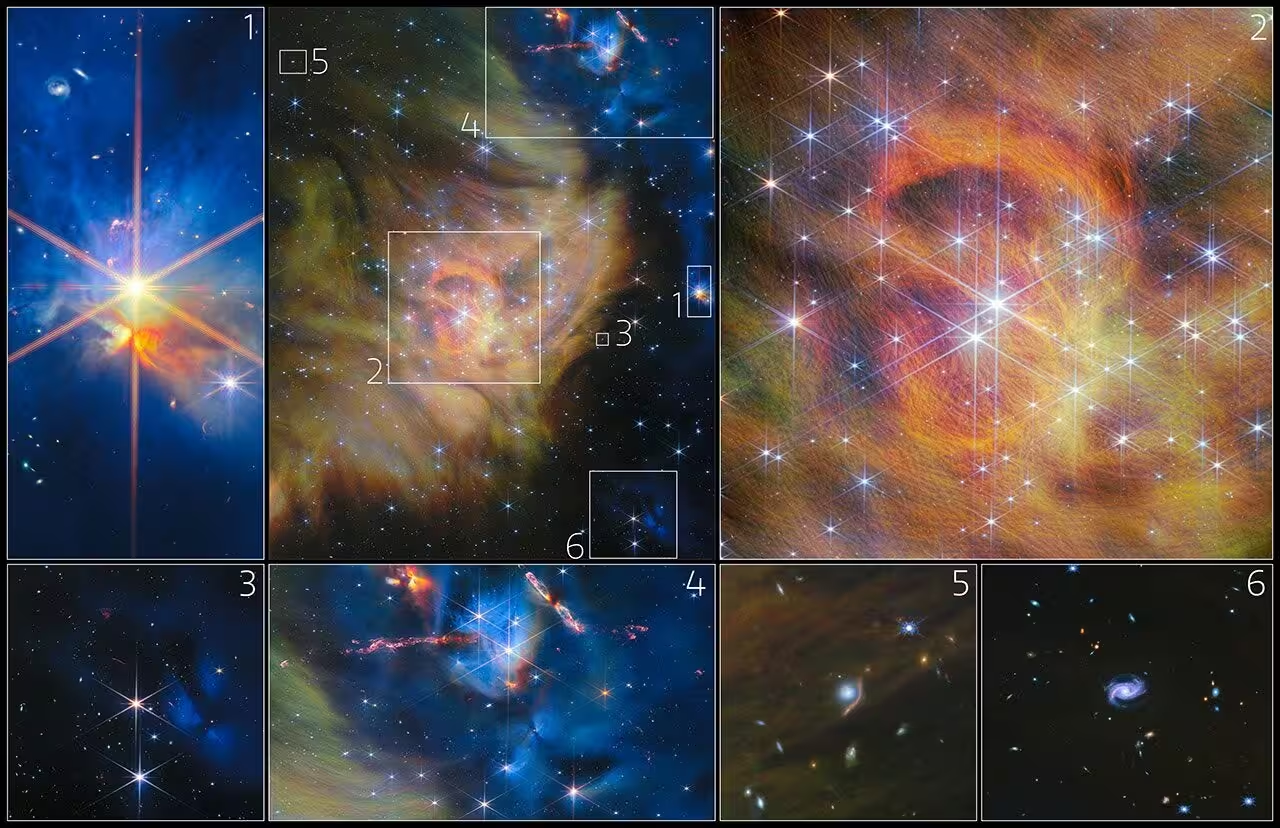
The James Webb Space Telescope has pushed the boundaries of stellar formation theory, identifying a collection of brown dwarfs in the IC 348 star-forming region with masses as low as twice that of Jupiter. These findings, detailed in The Astrophysical Journal Letters, suggest that the mechanisms governing the birth of stars may extend much deeper into the planetary mass regime than previously established models suggested.
Blurring the line between stars and planets
Located roughly 1,000 light-years away in the Perseus constellation, IC 348 is a dense stellar nursery. While traditional stars form when massive clouds of hydrogen collapse under their own gravity to ignite nuclear fusion, brown dwarfs represent a failure to launch. These objects possess enough mass to form similarly to stars but lack the internal pressure required to sustain the core fusion processes that define a true star. The discovery of free-floating objects at the two-Jupiter-mass threshold complicates the standard definition of a star versus a planet, as these bodies appear to have formed through direct gravitational collapse rather than the accretion processes typical of planetary systems.
New observational evidence
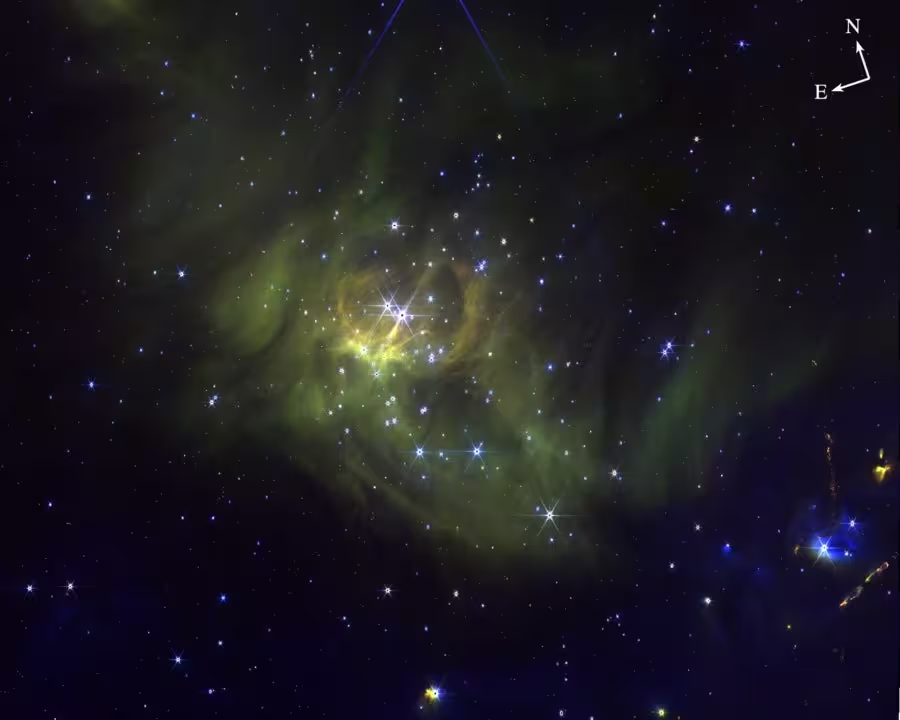
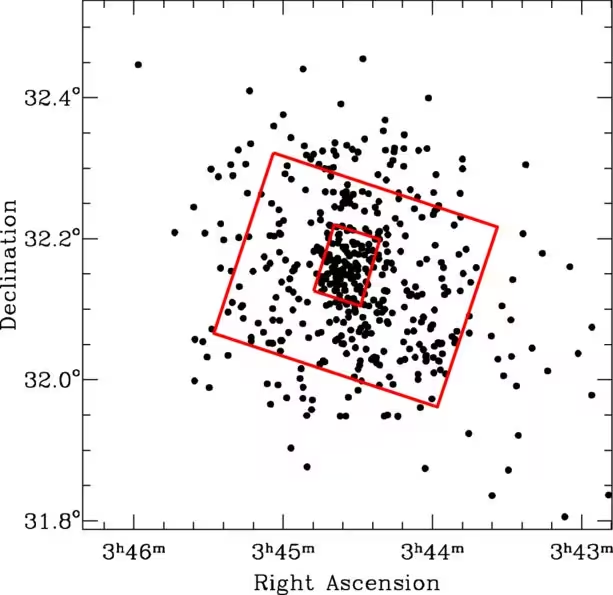
The research team utilized the Near-Infrared Camera (NIRCam) and the Near-Infrared Spectrograph (NIRSpec) on the James Webb Space Telescope to conduct a deep-field survey of the region. By analyzing the infrared light emitted by these cooling, youthful objects, astronomers identified the record-breaking low-mass candidates. One of the most intriguing discoveries among this group is an object exhibiting infrared excess, which indicates the presence of a surrounding circumstellar disk. This suggests that even at this extreme bottom end of the mass scale, these “failed stars” may still host the materials necessary for forming secondary bodies, further complicating how we categorize these sub-stellar entities.
Proposed “H” spectral classification
Beyond mass measurements, the spectroscopic data provided a chemical mystery. Researchers detected a distinct absorption feature near 3.4 micrometers, characteristic of an unidentified aliphatic hydrocarbon. As these brown dwarfs cool, their atmospheric compositions deviate from standard models, which would typically predict an increased presence of methane. Because this specific hydrocarbon signature is so prevalent in the coolest objects of this population, the study authors have proposed the creation of a new spectral class—the “H” class—to categorize these unique, hydrogen-carbon-dominated atmospheric profiles.
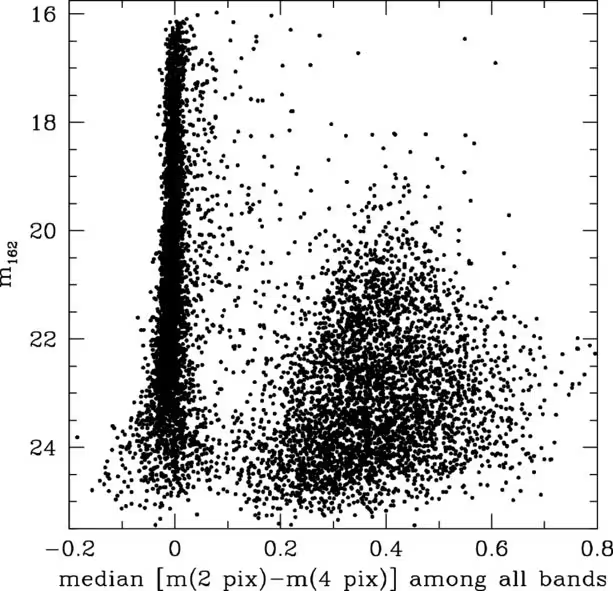
The study marks a significant milestone in stellar census-taking. While further spectroscopic analysis will be required to confirm the status of other faint candidates in the data, the current results confirm that the “floor” of star formation is significantly lower than theorists previously imagined. The focus for astronomers has now shifted from whether star-like formation can produce planetary-mass objects to understanding the physical limitations of how small such a fragment can truly become.
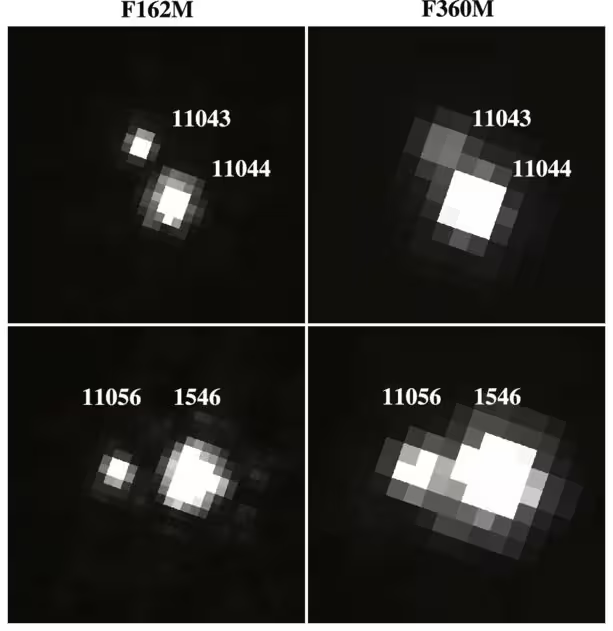
References and further reading
- A JWST Survey for Planetary Mass Brown Dwarfs in IC 348(The Astronomical Journal, 2024)
- Towards precise ages and masses of Free Floating Planetary Mass Brown Dwarfs(Monthly Notices of the Royal Astronomical Society, 2013)
- Brown dwarf formation by gravitational fragmentation of massive, extended protostellar discs(Monthly Notices of the Royal Astronomical Society: Letters, 2007)
- On the origin of brown dwarfs and free-floating planetary-mass objects(Monthly Notices of the Royal Astronomical Society, 2003)
- Spectroscopy of Free-floating Planetary-mass Objects and Their Disks with JWST(The Astronomical Journal, 2025)
This article has been fact checked for accuracy, with information verified against reputable sources. Learn more about us and our editorial process.
Last reviewed on .
Article history
- Latest version
Reference(s)
- Luhman, K. L.., et al. “A JWST Survey for Planetary Mass Brown Dwarfs in IC 348*.” The Astronomical Journal, vol. 167, no. 1, December 13, 2023, pp. 19 American Astronomical Society, doi: 10.3847/1538-3881/ad00b7. <https://doi.org/10.3847/1538-3881/ad00b7>.
- Canty, J. I.., et al. “Towards precise ages and masses of Free Floating Planetary Mass Brown Dwarfs.” Monthly Notices of the Royal Astronomical Society, vol. 435, no. 3, September 1, 2013, pp. 2650-2664. Oxford University Press (OUP), doi: 10.1093/mnras/stt1477. <https://doi.org/10.1093/mnras/stt1477>.
- Stamatellos, Dimitris., et al. “Brown dwarf formation by gravitational fragmentation of massive, extended protostellar discs.” Monthly Notices of the Royal Astronomical Society: Letters, vol. 382, no. 1, November 1, 2007, pp. L30-L34. Oxford University Press (OUP), doi: 10.1111/j.1745-3933.2007.00383.x. <https://doi.org/10.1111/j.1745-3933.2007.00383.x>.
- Kroupa, Pavel., et al. “On the origin of brown dwarfs and free-floating planetary-mass objects.” Monthly Notices of the Royal Astronomical Society, vol. 346, no. 2, November 19, 2003, pp. 369-380. Oxford University Press (OUP), doi: 10.1046/j.1365-2966.2003.07224.x. <https://doi.org/10.1046/j.1365-2966.2003.07224.x>.
- Damian, Belinda., et al. “Spectroscopy of Free-floating Planetary-mass Objects and Their Disks with JWST.” The Astronomical Journal, vol. 170, no. 2, July 30, 2025, pp. 127 American Astronomical Society, doi: 10.3847/1538-3881/adea50. <https://doi.org/10.3847/1538-3881/adea50>.
Cite this page:
- Posted by Aisha Ahmed