NASA Captures Stunning New View of the Mysterious Comet Shaped Cocoon Nebula
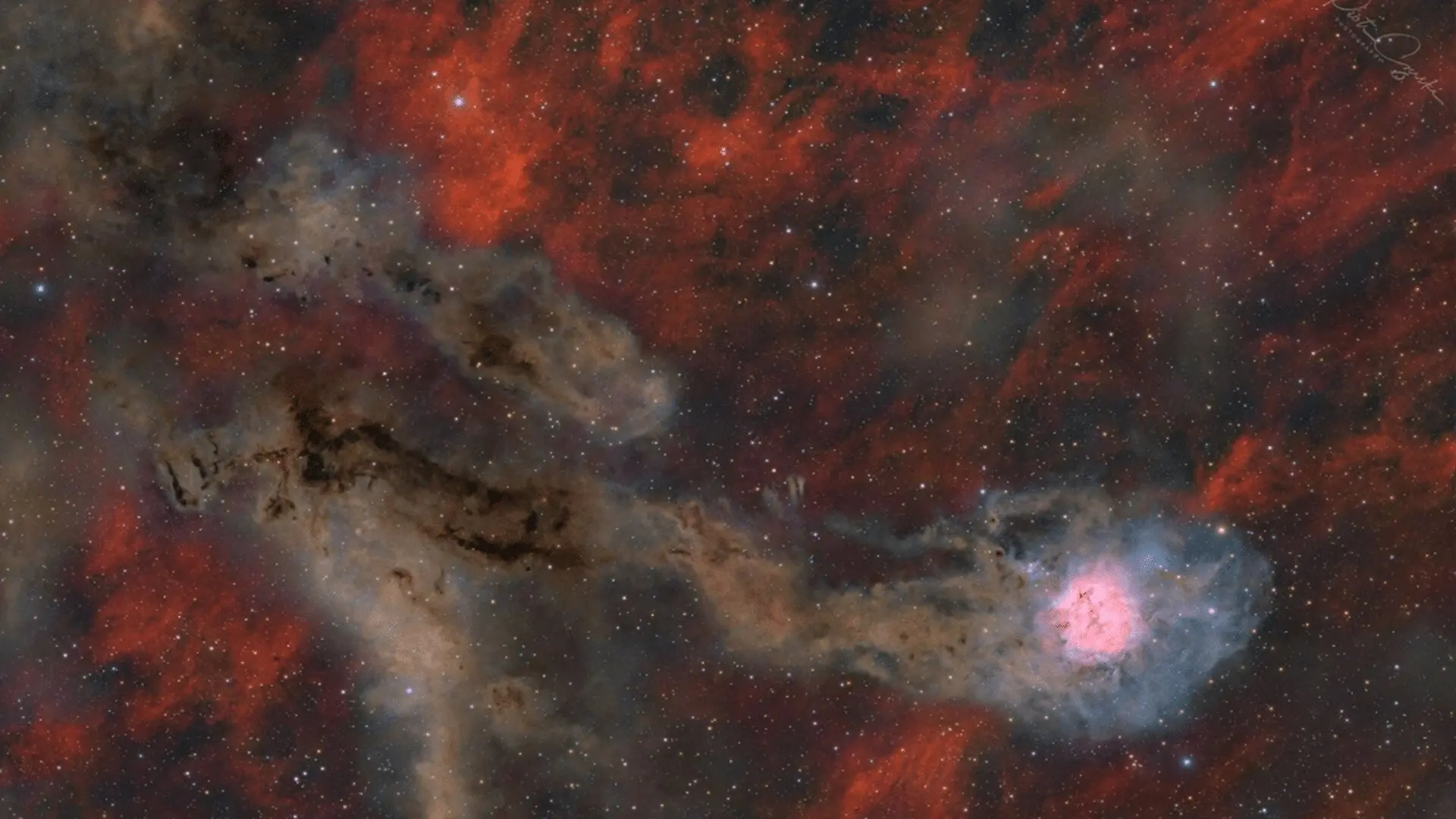
NASA’s latest Astronomy Picture of the Day captures the stunning Cocoon Nebula, a vibrant stellar nursery carved by glowing gas and dark cosmic dust.
Stellar Evolution Captured: The Cocoon Nebula’s Comet-Like Journey
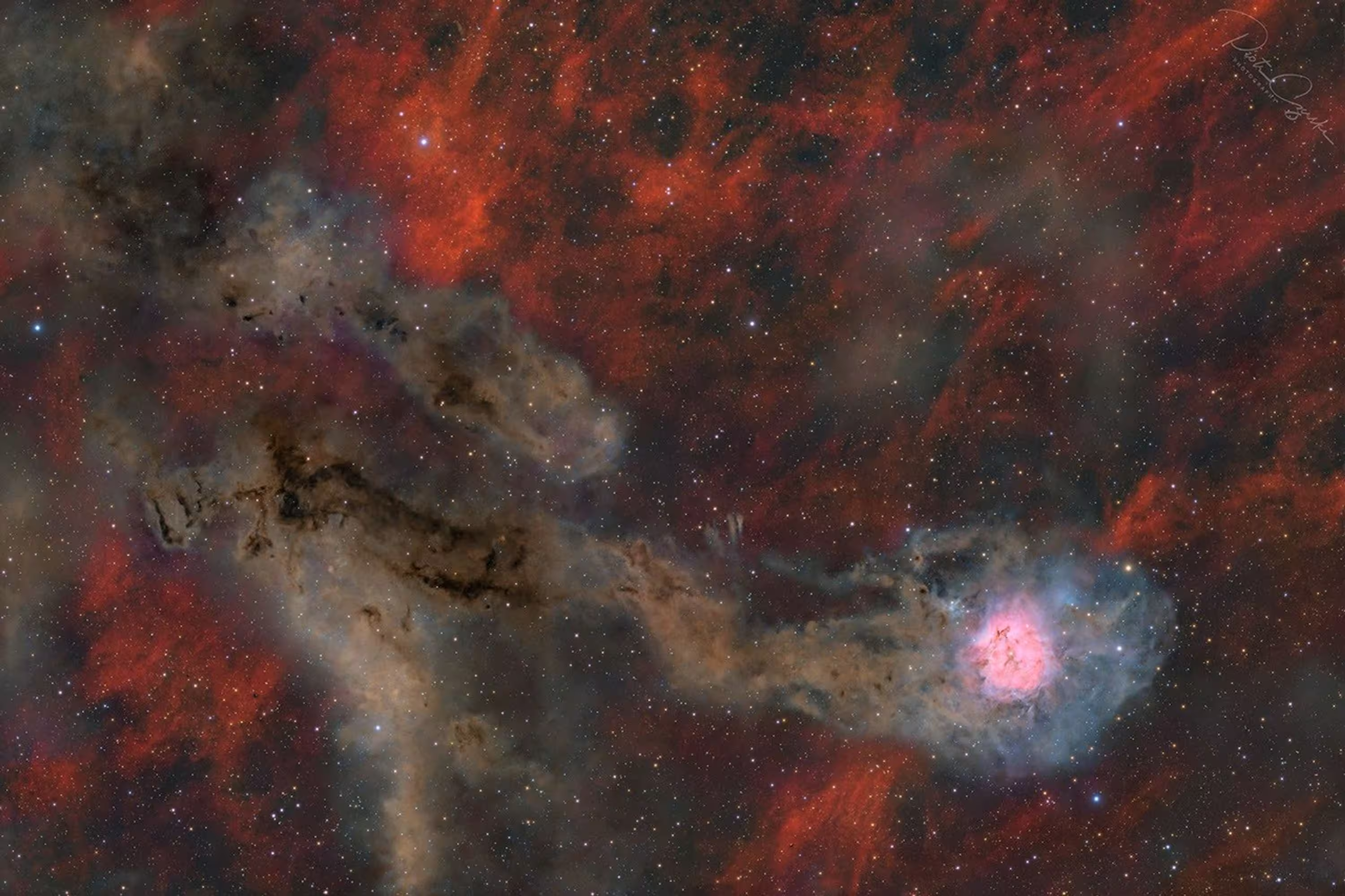
A striking new image showcases the Cocoon Nebula, a celestial structure that bears a remarkable resemblance to a comet trekking through the cosmos. Featured as NASA’s Astronomy Picture of the Day (APOD) on September 21, 2026, the photograph reveals an intricate tapestry of glowing gas, reflective light, and shadowed dust lanes situated within the constellation Cygnus.
This stellar nursery, formally cataloged as IC 5146, serves as a high-resolution laboratory for astronomers studying the violent and creative processes of star birth. Located approximately 2,500 light-years from Earth, the nebula spans a vast region of the Milky Way, with its luminous core stretching about 10 light-years across. Perhaps more impressive is the sweeping, dark tail of interstellar dust that trails behind it, extending for nearly 100 light-years.
A Dynamic Laboratory for Star Formation
The comet-like appearance of the nebula is no mere coincidence of perspective; it is the result of a powerful interaction between a young, bright star at the core and the surrounding molecular cloud. This central star acts as an engine, carving out a cavity in the gas and illuminating the surrounding material through both emission and reflection. The contrast between this radiant head and the opaque, dusty filaments trailing behind provides a clear visual record of how newborn stars reshape their immediate galactic environment.
Captured in July from the dark skies of Death Valley, California, the wide-field view highlights the complex relationship between the nebula and the dense, gas-rich fields of the Milky Way. According to NASA, these dark, sweeping lanes are far from empty. They act as essential reservoirs, hoarding the raw material necessary for future generations of stars to coalesce.
Unlocking the Mysteries of the Milky Way
The Cygnus region is renowned for its dense concentration of gas and dust, making it a focal point for researchers investigating the life cycles of stars. Observations of IC 5146 help scientists understand how gravity and radiation interact within molecular clouds to trigger collapse and star formation. As these young stars release energy, they influence the distribution of nearby material, effectively dictating the architecture of the stellar systems that will follow.
By capturing such detailed, wide-field perspectives, astronomers are better equipped to analyze how individual stellar nurseries fit into the broader evolution of our galaxy. The Cocoon Nebula stands as a vivid example of this ongoing cosmic transformation, where the quiet, dark stretches of space are revealed to be hubs of intense physical activity. As imaging technology continues to advance, the study of structures like IC 5146 remains vital to uncovering how the basic building blocks of the universe—stars and planets—are forged from the chaos of interstellar clouds.
This article has been fact checked for accuracy, with information verified against reputable sources. Learn more about us and our editorial process.
Last reviewed on .
Article history
- Latest version
Reference(s)
- Bonnell, Jerry. “APOD: 2026 September 21 - Cocoon Nebula Wide Field - NASA Science.”, September 21, 2026 NASA <https://science.nasa.gov/image-article/apod-2026-september-21-cocoon-nebula-wide-field/>.
Cite this page:
- Posted by Aisha Ahmed