Astronomers Discover Mysterious Planet Orbiting Its Star in the Wrong Direction
Astronomers have discovered GJ 3090 b, an exoplanet orbiting its red dwarf star in the wrong direction, posing a mystery about its strange retrograde path.
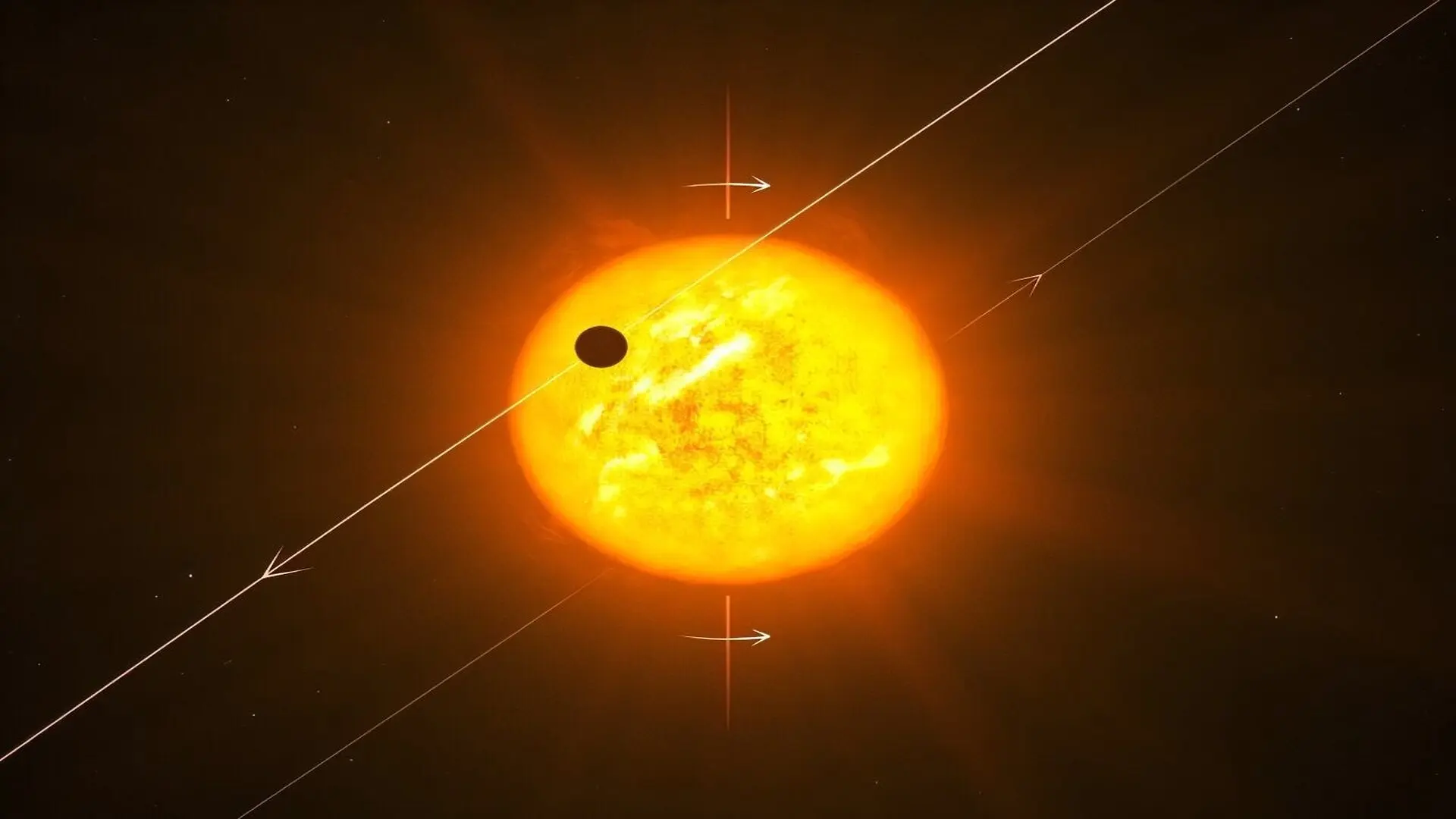
Astronomers have identified a planetary system that defies the conventional rules of stellar formation. A sub-Neptune exoplanet, designated GJ 3090 b, has been observed traversing a retrograde orbit around its red dwarf host star, moving in the opposite direction of the star’s own rotation. This discovery marks the first time such an extreme orbital configuration has been documented around an M-dwarf star.
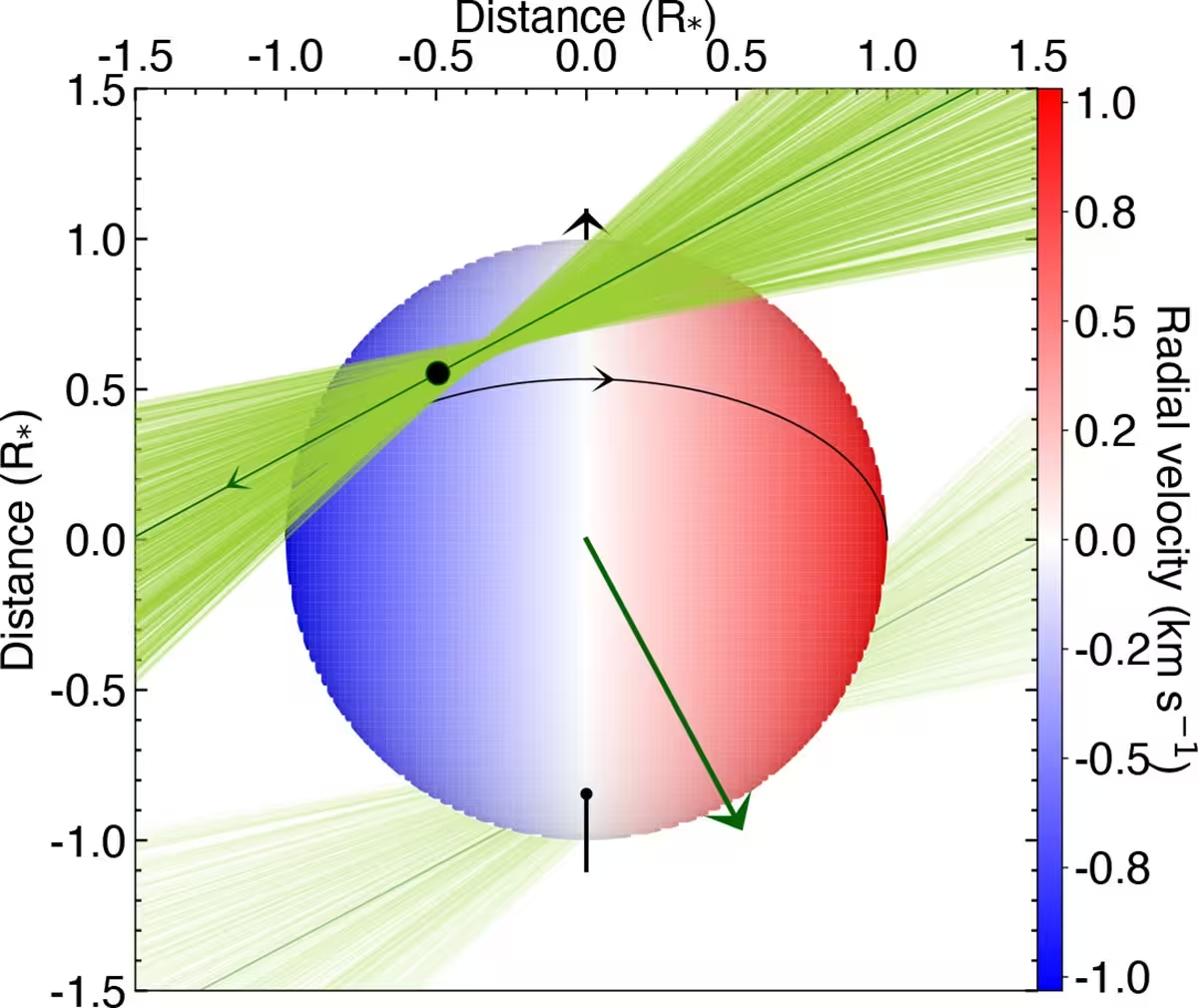
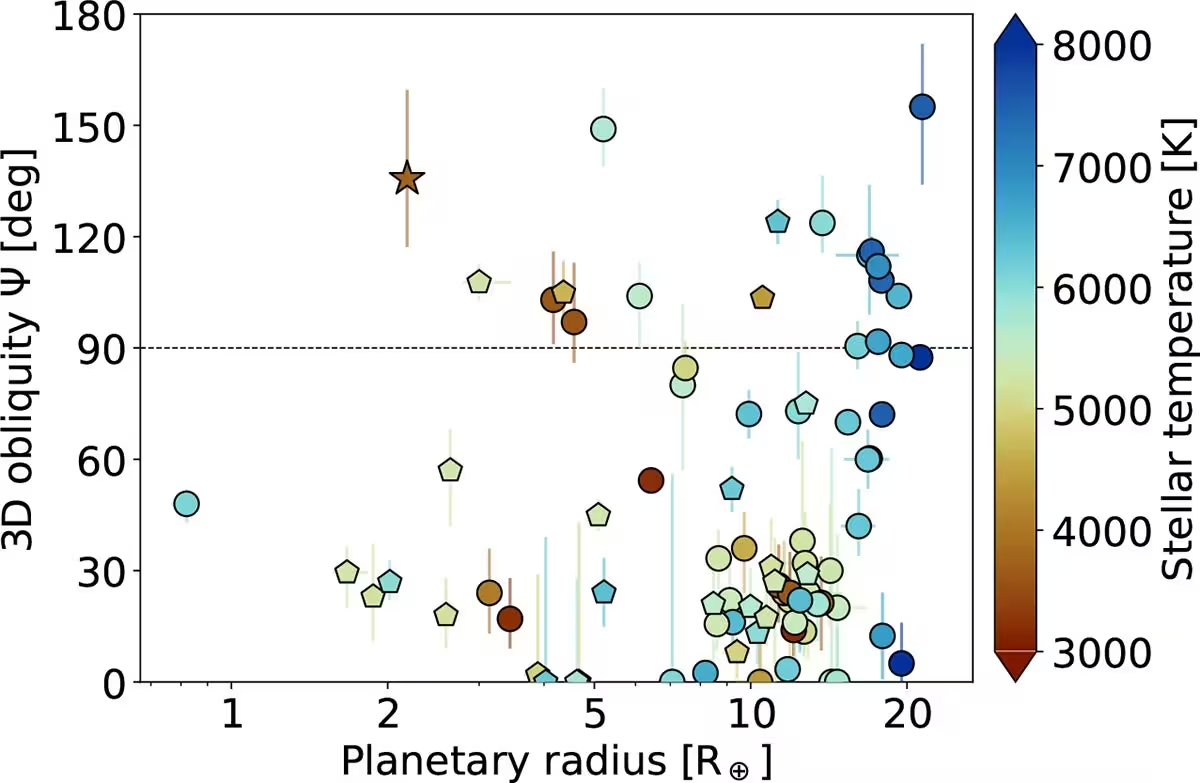
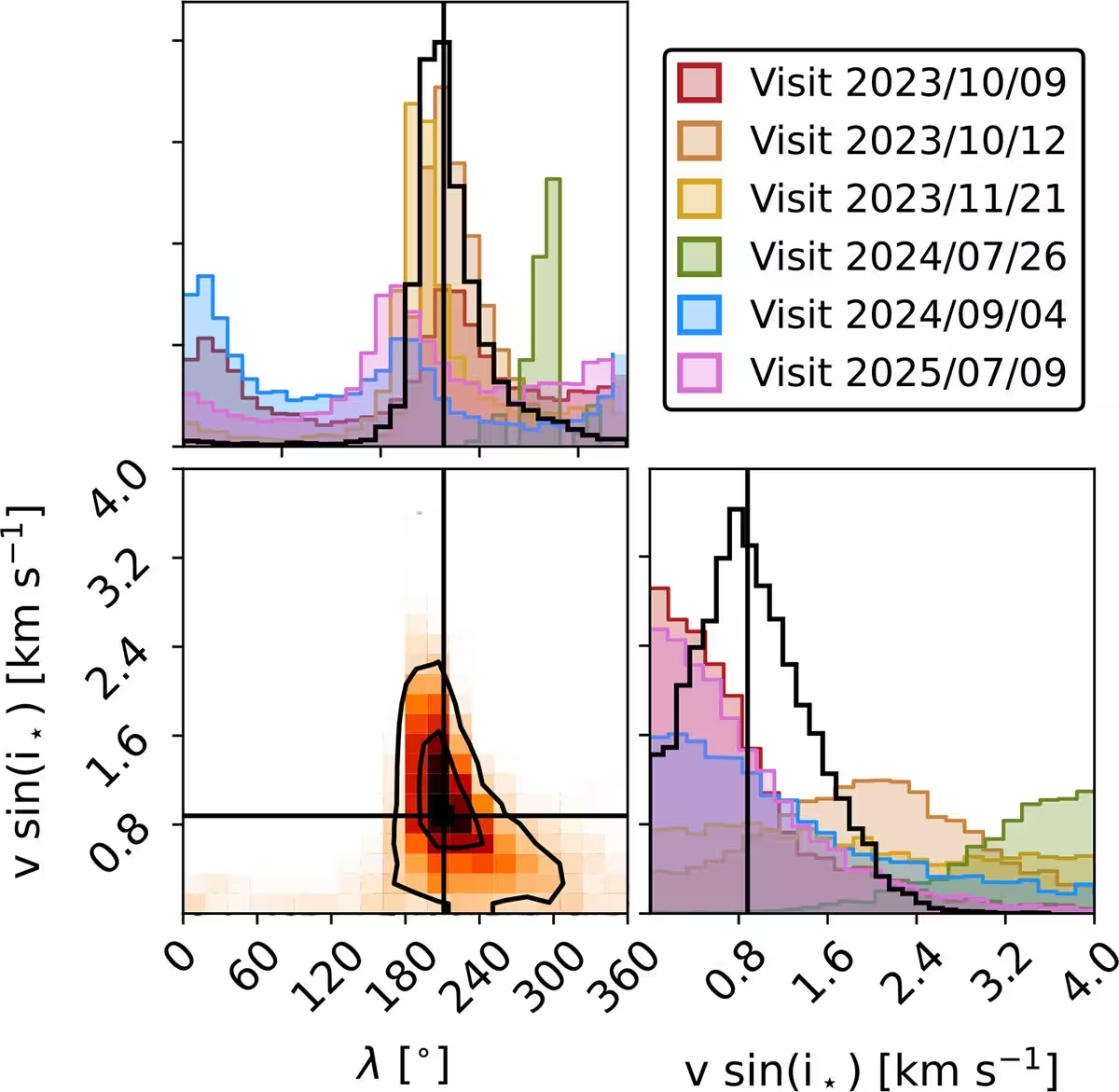
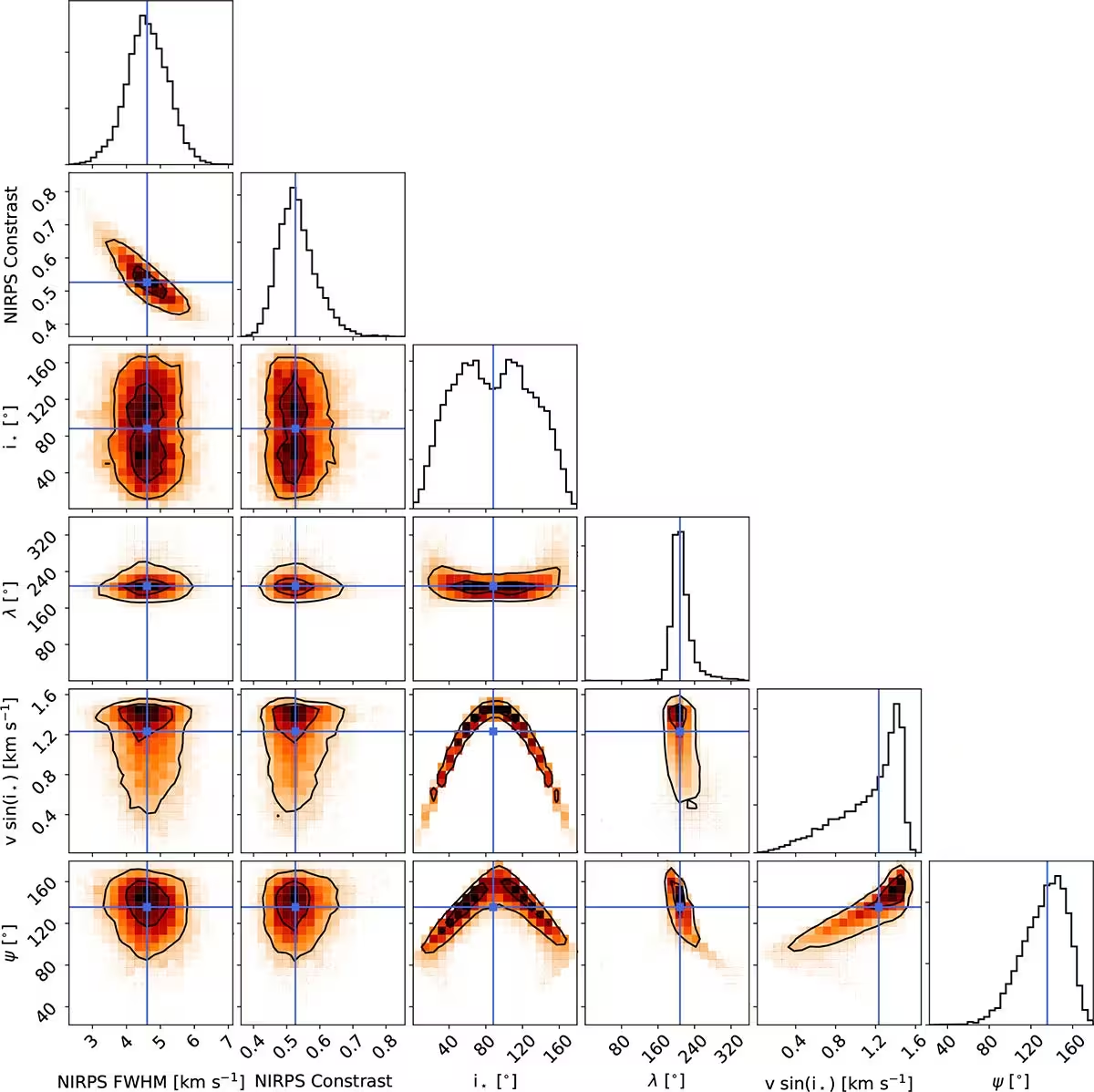
The study, published in Astronomy & Astrophysics, details how researchers utilized the Near-Infrared Planet Searcher (NIRPS) spectrograph on the European Southern Observatory’s 3.6-meter telescope in Chile to map the planet’s path. The data reveals a three-dimensional orbital obliquity of approximately 136 degrees, suggesting the planet is essentially “upside down” relative to the stellar equator.
Challenging Conventional Formation Theories
In standard models of planetary evolution, stars and their orbiting planets originate from the same collapsing cloud of gas and dust. This shared origin typically ensures that the resulting planets orbit in the same direction as the star’s rotation, remaining closely aligned with its equatorial plane. While minor deviations are common—Earth, for example, is tilted about 7 degrees—a full-scale retrograde orbit is highly anomalous.
“To our great surprise, not only is the planet GJ 3090 b on a highly misaligned orbit, but it also orbits retrogradely, in the opposite direction to the rotation of its star,” explained Yann Carteret of the University of Geneva, the study’s lead author.
Precision Mapping of Orbital Dynamics
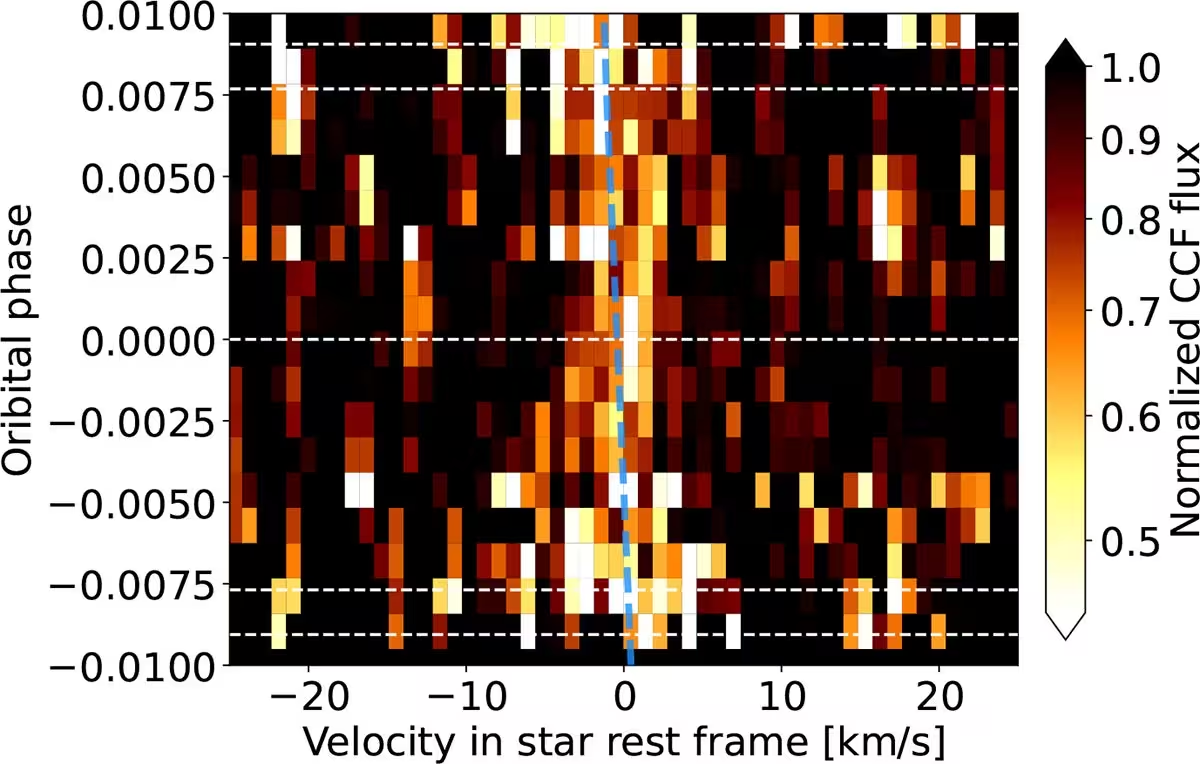
The team achieved these results by analyzing how the planet occulted different regions of the star’s surface as it transited. By measuring the slight shifts in spectral lines caused by the star’s rotation, the researchers were able to calculate the trajectory of GJ 3090 b with high precision. “It is the performance of NIRPS in the infrared that made it possible to achieve the precision needed to measure the angle between the planet’s orbital plane and the star’s equatorial plane for such a small planet,” noted co-author Léna Parc.
Searching for Gravitational Culprits
In many previously observed systems with high orbital tilts, astronomers have identified massive outer planets or companion stars that likely gravitationally “kicked” the inner planet into an irregular path. However, the GJ 3090 system appears to be an outlier. Exhaustive searches using radial-velocity data and high-resolution imaging have failed to turn up any massive stellar companions or gas giants that could explain the current architecture via late-stage gravitational disruption.
A Secondary Disk Hypothesis
The absence of external disturbers leads the research team to propose a different origin: the formation of a secondary, misaligned disk. It is possible that after the initial planet-forming process began, the star captured additional gas and material from its environment. If this incoming matter possessed a different angular momentum, it could have formed a second disk rotating in reverse. Planets born from this secondary material would inherit the retrograde motion, effectively freezing the system into its current, strange configuration.
This model aligns with emerging theories suggesting that the environments of young stars are far more dynamic than once thought. If this hypothesis is correct, the tilt of GJ 3090 b is not the result of an external collision, but rather a reflection of the chaotic birth conditions of the system itself.
Future observations will be critical in determining whether other planets in the GJ 3090 system share this retrograde orientation. Should they follow the same pattern, it would provide compelling evidence that this system was shaped by the influx of material in its earliest years, further expanding our understanding of the diverse and often unpredictable nature of planetary architectures.
This article has been fact checked for accuracy, with information verified against reputable sources. Learn more about us and our editorial process.
Last reviewed on .
Article history
- Latest version
Cite this page:
- Posted by Aisha Ahmed