CERN Physicists Use New AI Method to Hunt for Microscopic Black Holes in the LHC
Machine learning analysis of LHC collision data finds no evidence of microscopic black holes, significantly narrowing the search for exotic new physics.
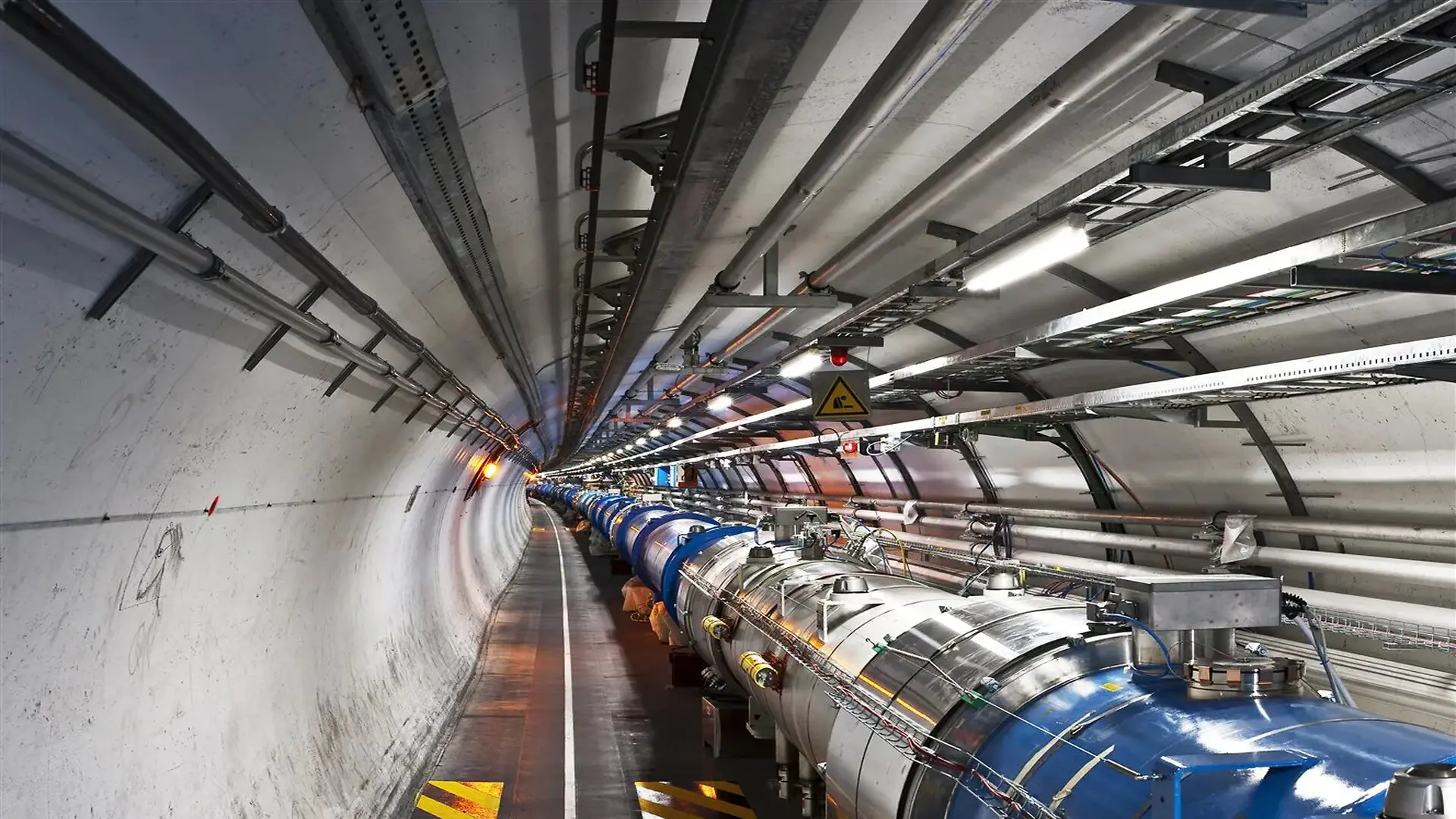
Physicists at the Large Hadron Collider (LHC) have completed a rigorous search for evidence of microscopic black holes and electroweak sphalerons, finding no sign of these exotic phenomena in data gathered between 2016 and 2018. While the absence of these elusive objects might seem like a quiet result, the analysis significantly refines our understanding of high-energy physics by effectively shrinking the theoretical landscape where such events could occur.
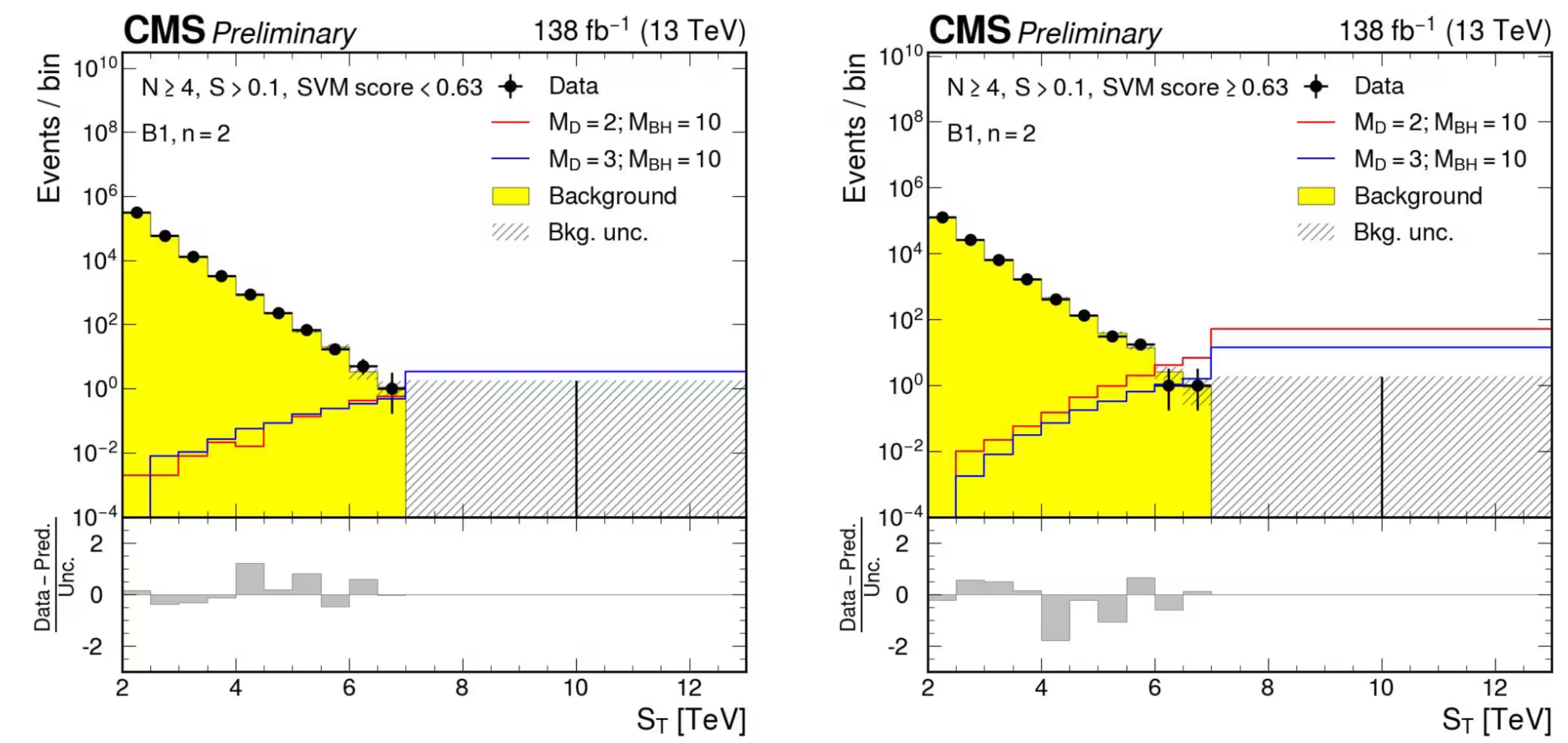
The study, conducted by the Compact Muon Solenoid (CMS) collaboration at CERN, utilized 138 inverse femtobarns of proton-proton collision data to test theoretical models that predict the formation of black holes. Under conventional four-dimensional physics, the LHC lacks the energy density to form a black hole. However, certain theories proposing extra spatial dimensions suggest that gravity could act with greater intensity at extremely small scales, potentially allowing for the creation of tiny, short-lived black holes that would evaporate almost instantly through Hawking radiation.

Tamas Almos Vami and Danyi Zhang of the University of California, Santa Barbara, led the research, which was recently published in Progress in High Energy Physics. By demonstrating that these black holes do not appear within specific energy parameters, the team has successfully excluded semiclassical black holes with masses ranging from 9.0 to 11.4 tera-electron volts (TeV), extending previous detection limits by up to 1.6 TeV.
“It’s not a dead-end,” Zhang explained. “The result is an exclusion limit, which is a real, publishable statement: ‘If this thing existed with these properties, we’d have seen it. We didn’t, so we can rule it out here.’”
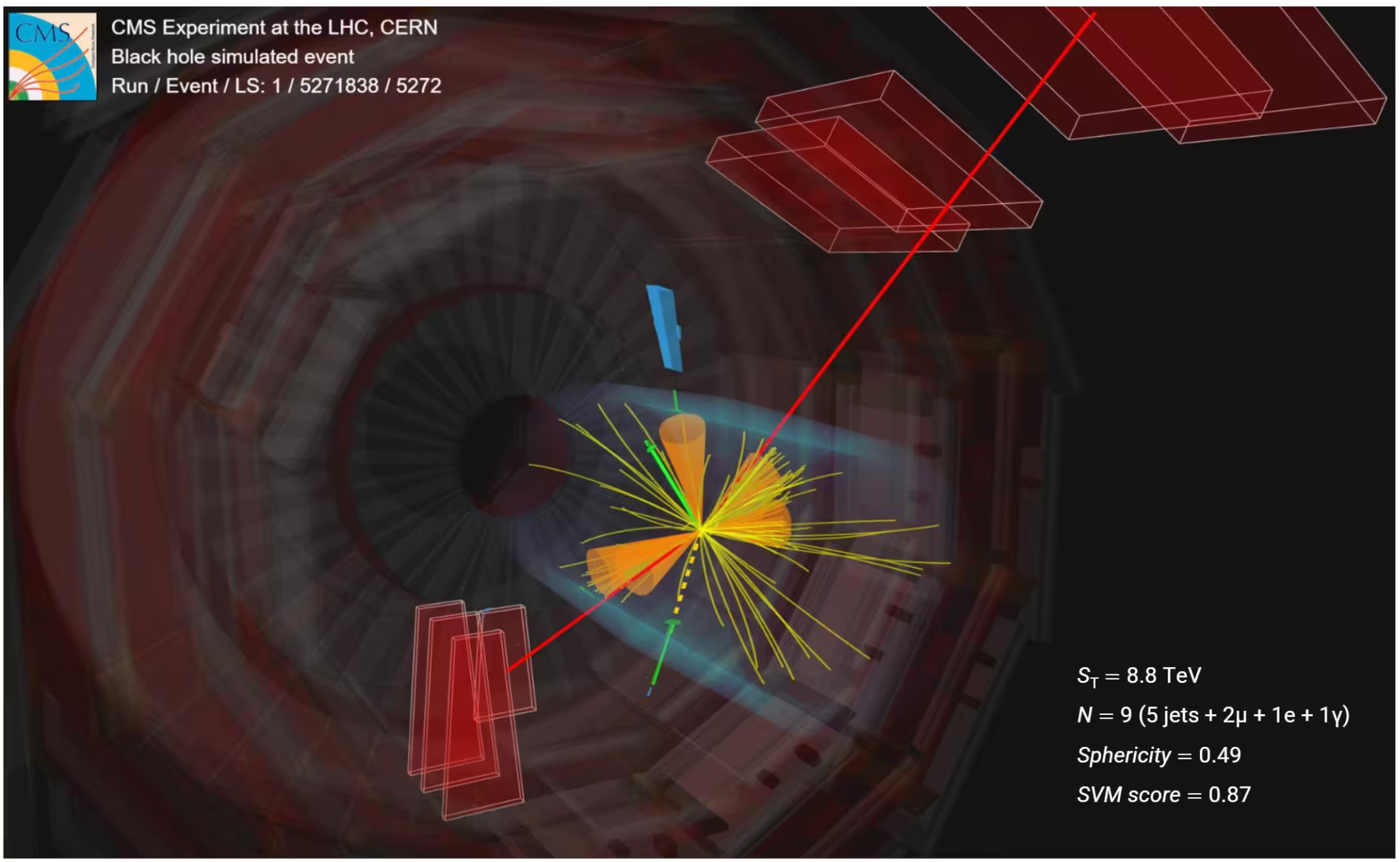
Innovative Machine Learning in Particle Physics
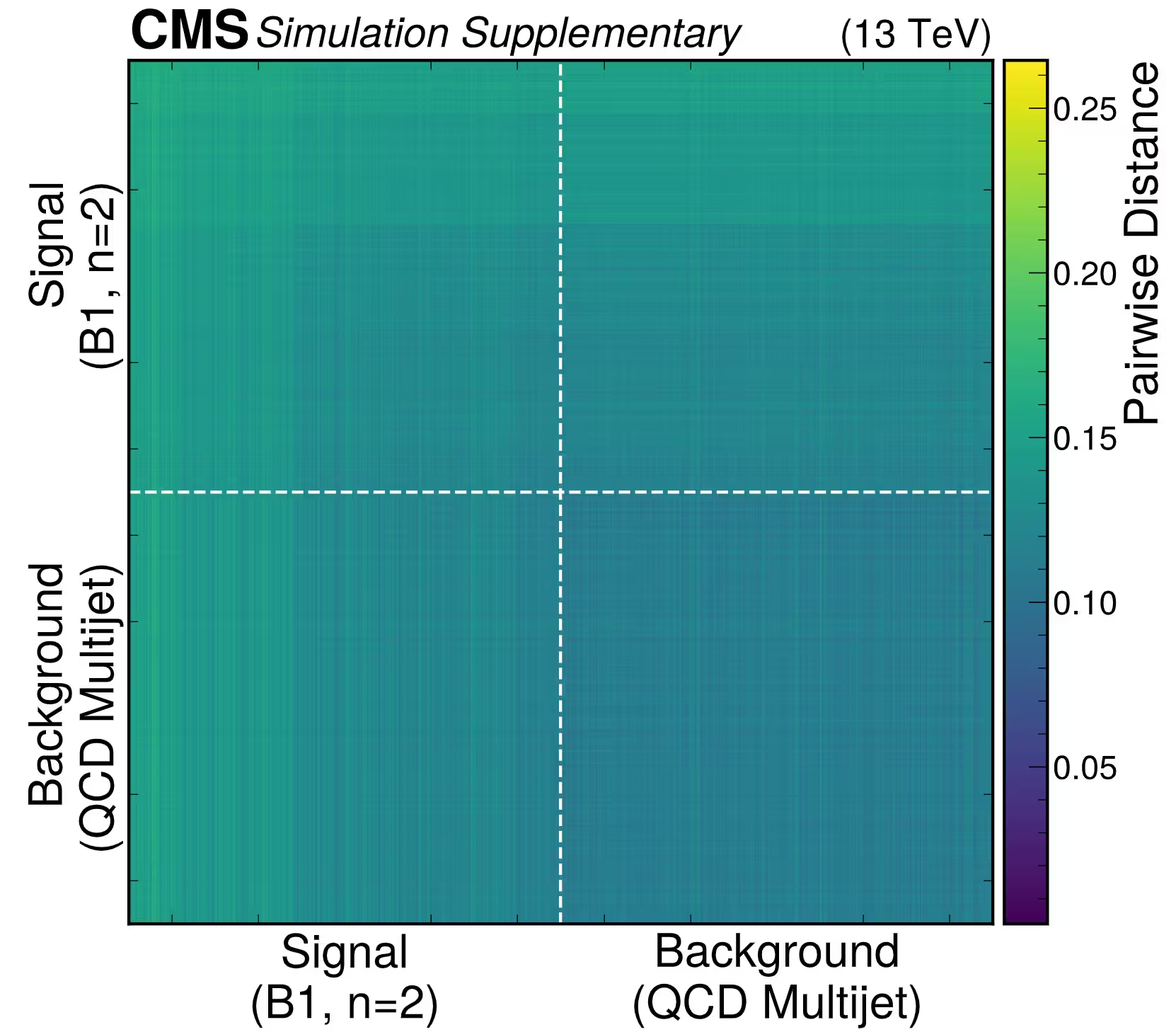
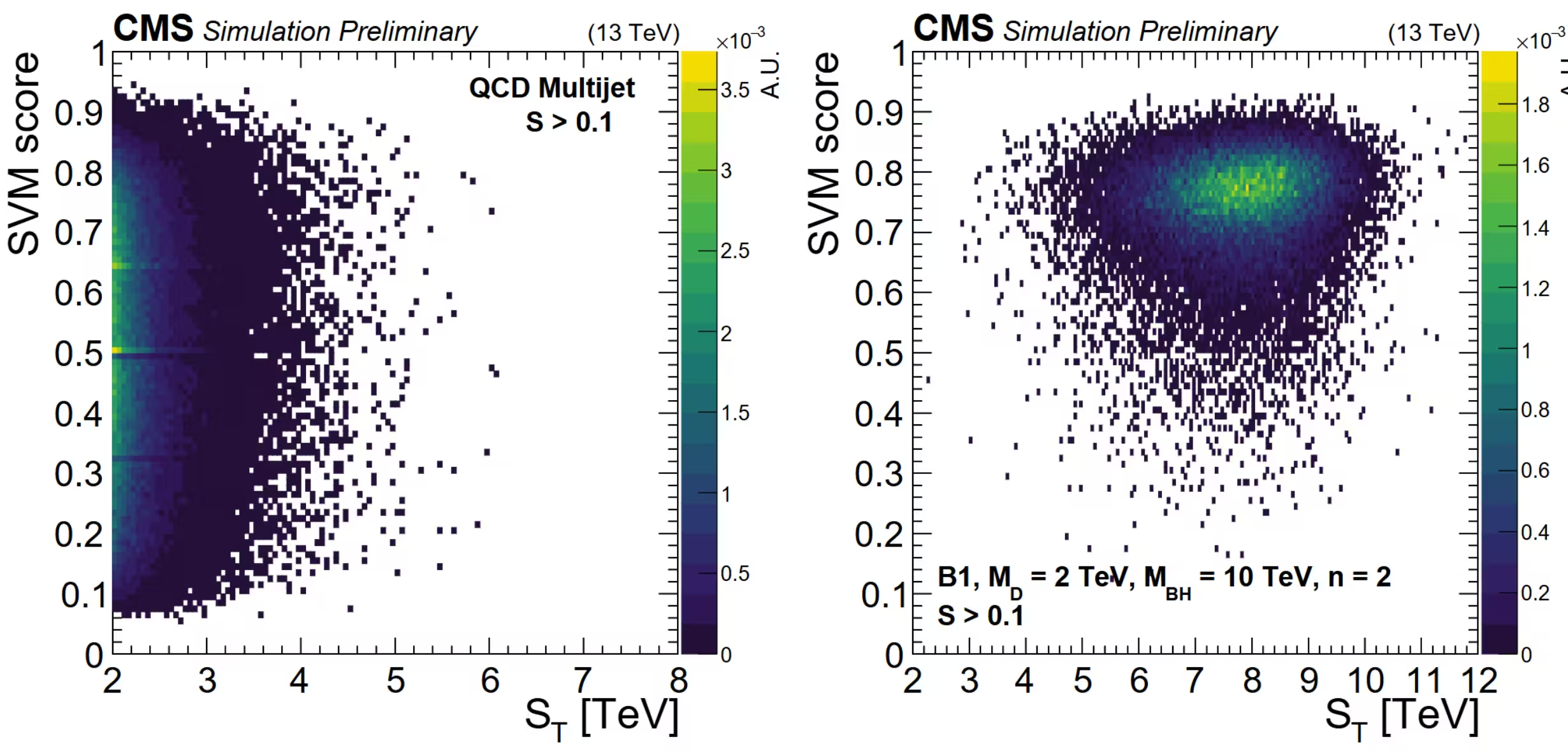
To identify potential signals, the researchers employed a novel approach based on the geometric distance between collision events in phase space. Unlike traditional methods that rely heavily on specific variables like sphericity, this technique analyzes the full multidimensional data of a collision—including particle momentum and energy—to determine how closely an event resembles theoretical predictions.
By using a support vector machine (SVM) to process these phase-space distances, the team could effectively distinguish between standard background processes and the high-energy, broad-spectrum signatures expected from black hole decay. The researchers found that this geometric approach outperformed conventional techniques, providing a cleaner way to sift through the immense volume of LHC data.
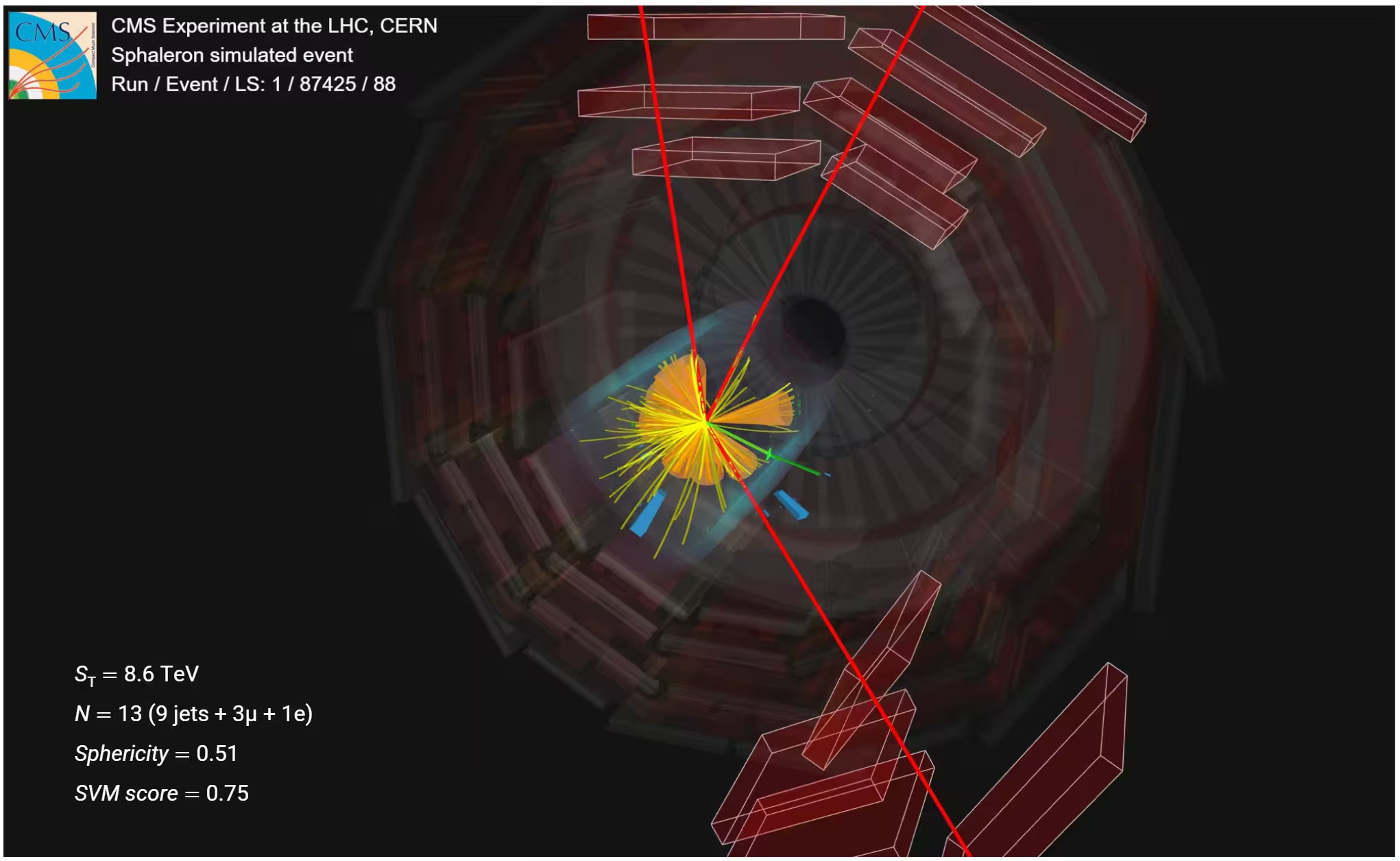
Constraints on Sphalerons and Early Universe Mysteries
The analysis also cast a wide net for electroweak sphalerons—unstable configurations of electroweak fields that are of intense interest to cosmologists. These structures could theoretically facilitate the conversion between different vacuum states and potentially explain the cosmic asymmetry between matter and antimatter.
Much like the search for black holes, the hunt for sphalerons yielded a null result. The team established a 95% confidence upper limit on the frequency of these transitions, providing a tighter constraint on models that link particle physics to the early evolution of the universe.
While the findings do not resolve the hierarchy problem—the disparity between the strength of gravity and the other fundamental forces—they successfully narrow the search area. By systematically ruling out specific energy ranges and model parameters, the CMS collaboration has demonstrated a powerful new methodology that will guide future searches for physics beyond the Standard Model.
For further reading on the intersection of collider physics and exotic phenomena:
- Black Holes at the LHC: A foundational 2001 proposal exploring how TeV-scale gravity could permit the creation of microscopic black holes.
- The phase space distance between collider events: Technical documentation on the geometric framework utilized in the current CMS analysis.
- Search for sphalerons in proton-proton collisions: A study detailing the expected high-multiplicity signatures of electroweak sphaleron transitions.
This article has been fact checked for accuracy, with information verified against reputable sources. Learn more about us and our editorial process.
Last reviewed on .
Article history
- Latest version
Reference(s)
- “Home.” UC Santa Barbara <https://www.ucsb.edu/>.
- “View of Search for Black Holes and Sphalerons Using Novel MachineLearning Techniques at CMS.” <https://phep.andromedapublisher.org/index.php/PHEP/article/view/21/21>.
- Dimopoulos, Savas., et al. “Black Holes at the Large Hadron Collider.” Physical Review Letters, vol. 87, no. 16, September 27, 2001 American Physical Society (APS), doi: 10.1103/PhysRevLett.87.161602. <https://doi.org/10.1103/PhysRevLett.87.161602>.
- Cai, Tianji., et al. “The phase space distance between collider events.” Journal of High Energy Physics, vol. 2024, no. 9, September 10, 2024 Springer Science and Business Media LLC, doi: 10.1007/JHEP09(2024)054. <https://doi.org/10.1007/JHEP09(2024)054>.
- Ellis, John., et al. “Search for sphalerons in proton-proton collisions.” Journal of High Energy Physics, vol. 2016, no. 4, April 14, 2016, pp. 1-15. Springer Science and Business Media LLC, doi: 10.1007/JHEP04(2016)086. <https://doi.org/10.1007/JHEP04(2016)086>.
Cite this page:
- Posted by Aisha Ahmed