Invasive “Zigzag” Pest Is Now Attacking This Popular City Tree
A new study reveals the elm zigzag sawfly is expanding its diet to the Japanese zelkova, a tree once thought to be safe from elm-specific pests, threatening urban forests and nurseries.
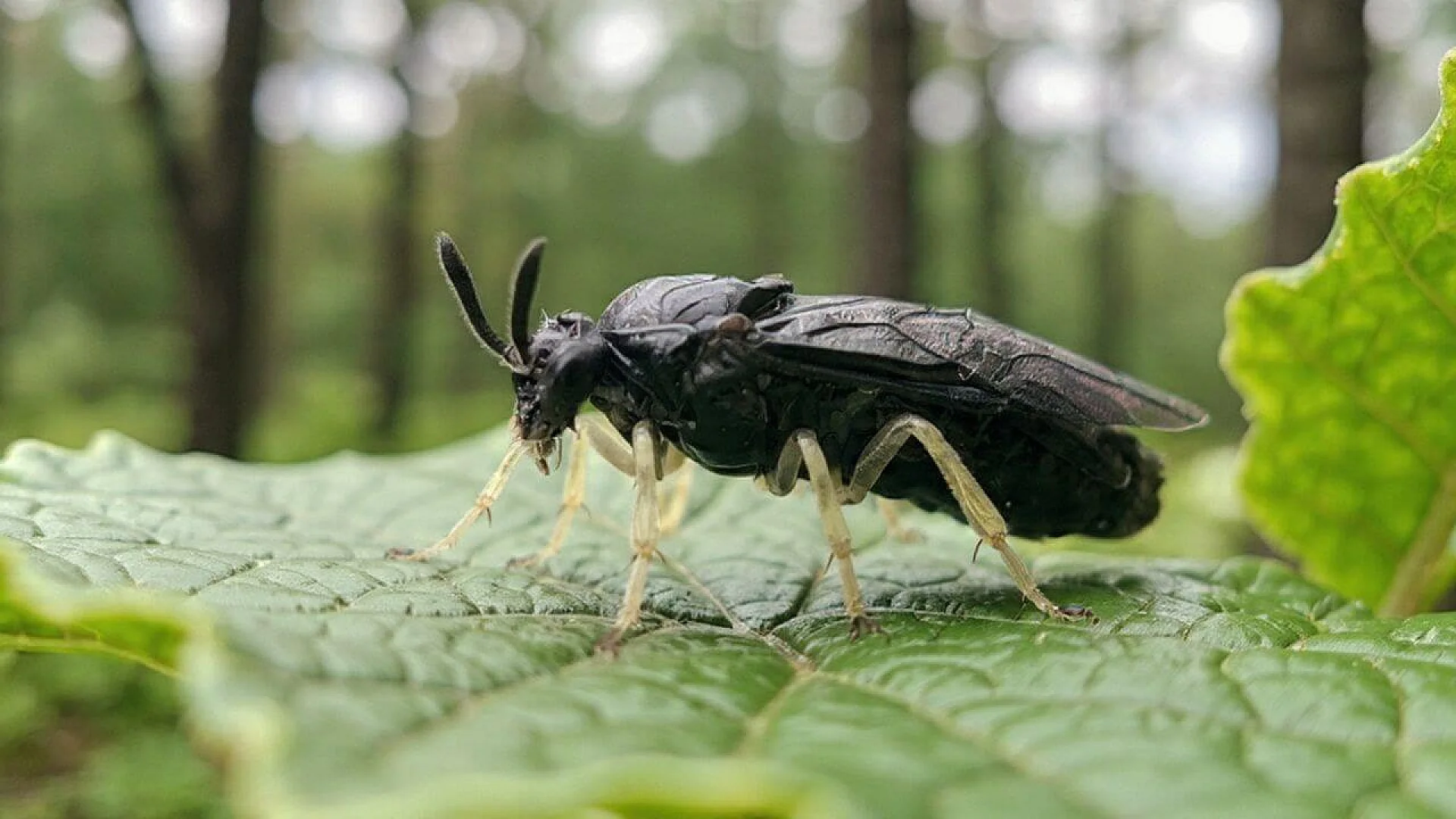
Nature rarely works in perfect geometric patterns, so when residents in the Eastern United States and Canada began noticing precise, zigzag-shaped incisions in their tree leaves, scientists knew something unusual was happening. These distinct “S” shaped trails are the calling card of the elm zigzag sawfly, an invasive insect that has been rapidly expanding across the continent since its first detection in 2020.
For a long time, there was a small comfort for arborists and homeowners: the pest was believed to be a specialist. It was thought to only target elm trees. In the wake of the Dutch elm disease tragedy of the 20th century, cities spent decades planting the Japanese zelkova as a hardy, resistant substitute. It looked like an elm, grew like an elm, but was safe from elm-related disasters.
That sense of security has now vanished. A groundbreaking study conducted by researchers from North Carolina State University and the USDA Forest Service has confirmed that the elm zigzag sawfly has officially added the Japanese zelkova to its menu. This development marks a major shift in the biology of the invasion and presents a significant challenge for the future of urban greenery.
An All-Female Army with No Need for Males
To understand why this discovery is so alarming, one must first look at the unique and terrifyingly efficient biology of the elm zigzag sawfly (Aproceros leucopoda). Native to East Asia, this insect is a master of rapid colonization because it does not need a partner to reproduce.
The species is parthenogenetic, specifically using a process called thelytoky. In this reproductive strategy, unfertilized eggs develop exclusively into females. This means that a single insect, perhaps hitched to a car or hidden in a shipment of plants, can start an entire population in a new state or province. There are no “lonely” sawflies; every individual is a self-contained colony-starter.
The life cycle of these insects is incredibly fast. A female can lay up to 49 eggs along the edge of a leaf. Once they hatch, the larvae go through six different growth stages in as little as 10 days. During this time, they create their signature zigzag patterns. In warmer climates, such as North Carolina, these pests can go through five generations in a single summer. Their numbers do not just grow; they explode.
The Problem: Why the Switch to Zelkova Matters
The Japanese zelkova was supposed to be the “safe” choice. When Dutch elm disease, a fungal pathogen spread by bark beetles, decimated the American elm population, the zelkova became the hero of urban planning. It is a beautiful, vase-shaped tree that provides excellent shade and is highly resistant to the fungi that killed its relatives.
Because it belongs to the same family as elms (Ulmaceae), scientists had always kept a watchful eye on it, but the elm zigzag sawfly had never been caught successfully breeding on zelkovas in North America. The recent discovery that they can now complete their entire life cycle on this tree changes the risk assessment for millions of trees across the continent.
If the sawfly can jump from elms to zelkovas, it means the “buffer” we created by planting different species is failing. The pest is not just following the elms; it is adapting to the very trees we used to replace them.
The Approach: How Scientists Caught the Sawfly in the Act
To investigate this potential host jump, researchers focused on a specific site in Delaware, Ohio. This area was already known to have an established population of the elm zigzag sawfly. The scientists decided to perform an “open-field choice assay,” which is essentially a real-world test to see which trees the insects would choose when given several options.
In the spring of 2024, the team planted young Japanese zelkova saplings near a stand of American elms. They used two common varieties of zelkova: “Musashino” and “Village Green.” By placing these trees in an environment where the sawfly was already active, they could monitor whether the insects would naturally migrate to the new hosts.
The researchers used a combination of methods to track the invasion. They hung yellow sticky traps to catch adult sawflies as they emerged from the ground after winter. They also performed weekly visual inspections of the leaves, looking for eggs, the telltale zigzag feeding marks, and the silk-like cocoons the larvae spin when they are ready to transform into adults.
The Breakthrough Discovery: Timing is Everything
The results were immediate and surprising. The first adult sawflies were caught on April 22. At this time, the researchers noticed a critical difference in the trees: the Japanese zelkovas had already fully leafed out, while the nearby American elms were still mostly in bud form.
Because the zelkovas were the only trees with fresh, green leaves available, the first generation of sawflies moved in. By early May, the “Musashino” zelkovas were covered in zigzag feeding patterns. The most definitive evidence came later that month, when the team found summer cocoons attached directly to the zelkova leaves.
This was the first time scientists had documented the sawfly completing its full development from egg to pupae on Zelkova serrata in a natural setting. The discovery revealed that the zelkova acts as a “phenological bridge.” It provides a food source early in the spring when elms are still dormant, allowing the sawfly to get a head start on the season.
Interestingly, once the American elms finally leafed out in late May, the later generations of sawflies seemed to prefer the elms, but the damage to the zelkovas was already done. The zelkova had served its purpose as an early-season nursery for the invasive army.
Why It Matters: A Multi-Billion Dollar Risk
The implications of this host jump are far-reaching, particularly for the nursery and landscaping industries. Japanese zelkovas are a staple of commercial forestry. They are grown in massive quantities and shipped across the country to be planted in new housing developments, city parks, and shopping centers.
This movement of plants is one of the primary ways invasive species travel. The elm zigzag sawfly produces two types of cocoons. The summer cocoons are light and airy, often attached to the undersides of leaves. The overwintering cocoons are much more solid and are usually found in the soil.
If a nursery unknowingly ships a zelkova tree with cocoons in the soil or on the leaves, they are effectively exporting the pest to a new region. Because the sawfly can reproduce without a mate, a single shipment could lead to an infestation in a city hundreds of miles away.
Furthermore, the rapid spread of this pest is aided by its “hitchhiking” abilities. The study noted that sawflies have been found on vehicles, including side mirrors and wheel wells. With the addition of zelkova as a host, the number of potential “launch pads” for these hitchhikers has increased dramatically.
The Caveats and Future Research
While the discovery is a major step forward in understanding this invasion, there are still many questions. The researchers noted that while the sawflies were able to live on zelkovas, they still seemed to prefer elms when they were available. We do not yet know how much damage the sawfly would do in a landscape that only has zelkovas.
There is also the question of “fitness.” Scientists need to determine if sawflies that grow up on a diet of zelkova leaves are as healthy or as fertile as those that eat elm leaves. If zelkova is a “lower quality” food source, the population growth might be slower on those trees.
Finally, the study focused on two specific cultivars of zelkova. It is possible that other varieties of the tree might be more or less attractive to the pest. Identifying resistant varieties could be key to saving our urban canopies.
Conclusion: Preparing for the Zigzag Future
The elm zigzag sawfly has proven to be an adaptable and formidable opponent. By jumping to the Japanese zelkova, it has bypassed one of our primary defenses for urban forests. We can no longer assume that planting zelkovas will keep our streets safe from the defoliation that once plagued the elms.
This discovery is a call to action for citizen scientists, arborists, and nursery owners. Early detection is the most effective tool we have against invasive species. By learning to recognize the zigzag patterns on both elms and zelkovas, we can better track the spread of this insect and develop strategies to protect our trees.
The story of the elm zigzag sawfly is a reminder that in the world of biology, nothing is static. Pests evolve, they adapt, and they find new ways to thrive. Our task is to stay one step ahead, using research and vigilance to preserve the green spaces that define our communities.
The research was published in Journal of Integrated Pest Management on November 03, 2025.
This article has been fact checked for accuracy, with information verified against reputable sources. Learn more about us and our editorial process.
Last reviewed on .
Article history
- Latest version
- Last updated by Dayyal Dungrela, MLT, BSc, BS
Reference(s)
- Oten, Kelly L F., et al. “Expanded geographic range and novel host association of elm zigzag sawfly (Hymenoptera: Argidae) with Zelkova serrata in North America.” Journal of Integrated Pest Management, vol. 16, no. 1, 03 November 2025, doi: 10.1093/jipm/pmaf040. <https://academic.oup.com/jipm/article/16/1/pmaf040/8313661>.
Cite this page:
- Posted by Zara Tariq