JWST Just Spotted a Massive Black Hole Growing in the Dawn of the Universe
Astronomers have detected a faint red glow from a massive black hole weighing 36 million suns, hidden in the early, infant universe.
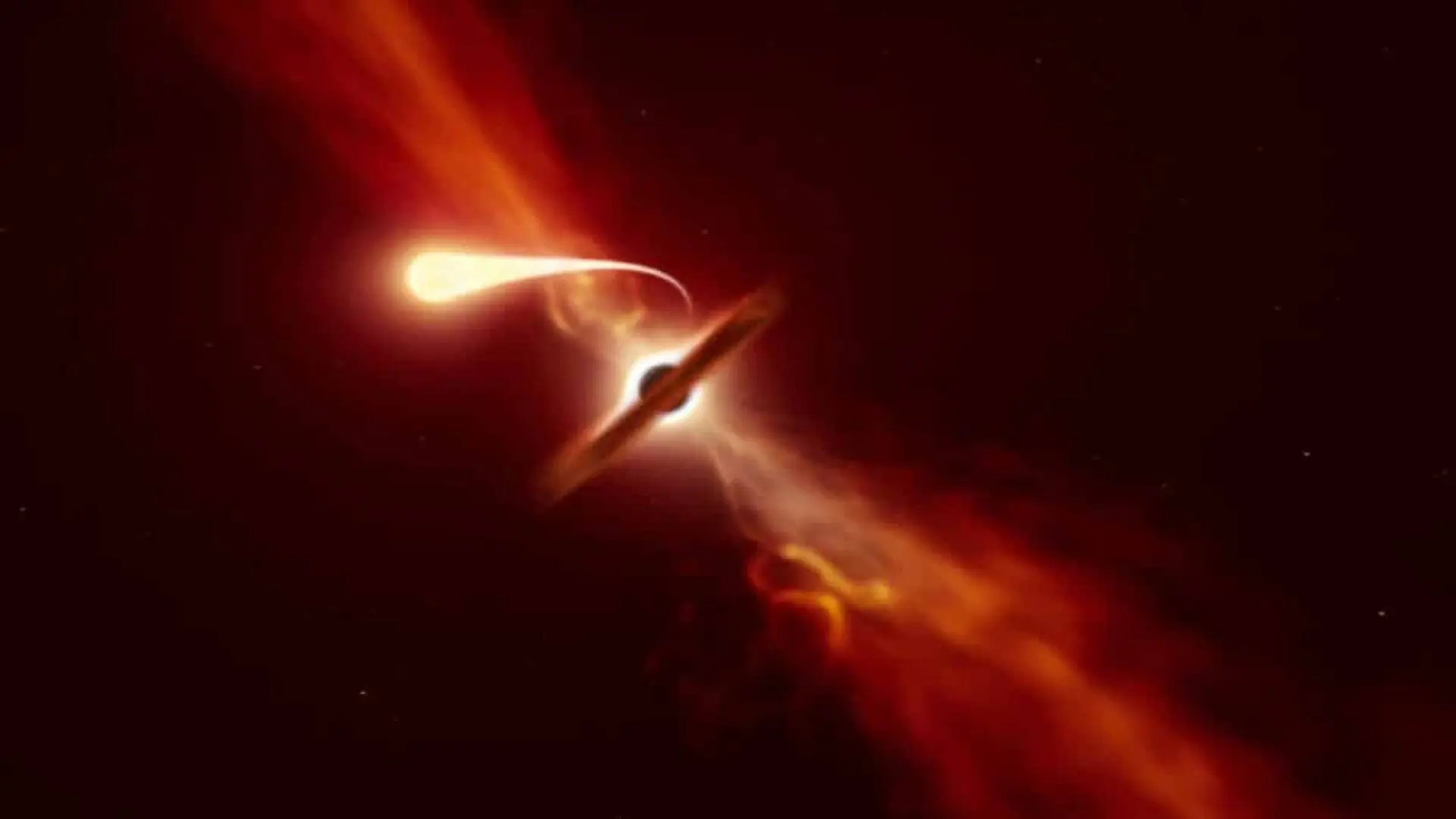
Astronomers using the James Webb Space Telescope have identified a colossal black hole actively consuming material during the dawn of time, specifically when the universe was merely 470 million years old—roughly 3 percent of its current age. Designated MoM-BL-z10, this ancient gravitational titan stands as one of the earliest black holes ever observed and represents the most distant specimen of its kind identified to date.
The discovery, led by an international team of 15 researchers headed by Xingyao Cai, was detailed in a preliminary report released on October 20. Estimates regarding the mass of the object range between 2 million and 36 million times that of our Sun. Even at the lower end of these projections, the sheer size of the black hole presents a significant challenge to current cosmological models, as it suggests the object reached a massive scale with remarkable speed.
Data Mining the Early Cosmos
The research team did not require new observation time to make this finding. Instead, they combed through public archives of Webb’s previous survey data, specifically hunting for evidence of early galaxies that might harbor hidden black holes.
The breakthrough came from analyzing the spectral signatures of hydrogen gas. The light from this gas was significantly smeared, indicating that material was spiraling into the black hole at velocities reaching 3,480 kilometers per second (approximately 7.8 million mph). Such extreme movement is a hallmark of a powerful gravitational well. Further confirmation was provided by the detection of neon and oxygen emissions, which appeared heated to levels that cannot be explained by star formation alone.
Calculating the Mass of a Cosmic Titan
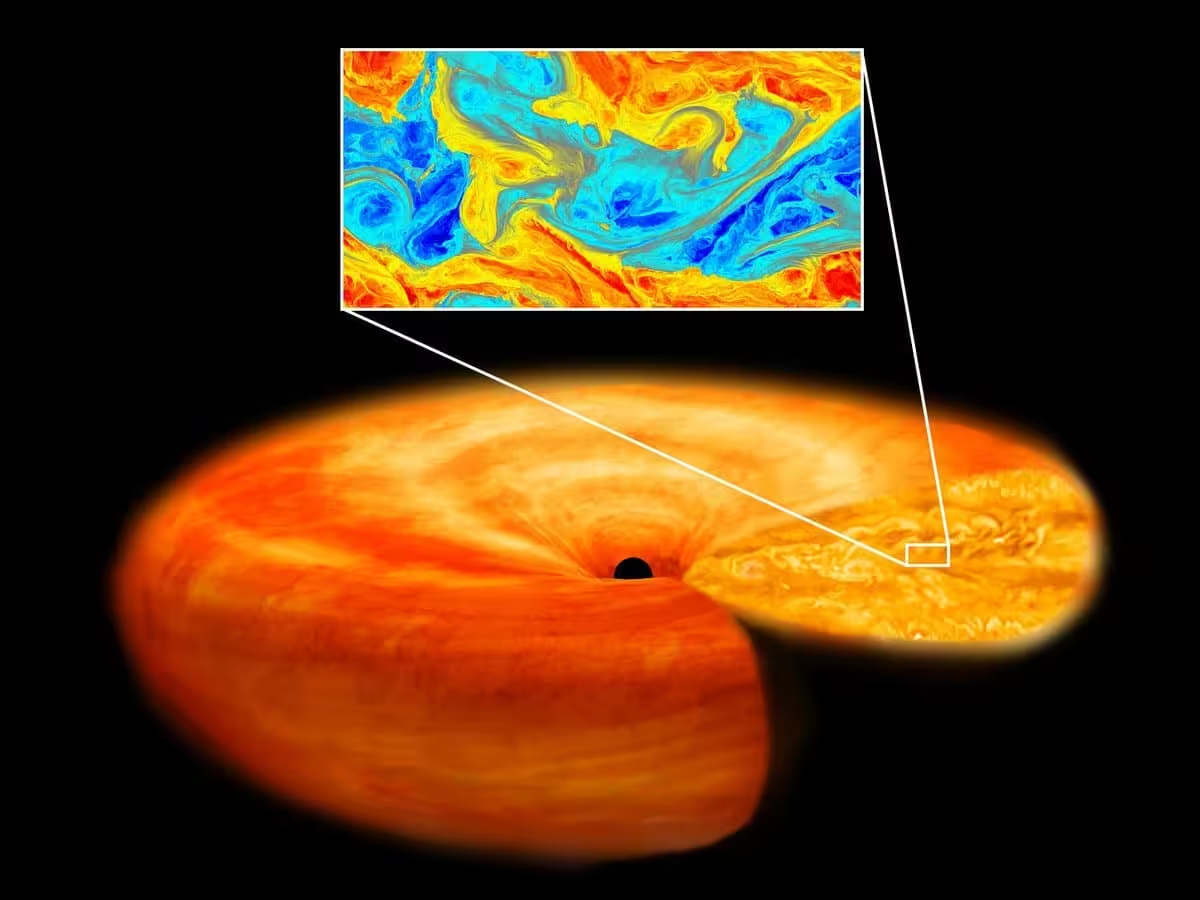
Determining the mass of such a distant object involves calculating the relationship between the speed of the swirling gas and its proximity to the center of the black hole. Using standard mass-estimation techniques, the team calculated a potential weight of 36 million solar masses. Under this scenario, the black hole would be consuming matter at approximately 10 percent of its theoretical maximum capacity.
Alternatively, applying a model developed specifically for the unique “red” galaxies observed by Webb, the mass estimate drops to 2.1 million solar masses. In this case, the object would be feeding at the absolute physical limit. The researchers presented both findings, noting that the astronomical community has yet to reach a consensus on which methodology is most accurate for these specific, early-universe environments.
Understanding the “Little Red Dots”
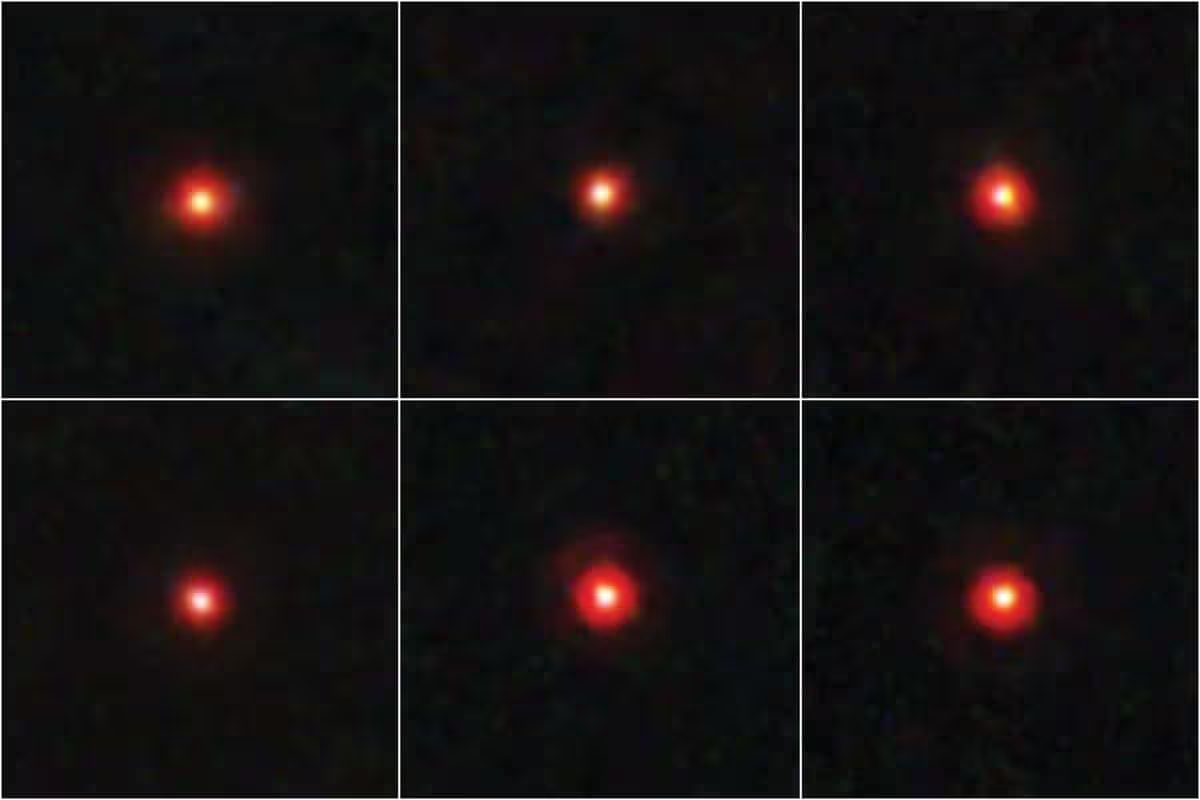
MoM-BL-z10 shares characteristics with the so-called “Little Red Dots,” a category of compact, reddish light sources first identified by Webb in late 2022. These objects were prevalent in the infant universe but became increasingly scarce after the first 2 billion years. Research published in Nature earlier this year suggests that these dots are not dense stellar clusters, but rather supermassive black holes shrouded in thick, dusty cocoons.
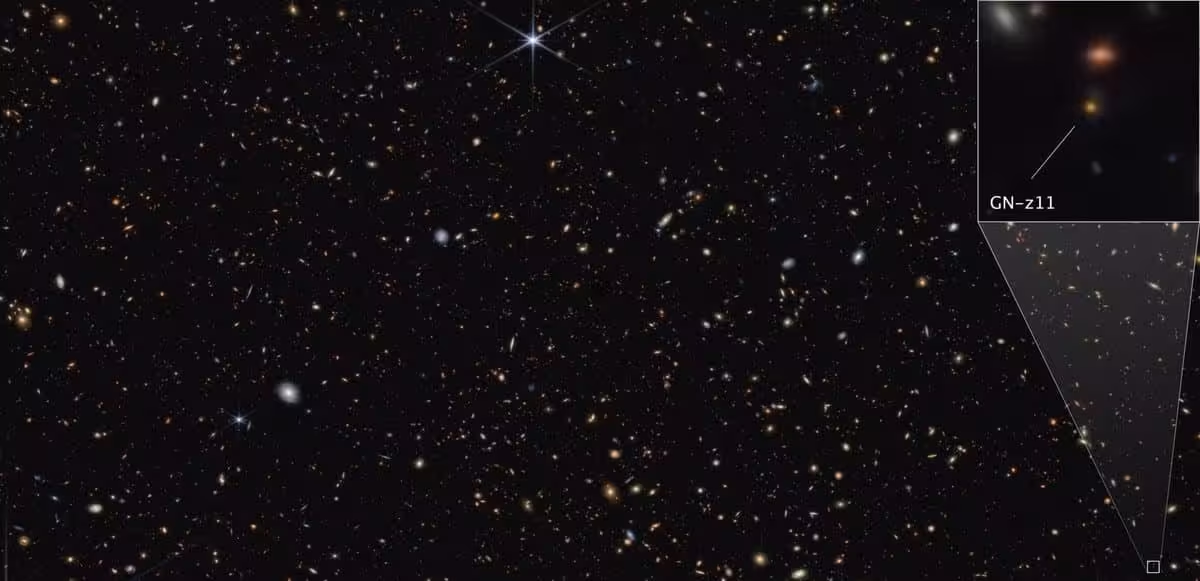
The existence of MoM-BL-z10 follows other notable early-universe detections, such as the black hole found within the galaxy GN-z11, which dates back to 400 million years post-Big Bang. As Roberto Maiolino of the University of Cambridge, who led the GN-z11 study, noted in a previous interview, the rapid emergence of such massive objects challenges current theoretical timelines for black hole growth.
The Mystery of Rapid Evolution
The discovery leaves scientists with two competing theories on how MoM-BL-z10 reached its current size so early in the cosmic timeline. It may have originated as the remnant of a single star that subsequently experienced a prolonged, super-critical growth phase. Alternatively, it could have formed directly from the gravitational collapse of a massive, primordial gas cloud. Regardless of the mechanism, the ability to observe and measure the motion of gas around such an ancient object provides a rare, direct look at the mechanics of black hole development shortly after the Big Bang.
The light captured by Webb, originally emitted as visible blue-green light, has been stretched by the expansion of the universe over billions of years, shifting it into the mid-infrared spectrum where only the telescope’s specialized instruments can perceive it.
This article has been fact checked for accuracy, with information verified against reputable sources. Learn more about us and our editorial process.
Last reviewed on .
Article history
- Latest version
Reference(s)
- Cai, Xingyao. “Discovery of a Broad-Line Active Galactic Nucleus at $z = 9.98$.” arXiv.org <https://arxiv.org/abs/2610.28735>.
- Choi, Charles. “James Webb Space Telescope's mysterious 'little red dots' may be black holes in disguise.”, January 14, 2026 Space <https://space.com/astronomy/black-holes/james-webb-space-telescopes-mysterious-little-red-dots-may-be-black-holes-in-disguise>.
- Daniel, Ari. “The earliest detection of a black hole is made by the James Webb Telescope.”, January 18, 2024 NPR <https://www.npr.org/2024/01/18/1225309585/the-earliest-detection-of-a-black-hole-is-made-by-the-james-webb-telescope>.
Cite this page:
- Posted by Farah Siddiqui