NASA’s New Habitable Worlds Observatory Aims to Spot Earth‑Like Planets and Signs of Life
NASA’s upcoming Habitable Worlds Observatory aims to revolutionize the hunt for Earth‑like planets and extraterrestrial life beyond our solar system.
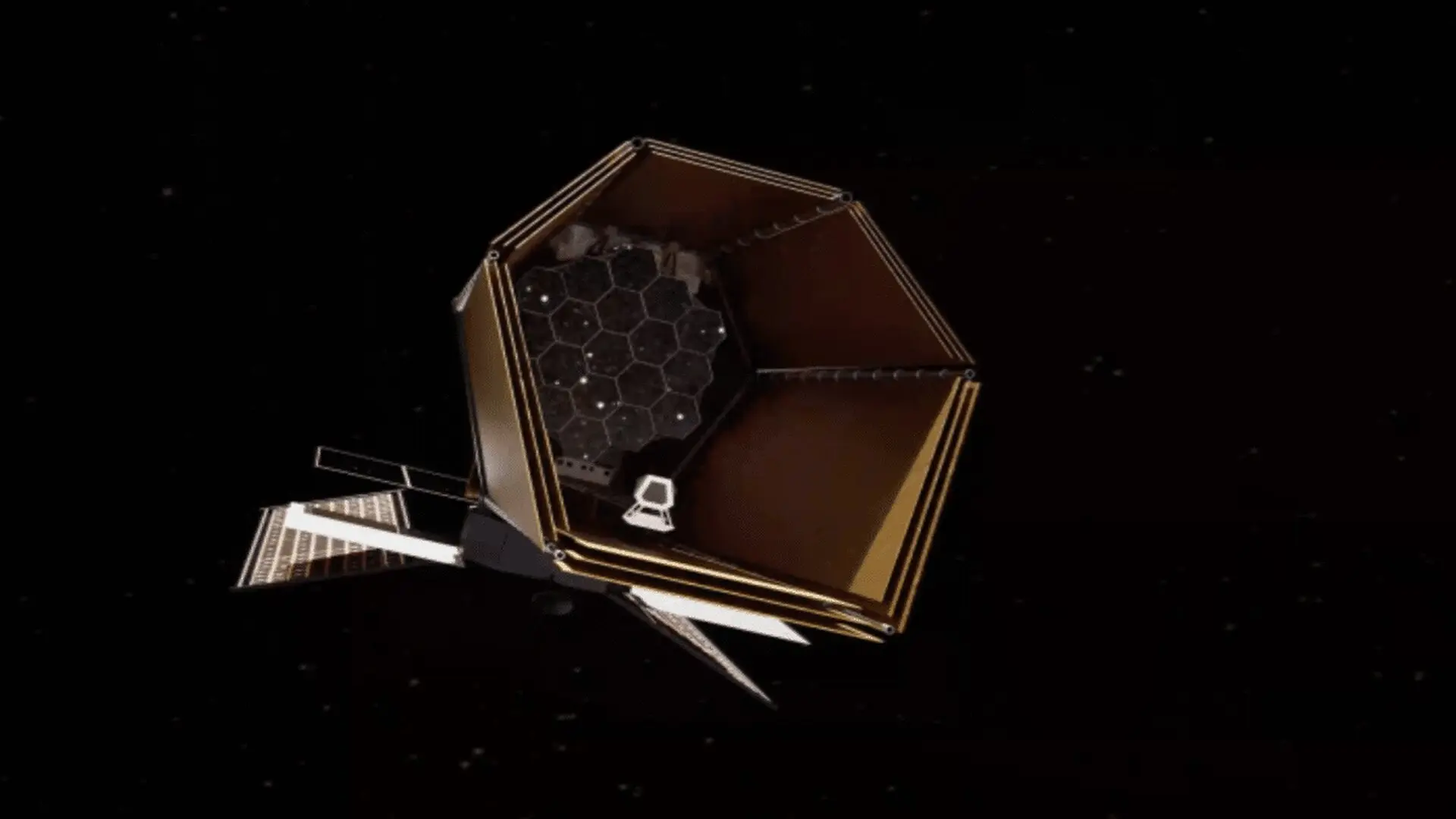
NASA is outlining concepts for the Habitable Worlds Observatory, a cutting‑edge telescope intended to hunt for planets that resemble Earth and to search for possible biological activity beyond our solar system, as reported by Universe Today. The initiative marks a pivotal move toward answering the age‑old question of whether life exists elsewhere in the cosmos.
A Telescope Designed to Spot Earth‑like Worlds
The upcoming Habitable Worlds Observatory (HWO) will focus exclusively on locating and characterising planets that could host conditions similar to those on our planet. Earlier missions such as Kepler and TESS have already identified thousands of exoplanets, yet only a fraction lie within zones where liquid water might persist. HWO aims to move beyond mere detection, enabling in‑depth studies of these promising worlds.
By employing sophisticated direct‑imaging techniques that suppress the overwhelming glare of host stars, the observatory could capture faint planetary signals. This capability would allow researchers to probe atmospheric composition, surface features, and broader environmental conditions of nearby exoplanets.
NASA’s Long‑Range Plan for Future Telescopes
According to Universe Today, the HWO concept stems from extensive scientific road‑mapping and technology‑readiness work. The mission aligns with priorities highlighted in the 2020 Decadal Survey for Astronomy and Astrophysics, which placed the search for habitable worlds near the top of NASA’s agenda.
Design teams are drawing on heritage from the James Webb Space Telescope and other large‑scale observatories, exploring how to achieve the extreme precision needed for planet‑level measurements. Collaborative efforts across the astronomy community are assessing which instrument suites and telescope architectures would deliver the most compelling scientific payoff.
At present, the program remains in a technology‑development stage. Final hardware choices, launch timelines, and budget allocations will be determined as the project progresses, positioning HWO among NASA’s most ambitious proposed endeavors.
Seeking Chemical Clues of Life on Distant Planets
A central scientific objective of the Habitable Worlds Observatory will be the analysis of exoplanet atmospheres. When a planet transits or grazes its star, starlight filtered through the atmosphere can imprint signatures of various gases.
Researchers will look for potential biosignatures—combinations of molecules such as oxygen, methane, and water vapor that might indicate biological processes. While the detection of such gases would be intriguing, scientists caution that non‑biological mechanisms can also generate similar atmospheric patterns, necessitating repeated observations and rigorous interpretation.
Unlocking atmospheric data would represent a leap beyond traditional measurements of planetary size, mass, and orbital dynamics, opening a new window onto the chemistry and habitability of worlds far beyond our solar system.
Engineering Challenges Behind Direct Imaging
Realising the HWO concept demands breakthroughs in several engineering domains. Detecting an Earth‑sized planet requires instruments capable of discerning signals billions of times fainter than their host stars.
A key component will be an advanced coronagraph or comparable starlight‑suppression system, enabling the telescope to isolate the faint glow of a distant world. In addition, the observatory will need a large, ultra‑precise primary mirror, highly stable spacecraft platforms, and long‑life scientific instruments to operate reliably for extended missions.
Past flagship missions have demonstrated how large space telescopes can transform our understanding of the universe, while also highlighting the technical complexity involved. The Habitable Worlds Observatory is poised to advance this legacy, offering the potential to characterise the environments of worlds that may harbor life.
This article has been fact checked for accuracy, with information verified against reputable sources. Learn more about us and our editorial process.
Last reviewed on .
Article history
- Latest version
Reference(s)
- Tomaswick, Andy. “How NASA Plans to Build the Habitable Worlds Observatory.”, July 27, 2026 Universe Today <https://www.universetoday.com/articles/how-nasa-plans-to-build-the-habitable-worlds-observatory>.
Cite this page:
- Posted by Karan Das