Red Potato Galaxy Shows Supermassive Black Hole Quenching Star Formation 11 Billion Years Ago
The ’Red Potato’ galaxy shows how a supermassive black hole can quench star formation in the early universe.
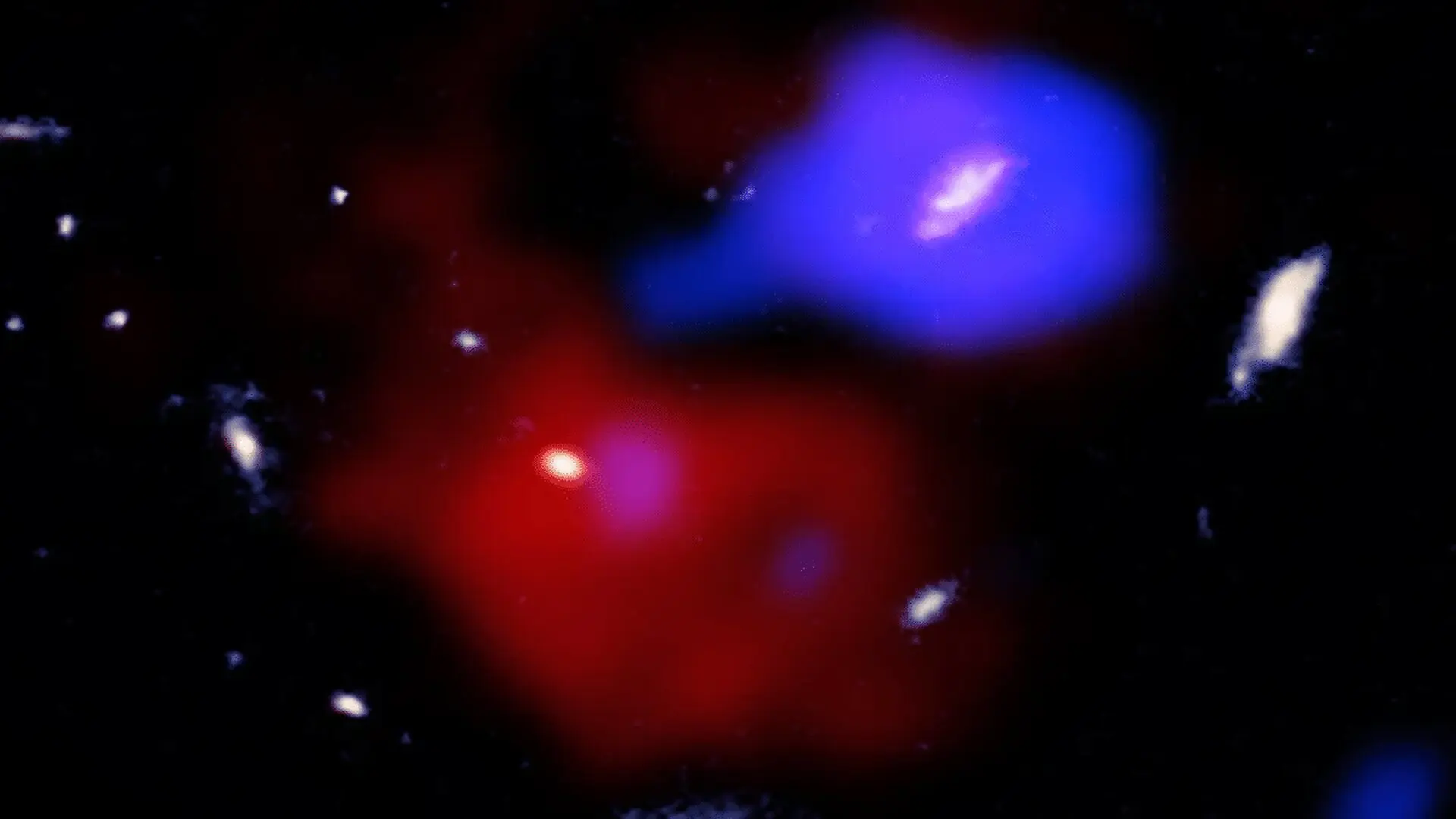
Astronomers have captured an unusually clear view of how a supermassive black hole can throttle the birth of stars in a galaxy that existed when the universe was less than a third of its current age. By merging data from the XRISM X‑ray observatory with observations from several ground‑based facilities, an international team has identified a vigorous outflow that appears to keep the galaxy’s gas in a state of perpetual turbulence, dramatically curtailing star formation.
Distant “Red Potato” Galaxy Sheds Light on Early Black‑Hole Feedback
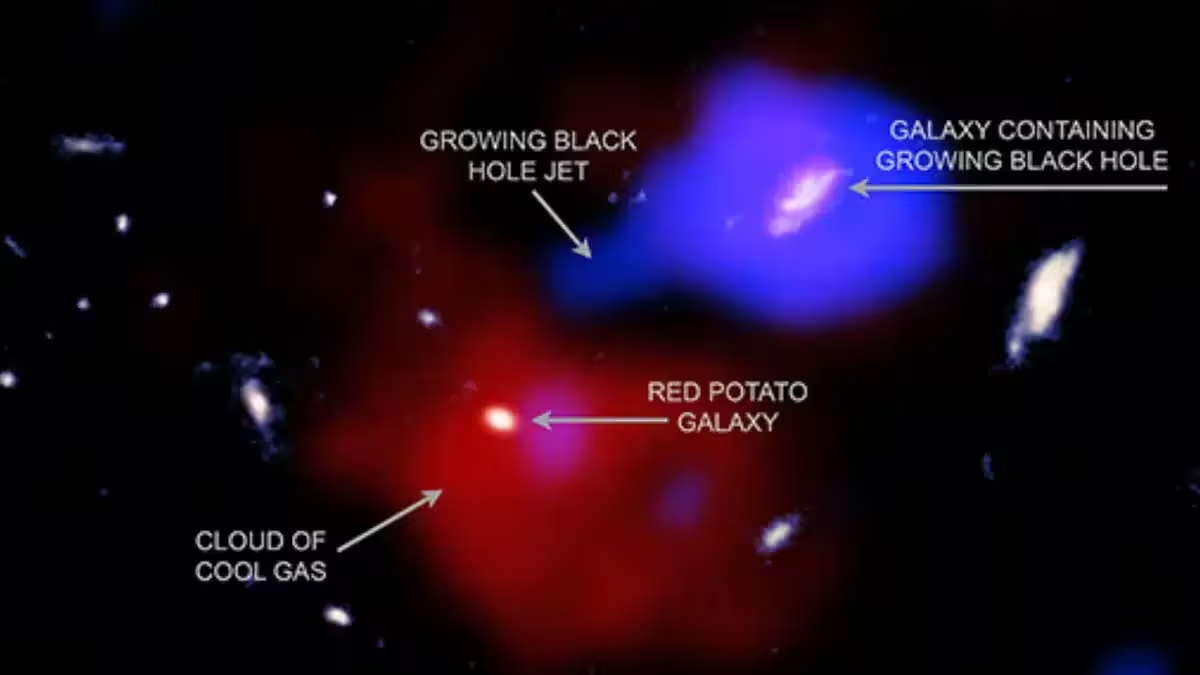
The object, catalogued as PLCK G244.8+54.9 and nicknamed “Red Potato” because of its stretched appearance, lies more than 11 billion light‑years from Earth. During the epoch in which it formed, many galaxies were rapidly assembling stellar mass, yet this system exhibited a puzzlingly low star‑formation rate despite harboring abundant gas reserves. This mismatch prompted researchers to explore whether an internal mechanism was disrupting the conversion of gas into stars.
Combining XRISM measurements with observations from the Atacama Large Millimeter/submillimeter Array (ALMA) and the Very Large Telescope (VLT), the team assembled one of the most detailed portraits of the galaxy’s internal environment to date. Their analysis points to a high‑energy outflow driven by the central supermassive black hole, capable of stirring the galaxy’s massive gas reservoir and inhibiting the collapse required for new stars to form. The results, appearing in Astronomy & Astrophysics, provide a rare, direct illustration of black‑hole feedback operating in the early universe.
XRISM Data Unveil Turbulent Jet from Central Black Hole
The breakthrough came from XRISM, Japan’s next‑generation X‑ray mission developed in partnership with JAXA, NASA, and the European Space Agency. The observatory detected extremely hot gas moving at high velocities within the galaxy, a signature of turbulence generated by a powerful jet emanating from the black hole’s core. Rather than allowing cold gas to settle into dense clouds, the jet keeps the material in constant motion, making gravitational collapse far less efficient.
Lead author Weichen Wang of the University of Milan‑Bicocca emphasized the broader impact: “Stars are not forming as we expected, so we investigated the cause. Our findings suggest a ‘cook’ is active in this cosmic kitchen, reshaping the gas dynamics.” This vivid analogy underscores the growing consensus that supermassive black holes can regulate whole galaxies by heating, stirring, and redistributing the fuel for star formation.
Jet‑Driven Turbulence Suppresses Star Formation
The study indicates that the black hole’s influence extends far beyond its immediate vicinity. Jets can inject kinetic energy across thousands of light‑years, creating turbulence that hinders gas from cooling and fragmenting into star‑forming clouds. Consequently, the galaxy retains large gas reservoirs but fails to convert them into new stars at the rate expected for its epoch.
Co‑author Sebastiano Cantalupo, also of the University of Milan‑Bicocca, explained: “If the jet is agitating the gas around the Red Potato, it could dramatically slow the galaxy’s ability to acquire fresh material for star formation. The injected energy essentially starves the galaxy, preventing it from reaching the star‑formation levels typical of similar systems at this cosmic age.” This mechanism helps clarify why some massive galaxies shut down star formation early, even while retaining substantial gas supplies.
Insights from the Red Potato May Refine Galaxy‑Evolution Models
Beyond its nickname, the Red Potato offers a valuable window into a transitional phase when vigorous star formation gives way to long‑term quiescence. Each new observation allows scientists to benchmark theoretical predictions against direct evidence, sharpening our grasp of how supermassive black holes shape the growth of their host galaxies over billions of years.
Researcher Andrea Travascio highlighted the broader significance: “The red potato is leaving crumbs of information that may help us track down answers to some really big questions.” As XRISM continues its scientific mission, astronomers anticipate uncovering additional cases that will illuminate the intricate interplay between black holes, interstellar gas, and star formation throughout cosmic history.
This article has been fact checked for accuracy, with information verified against reputable sources. Learn more about us and our editorial process.
Last reviewed on .
Article history
- Latest version
Reference(s)
- “Chandra Press Room :: NASA's Chandra Sees Black Hole Stirring "Pot" Containing Galactic Potato :: 21 July 2026.” <https://chandra.harvard.edu/press/26_releases/press_072126.html>.
Cite this page:
- Posted by Karan Das