Scientists Rediscover Thriving Coral Ecosystem Once Thought Dead for 60 Years
A coral reef off the coast of Benin, long presumed dead since the 1960s, has been found to harbor thriving, living coral communities after new surveys.
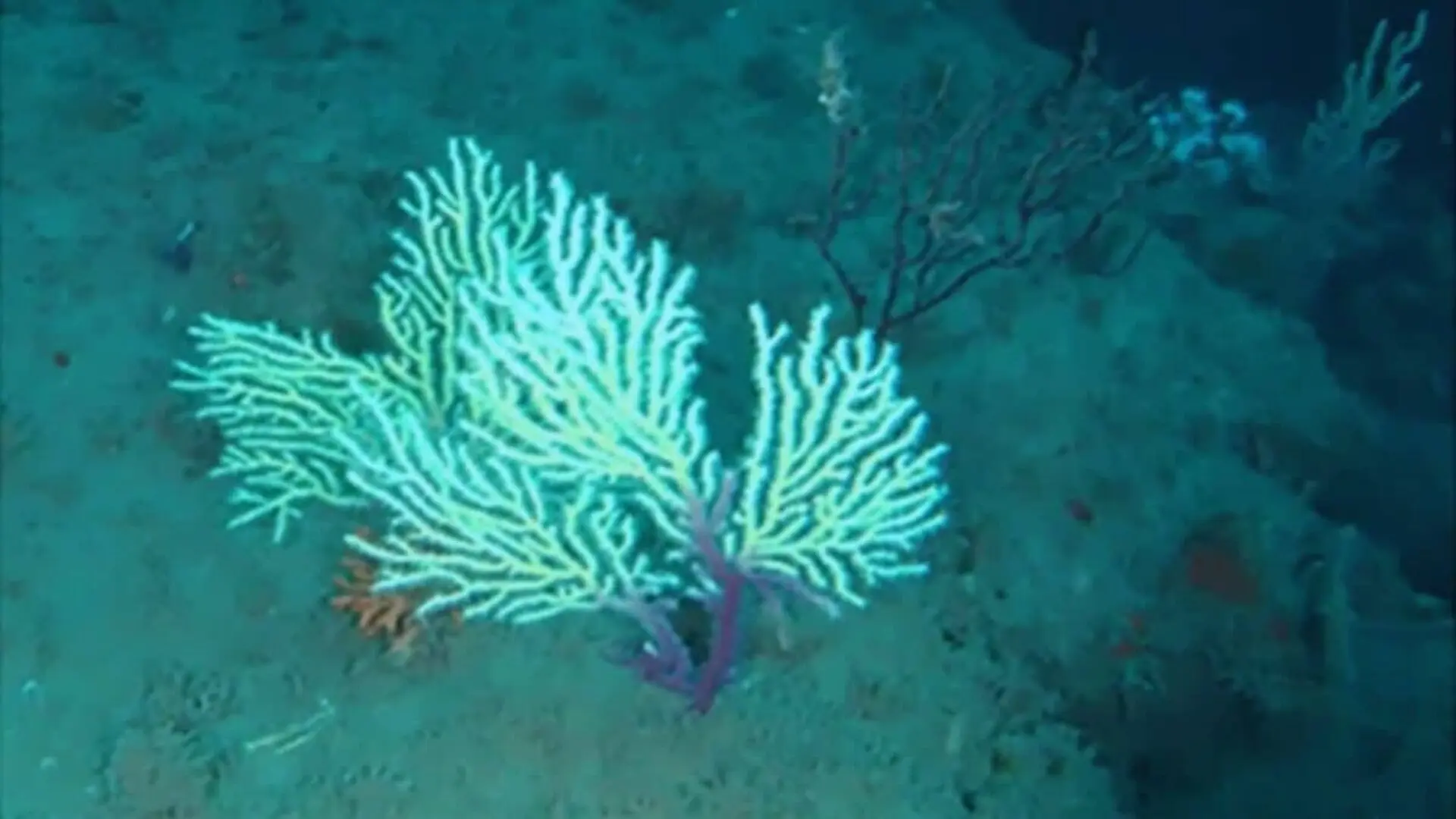
A long-standing mystery regarding the seafloor off the coast of West Africa has been solved, as researchers have confirmed the existence of vibrant, living coral communities on the Benin continental shelf. Published in Frontiers in Marine Science, the findings reveal a thriving mesophotic ecosystem at depths of approximately 54 meters, challenging decades-old assumptions that the area was barren.
Rediscovering Hidden Underwater Gardens
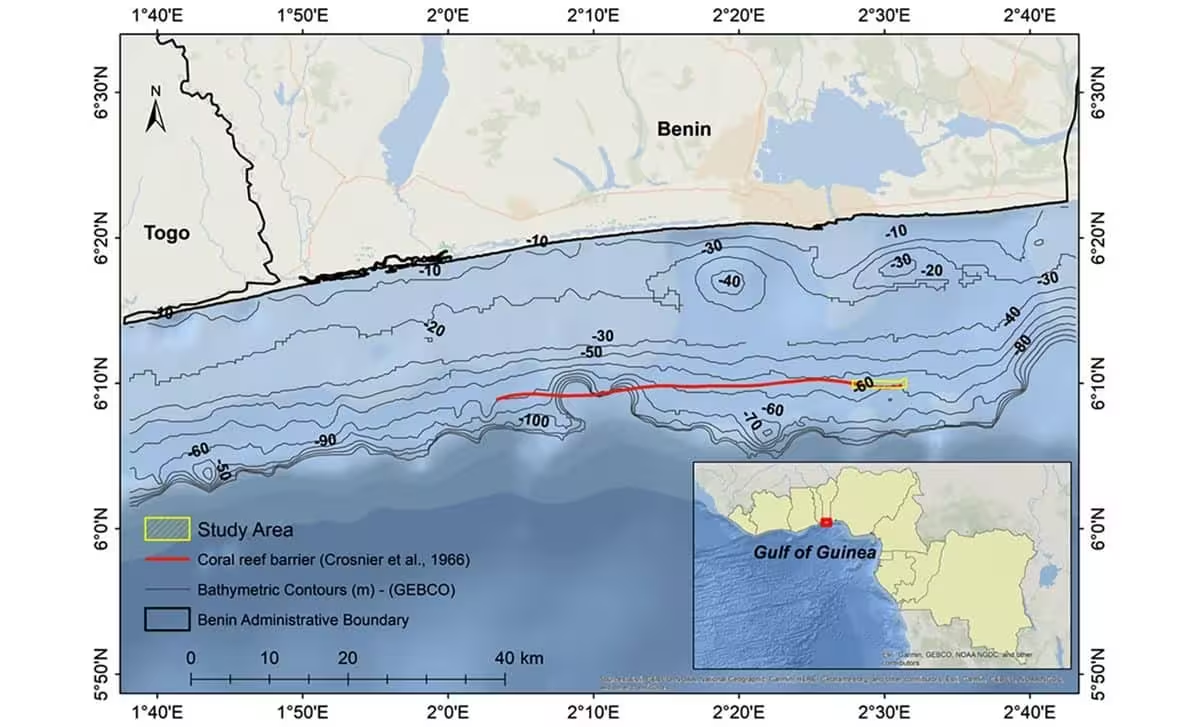
The quest to verify these deep-water habitats began by revisiting geological records from the mid-1960s. Historical surveys conducted between 1963 and 1964 had identified potential coral structures between 52 and 56 meters below the surface, but at the time, these were categorized as likely dead geological remnants rather than active biological communities.
To investigate the status of these sites, the Coral Reefs Rediscovering and Exploration project in Benin (COREB) deployed advanced marine technology. By integrating side-scan sonar mapping with high-definition underwater drone footage and the National Geographic Deep Sea Camera System, the team surveyed 11.5 kilometers of the seabed. This modern approach successfully located two distinct hard-bottom areas—oases of life hidden within a vast expanse of sandy, sediment-heavy continental shelf.
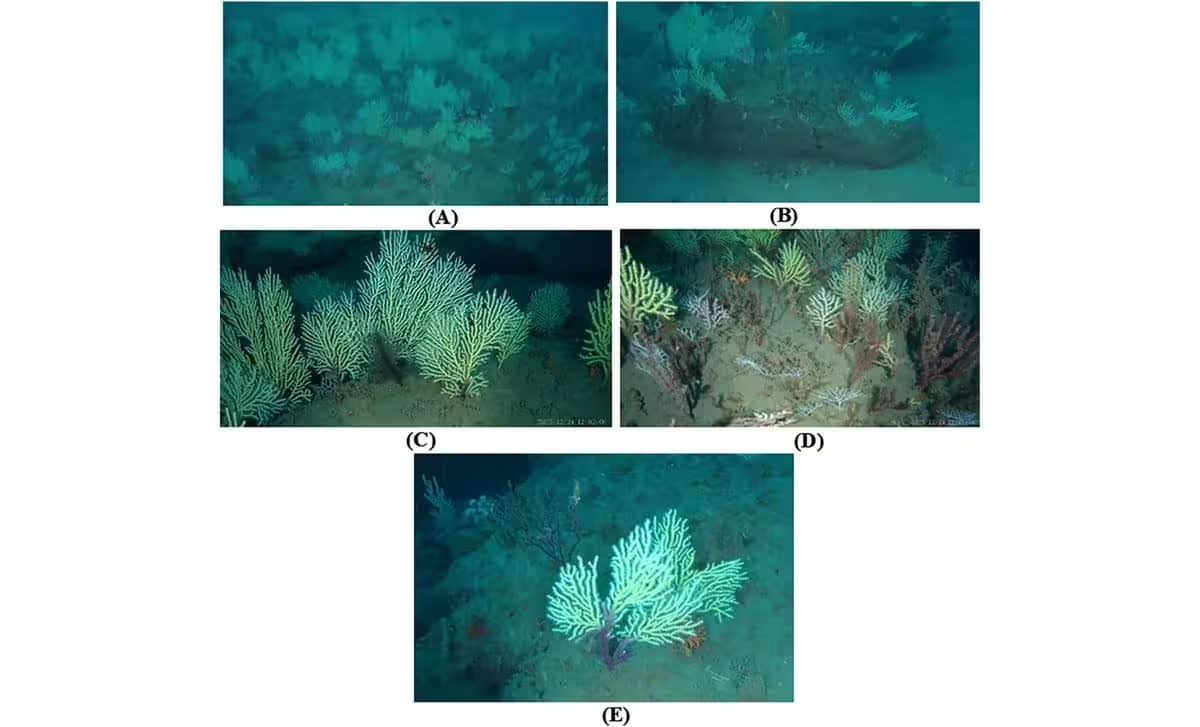
The visual data confirmed that these sites function as mesophotic coral gardens. Unlike the sprawling, continuous reef structures found in shallower tropical waters, these communities are anchored to rocky blocks that provide the stability required for coral colonization. The landscape is predominantly populated by octocorals and soft corals, with at least two distinct varieties of black coral identified by the research team. While these findings represent a significant ecological milestone, scientists note that because no physical samples were collected, the long-term history of the community remains an open question.
A Biodiversity Hotspot in the Gulf of Guinea
The significance of this discovery extends beyond the corals themselves. The rocky substrate provides a crucial haven for diverse marine life, with researchers documenting eight different reef-associated fish species using the area for shelter and nourishment. Notable observations include Lutjanus fulgens, Myripristis jacobus, Holacanthus africanus, and Acanthurus monroviae.
According to the study, this is the first confirmed visual documentation of a living mesophotic ecosystem on the Benin continental shelf, and it serves as a rare data point for the wider Gulf of Guinea region. While early reports once suggested a 40-kilometer-long coral barrier, the current study suggests that these habitats exist as fragmented, isolated pockets of hard-bottom biodiversity rather than a single, monolithic reef.
The team emphasizes that this discovery is likely just the beginning, as much of West Africa’s deep-water coastline remains largely unexplored. Future research aims to employ broader acoustic mapping and direct biological sampling to determine the full scale of these ecosystems. By studying how these corals persist in deeper, less accessible environments, researchers hope to gain essential insights into the resilience of marine life in the tropical Atlantic.
This article has been fact checked for accuracy, with information verified against reputable sources. Learn more about us and our editorial process.
Last reviewed on .
Article history
- Latest version
Reference(s)
- Zinzindohoué, Coffi. “First evidence of live mesophotic coral reefs on the Benin continental shelf.” Frontiers in Marine Science, vol. 13, July 20, 2026, pp. 1848226 Frontiers, doi: 10.3389/fmars.2026.1848226/full. <https://www.frontiersin.org/journals/marine-science/articles/10.3389/fmars.2026.1848226/full>.
Cite this page:
- Posted by Divya Iyer