Rare Deep Sea Oarfish Wash Up on Mexican Beach Stirring Ancient Legends
Tourists in Cabo San Lucas spotted two rare giant oarfish washed ashore, offering a fleeting glimpse of these mysterious, deep-sea dwellers.
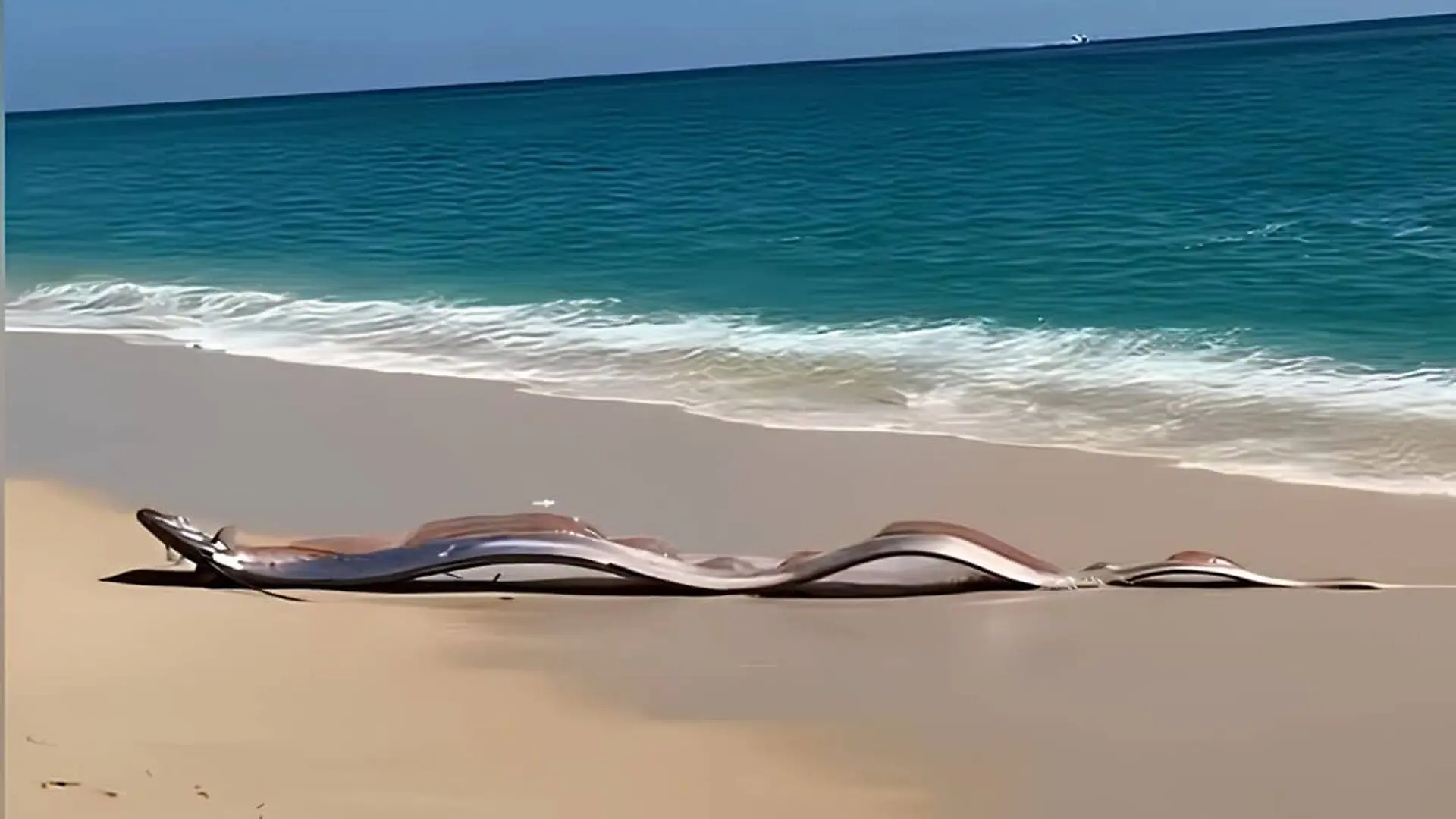
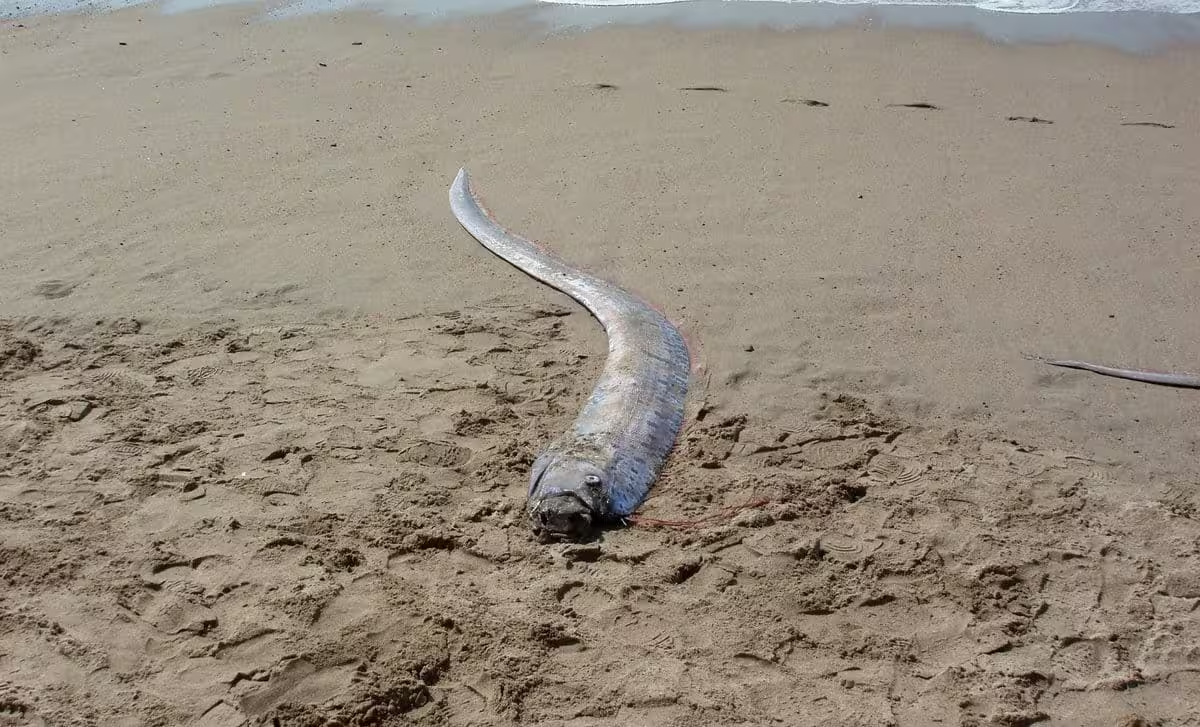
Beachgoers in Mexico recently experienced a rare encounter with one of the ocean’s most elusive inhabitants: the oarfish. Known for their ribbon-like, silver bodies and vivid red dorsal fins, these deep-sea giants typically dwell at depths of approximately 1,000 meters, making their appearance in shallow coastal waters a highly unusual event.
Video footage captured by tourists documented the discovery, showing the long, serpentine fish resting near the shoreline. In a display of compassion, two visitors attempted to assist one of the animals, successfully guiding it back into the surf. The moment was described by those present as truly surreal.
Deep-Sea Giants and the Myths They Inspire
Despite their imposing stature, which has fueled imagination for centuries, oarfish are gentle creatures. They lack the specialized teeth of typical predators, subsisting instead on a diet of plankton and small crustaceans. While a typical specimen measures between 5 and 7 meters, they are among the longest bony fish on the planet, with record individuals reaching lengths of 17 meters and weights near 200 kilograms.
Encounters with these creatures remain extremely rare. Past strandings reported near Cabo San Lucas and across Baja California Sur continue to draw significant attention from both the public and marine biologists, as these events provide a fleeting look at life in the deep ocean.
Fact-Checking the Omen of the Deep
The oarfish is often shrouded in superstition, particularly in regions like Taiwan, where it is frequently dubbed the “earthquake fish” or the “fish of the apocalypse.” According to local folklore, the appearance of these deep-sea dwellers in shallow waters serves as an ominous warning of imminent seismic activity.
However, scientists dismiss these claims, noting that there is no empirical data linking oarfish sightings to earthquakes. Marine researchers generally suggest that such strandings are likely caused by health issues, environmental shifts, or changes in natural behavior rather than geological portents.
This article has been fact checked for accuracy, with information verified against reputable sources. Learn more about us and our editorial process.
Last reviewed on .
Article history
- Latest version
Cite this page:
- Posted by Divya Iyer