Why Wi-Fi 8 Is Finally Moving Beyond Raw Speed to Fix Your Connection Problems
Wi-Fi 8 is shifting focus from raw speed to network stability and reliability, ensuring seamless connectivity even as more devices compete for bandwidth.
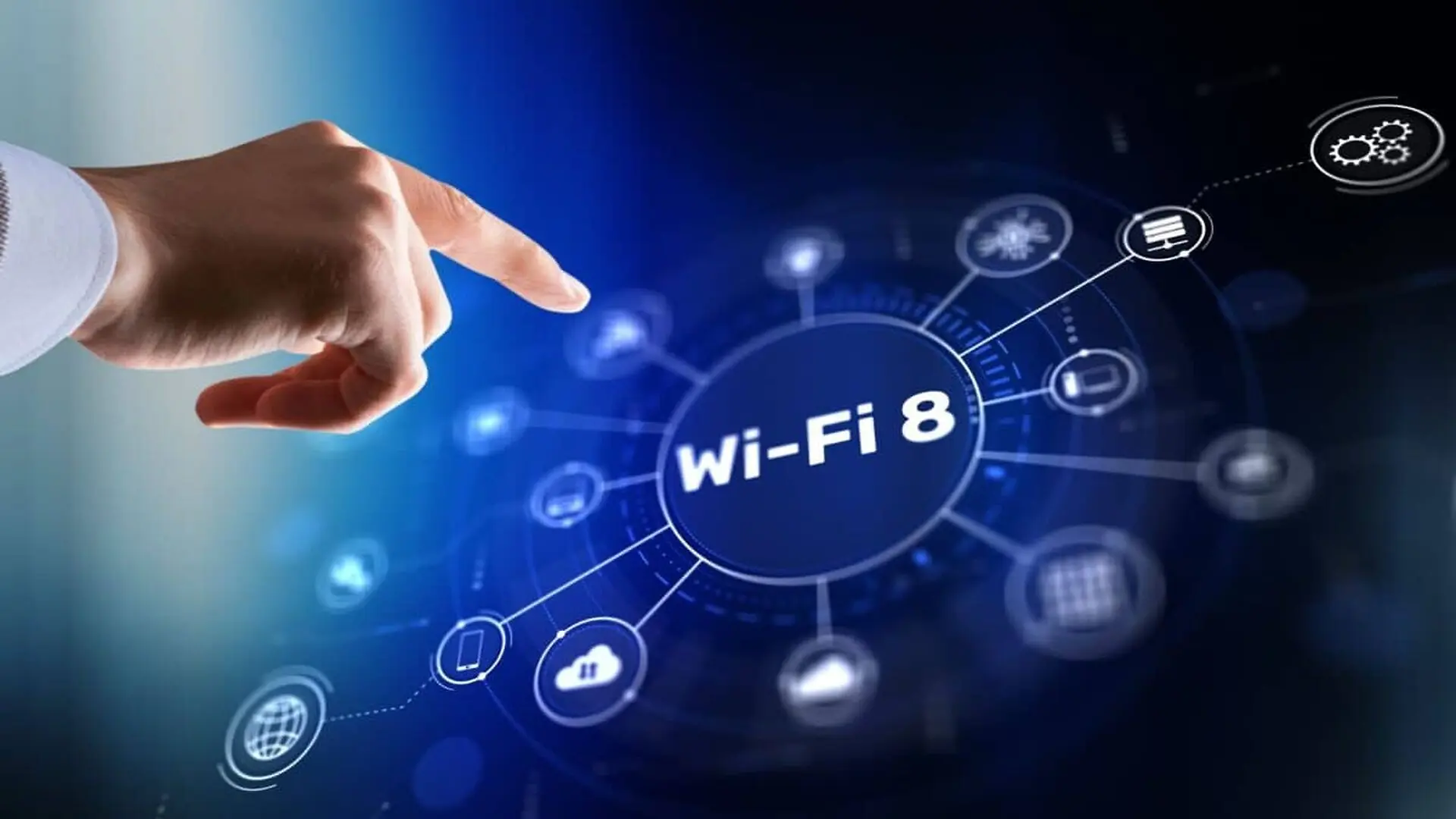
The Future of Wireless: Wi-Fi 8 Pivots from Raw Speed to Unmatched Stability
For decades, the evolution of wireless networking has been defined by a race toward higher theoretical data rates. However, as our homes and offices become increasingly crowded with an ever-growing ecosystem of connected hardware, engineers are shifting their focus. The upcoming Wi-Fi 8 standard, currently in development under the IEEE 802.11bn designation, marks a fundamental change in strategy: prioritizing Ultra High Reliability over mere bandwidth.
While the previous generation, Wi-Fi 7, focused heavily on peak throughput, users often find that a fast connection does not necessarily equate to a seamless experience. Physical obstacles like walls, heavy congestion, and competing signals in dense environments frequently lead to packet loss and latency spikes. The industry is responding to these real-world pain points by building a standard designed to maintain connectivity under pressure.
According to IEEE specifications, the goal for 802.11bn is to achieve a 25 percent improvement in throughput, a 25 percent reduction in 95th-percentile latency, and a 25 percent decrease in packet loss compared to current standards. These metrics are intended to stabilize performance in challenging conditions rather than simply boosting top-end speeds for benchmark testing.
Engineering a More Cooperative Wireless Landscape
A major pillar of the Wi-Fi 8 philosophy is the move toward smarter coordination between access points. In current environments, multiple routers or mesh nodes can often interfere with one another, fighting for the same airtime. Wi-Fi 8 introduces enhanced Multi-Access-Point Coordination, which allows network hardware to communicate, share resources, and adjust power levels dynamically to minimize interference.
This cooperative approach is supported by several new technical features, including:
- Distributed Resource Units: These allow uplink transmissions to be spread across the spectrum, ensuring that devices on the fringe of a signal range maintain a steady connection.
- Unequal Modulation: This prevents a single device with a weak signal from dragging down the performance of an entire spatial stream, allowing the system to optimize data delivery based on individual link quality.
- Coordinated Spatial Reuse and Beamforming: These protocols enable access points to better manage traffic flow in crowded areas like apartment complexes or transit hubs.
Managing Mobility and Spectrum Efficiency
The standard also introduces mechanisms to improve how users experience network transitions. With the implementation of Single Mobility Domains, devices can establish a handshake with a new access point before fully dropping the connection to the old one, significantly reducing lag when moving throughout a home or office. Furthermore, features such as Dynamic Sub-Band Operation and Non-Primary Channel Access provide the network with greater flexibility to reroute data when primary channels become congested.
The Wi-Fi 8 story continues. Now, it reaches every room.
— TP-Link Systems Inc. (@TPLINKUS) September 7, 2026
Deco 8 Ultra brings the reliability of Wi-Fi 8 to a whole-home mesh system, engineered to deliver consistent performance through the demanding, real-world conditions your home encounters every day.
Multiple Deco units… pic.twitter.com/41PYcaROSs
While industry players such as TP-Link and Asus have already begun teasing hardware prototypes, widespread adoption remains on the horizon. The IEEE expects the 802.11bn standard to be finalized and officially published in 2028. Until then, existing Wi-Fi 6 and Wi-Fi 7 systems continue to provide robust support for most modern Wi-Fi demands, such as high-definition streaming and interactive video conferencing.
Ultimately, the transition to Wi-Fi 8 signifies a maturing of the technology. As wireless networks become the primary utility for digital life, the most important benchmark is no longer how fast we can transmit data, but how reliably we can stay connected when the environment demands it most.
This article has been fact checked for accuracy, with information verified against reputable sources. Learn more about us and our editorial process.
Last reviewed on .
Article history
- Latest version
Reference(s)
- <https://ieeexplore.ieee.org/document/11193669/>.
- “https://twitter.com/TPLINKUS/status/2097022951233134686/video/1.” <https://t.co/41PYcaROSs>.
Cite this page:
- Posted by Zara Tariq