Geologists Discover 115 Million Year Old Dinosaur Fossil Deep Beneath Northern China
A rare dinosaur fossil discovered 473 meters underground in China’s Bayan Gobi Formation reveals new insights into Early Cretaceous species distribution.
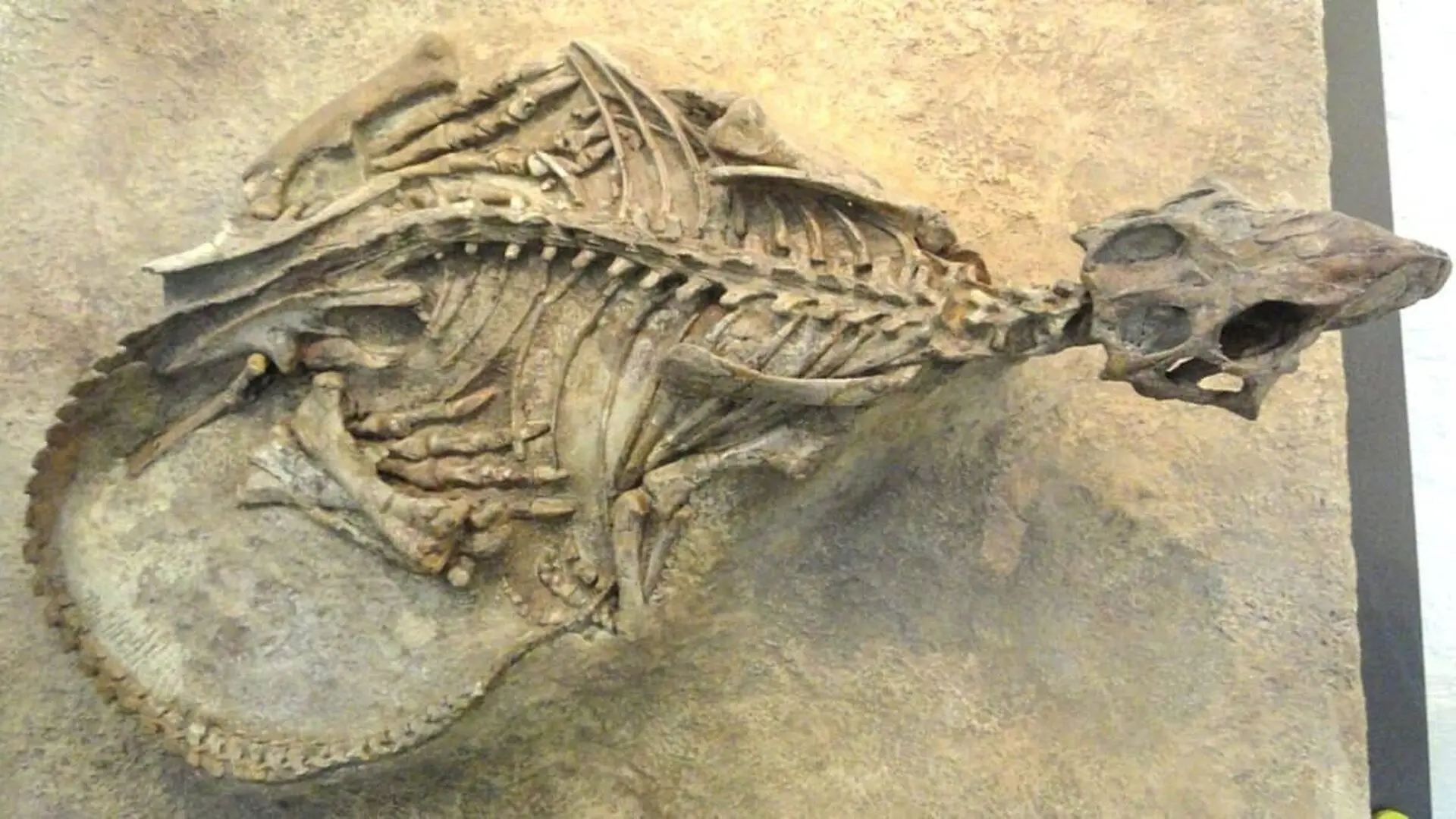
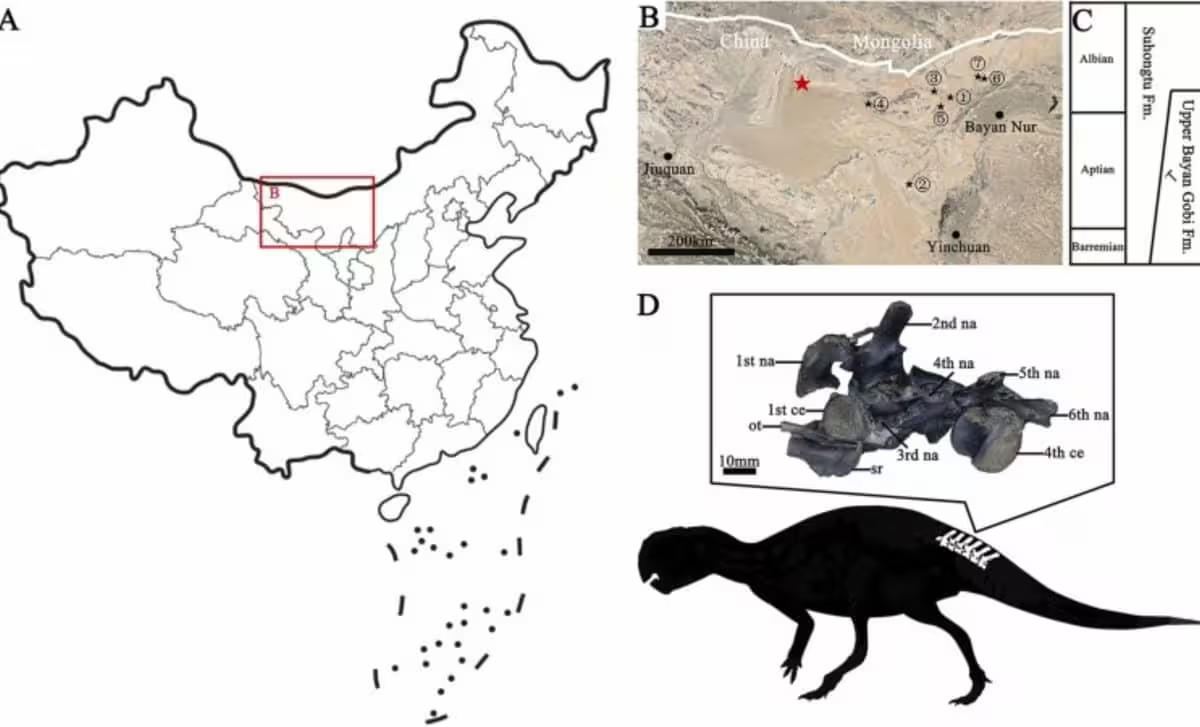
Geologists searching for copper deposits in northern China have stumbled upon a significant paleontological find. During a routine survey near Guaizihu in the Yin’gen-Ejinaqi Basin, a team unearthed a partial dinosaur skeleton, now cataloged as 208GPV01. The discovery provides a rare glimpse into the fauna of the Bayan Gobi Formation, a continental deposit dating back to the Early Cretaceous period.
Led by Lida Xing from the China University of Geosciences and the Dinosaur Odyssey Science Museum, the research team identified the fossil as an ornithischian, a diverse group of herbivorous dinosaurs. The remains include a sacral rib, a series of caudal (tail) vertebrae, several transverse processes, and ossified tendons. Analysis of the bones, which were not yet fully fused, suggests that the creature was an immature individual when it died approximately 115 million years ago.
Broadening the Paleontological Map
The study, published in the journal Earth History and Biodiversity, highlights the strategic importance of the 208GPV01 specimen. Prior to this find, most dinosaur fossils within the Bayan Gobi Formation were clustered in the eastern reaches of the basin. By appearing near the western edge of the region, this discovery significantly expands the known geographic range of dinosaurs in this formation.
Using geometric morphometrics, the researchers compared the dimensions of the tail vertebrae to other known species. The results showed a strong resemblance to Psittacosaurus, a prolific early horned dinosaur that thrived across East Asia during the Cretaceous. Despite this similarity, the team stopped short of formal assignment to a specific genus, citing the limited nature of the skeletal remains.
Unusual Anatomical Features
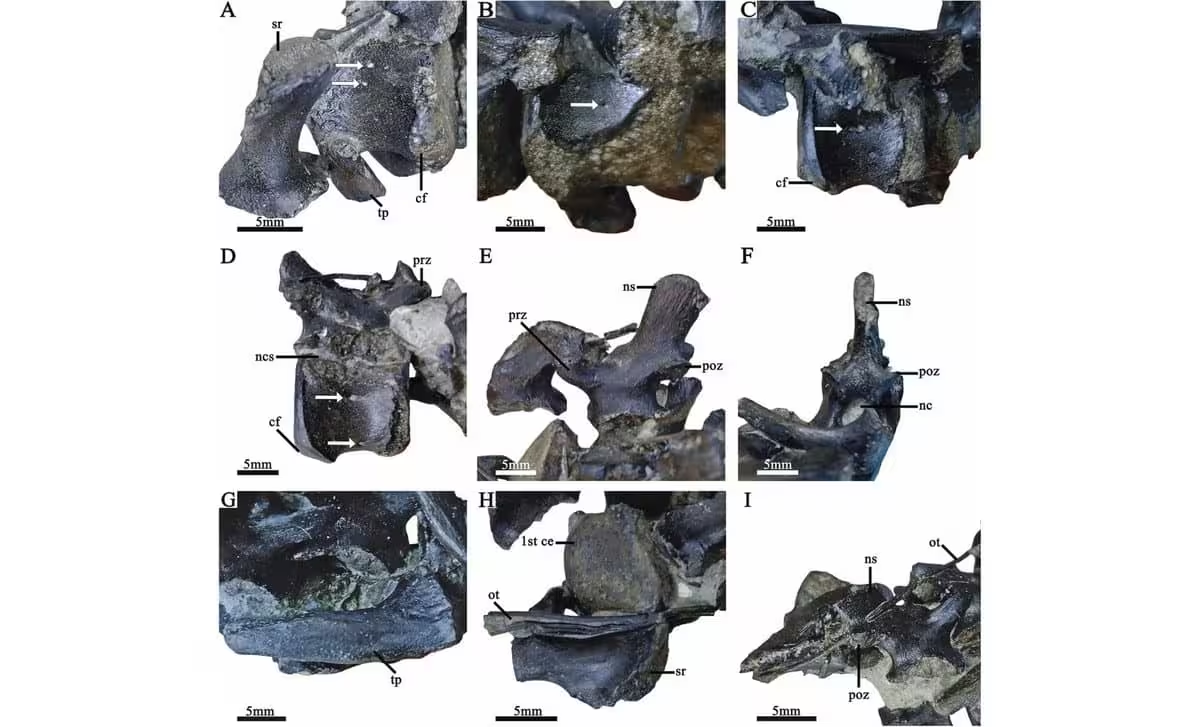
While the specimen shares commonalities with known taxa, it also presents a curious anatomical detail: a series of regularly arranged nutrient foramina, or small openings, along the sides of the second through fourth tail vertebrae. Researchers confirmed these are not the pneumatic, air-filled structures seen in some other dinosaur lineages. Currently, it remains unclear whether this pattern is a unique trait of the individual, a feature of a specific species, or merely a developmental quirk associated with its youth.
The discovery provides essential data to fill gaps in the fossil record for western Inner Mongolia. While the Bayan Gobi Formation is often compared to the prolific Jehol Biota of Western Liaoning, the scarcity of fossils in the former has made direct connections difficult to confirm. By offering new morphological evidence, 208GPV01 serves as a bridge for paleontologists trying to understand the diversity of life in the Early Cretaceous landscape.
For now, the specimen remains an indeterminate member of the ornithischian clade. Scientists involved in the study emphasize that further exploration and more complete skeletal remains will be required to determine whether this animal represents a previously unknown species or a new variation of a known dinosaur.
This article has been fact checked for accuracy, with information verified against reputable sources. Learn more about us and our editorial process.
Last reviewed on .
Article history
- Latest version
Reference(s)
- “Welcome to the homepage of Lida Xing.” <http://www.xinglida.net/>.
- Li, Tianyu., et al. “The First Dinosaur from the Lower Cretaceous Bayan Gobi Formation in the Western Yin'gen-Ejinaqi Basin of Inner Mongolia, China.” Earth History and Biodiversity, September 1, 2026, pp. 100044 Elsevier BV, doi: 10.1016/j.hisbio.2026.100044. <https://www.sciencedirect.com/science/article/pii/S2950475926000080>.
Cite this page:
- Posted by Zara Tariq