From Fog to Faucet: How Moroccan Women Harvest Air for Drinking Water
Morocco’s Anti-Atlas fog harvesters convert mist into tap water, ending long treks to wells for local families.
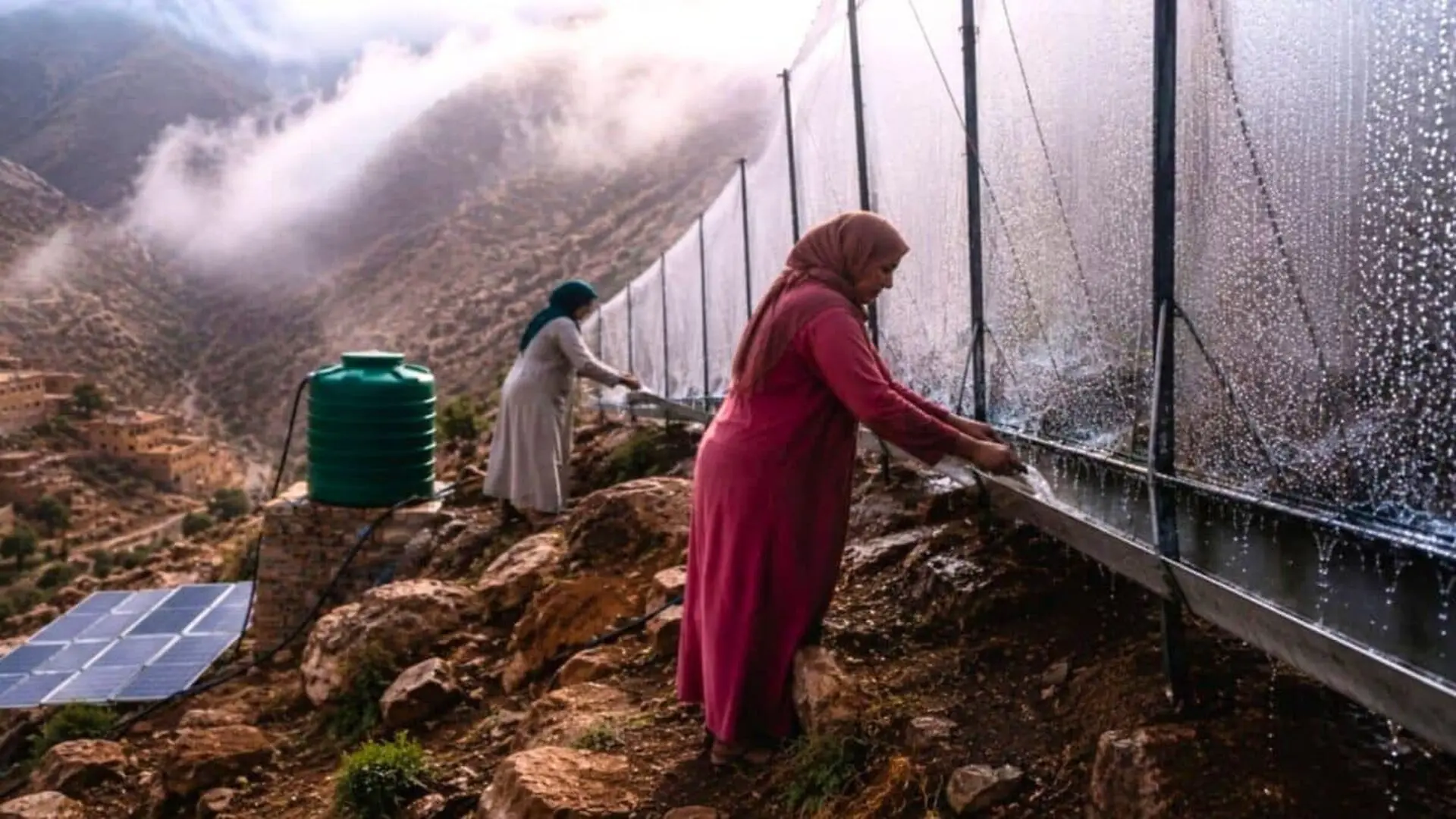
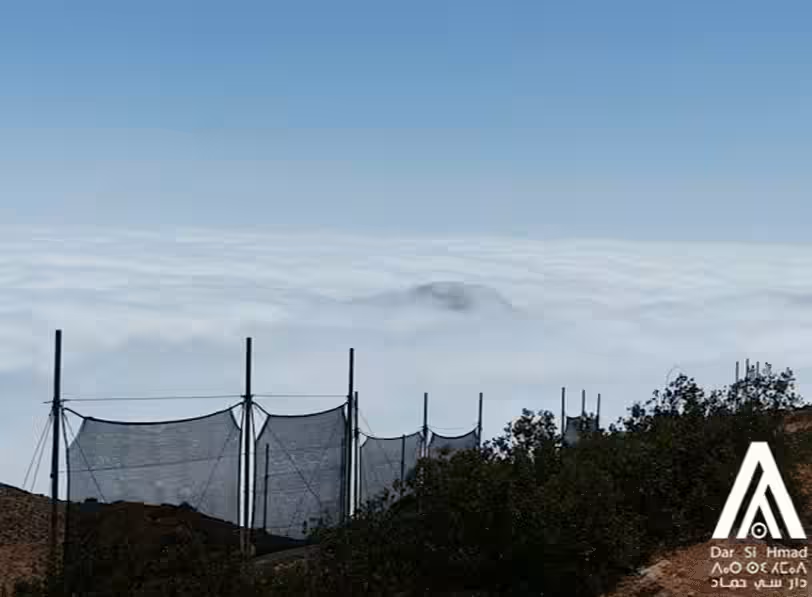
At more than 4,000 feet above sea level on Mt. Boutmezguida in southwest Morocco, rows of black polymer mesh capture drifting Atlantic fog. The moisture condenses on the nets, flows into storage tanks and, by gravity, travels through pipes to households in the village of Aït Baâmrane. In this case, the water source is not a river or well but the very air that sweeps over the Anti‑Atlas range.
The installation is managed by Dar Si Hmad, a Moroccan nonprofit that began experimenting with fog as a potable water source in 2006. A study by the Reach Alliance documents that the system now provides drinking water to individual homes in one of the driest sections of the Anti‑Atlas, where traditional sources are scarce [source].
Before the fog collectors came online, many families spent up to four hours each day walking to distant wells, often carrying five‑gallon containers that weighed nearly 50 pounds on their heads, as reported by The New Yorker [source]. The new system has transformed that routine.
From Cloud to Tap: How the Mesh Works
Tall steel poles support rectangular nets positioned directly in the path of Atlantic fog that sweeps through the mountains. As droplets settle on the mesh, they coalesce and run down the fibers, entering a collection basin. Gravity then carries the water downhill to the village’s distribution network.
Tests at the Moroccan site show that each square yard of netting can yield as much as 17 gallons of water within a 24‑hour period. The 2016 New Yorker feature on the CloudFisher project highlighted these performance levels [source].
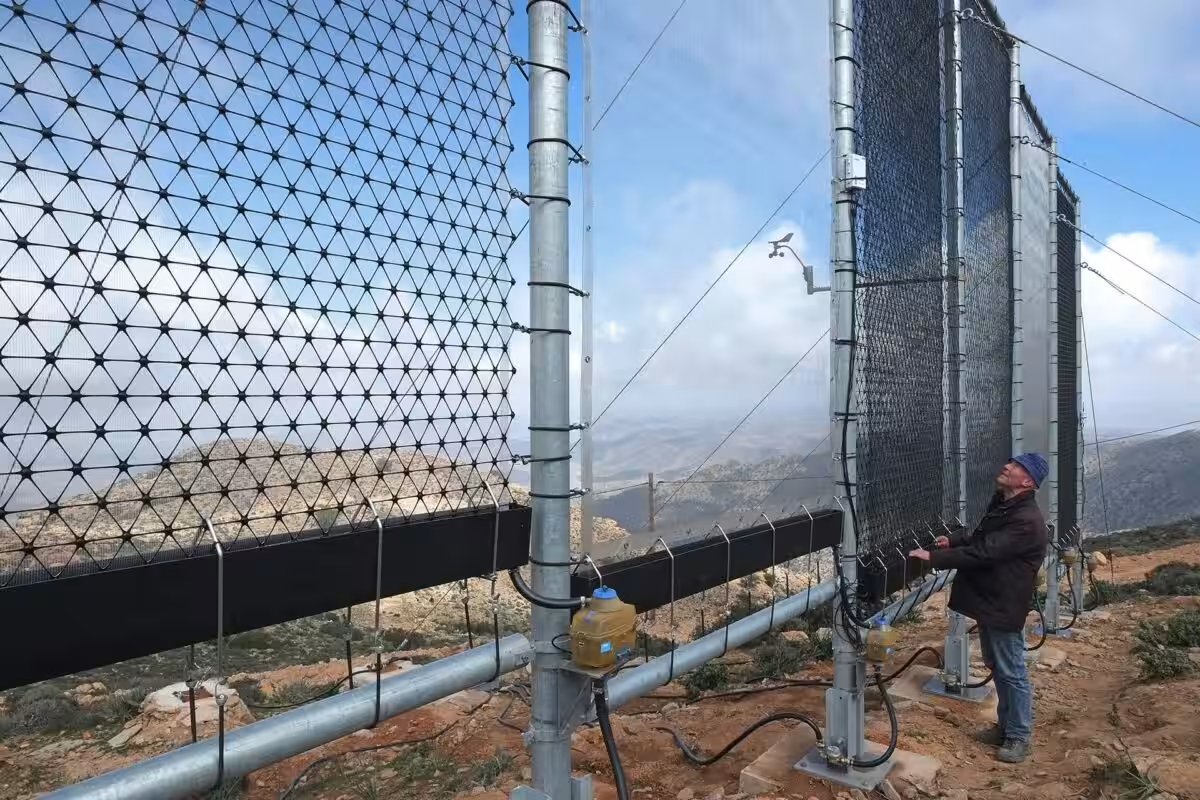
Engineering refinements—altering mesh aperture size, fiber composition, and surface coatings—have boosted collection efficiency by roughly 500 percent, according to MIT engineer Gareth McKinley. The updated design is also reported to be more durable and easier for local residents to maintain than earlier fog‑net installations deployed in Eritrea, Chile, and Yemen during the 1990s and early 2000s.
The concept of harvesting fog predates modern materials. Historian Bartolomé de las Casas referenced a similar practice in his 16th‑century “History of the Indies.” The Moroccan effort blends that historic technique with contemporary mesh technology, storage facilities, and a piped distribution system.
First Tap, First Celebration
When the CloudFisher network was inaugurated in 2015, villagers gathered around a single tap that filled a crystal goblet, which was then passed among the crowd. The water, dubbed l’eau du brouillard (“fog water”) in French, marked the arrival of piped drinking water to the community.
Jamila Bargach, co‑founder and director of Dar Si Hmad, described the moment as a personal triumph, saying, “On days like today, I am the queen of fog.”
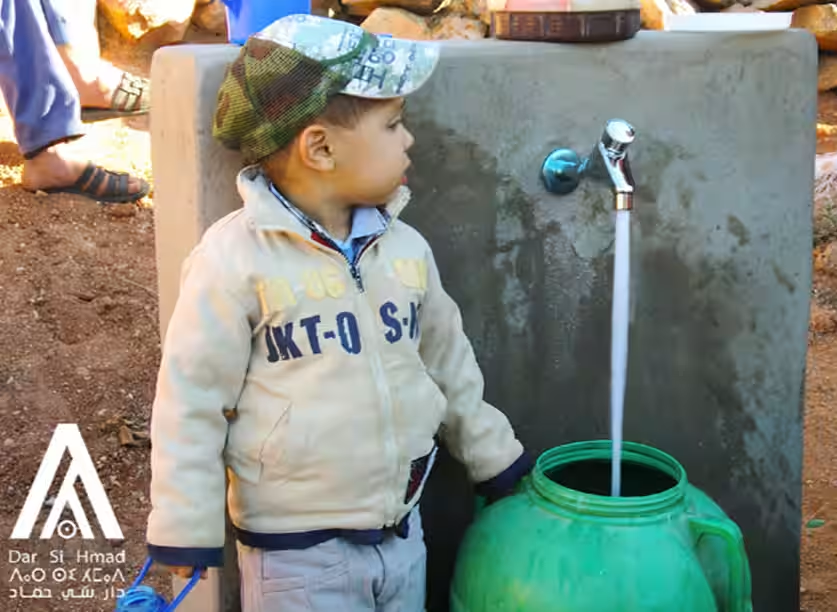
The new water supply eliminated the need for many families to trek repeatedly to remote wells. One early skeptic, 52‑year‑old grandmother Fadma, initially doubted the legitimacy of fog water, fearing it lacked mineral content and ritual purity. Over time she came to accept the source, and her granddaughters now attend school regularly, according to Bargach.
Some community members were initially hesitant, questioning whether water that had not percolated through soil possessed the qualities associated with “living water,” a concern that touched both health perceptions and religious practices.
Beyond Infrastructure: Education and Empowerment
The shift to household tap water also altered gender dynamics. Women who previously controlled water collection sometimes found their authority reduced as the tap assumed that role.
In response, Dar Si Hmad launched a “water school” program that teaches residents how to conserve the new resource, maintain the distribution network, and read basic information such as telephone numbers—skills that help prevent pipe failures from damaging traditional clay homes.
The Reach Alliance case study highlights how the combination of technology and community engagement—particularly the involvement of women—has fostered cultural acceptance and cooperation with both local and external partners in the ultra‑arid Anti‑Atlas region, home to Amazigh communities [source].
Dar Si Hmad continues to operate the fog‑harvesting system, relying on the regular Atlantic fog, high elevation, and sufficient airborne moisture around Mt. Boutmezguida to sustain the flow of water to villages below.
This article has been fact checked for accuracy, with information verified against reputable sources. Learn more about us and our editorial process.
Last reviewed on .
Article history
- Latest version
Reference(s)
- “Water in the Desert: Dar Si Hmad’s Fog-Harvesting Program - The Reach Alliance.”, February 16, 2022 The Reach Alliance <https://reachalliance.org/reports/dar-si-hmad-harvesting-water-from-fog/>.
- Toutonghi, Pauls. “Could Harvesting Fog Help Solve the World’s Water Crisis?.”, March 22, 2016 The New Yorker <https://www.newyorker.com/tech/annals-of-technology/could-harvesting-fog-help-solve-the-worlds-water-crisis>.
Cite this page:
- Posted by Zara Tariq