Why 100 Sheep Are Grazing a Volkswagen Solar Farm in a Groundbreaking Agrivoltaics
Nearly 100 sheep are roaming a Volkswagen solar farm, replacing machines in a surprising experiment under 31,000 panels.
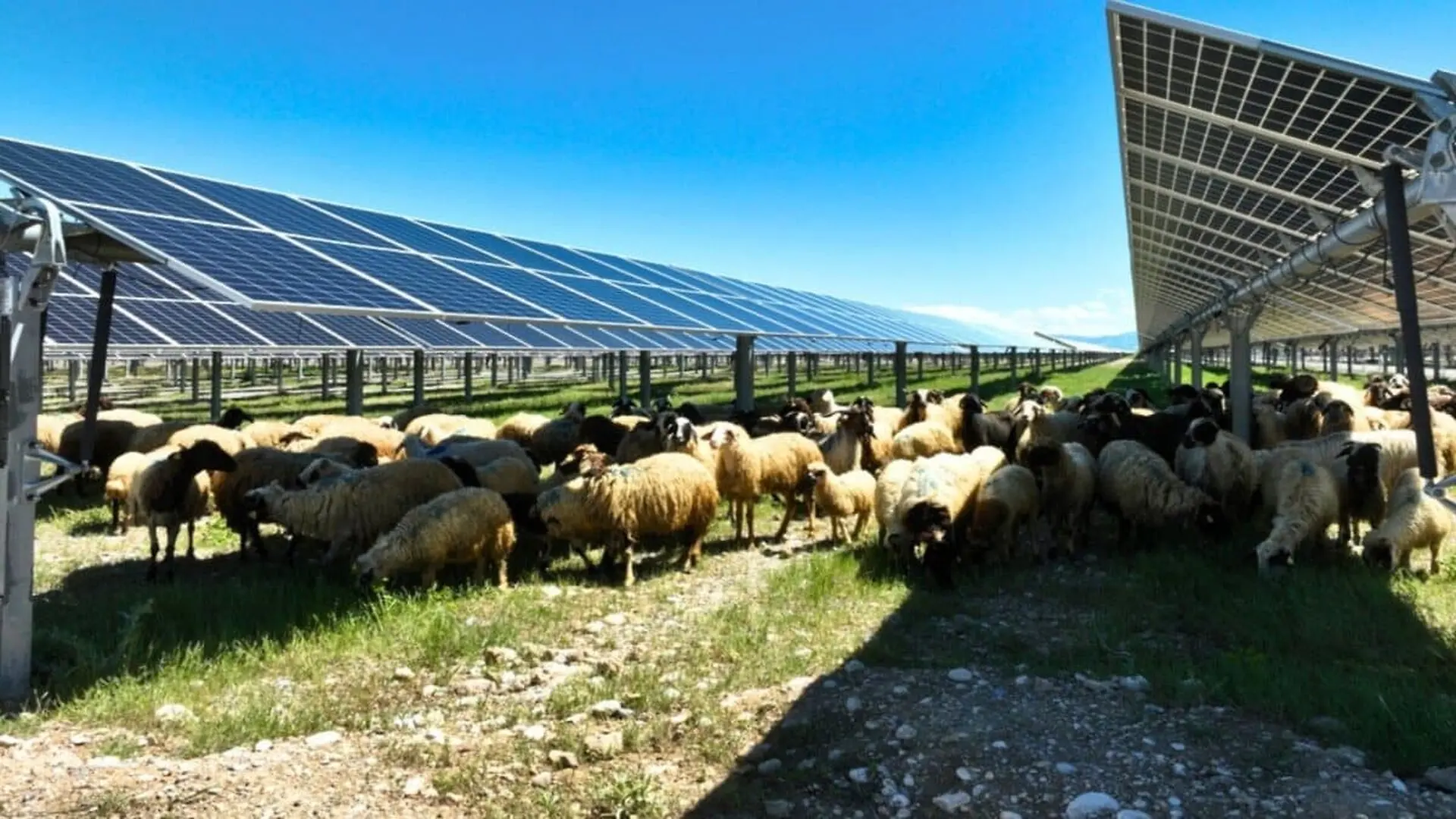
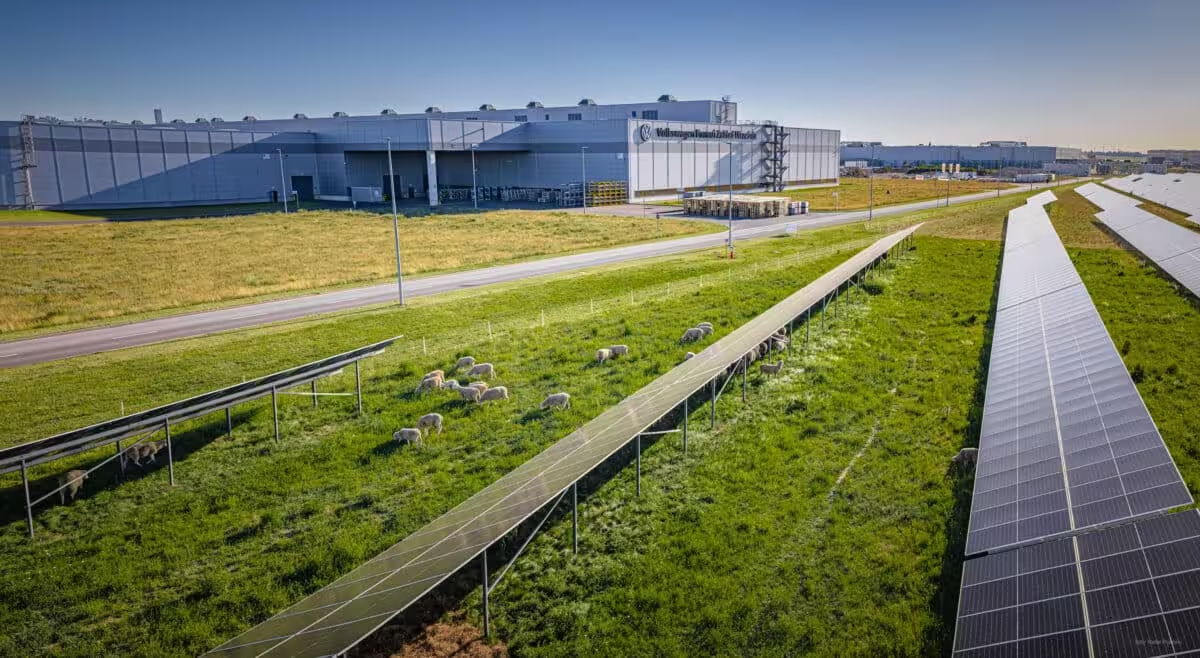
In the outskirts of Września, western Poland, roughly one hundred Greater Poland sheep have been deployed among more than 31,000 photovoltaic panels at Volkswagen Poznań’s manufacturing complex. The animals arrived in late April 2026 to naturally trim grass and other vegetation in zones where conventional mowing machines cannot reach.
The flock will remain on site until the autumn months, overseen by professional livestock caretakers. Simultaneously, scientists from the Poznań University of Life Sciences are monitoring the sheep’s adaptation to life inside a large‑scale solar installation, assessing behavior, welfare, pasture condition, soil health, and surrounding environmental variables.
The undertaking serves as a practical illustration of agrivoltaics—using the same parcel of land for both solar power generation and agricultural activity. Spanning about 27 hectares (67 acres) and equipped with an 18.3 MW capacity, the solar array can meet the factory’s full electricity demand on bright days and supplies roughly a quarter of the plant’s annual power consumption.
Sheep Navigate Solar Farm Obstacles
Maintaining clear vegetation at a solar farm is more intricate than mowing an open field. The presence of panel supports, wiring, and narrow aisles limits the use of standard equipment, while the sheep can slip beneath the structures and graze close to the ground.
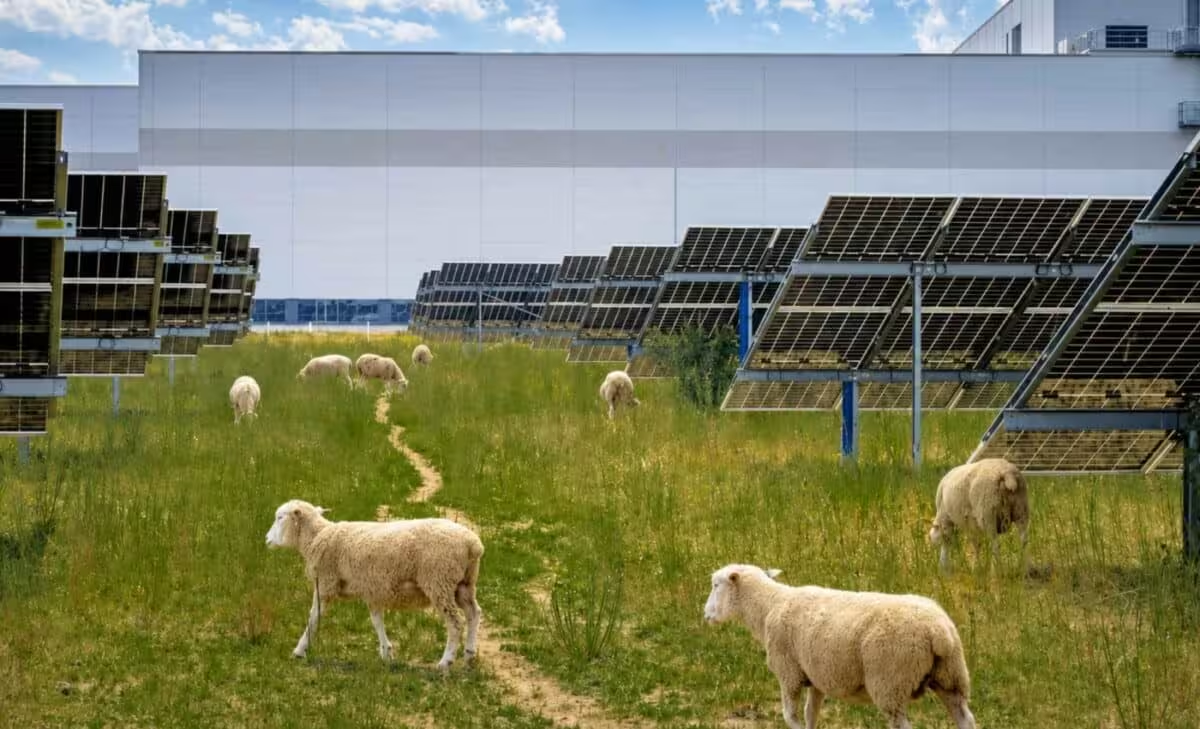
On the Września site, the flock handles vegetation control without disrupting electricity generation. The U.S. Department of Energy’s guide for farmers notes that sheep are well suited to many solar installations because they can fit beneath standard panel frameworks, though fencing, water access, protected wiring, and safe maintenance routes remain essential.
Volkswagen Poznań frames the initiative as a convergence of industrial energy production, local agriculture, and scientific inquiry. Plant director Marzena Pillich‑Grońska highlighted that the solar field now serves as a platform for “biodiversity, regional farming, and the advancement of scientific knowledge,” as reported by the Poznań University of Life Sciences. While the biodiversity claim forms part of the company’s narrative, empirical ecological data are still being gathered.
Researchers Track Animal Health and Site Microclimate
A multidisciplinary team—including experts in animal science, veterinary medicine, environmental engineering, and mechanical engineering—is quantifying animal welfare, grazing patterns, pasture quality, soil properties, ammonia emissions, and spatial variations in temperature and moisture across the installation.
These fine‑scale environmental variations constitute a microclimate. Shade created by the panels can modify ground temperature, moisture levels, wind exposure, and the amount of direct sunlight reaching vegetation. The Polish investigation compares shaded versus exposed sections to determine how such conditions influence both the flock and the land they graze.
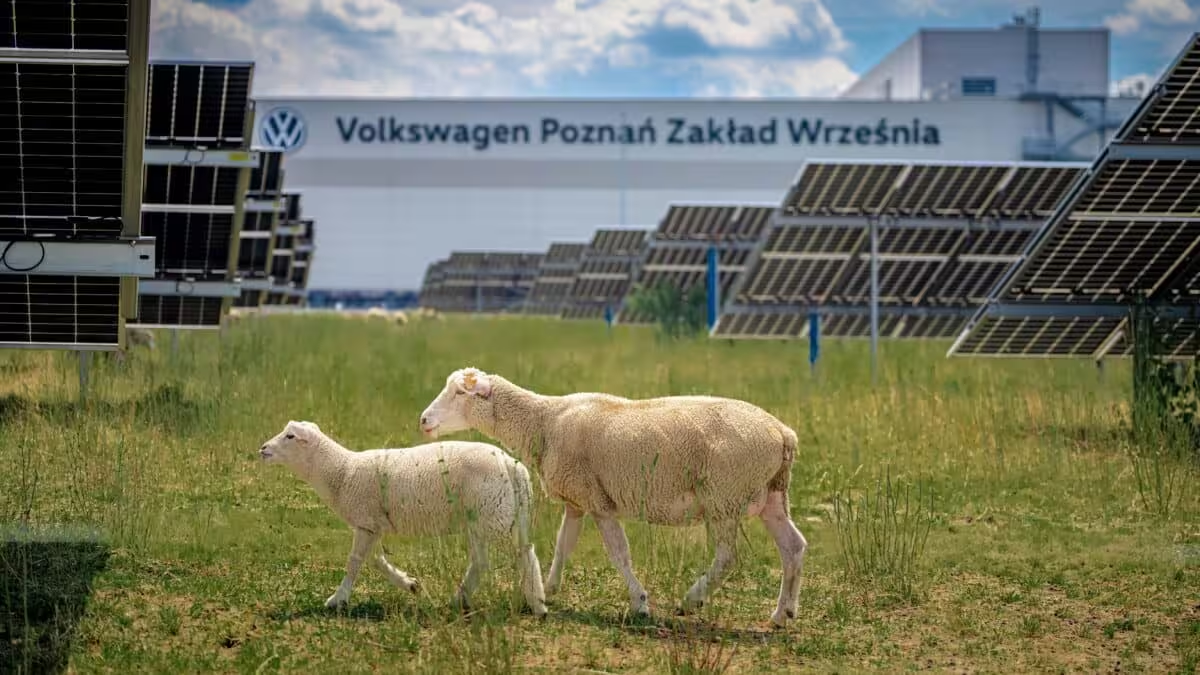
According to Joanna Składanowska‑Baryza of the Poznań University of Life Sciences, the project represents one of the first Polish studies to evaluate a large photovoltaic farm holistically—examining animals, vegetation, and the surrounding ecosystem together rather than merely substituting mowing with grazing.
Flock owner Justyna Nowak‑Gajek observes that the sheep have formed smaller, well‑distributed groups and are grazing calmly throughout the area. She added that the animals “adapted very well to the new conditions,” noting that when faced with a perceived threat the sheep tend to cluster tightly. These field notes will be cross‑checked with the quantitative data on welfare, pasture, soil, and emissions.
California Study Shows Solar Panels Extend Grazing Time
A 2023 peer‑reviewed investigation at the Gold Tree Solar Farm in San Luis Obispo, California, monitored 80 sheep grazing either among solar panels or on adjacent native rangeland. Data loggers captured moments when the animals stood or moved slowly with heads lowered, which the researchers interpreted as grazing activity.
Sheep occupying the solar‑panel zones spent more time grazing than their counterparts on the open rangeland. Additionally, forage beneath the panels exhibited higher protein content and greater digestibility, despite the overall dormant state of vegetation at both locations.
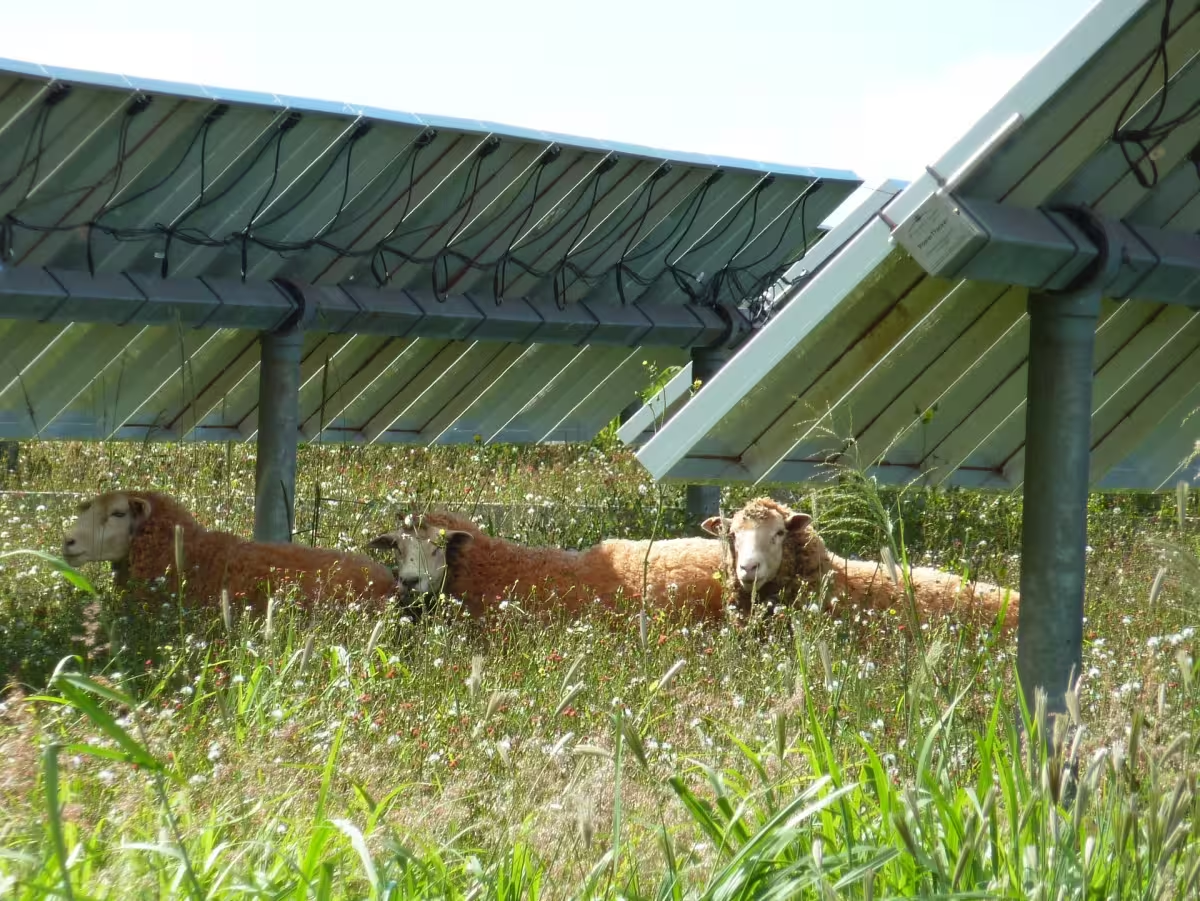
The study also noted that management practices influenced behavior: groups rotated to fresh pasture every four days grazed longer than those moved daily. Researchers suggested that the panel structures may offer “relief from heat, wind, and rain,” linking the built environment to the animals’ feeding experience.
While the Polish effort shares the same agrivoltaic concept, it differs in breed, climate, pasture type, and panel arrangement. Consequently, the Września team is gathering site‑specific data on pasture quality, animal behavior, soil parameters, and microclimatic effects throughout the grazing season rather than directly applying the California findings.
Heritage Breed Adapts to an Industrial Solar Landscape
The animals belong to the Greater Poland breed, originally cultivated in the Wielkopolska region under the guidance of Professor Zdzisław Śliwa. Once a common sheep variety in Poland, the breed now features in the nation’s genetic resources conservation program.
Conservation programs aim to preserve livestock populations and distinctive genetic traits that might otherwise decline. At Września, the protected breed is integrated into an active grazing system within a modern energy facility, demonstrating a functional use beyond traditional breeding or exhibition purposes.
The U.S. Department of Energy’s agrivoltaics overview outlines several models for co‑locating agriculture with solar arrays, including crops, livestock, and pollinator habitats positioned beneath or between panels. The suitability of each model depends on panel height, spacing, the specific agricultural needs, and maintenance accessibility.
This article has been fact checked for accuracy, with information verified against reputable sources. Learn more about us and our editorial process.
Last reviewed on .
Article history
- Latest version
Reference(s)
- “Farmer's Guide to Going Solar.”, March 30, 2018 Energy.gov <https://www.energy.gov/cmei/systems/farmers-guide-going-solar>.
- “100 owiec zamiast kosiarek. Badacze UPP analizują przyszłość agrowoltaiki.”, July 7, 2026 Uniwersytet Przyrodniczy w Poznaniu <https://up.poznan.pl/aktualnosci/100-owiec-zamiast-kosiarek-badacze-upp-analizuja-przyszlosc-agrowoltaiki>.
- “The Potential of Agrivoltaics for the U.S. Solar Industry, Farmers, and Communities.”, April 14, 2023 Energy.gov <https://www.energy.gov/cmei/systems/articles/potential-agrivoltaics-us-solar-industry-farmers-and-communities>.
Cite this page:
- Posted by Elizabeth Taylor