DNA Reveals New Deep‑Sea Ghost Shark Species Hidden in Costa Rica’s Waters at 800 Meters Deep
A mysterious deep‑sea shark, long mistaken for another creature, is finally revealed, shedding light on its true identity.
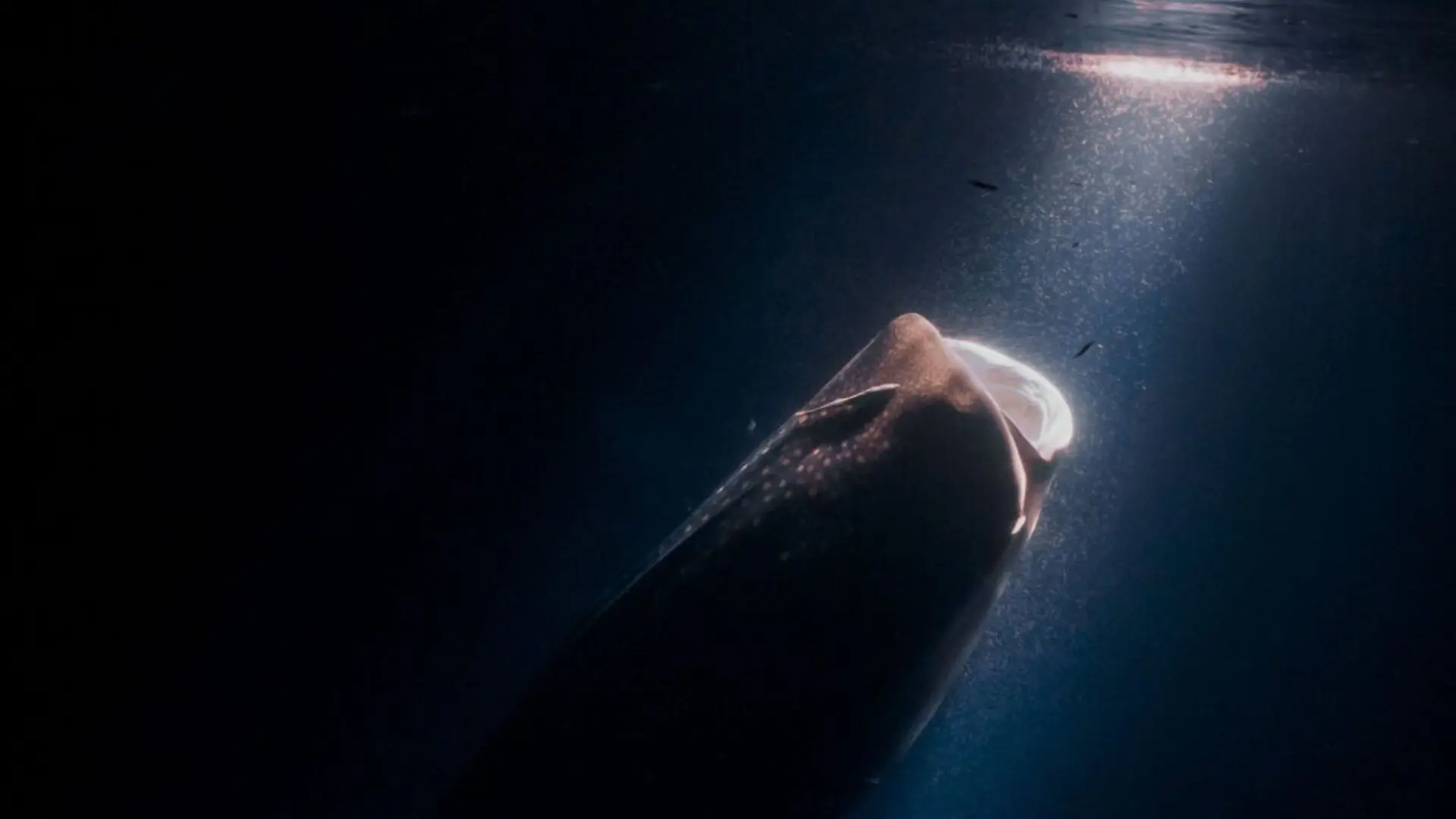
Researchers have formally described a previously unknown deep‑sea chimaera, Rhinochimaera costaricana, from waters off the Pacific coast of Costa Rica. The fish belongs to the group commonly called ghost sharks and had evaded recognition despite being collected on several occasions.
Sampling of Costa Rica’s offshore Pacific has historically been sporadic, leaving large gaps in the biological record. Scientists long suspected that the abyssal habitats hosted undiscovered taxa, yet conventional identification methods often failed to separate them from known relatives.
The turnaround came with the application of contemporary genetic techniques, allowing scientists to re‑evaluate archived specimens. As detailed in a recent Zootaxa article, the combination of fresh fieldwork and DNA sequencing revealed a species that had been hiding in plain sight.
Decades‑Long Collection Yields a New Species
The description of Rhinochimaera costaricana rests on three male individuals gathered between 2000 and 2023 at depths ranging from 390 to 787 meters. According to researchers from Costa Rica’s Fisheries and Aquaculture Institute (INCOPESCA), these specimens had been stored in museum collections without recognition as a distinct taxon.
Collaboration among INCOPESCA, the University of Costa Rica, and Brazil’s Federal University of Pará enabled the team to piece together the fragmented record. The authors of the Zootaxa study noted that the wide temporal span of the samples complicated the analysis, yet it also confirmed the repeatability of the observed traits across multiple individuals.
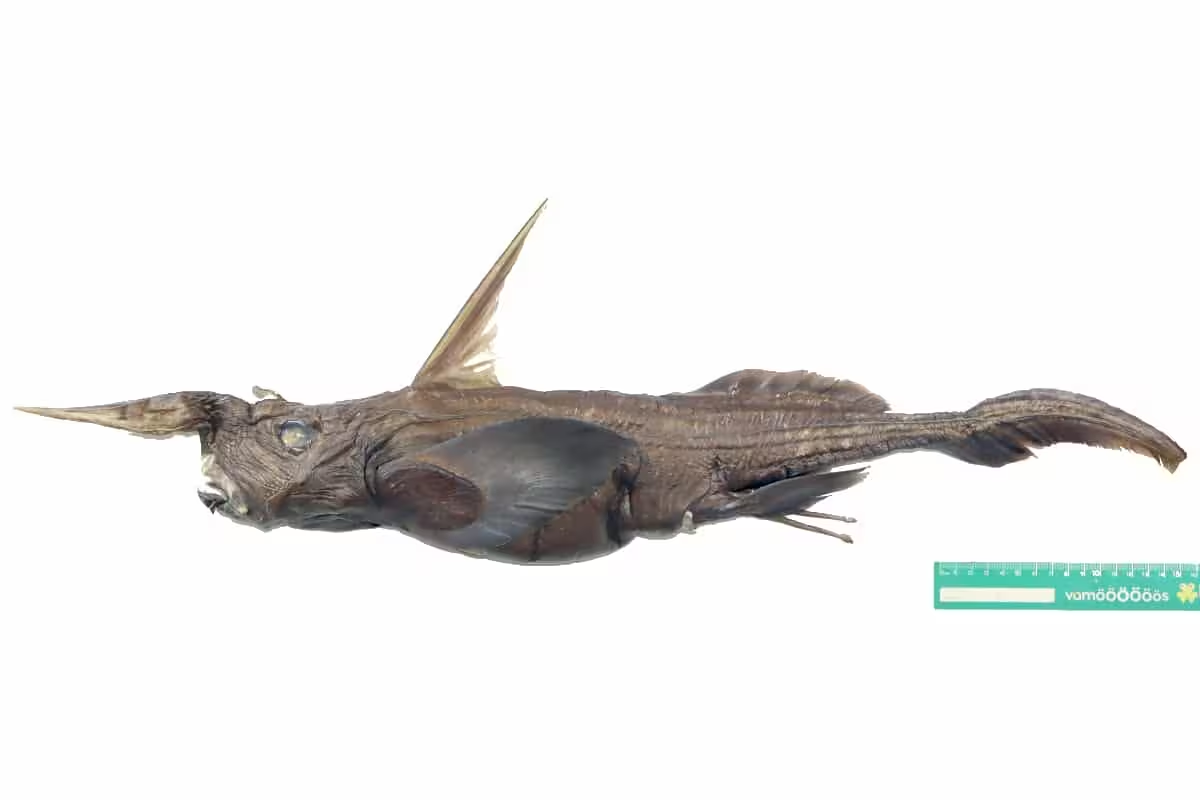
Molecular analysis proved decisive: DNA comparisons revealed a divergence of 3.9 % to 4.7 % from other recognized Rhinochimaera species, a level of difference that satisfies criteria for designation as a separate species within this cartilaginous fish lineage.
Distinct Morphology Sets the New Chimaera Apart
To corroborate the genetic findings, the team measured 49 morphological variables on the Costa Rican specimens and contrasted them with data from more than 90 individuals representing all known species of the genus. Such an extensive comparative dataset was essential because long‑snouted chimaeras often appear nearly identical at first glance.
Key traits consistently distinguished R. costaricana: a relatively short snout, a taller first dorsal fin bearing a pronounced spine, a broader gap between the two dorsal fins, and a reduced number of tubercles along the tail region.
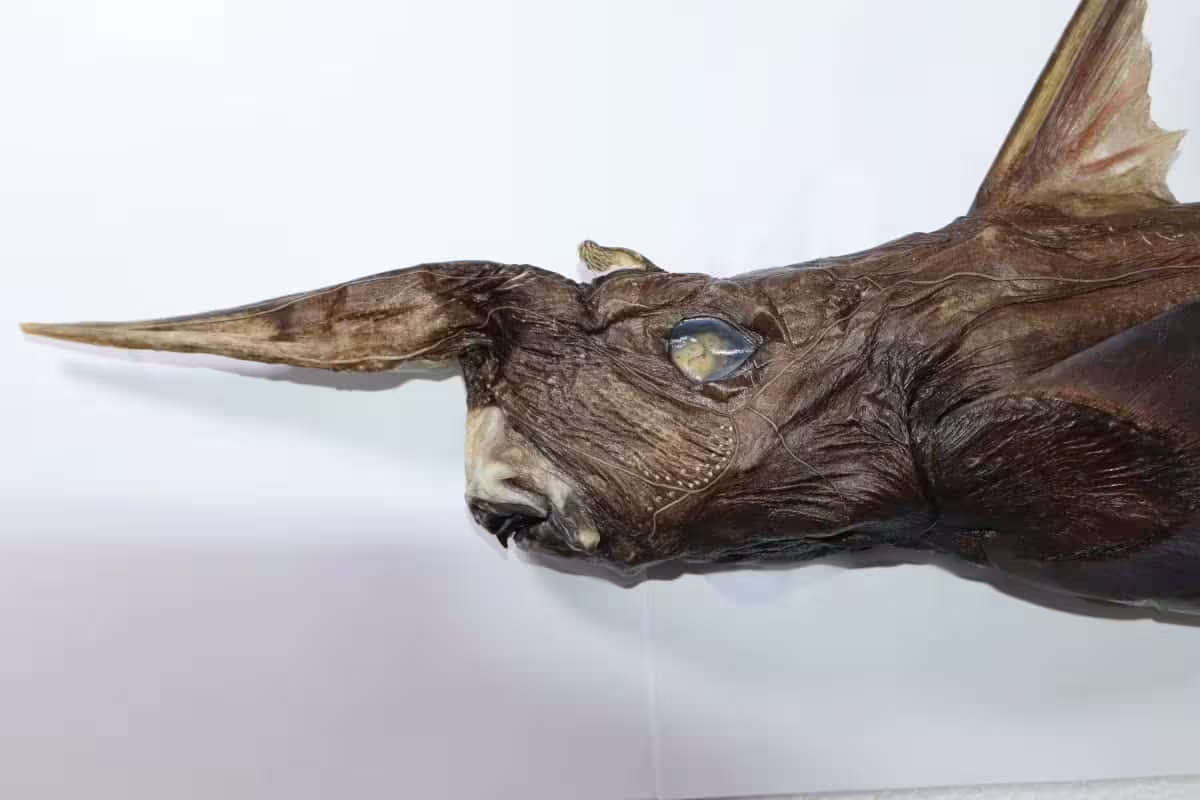
Although the differences are subtle, they appear uniformly across all examined individuals. In this group of deep‑sea cartilaginous fishes, minor morphological variations often delineate separate species.
Deep Pacific Remains a Frontier of Discovery
The epithet costaricana directly honors Costa Rica, the sole location where the specimens have been found, and highlights the expanding role of national research institutions in unveiling deep‑sea biodiversity.
The finding underscores how little is known about ecosystems beyond the continental shelf in the eastern Pacific. Even in regions that have been sampled for decades, species can remain unrecognized, often because they were previously grouped with other taxa.
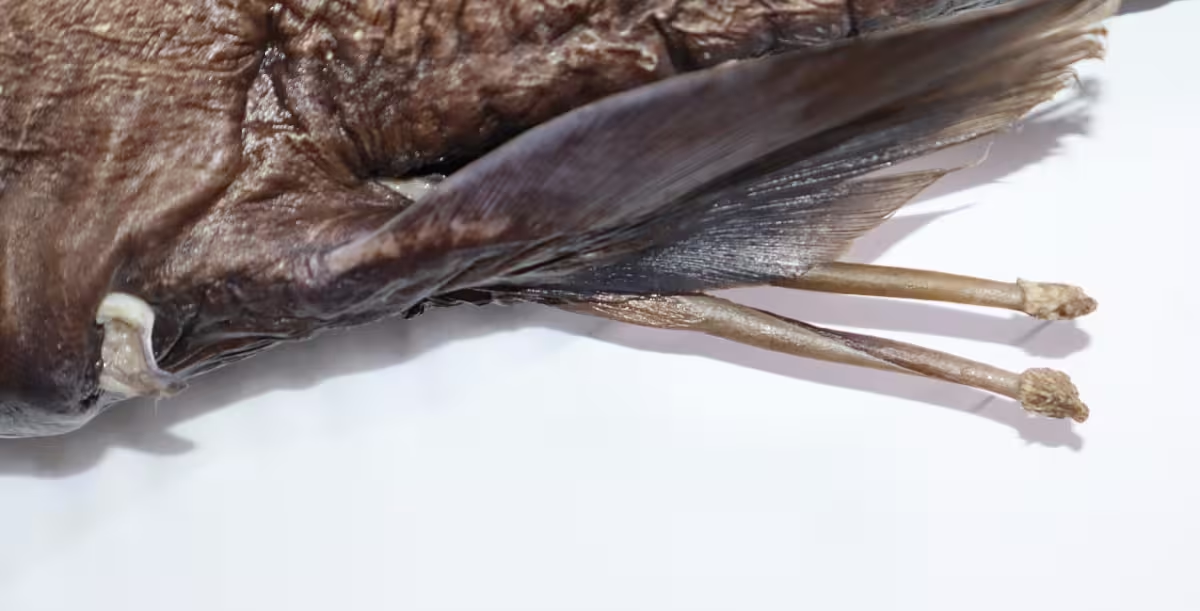
The authors note that modern genetic sequencing now allows scientists to revisit historic museum collections and uncover lineages that were previously overlooked.
This article has been fact checked for accuracy, with information verified against reputable sources. Learn more about us and our editorial process.
Last reviewed on .
Article history
- Latest version
Reference(s)
- “Sports and tourism fishing.” <https://incopesca.go.cr/home/fishing/sports_and_tourism_fishing.html>.
- VIDAURRE-QUESADA, NAIDELY. “A new species of Rhinochimaera Garman 1901 (Holocephali: Chimaeriformes: Rhinochimaeridae) from the Eastern Pacific Ocean.”, vol. 5828, no. 3, pp. 535-548., doi: 10.11646/zootaxa.5828.3.7. <https://www.mapress.com/zt/article/view/zootaxa.5828.3.7>.
- “WoRMS - World Register of Marine Species - Rhinochimaera costaricana Vidaurre-Quesada et al., 2026.” <https://www.marinespecies.org/aphia.php?p=taxdetails&id=1896312&from=rss>.
Cite this page:
- Posted by Elizabeth Taylor