2.5-Million-Year-Old Japanese Bee Fossil Sheds Light on Honeybee Evolution
Scientists discover a fossil bee in Japan’s ancient sediment, shedding light on a long‑lost chapter of bee evolution.
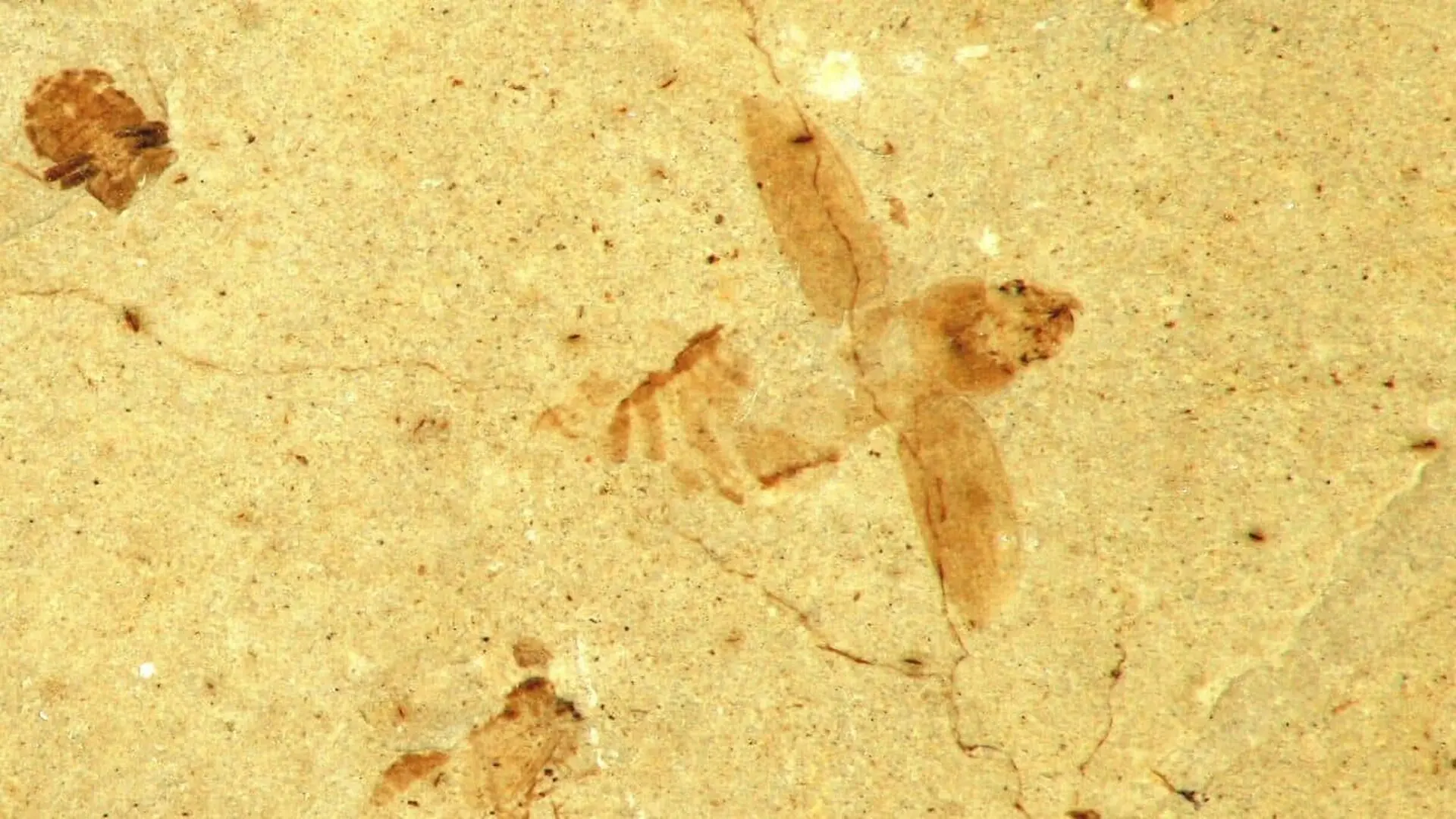
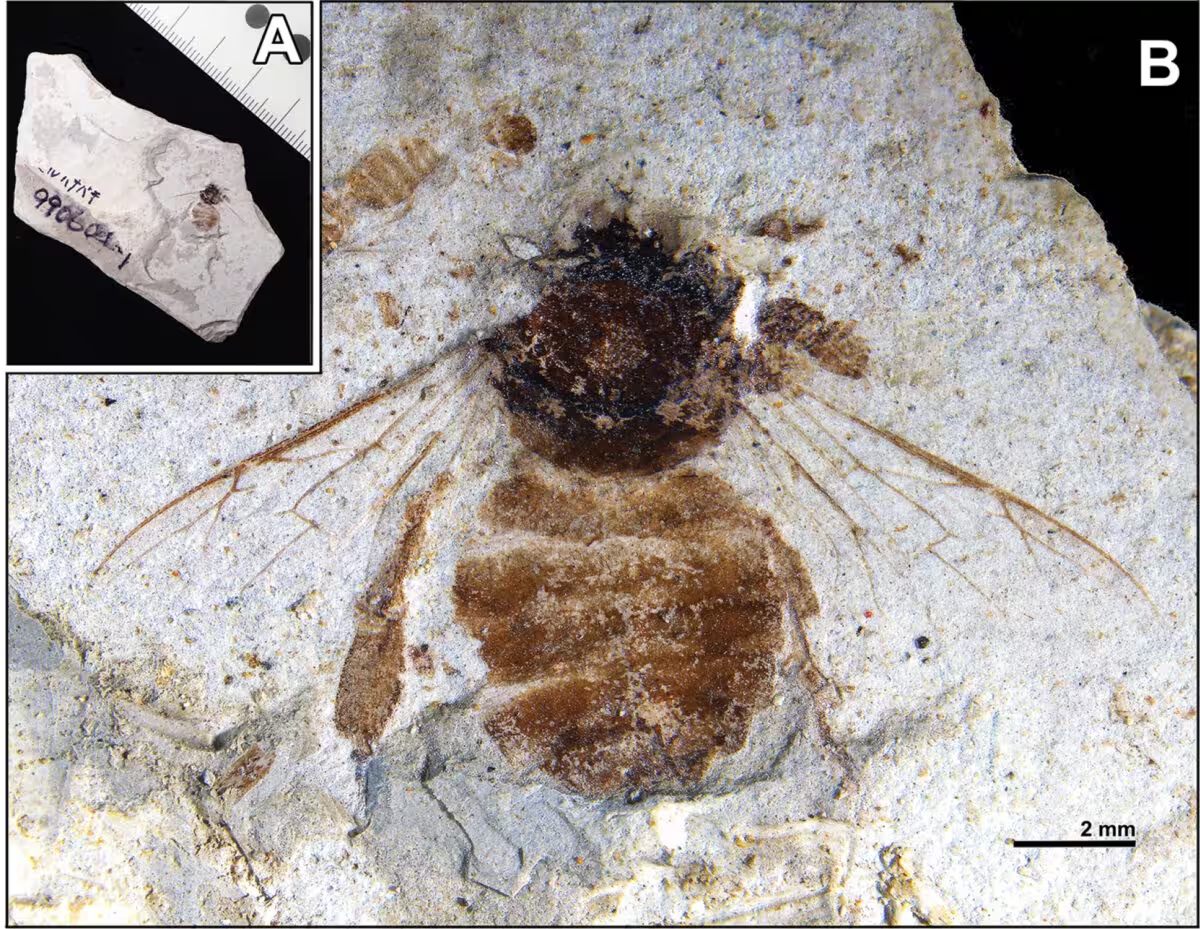
Researchers have unveiled a 2.8‑ to 2.2‑million‑year‑old bee fossil from Japan that fills a missing chapter in the lineage of modern honeybees. The specimen, designated Apis aibai, represents the earliest confirmed member of the Apis subgenus.
Honeybees are among the planet’s most vital pollinators, sustaining wild flora and cultivated crops alike. The genus Apis comprises nine extant species grouped into three subgenera—Micrapis, Megapis, and Apis—the latter containing the Western honeybee (Apis mellifera) and its closest relatives.
Japanese Pliocene Fossil Illuminates Early Honeybee Evolution
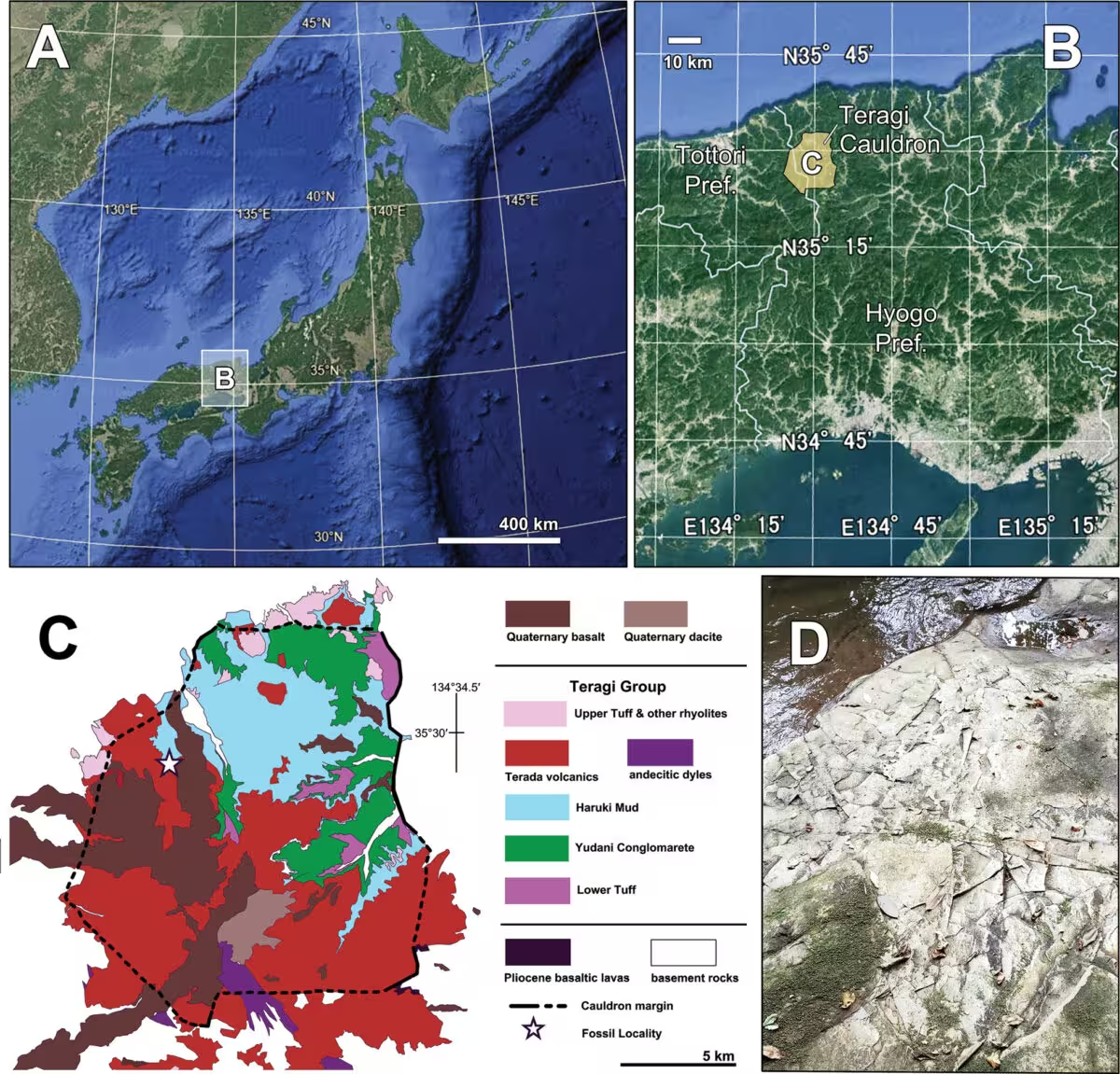
The fossil was recovered from the volcanic‑lake deposits of the Teragi Group in Hyōgo Prefecture. Preserved in whitish, tuff‑rich siltstone, the specimen retains sufficient morphological detail for thorough analysis.
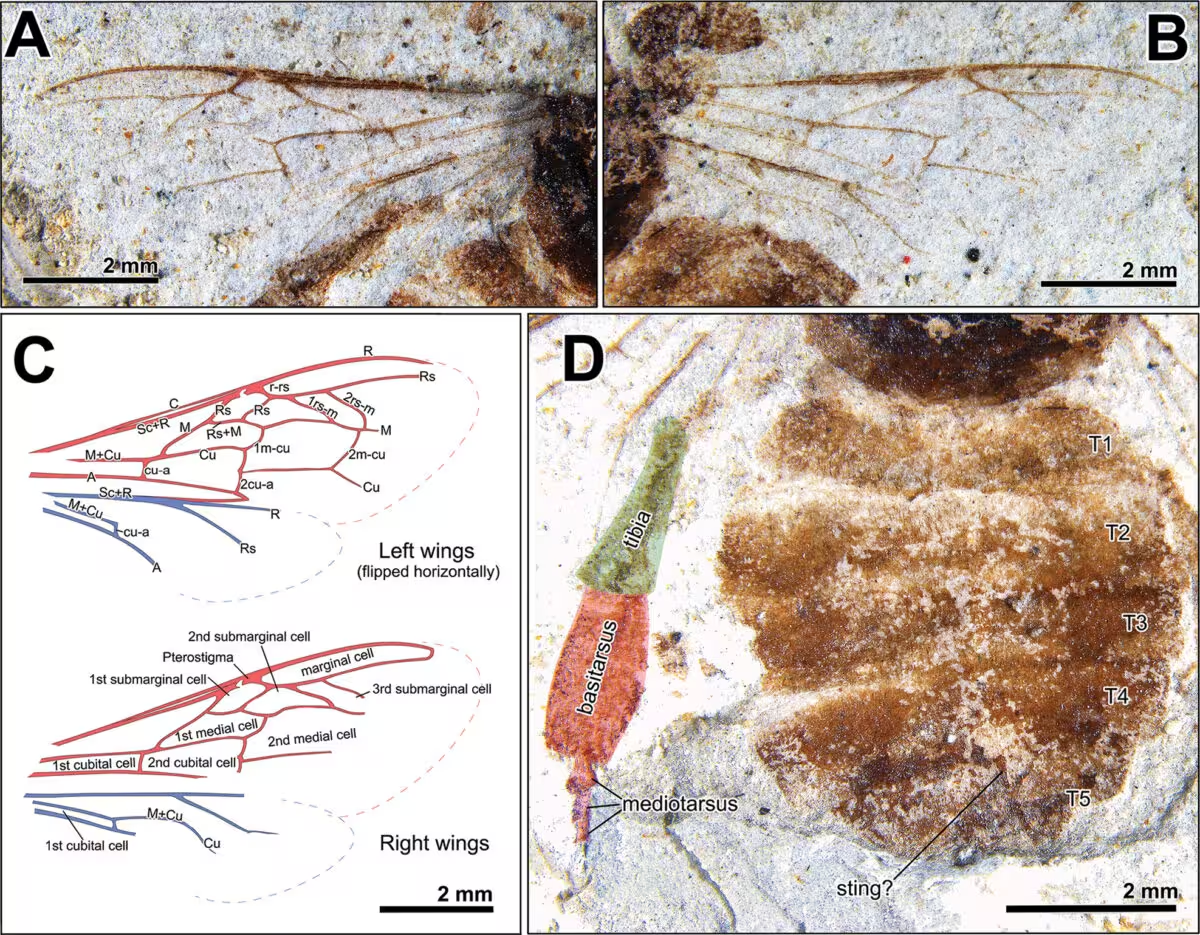
Measuring roughly 10 mm, the worker bee exhibits well‑preserved wings, hind legs, and abdominal segments, enabling direct comparison with living relatives.
According to Dr. Yui Takahashi of Keio Yochisha Elementary School and Dr. Jun‑ichi Takahashi of Kyoto Sangyo University:
“The honey bee, a general term for hymenopteran insects of the genus Apis (family Apidae), plays a vital role as a pollinator for both natural and agricultural ecosystems.”
Identification relied on distinctive wing‑vein patterns and leg morphology, situating the fossil between the older Oligocene‑Miocene record and the more recent Pleistocene‑Holocene specimens that belong to living species.
Link to a Modern Philippine Species Suggests Wider Ancient Range
The study, published in ZooKeys, finds that Apis aibai shares notable traits with Apis nigrocincta, a bee now confined to the Philippines and Indonesia. This resemblance hints that the extinct lineage once spanned much of East Asia.
“This suggests that the Apis nigrocincta-related extinct group, including the new species, historically had a wider distribution, ranging to temperate Japan of the Late Pliocene‑Early Pleistocene age,” explained by the researchers.
Modern Asian honeybees are largely restricted to tropical and subtropical zones, with only Apis cerana extending into temperate regions such as Japan. The newly described extinct line may have contributed to the ancestry of Japan’s native bee populations, offering fresh perspectives on the evolution of Asian honeybees.
Fossil Evidence Bridges Genetic Timelines and the Physical Record
Previous mitochondrial DNA analyses had placed the emergence of the Apis subgenus in the Late Miocene, yet concrete fossil confirmation was lacking. The Japanese specimen provides a tangible link between molecular estimates and the sparse fossil assemblage, which is dominated by Eocene‑Miocene finds from Europe and China.
This article has been fact checked for accuracy, with information verified against reputable sources. Learn more about us and our editorial process.
Last reviewed on .
Article history
- Latest version
Reference(s)
- <https://www.researchgate.net/profile/Yui-Takahashi-2>.
- <https://sciprofiles.com/profile/1559350>.
- Takahashi, Yui. “A honey bee fossil (Hymenoptera, Apidae) from the Late Pliocene to Early Pleistocene Teragi Group, Hyogo Prefecture, Japan: Bridging a gap in Apis evolutionary history.”, vol. 1255, October 13, 2025, pp. 291-301. Pensoft Publishers, doi: PropertyValue. <https://zookeys.pensoft.net/article/162389/>.
Cite this page:
- Posted by Elizabeth Taylor