Scientists Discover Potential Massive Natural Hydrogen Reserve Beneath Australia
New research reveals that the shape and condition of iron-rich rocks significantly influence how much hydrogen is produced deep beneath Earth’s surface.
Hydrogen is increasingly viewed as a vital component of the global transition toward cleaner energy, particularly for heavy industries like international shipping and aviation that are difficult to decarbonize through electrification alone. Because burning hydrogen produces only water, it offers a promising alternative to fossil fuels. However, the environmental impact of hydrogen is entirely dependent on its production method.
Currently, over 95 percent of the world’s hydrogen supply is generated through processes involving coal or natural gas, resulting in products often referred to as “gray” or “blue” hydrogen. In contrast, “green” hydrogen—produced using renewable energy—accounts for less than one percent of total global output, according to data from MIT.
Unlocking Subsurface Energy in Western Australia
A new study published in the International Journal of Hydrogen Energy suggests that the massive iron-ore deposits in Western Australia’s Pilbara region could serve as a hidden, naturally occurring source of hydrogen. Researchers at Edith Cowan University (ECU) explored whether the magnetite found within these formations could trigger underground hydrogen production.
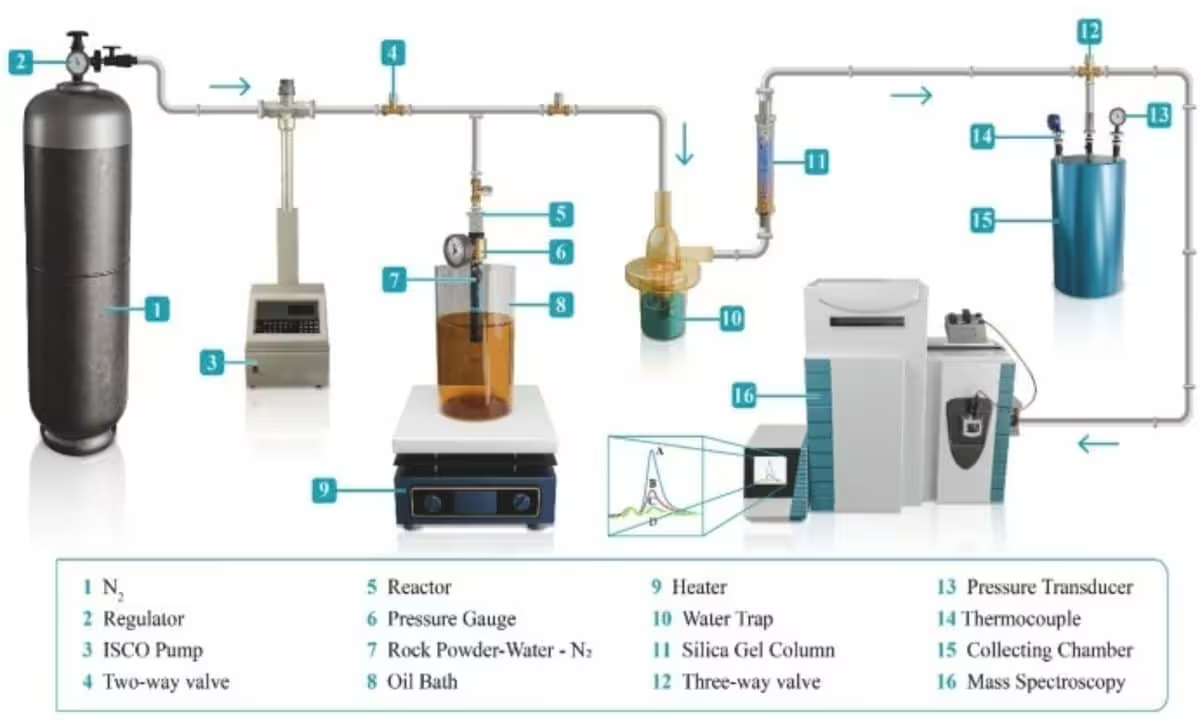
The chemical mechanism relies on magnetite—a type of iron oxide—stripping oxygen from water molecules. This reaction converts ferrous iron into ferric iron while releasing hydrogen gas. While this process is known to science, it typically requires extreme temperatures and pressures not found at the Earth’s surface. To test the feasibility of this reaction in a geological context, the ECU team simulated these intense conditions within a laboratory setting.
“Australia could be sitting on a massive, untapped energy reserve—and the potential is enormous,” said senior study author Alireza Keshavarz of ECU. “There is enough hydrogen for Australia to benefit for generations, and potentially enough for us to become a major exporter of clean energy to the rest of the world.”
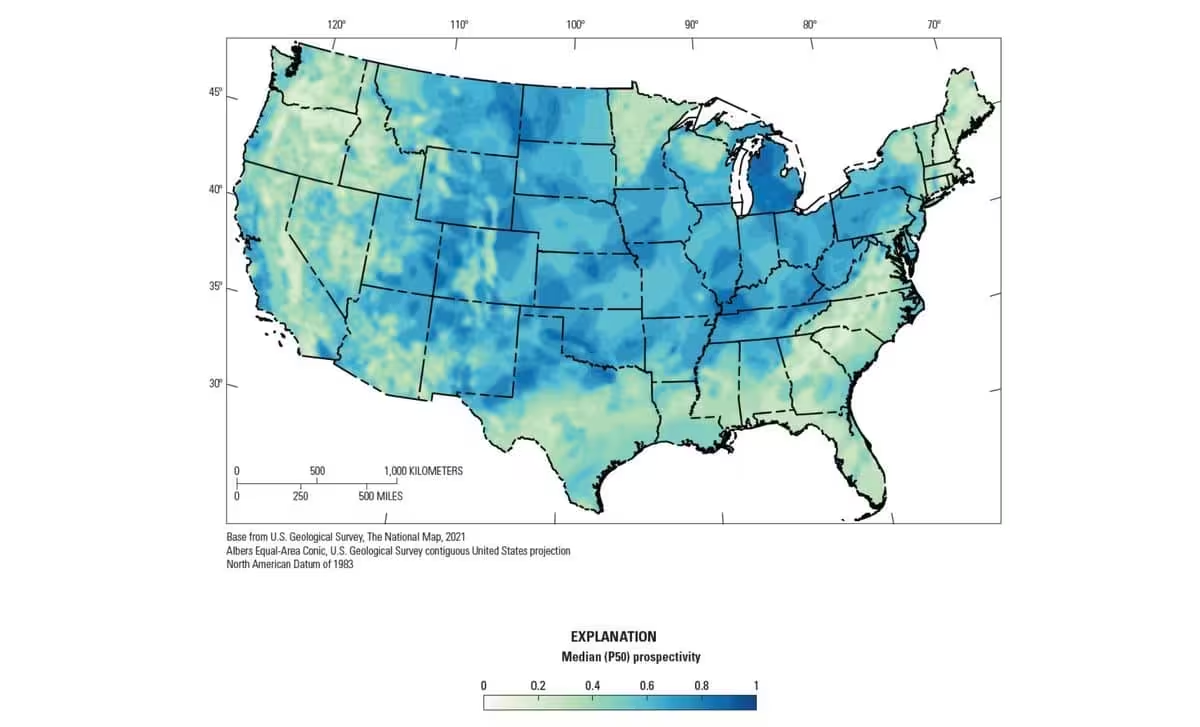
This research aligns with a growing global interest in geologic hydrogen. In early 2025, the U.S. Geological Survey published the first comprehensive map identifying potential natural hydrogen resources across the United States. Similar investigations are ongoing elsewhere, including studies into the Precambrian bedrock of the Canadian Shield, which may hold hydrogen deposits similar to those discovered in Mali and France.
Surface Area and Permeability Drive Efficiency
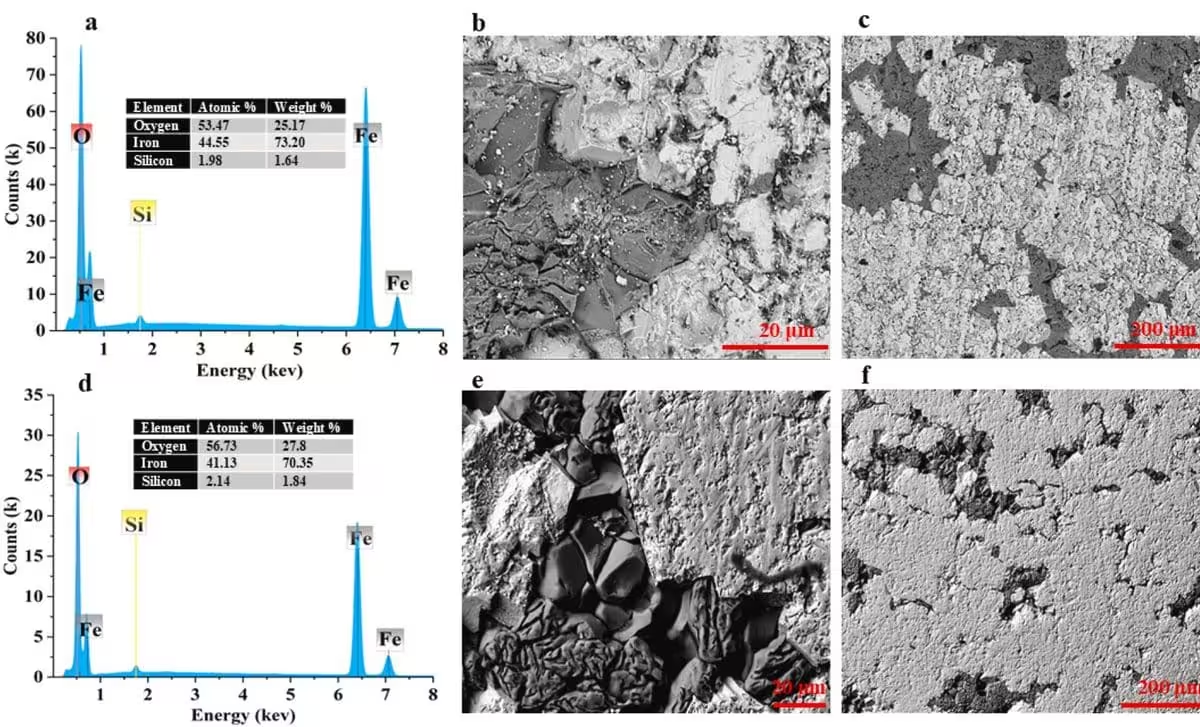
The ECU experiments revealed a significant efficiency gap between different forms of magnetite. When magnetite was ground into a powder, it produced five times the amount of hydrogen compared to solid mineral slabs. The researchers attributed this to the increased surface area of the powder, which allowed for more contact with water.
In contrast, the solid slabs developed a crust of hematite—a dense iron oxide—which acted as a barrier, preventing water from reaching the underlying magnetite. This discovery highlights that the ability of water to circulate through rock pores and fractures is just as critical to hydrogen production as the mineral composition itself.
Targeting Geologically Active Zones
The team concluded that for underground hydrogen generation to be viable, the rock must be highly permeable. Specifically, zones characterized by brecciation, tectonic deformation, or intense geological alteration are the most promising, as these processes naturally fracture the rock and expose fresh mineral surfaces, mirroring the efficiency of the lab-tested magnetite powder.
Lead author and Ph.D. student Kaveh Moghanirahimi emphasized the strategic importance of the region’s geology. “Western Australia has some of the world’s largest banded iron formations,” Moghanirahimi said. “If we can unlock this resource at scale, it could be transformative for our energy future.”
This article has been fact checked for accuracy, with information verified against reputable sources. Learn more about us and our editorial process.
Last reviewed on .
Article history
- Latest version
Reference(s)
- <https://climate.mit.edu/ask-mit/how-clean-green-hydrogen>.
- <https://www.ecu.edu.au/schools/engineering/staff/profiles/associate-deans/dr-alireza-keshavarz>.
- “USGS releases first-ever map of potential for geologic hydrogen in U.S..” USGS <https://www.usgs.gov/news/national-news-release/usgs-releases-first-ever-map-potential-geologic-hydrogen-us>.
Cite this page:
- Posted by Vikram Desai