Archaeologists Uncover 40,000 Roman Coins Stashed Under A House Floor In France
Archaeologists in France have unearthed a rare Roman jar, offering a fascinating glimpse into ancient life as researchers analyze its long-buried secrets.
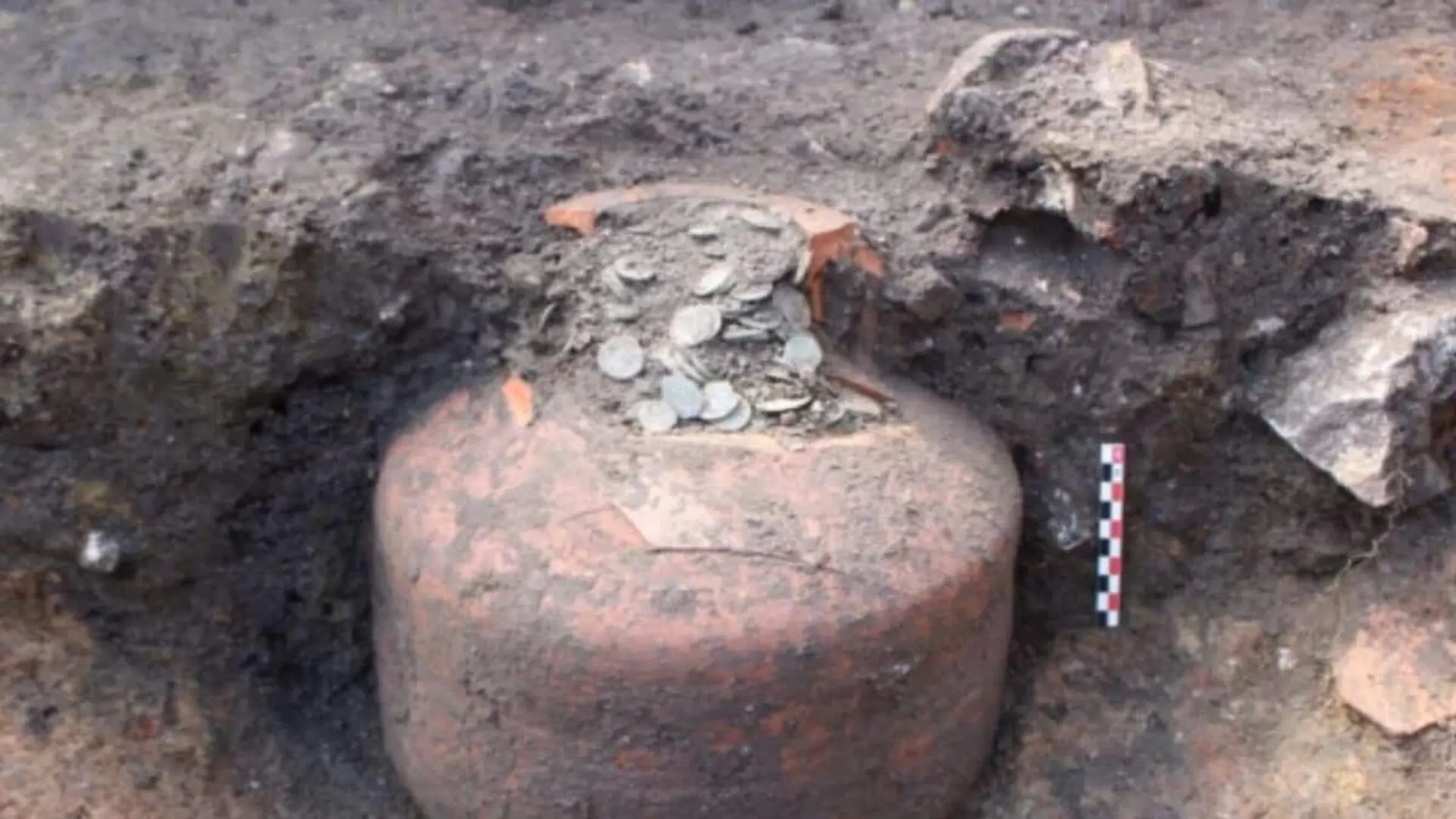
Archaeologists working in the French village of Senon have unearthed a significant cache of Roman history: three large ceramic vessels filled with thousands of ancient coins. Unearthed from beneath the floorboards of a residential structure, these artifacts, known as amphorae, may have collectively contained upwards of 40,000 coins, offering a rare glimpse into the personal financial habits of individuals living roughly 1,800 years ago.
The excavation, conducted by the National Institute for Preventive Archaeological Research (INRAP), revealed that the jars were not stashed away in a desperate attempt to hide wealth during a crisis. Instead, they were carefully placed within purpose-built pits inside a room, with their rims level with the floor, suggesting a practical, long-term approach to asset management.
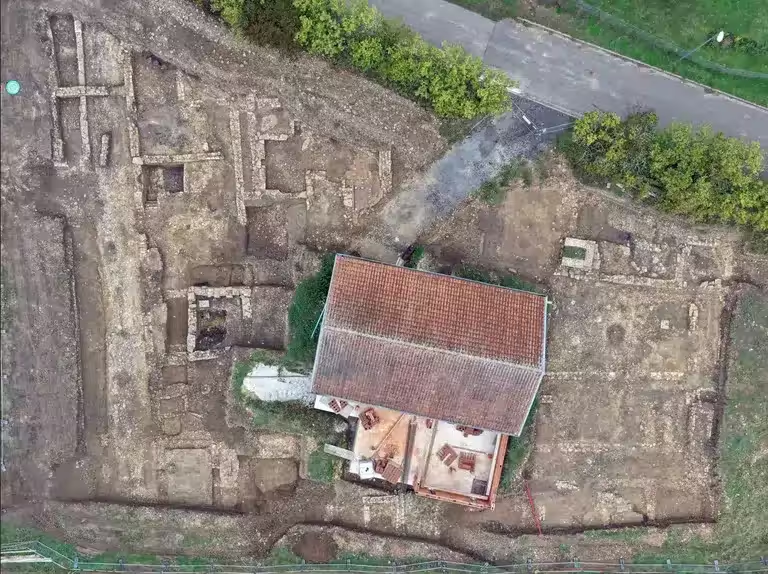
An Ancient Domestic Savings System
Vincent Geneviève, an INRAP numismatist analyzing the find, noted the immense scale of the hoard. One amphora weighed approximately 38 kilograms and held an estimated 23,000 to 24,000 coins. A second jar, weighing about 50 kilograms, is believed to have contained between 18,000 and 19,000 pieces. Evidence indicates that these amphorae were periodically accessed; researchers found coins fused to the edges of the jars, implying that the owners continued to add to their savings even after the initial burial of the vessels.
The home itself was part of a sophisticated settlement featuring stone architecture, underfloor heating, and dedicated workshop spaces. The proximity of a nearby Roman fortification further underscores the site’s importance during the third and fourth centuries A.D.
Monetary Records of a Turbulent Era
The collection of coins dates to between A.D. 280 and 310, a period defined by the aftermath of the Gallic Empire—a breakaway state that briefly ruled the region before being reclaimed by Emperor Aurelian. The hoard includes currency bearing the likenesses of Victorinus, Tetricus I, and Tetricus II, providing valuable data on the economic circulation of the era.
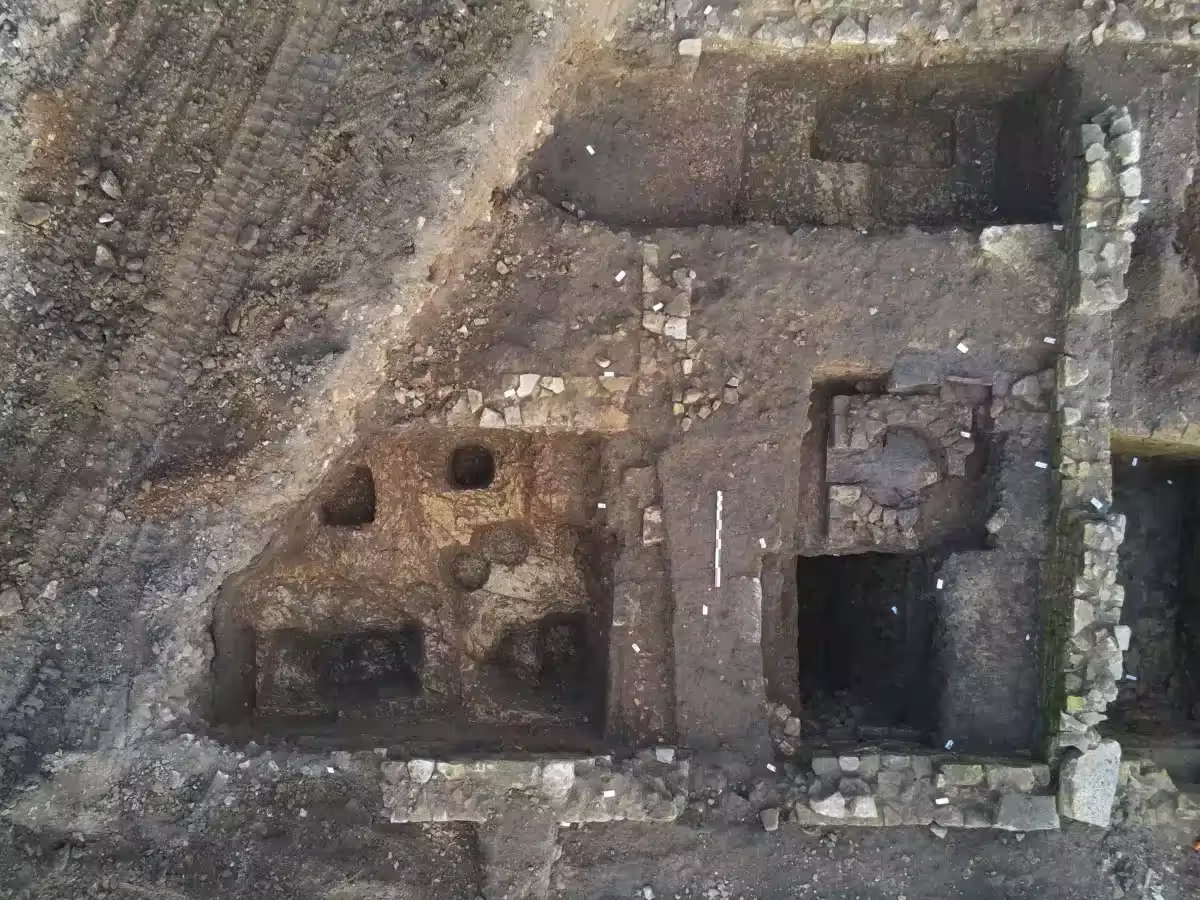
While the settlement eventually succumbed to fire and abandonment, the discovery challenges the common narrative that such caches were merely emergency treasure deposits. Instead, it illustrates a structured method of wealth accumulation within a private household.
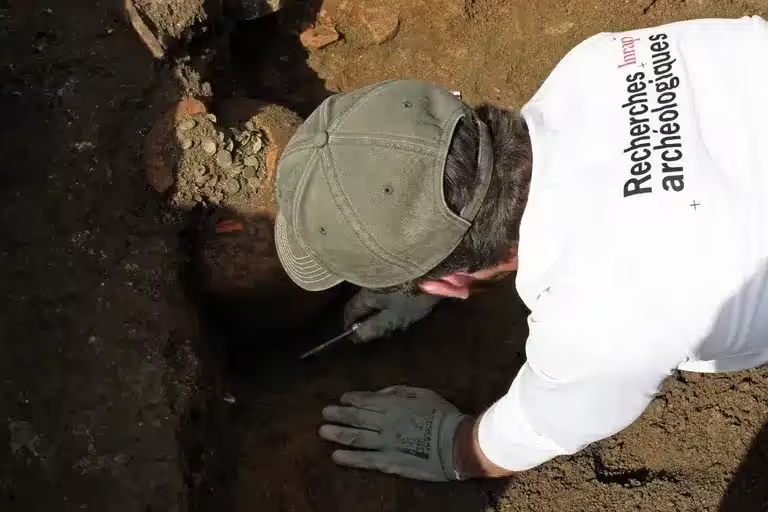
Although one jar was recovered by someone in antiquity—leaving behind only a few stray coins—the remaining two stayed untouched for nearly two millennia. The find stands out among other regional hoards for the preserved context of its storage, offering a tangible link to the daily lives of Roman-era citizens.
This article has been fact checked for accuracy, with information verified against reputable sources. Learn more about us and our editorial process.
Last reviewed on .
Article history
- Latest version
Reference(s)
- “Actualité | Un quartier d’habitation de l’agglomération antique de Senon (Meuse).”, November 26, 2025 Inrap <https://www.inrap.fr/un-quartier-d-habitation-de-l-agglomeration-antique-de-senon-meuse-20417>.
Cite this page:
- Posted by Vikram Desai