Ancient Meteorites Are Carrying A Pristine Chemical Record From The Birth Of The Solar System
Ancient meteorites contain organic matter that predates our asteroids, offering a rare glimpse into the chemical environment of the early solar system.
New research from Harvard University has provided a clearer picture of how organic molecules in our early solar system were formed, suggesting that these building blocks of life were likely synthesized long before they were incorporated into asteroids. By conducting high-precision oxygen isotope analysis on primitive carbonaceous chondrite meteorites, scientists have determined that the organic matter within these space rocks retains signatures from ancient reservoirs, largely untouched by the internal processes of their parent bodies.
Carbonaceous chondrites serve as time capsules for planetary scientists, as they contain water, carbon, and nitrogen, along with complex organic compounds that likely seeded the early Earth with essential chemical ingredients. Central to this study is insoluble organic matter (IOM), a major structural component of the carbonaceous material found in these meteorites. The findings, published in the Proceedings of the National Academy of Sciences, indicate that this matter underwent minimal isotopic alteration once it settled into its parent asteroids.
Evidence of Primordial Origins
The research team examined IOM samples extracted from seven pristine carbonaceous chondrites, including CI, CM, and CR groups, as well as the Bells and Tarda specimens. Because these specific meteorites have remained thermally stable throughout their history, they offer the most accurate look at the material’s original composition. The study revealed that the oxygen isotope compositions of this organic matter align closely with the Carbonaceous Chondrite Anhydrous Mineral (CCAM) line, a reference point for early solar system material mixing.
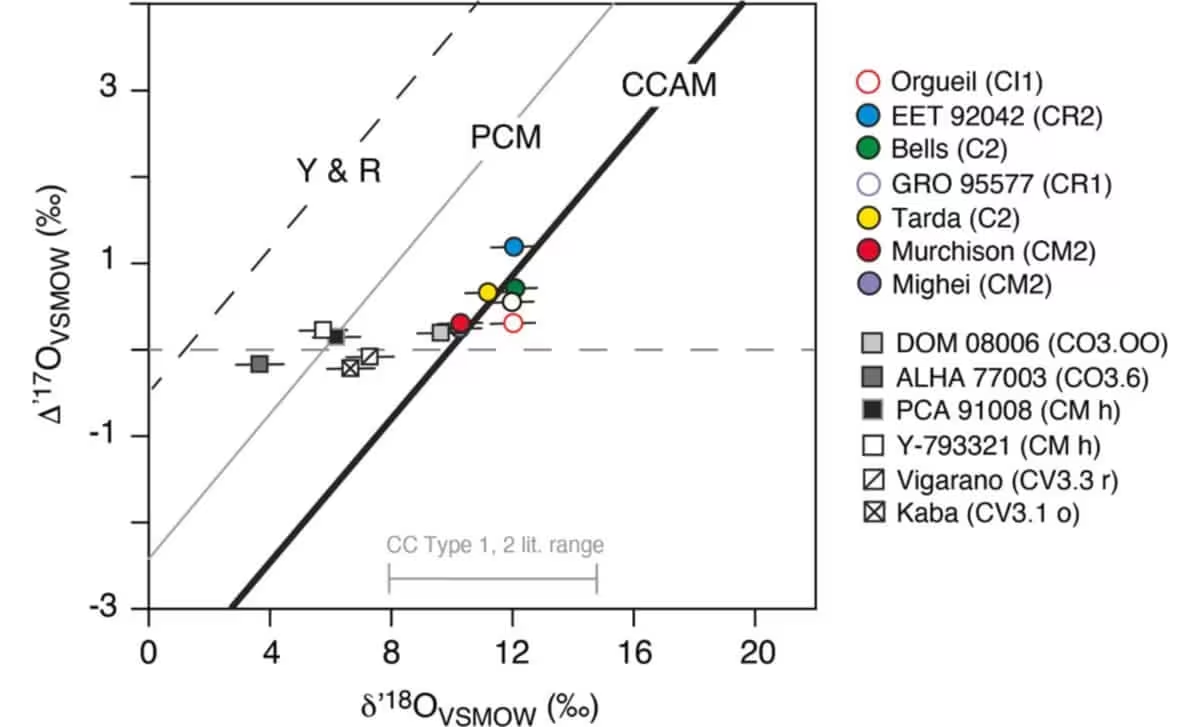
Crucially, the measured oxygen-18 values—ranging from 10.4 to 12.3 per mille—do not reflect the isotopic exchange that would have occurred had the organic matter interacted significantly with asteroid fluids over time. In contrast, samples of meteorites that had been exposed to heat showed distinct, altered oxygen signatures, a finding confirmed by laboratory heating experiments on the Mighei meteorite. This suggests that the pristine samples have remained largely unchanged since their formation in the cold, outer regions of the protoplanetary disk.
Mapping the Solar System’s Chemistry
The study suggests that the organic matter was synthesized through grain chemistry or the radiation-driven processing of water-ice mixtures. This process likely occurred in the cold outer solar system, where the materials were enriched with nitrogen-15 and deuterium before being dispersed and incorporated into various asteroid parent bodies. Rather than originating from a variety of disparate sources, the consistency of the isotope data points to a common origin or similar chemical processes occurring widely across the early solar system.
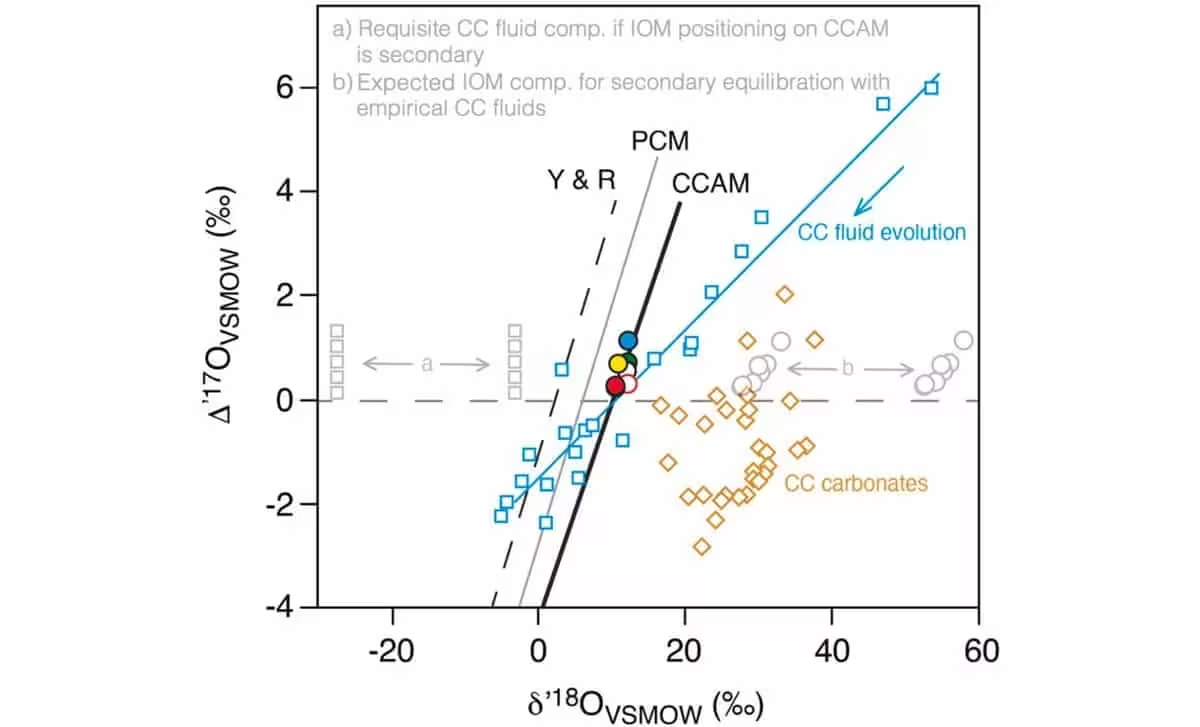
By clarifying the isotopic history of this organic matter, researchers have gained a better understanding of the CCAM line itself, arguing that the observed patterns are a primary feature rather than a secondary result of asteroid-based alteration. These findings reinforce the theory that carbonaceous chondrites were significant delivery vehicles for the chemical precursors of life, providing a clearer look at the conditions that prevailed just before the formation of the planets.
This article has been fact checked for accuracy, with information verified against reputable sources. Learn more about us and our editorial process.
Last reviewed on .
Article history
- Latest version
Reference(s)
- Crocker, Daniel R.., et al. “Meteoritic organic matter records primitive oxygen reservoirs of the solar system.” Proceedings of the National Academy of Sciences, vol. 123, no. 40, September 21, 2026 National Academy of Sciences, doi: 10.1073/pnas.2605307123. <https://www.pnas.org/doi/10.1073/pnas.2605307123>.
Cite this page:
- Posted by Vikram Desai