Venus May Have Swallowed Its Own Moon According to New Simulations
A new study suggests Venus may have once had a moon that was lost after the planet’s slow rotation pulled the satellite back into its surface.
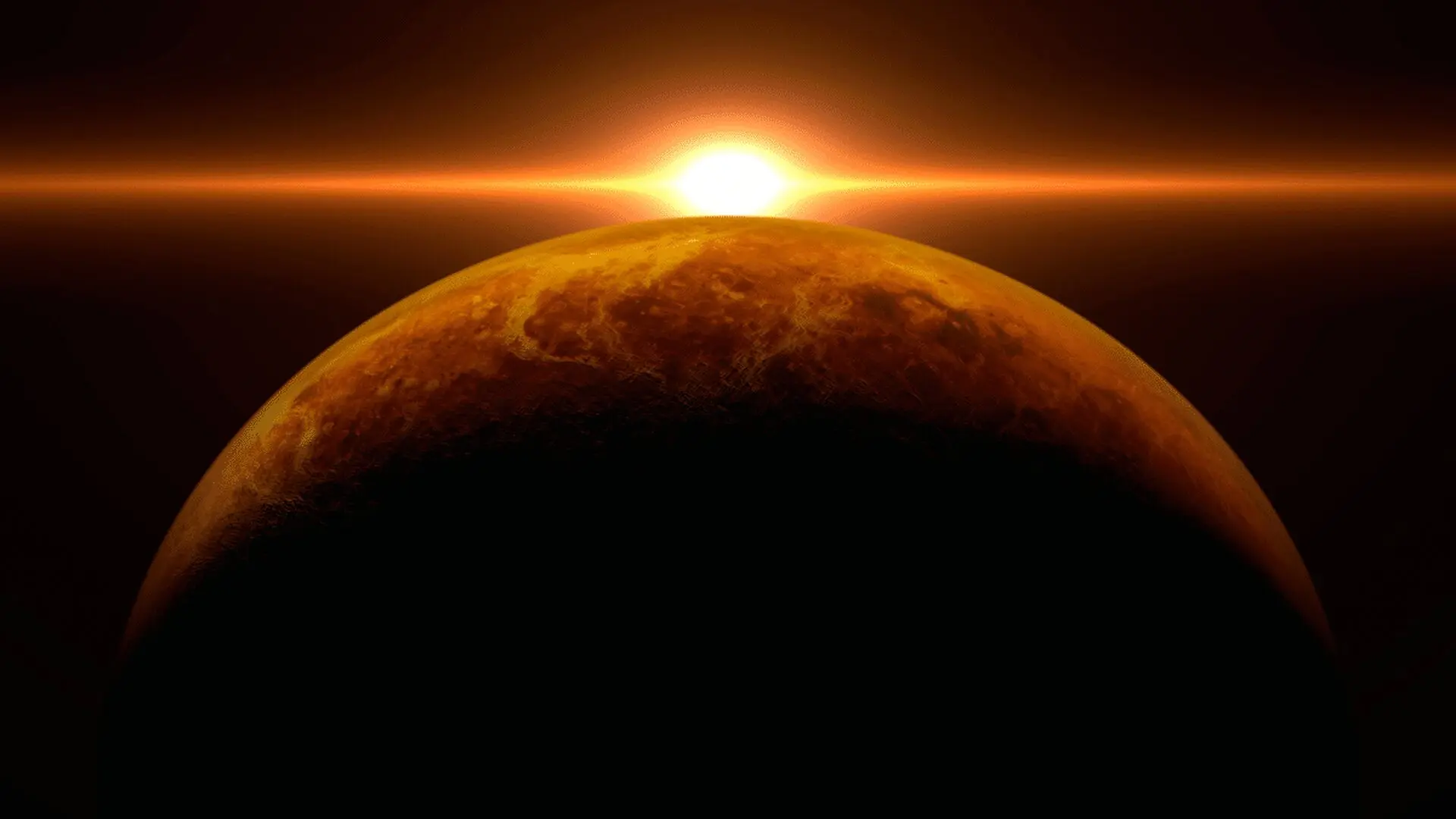
New research published in the Astrophysical Journal suggests that Venus may have once hosted a natural satellite, only to lose it in a slow-motion collision with the planet itself. The findings, led by astrophysicist Stephen Kane of the University of California, Riverside, offer a new perspective on the history of Earth’s closest neighbor by suggesting that Venus did not require a cataclysmic impact to lose a moon, but rather surrendered it to the planet’s own gravitational pull.
Rethinking the Mystery of the Lunar Vacuum
For generations, astronomers have puzzled over why Venus remains moonless despite its striking physical similarities to Earth in terms of mass, size, and composition. Prevailing theories previously suggested that a massive collision might have failed to create a satellite, or that any moon once present was stripped away by a later, high-energy catastrophe. However, the new computer simulations propose a more mundane but inevitable fate: the planet’s unique rotation likely doomed any orbiting body.
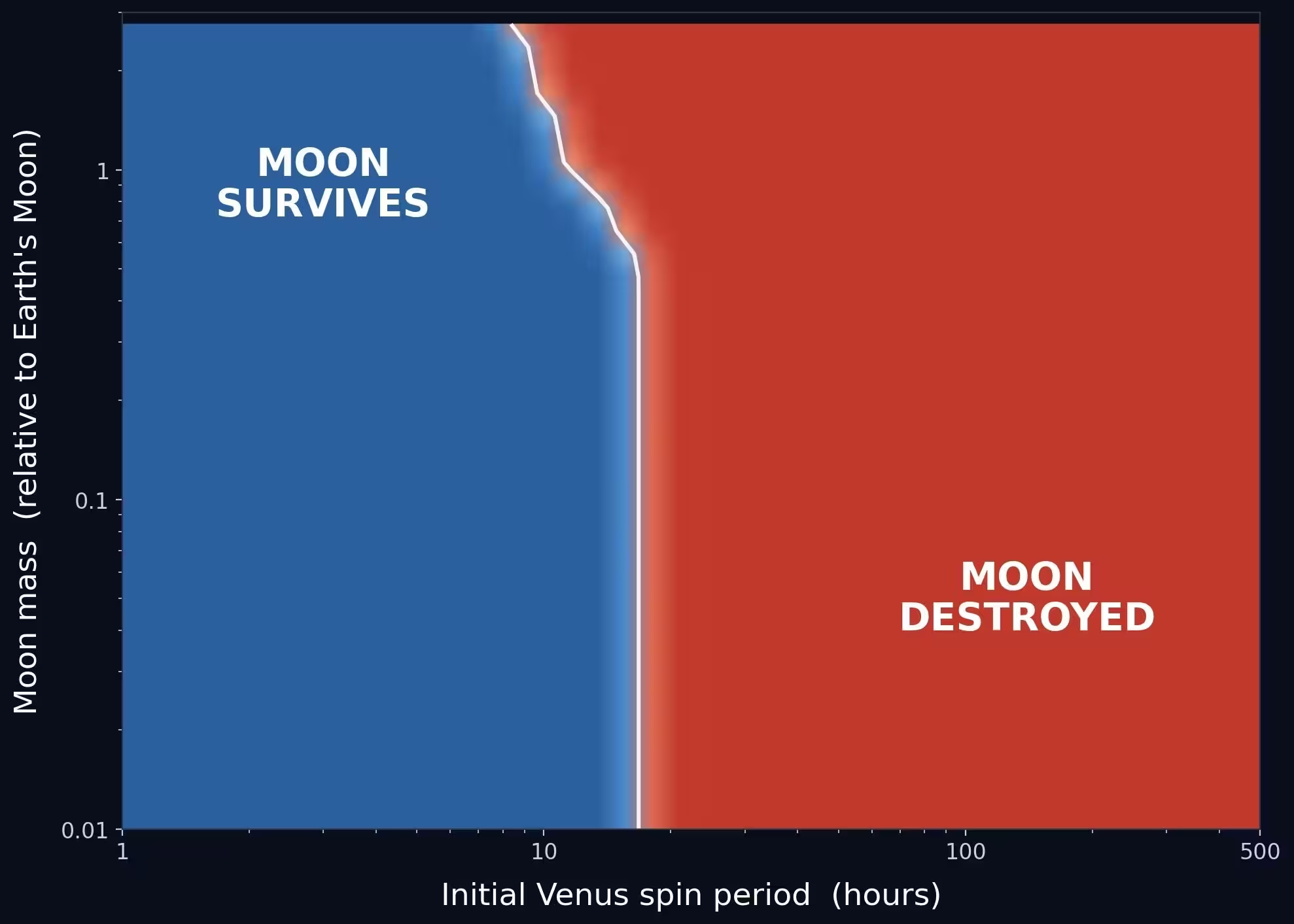
Unlike Earth, which completes a rotation in 24 hours, Venus turns on its axis with agonizing slowness, requiring 243 Earth days to complete a single revolution. Furthermore, the planet rotates in a retrograde direction, opposite to most of its neighbors in the solar system. According to Kane, these conditions create a gravitational environment that effectively drains energy from a satellite, forcing it into a decaying orbit that ends at the surface of the planet.
The Physics of a Collapsing Orbit
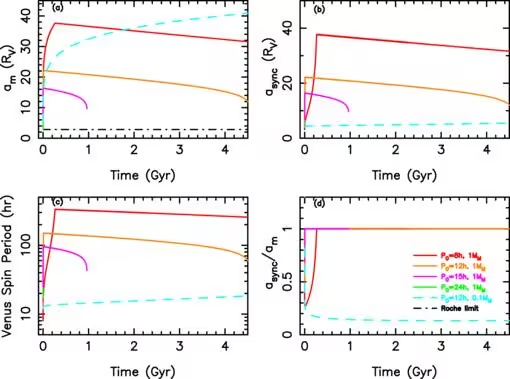
The study highlights a stark contrast in lunar evolution. On Earth, tidal interactions cause the moon to gradually recede, a phenomenon confirmed by laser-ranging measurements that track our moon drifting away at a rate of approximately 4 centimeters per year. In the gravitational environment of Venus, the energy transfer is inverted. The simulations, which tested various moon masses and orbital configurations, consistently pointed toward a terminal collapse.
“My study shows Venus didn’t require a catastrophe to arrive at what we can see today,” said UCR astrophysicist and lead author Stephen Kane. “It turns out the gravity of the planet itself combined with the rate at which it spins naturally caused the moon to collapse on top of it.”
While the findings do not provide direct physical evidence of a long-lost moon—largely because Venus underwent a massive volcanic resurfacing roughly one billion years ago that buried its ancient history—the models suggest that any early satellite was fundamentally unstable.
Implications for Exoplanet Habitability
This research carries significant weight for the search for life elsewhere in the galaxy. As astronomers identify more potential “Earth twins” orbiting distant stars, the role of a moon in maintaining planetary stability has become a subject of intense interest. While moons may help regulate a planet’s climate and axial tilt, this study serves as a warning that not all moons are meant to last.
“When people think about Earth twins around other stars, one question they ask is, ‘Does it have a moon?’” Kane noted. “My study shows a disturbing scenario for many of those cases. If these planets don’t rotate fast enough, the moon will crash to the surface, and that would change the course of history for those planets.”
Ultimately, the work suggests that the absence of a moon on Venus may not be an anomaly, but a predictable consequence of its slow, retrograde spin. Future deep-crust investigations or seismic analysis of the Venusian interior may one day reveal the chemical signatures of a moon that long ago became part of the planet itself.
This article has been fact checked for accuracy, with information verified against reputable sources. Learn more about us and our editorial process.
Last reviewed on .
Article history
- Latest version
Reference(s)
- Kane, Stephen R.., et al. “Tidal Demise: The Evolution and Fate of a Hypothetical Venus Moon.” The Astrophysical Journal, vol. 1009, no. 1, September 14, 2026, pp. 31 American Astronomical Society, doi: 10.3847/1538-4357/ae9d6c. <https://iopscience.iop.org/article/10.3847/1538-4357/ae9d6c>.
Cite this page:
- Posted by Vikram Desai