Archaeologists Recover Massive 80 Ton Blocks From Lost Lighthouse of Alexandria Entrance
Archaeologists have discovered 22 massive stones submerged in the Mediterranean, revealing the remains of an ancient gateway hidden for centuries.
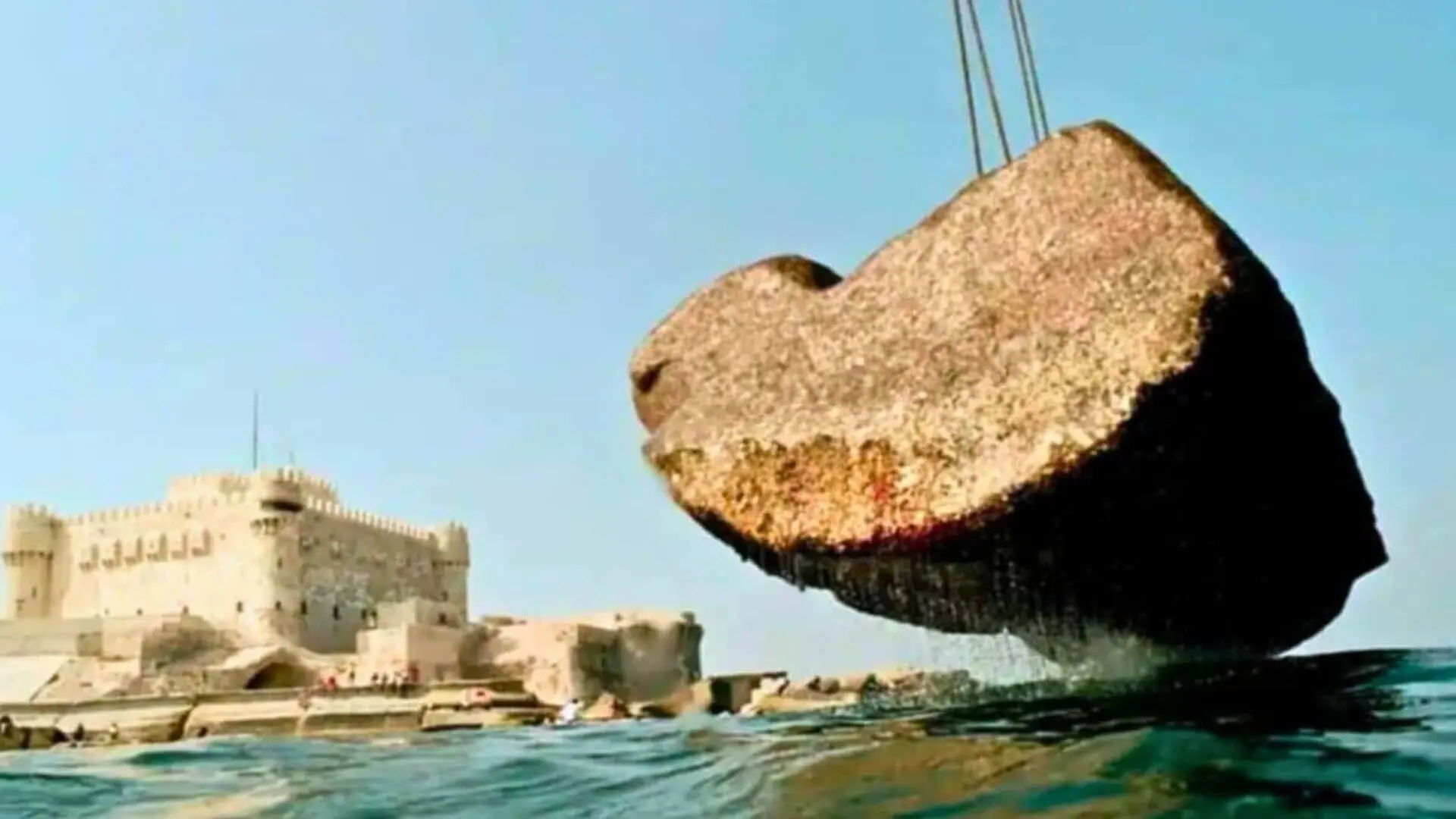
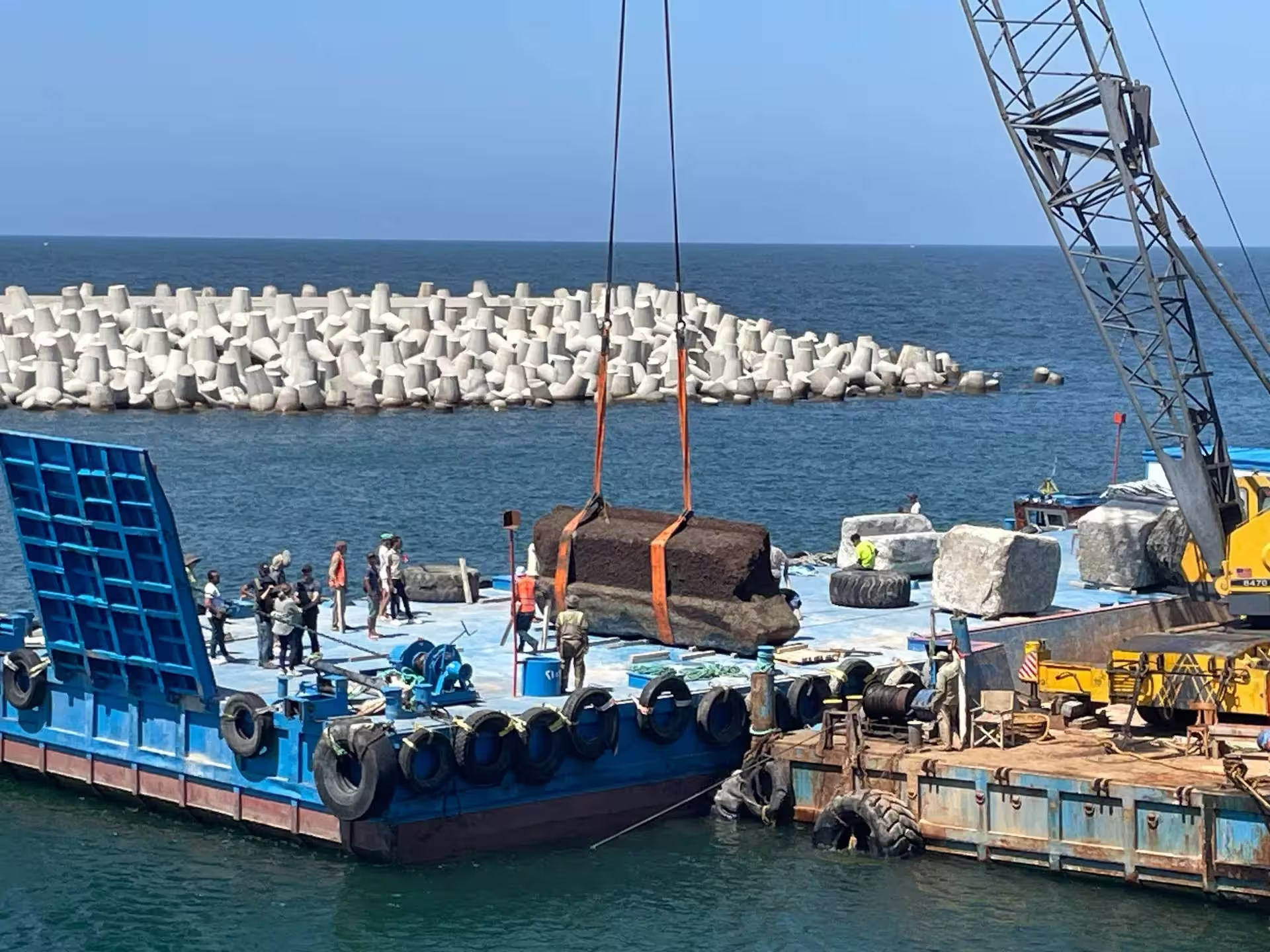
A specialized recovery operation off the coast of Egypt has successfully retrieved 22 massive stone blocks from the Mediterranean seabed, marking a significant milestone in the ongoing study of the legendary Lighthouse of Alexandria. Each of these architectural remnants, weighing between 70 and 80 tons, had remained submerged since the ancient structure’s collapse. This season’s recovery effort is notable for yielding some of the largest individual components surfaced in nearly 30 years of underwater archaeological work at the site.
The mission was spearheaded by archaeologist and architect Isabelle Hairy, representing the Centre national de la recherche scientifique (CNRS) and its permanent Egyptian research arm, the Centre d’Études Alexandrines (CEAlex). Operations were conducted under the oversight of Egypt’s Ministry of Tourism and Antiquities, with financial support for the project’s recent phase provided by the Dassault Systèmes Foundation and logistics funded by the French production house GEDEON Programmes.
Unearthing a Hidden Architectural Landmark
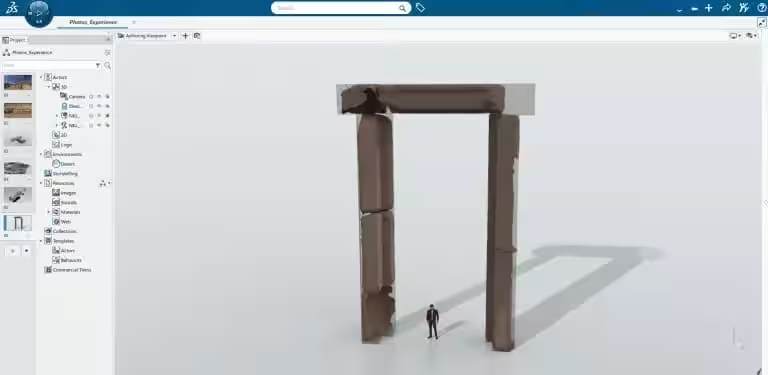
While the haul included a variety of significant structural elements—such as base slabs, doorjambs, and lintels—the standout discovery was a pylon featuring an Egyptian-style door dating back to the Hellenistic period. Researchers suggest this artifact was part of the lighthouse’s primary entrance, a monumental gateway that had previously evaded documentation. The finding is particularly valuable as it provides physical proof of a fusion between Egyptian and Hellenistic design traditions, offering a tangible look at how these distinct cultures influenced the architecture of Alexandria, the intellectual hub of the Mediterranean world.
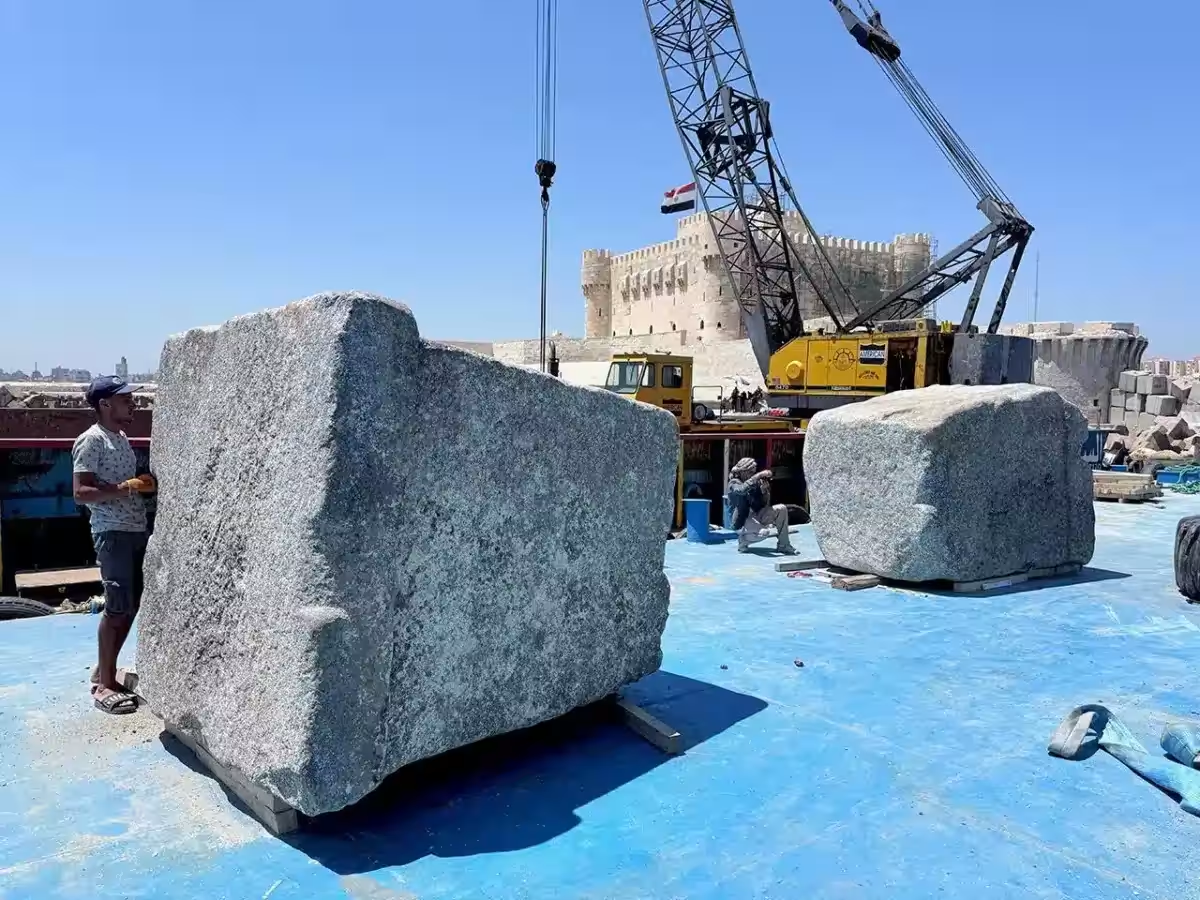
Following recovery, these blocks undergo rigorous photogrammetric processing. By capturing overlapping high-resolution photographs, the team constructs precise 3D digital models, which are then integrated into a virtual repository of more than 100 previously digitized artifacts.
Decades of Underwater Exploration
The submerged ruins near Alexandria were first documented in 1968, but systematic efforts did not begin in earnest until 1994, when a landmark survey identified over 3,300 objects, including obelisks, sphinxes, and granite blocks. The following year, archaeologist Jean-Yves Empereur led the formal cataloging of these submerged remains. GEDEON Programmes, which co-financed the 1995 expedition and produced the documentary “The Seventh Wonder of the World,” has returned three decades later to support this latest phase of discovery.
Constructing a Digital Twin
The ultimate objective of the PHAROS project is to build a high-fidelity digital twin of the lighthouse. Using data from the physical scans, engineers and researchers treat the submerged remains like a massive puzzle, simulating structural assembly to test theories on how the lighthouse was engineered and how it eventually succumbed to the elements. This effort involves a multidisciplinary team of historians, numismatists, and architects, who cross-reference archaeological findings with ancient written records and artistic depictions spanning from the late fourth century B.C. to the 15th century A.D.
Commissioned by Ptolemy I Soter and designed by Sostratus of Cnidus, the lighthouse once stood over 100 meters tall, serving as a critical maritime beacon for more than a millennium. While a devastating earthquake in 1303 rendered the structure unsalvageable, and subsequent generations repurposed much of its stone for the nearby Qaitbay Citadel, the blocks recovered today offer a rare, preserved glimpse into the original grandeur of one of the ancient world’s most enduring wonders.
This article has been fact checked for accuracy, with information verified against reputable sources. Learn more about us and our editorial process.
Last reviewed on .
Article history
- Latest version
Reference(s)
- “Centre national de la recherche scientifique (CNRS).”, September 17, 2026 Centre national de la recherche scientifique (CNRS) <https://www.cnrs.fr/>.
- Systèmes, La. “The Gates of the Alexandria Lighthouse Emerge from the Sea!.”, June 25, 2025 La Fondation Dassault Systèmes <https://www.lafondation3ds.org/news/gates-alexandria-lighthouse-emerge-sea/>.
Cite this page:
- Posted by Vikram Desai