Stunning 14th Century Shipwreck Discovered Beneath Tallinn Street With Everything Left Behind
Investigators are unravelling the mystery behind a massive Northern European shipwreck where the crew vanished, leaving their belongings and rats behind.
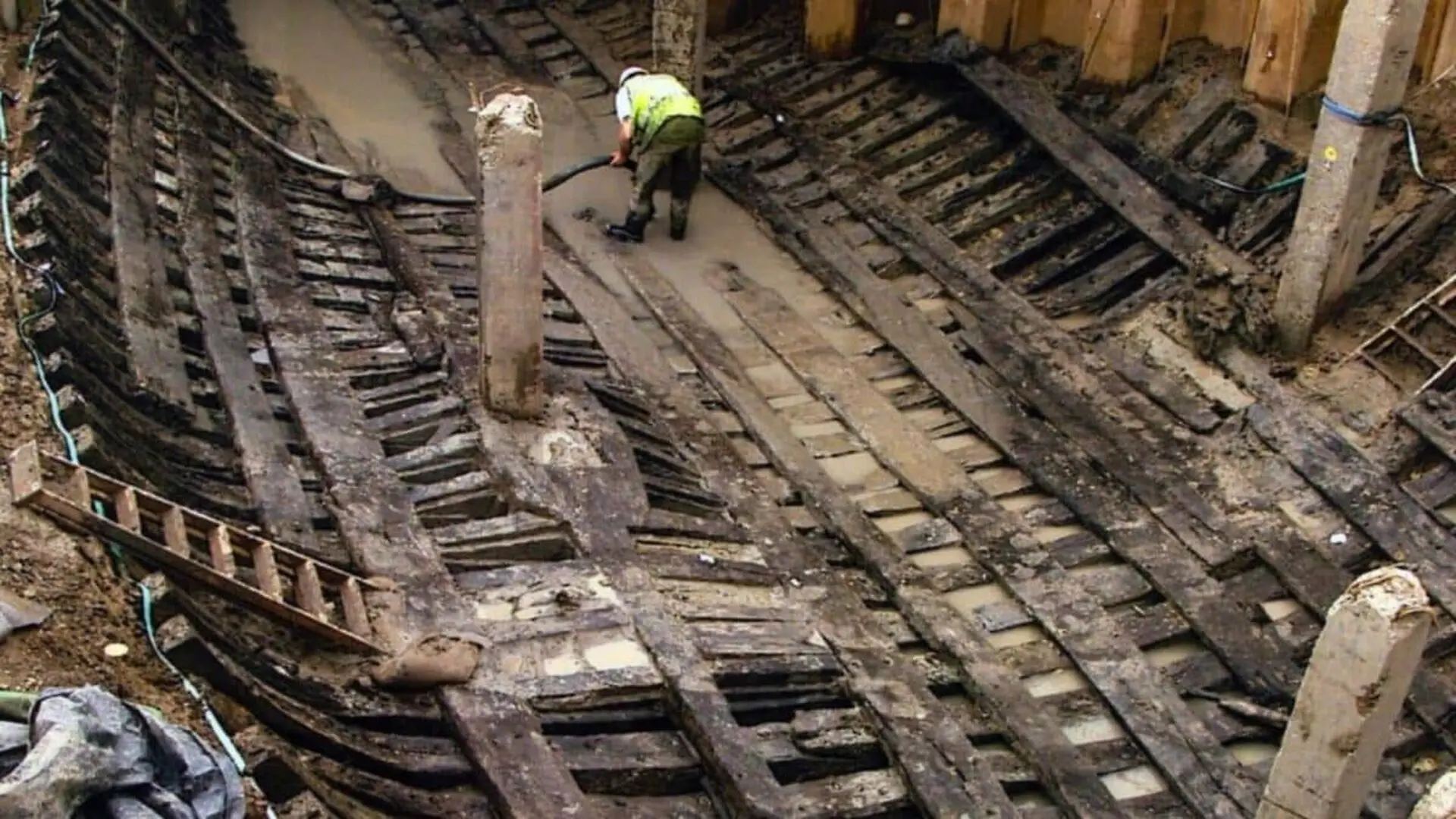
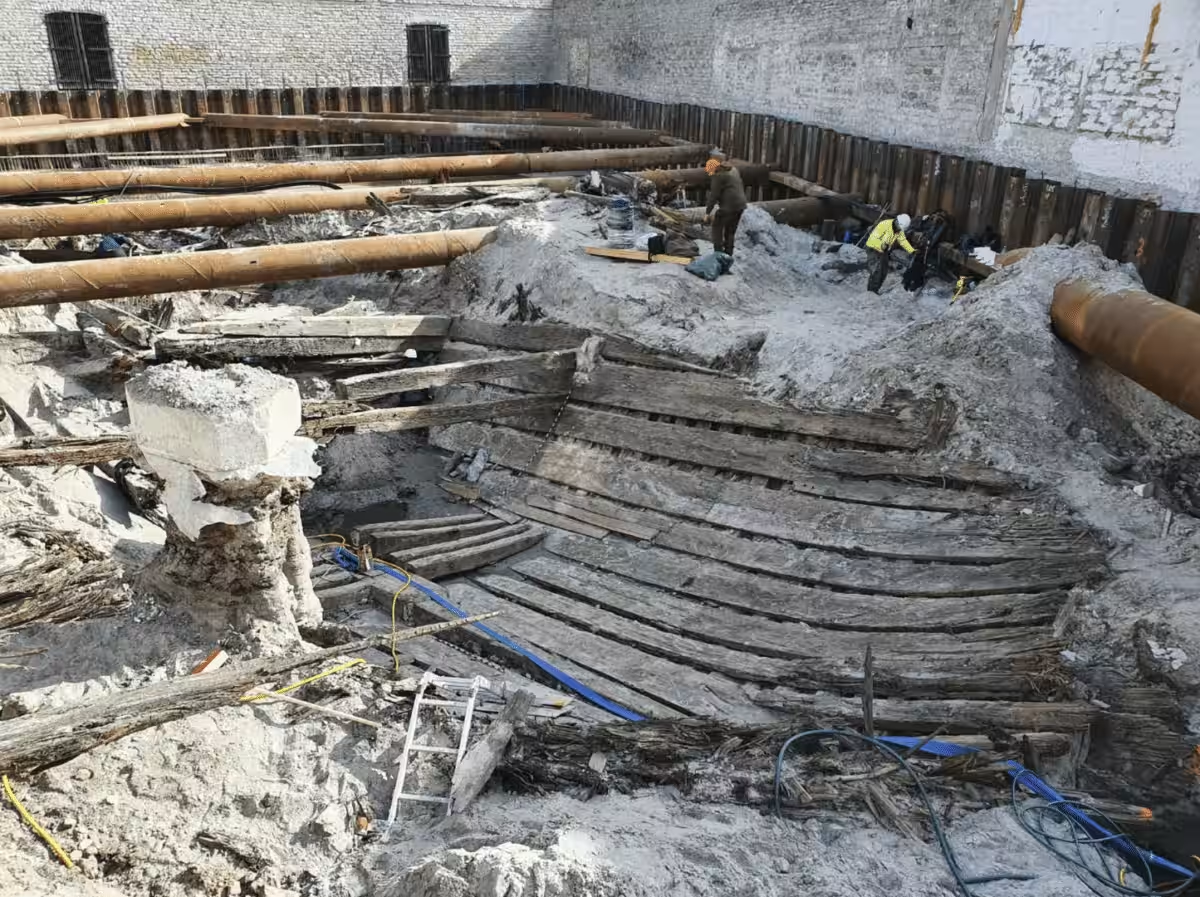
Construction workers in Tallinn, Estonia, were clearing ground for a new office development on Lootsi Street when their machinery struck an unexpected obstacle: the massive oak hull of a 14th-century merchant vessel. Buried 1.5 meters beneath the modern city pavement, the site of the find once served as a shallow coastal bay. The ship, a remarkably preserved cog measuring roughly 24.5 meters in length and 9 meters in width, has now been identified as one of the most significant medieval maritime discoveries in Northern Europe.
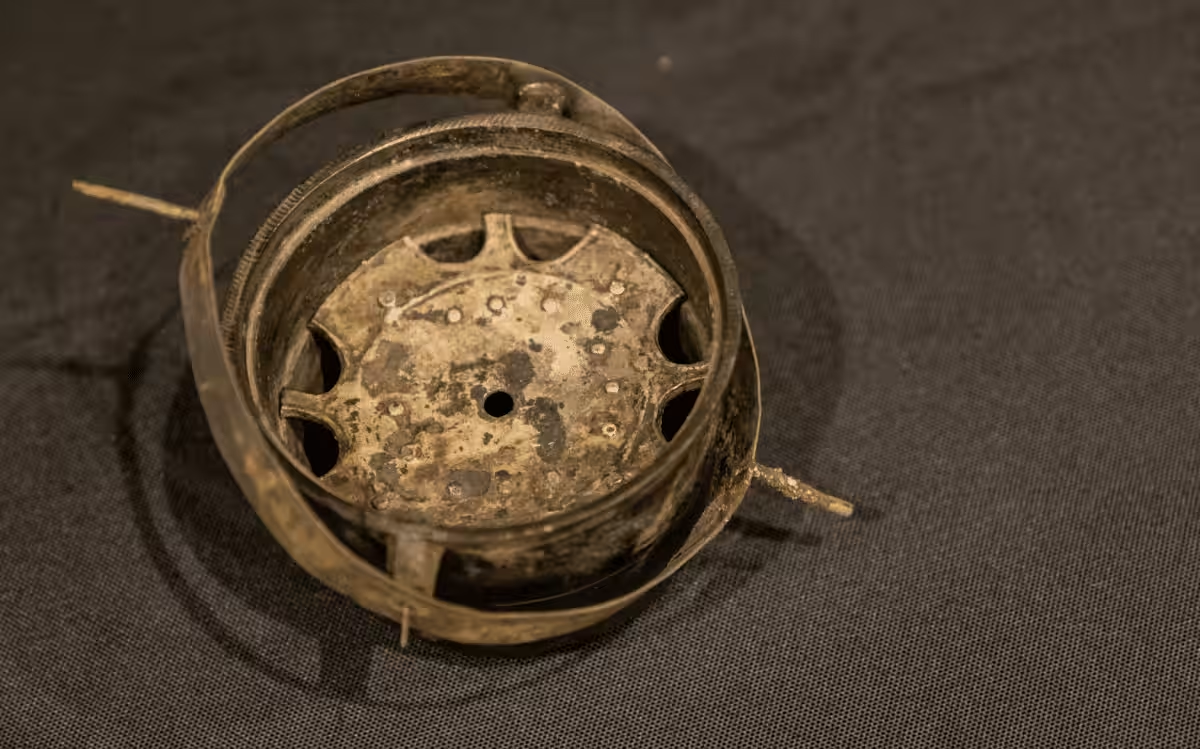
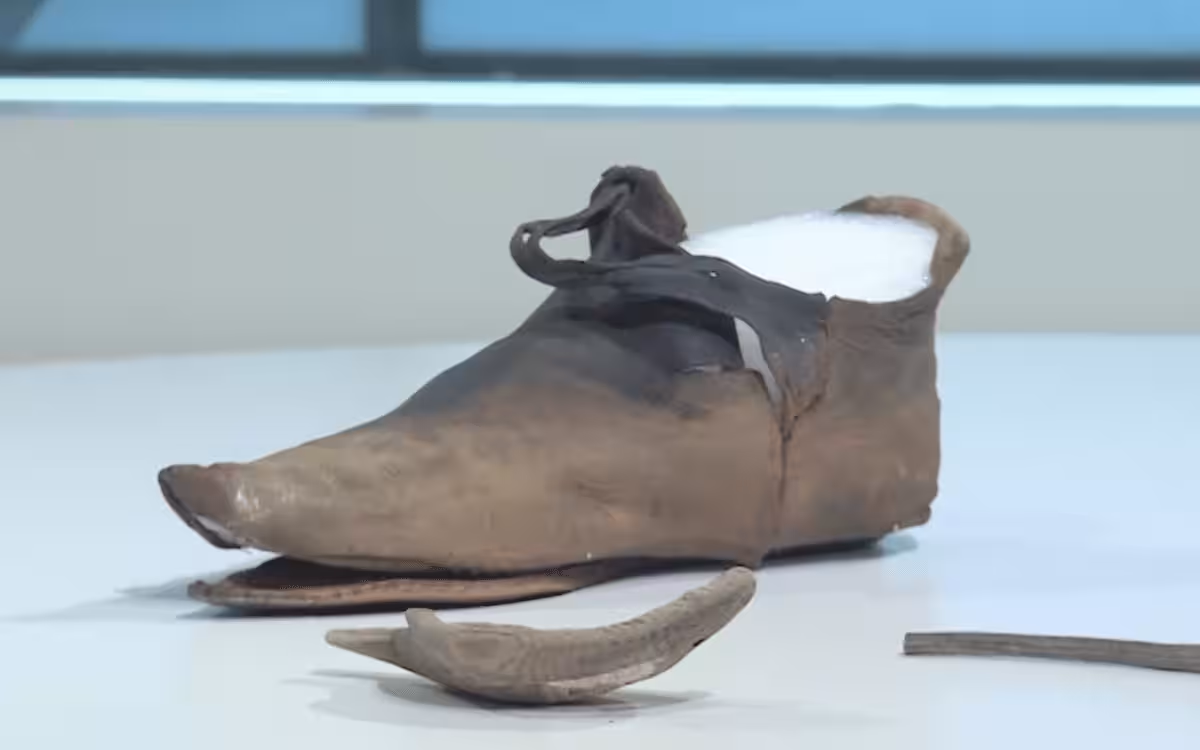
The vessel appears to have been abandoned in haste, as it remained largely intact with its cargo and personal effects untouched by time. Among the artifacts recovered are worn leather footwear, specialized maritime tools, weaponry, household implements, and a dry navigational compass that experts now believe to be the oldest functional example ever discovered on the continent. Further adding to the find’s biological significance, two ship rats were discovered encased in spilled tar, their remains so well-preserved that they offer a rare opportunity for future DNA analysis.
Tracing the Timber of a Medieval Trade Powerhouse
A comprehensive dendrochronological study, published in May 2026 in the journal Dendrochronologia, has mapped the origins of the ship’s materials with seasonal precision. Researchers from the Estonian Maritime Museum, the University of Tartu, and Denmark’s Dendro.dk analyzed 87 timber specimens from the wreck to reconstruct its construction history.
The findings indicate that the vessel’s lower hull was crafted from oaks harvested along the Lithuanian coastline during the winters of 1370 and 1372. By 1373 and 1374, construction shifted to the upper deck and galley components, which were built using trees harvested near Tallinn. This dual-origin sourcing suggests a complex maritime network where a vessel might be commissioned in one region, only to receive final outfitting by local craftsmen hundreds of kilometers away. The oak used for the ship’s cargo components matches timber found in historical structures within Tallinn, such as the city’s medieval Bremen Tower.
Engineering Ingenuity Amidst Structural Risks
The forensic examination of the hull provided an unprecedented cross-sectional view of medieval shipbuilding practices. Researchers discovered that approximately 24 percent of the timber planks featured “moon rings,” a physiological anomaly caused by severe cold or physical damage during a tree’s growth cycle. While typical medieval oak samples show this defect in only 1 percent of trees, the high prevalence in the Lootsi cog suggests the builders were working with challenging materials.
However, the analysis revealed that the 14th-century shipwrights were highly proficient. In areas where the weakened wood was utilized for the hull, the builders installed internal reinforcing planks to compensate for potential structural failures. This indicates a sophisticated understanding of material science, allowing them to mitigate risks while relying on a regional timber supply that was simultaneously fueling shipyards across the Baltic and North Seas.
A Sudden End and a Secret Beneath the Surface
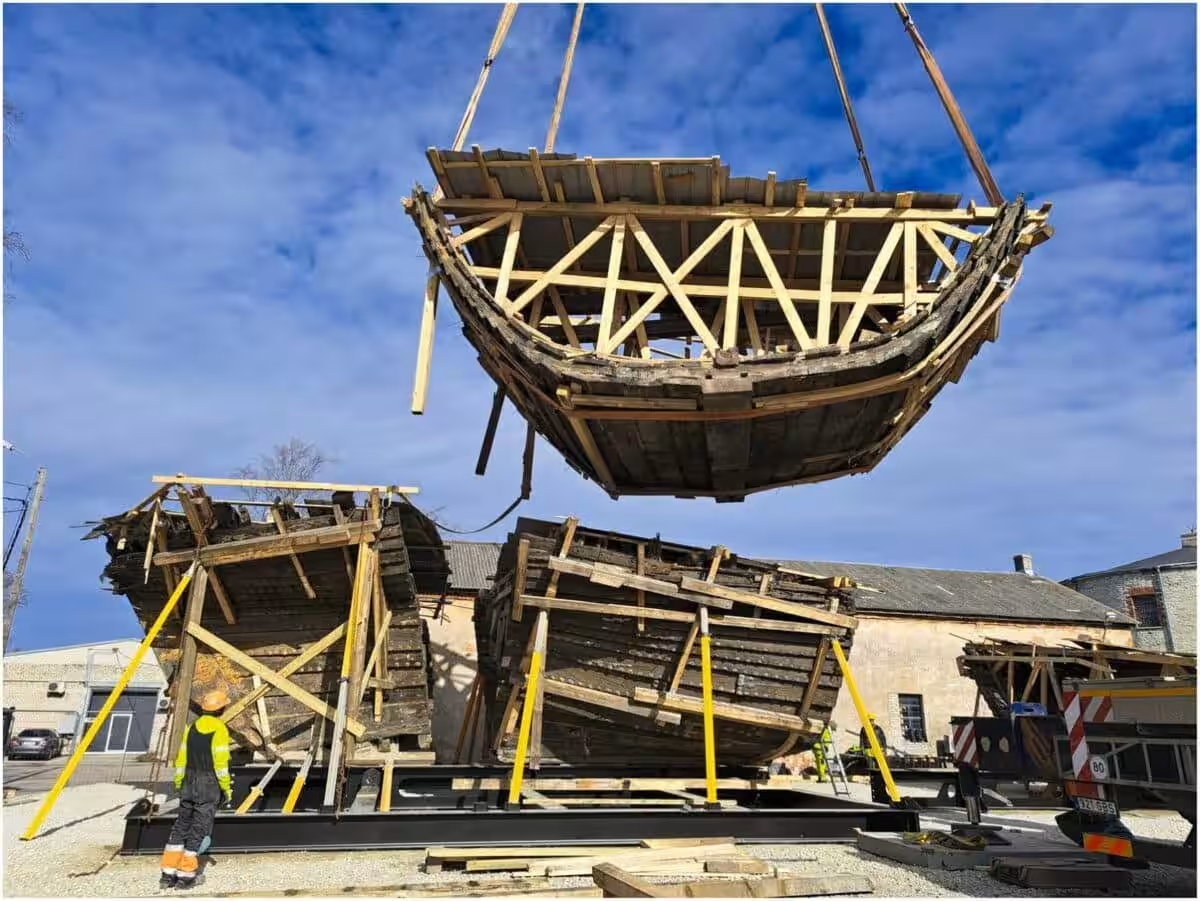
Priit Lätti, a researcher at the Estonian Maritime Museum, describes the scene of the wreck as chaotic rather than abandoned. The presence of repaired shoes, stored food supplies, and construction materials like ceramic roof tiles suggests a fully operational vessel that likely met a sudden end. While the stern remains well-preserved, the bow was likely salvaged by locals shortly after the sinking, as sections of it were visibly removed.
This site holds further mysteries. In 2009, construction nearby revealed another vessel dating back to the 13th century. Unlike the Lootsi cog, which was carefully sectioned and moved for conservation, the older wreck has been left in situ. According to Lätti, this is a strategic decision intended to protect the timber, which is best preserved in its waterlogged, oxygen-deprived environment. By leaving the 13th-century ship in the ground, researchers hope to allow future generations with more advanced technologies to conduct further investigations. For now, the site remains a protected monument, resting beneath a street ironically named for the maritime pilots who once guided ships into these very waters.
This article has been fact checked for accuracy, with information verified against reputable sources. Learn more about us and our editorial process.
Last reviewed on .
Article history
- Latest version
Reference(s)
- Daly, Aoife., et al. “Timber for a medieval Cog – Wood studies of the Lootsi 8 wreck, Tallinn.” Dendrochronologia, vol. 97, May 1, 2026, pp. 126519 Elsevier BV, doi: 10.1016/j.dendro.2026.126519. <https://www.sciencedirect.com/science/article/pii/S1125786526000512>.
- “Wreck of the Lootsi cog - Meremuuseum.”, September 20, 2023 Meremuuseum <https://meremuuseum.ee/en/wreck-of-the-lootsi-cog/>.
Cite this page:
- Posted by Vikram Desai