New Portable X-Ray Scanner Reads 4,000-Year-Old Sealed Messages Without Breaking Clay
For 4,000 years, ancient clay envelopes remained a mystery. Now, new technology reveals their hidden contents without the need to shatter them.
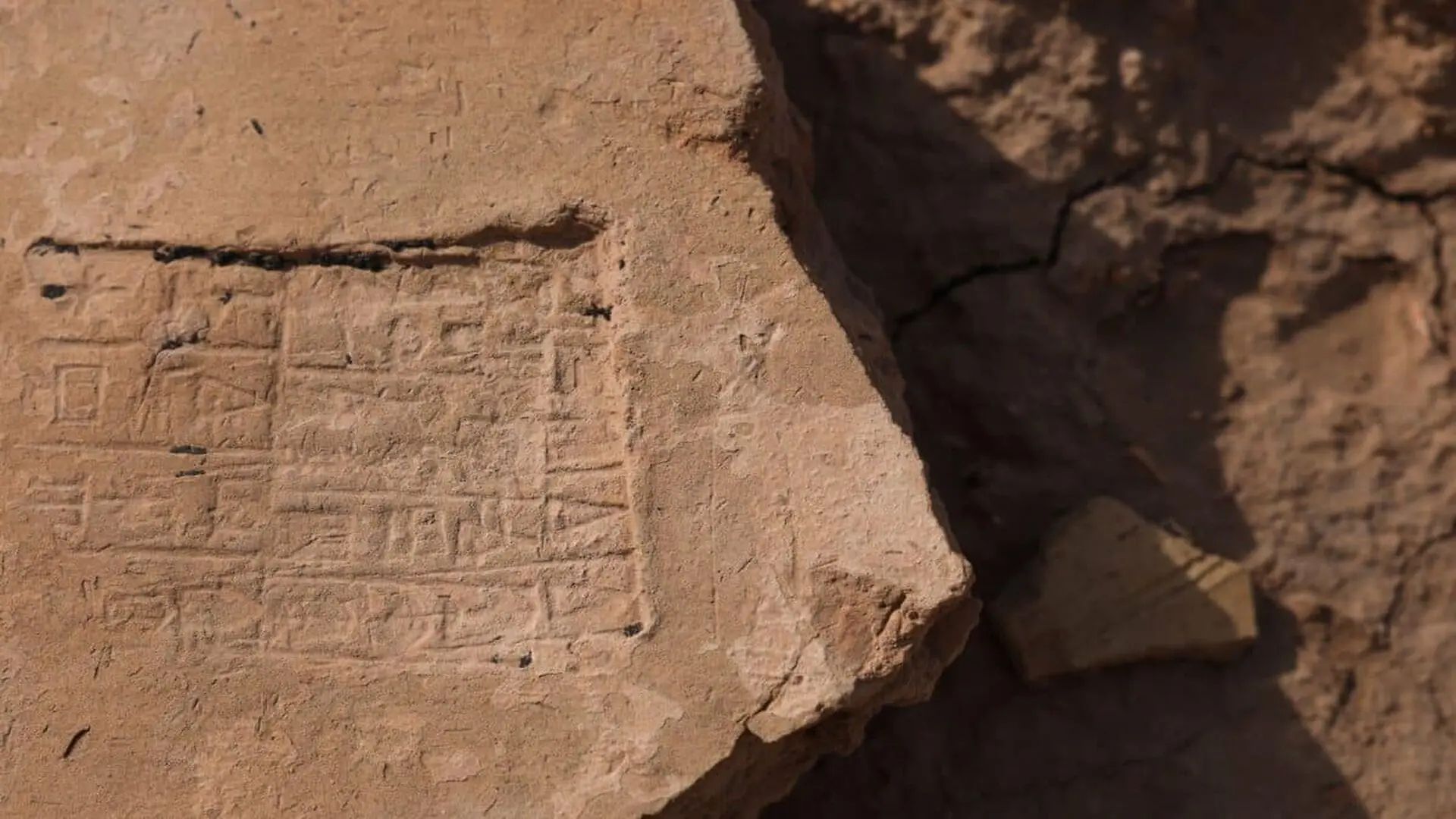
A team of European researchers has developed a breakthrough method to read 4,000-year-old messages locked inside clay envelopes without ever breaking them. By utilizing a specialized, transportable X-ray scanner, scientists can now peer through the outer shells of ancient Mesopotamian artifacts, uncovering intimate details of history that have remained shielded from view for millennia.
For decades, scholars were forced to destroy the protective outer layers of these artifacts to read the cuneiform tablets sealed within. With hundreds of thousands of such objects recovered across the Middle East, this destructive requirement often meant that many documents—frequently containing sensitive administrative or legal data—remained permanently closed. A collaboration between the Deutsches Elektronen-Synchrotron and the University of Hamburg has now eliminated this trade-off, enabling the “virtual unwrapping” of these historical time capsules.
Advanced Imaging Designed for Fieldwork
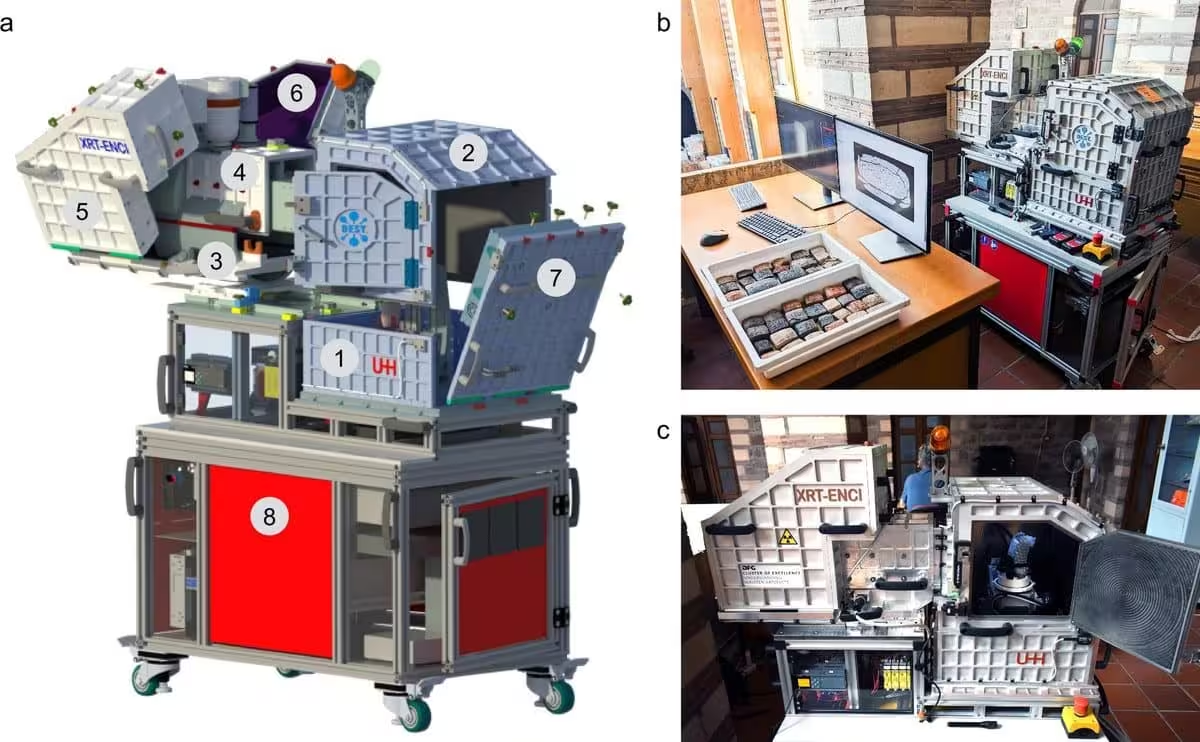
The system, known as ENCI (Extracting Non-destructively Cuneiform Inscriptions), was built specifically for mobility, as detailed in the journal npj Heritage Science. By allowing the equipment to be disassembled and reassembled on-site at museums, researchers can now conduct high-resolution scans while ensuring fragile artifacts never leave their secure, climate-controlled environments.
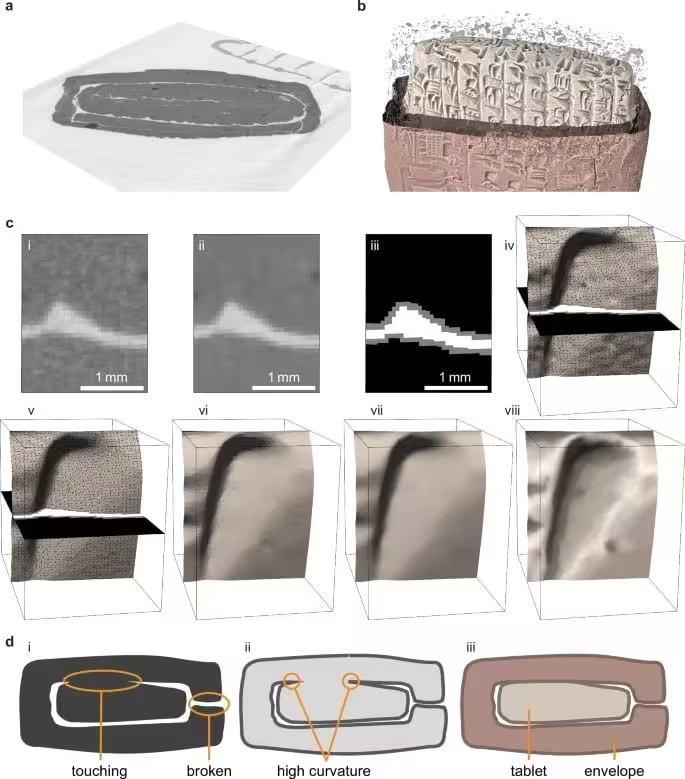
The technology relies on high-energy X-rays combined with a 2mm copper filter to mitigate beam-hardening—a common distortion effect where dense clay disrupts clear imaging. Sophisticated reconstruction software then processes the raw data, allowing historians to visualize and transcribe the hidden texts with complete structural integrity.
A Domestic Dispute Revealed in Clay
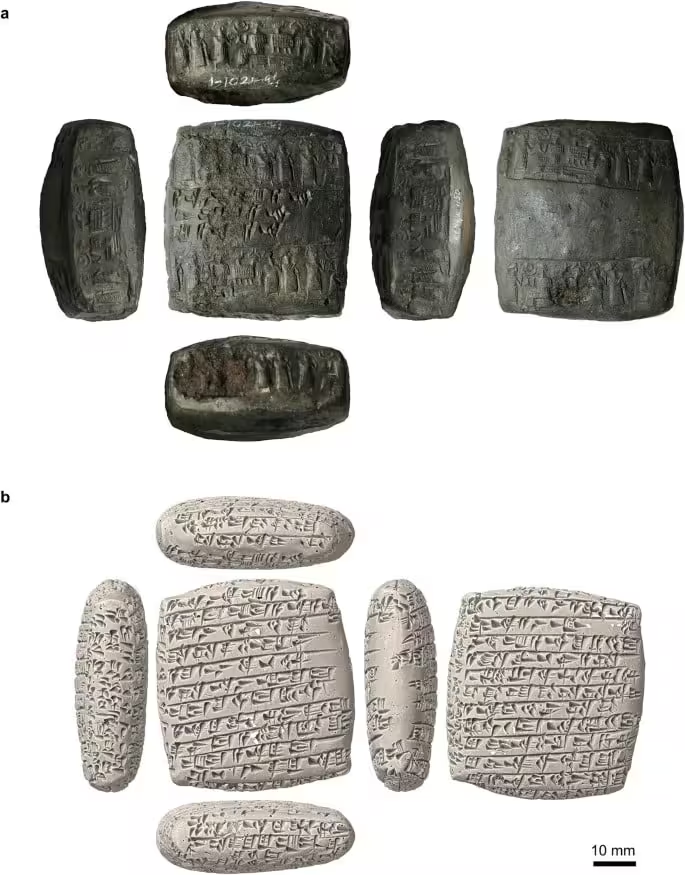
Among the first findings to emerge from the scanner in Ankara is a remarkably candid letter from a woman named Anna-anna to her husband, the merchant Ennum-Aššur. The text offers a rare, humanizing glimpse into the domestic and economic pressures of the era. With her husband away on business, Anna-anna was left to manage the collection of a debt from a man named Laqēpum, who was refusing to pay, citing previous arrangements with a third party.
The frustration in Anna-anna’s writing is palpable as she urges her husband to return home, questioning his preoccupation with business dealings at the expense of their household stability. Her letter provides vital evidence of the significant agency women held in managing trade-focused households, often serving as the primary authority in their husbands’ absence.
“Why do you keep turning your head towards the lapis lazuli? Here, your instructions concerning silver, 10 or 20 minas that are either in Burušhattum, or in Wahšušana, or here, you left your instructions and you keep turning your head towards it. If within 10 days you have not arrived, as for your departure, stand up and come.”
Unexpected Discoveries
The versatility of the ENCI system was further highlighted by the analysis of a 1993 discovery from the home of Ali-ahum. While examining a loan contract intended to be broken only upon debt repayment, the scanner identified a 4,000-year-old barley seed trapped inside the clay casing. This incidental inclusion provides researchers with a rare look at the organic environment surrounding these cuneiform tablets.
This success suggests that the non-destructive approach could unlock a wealth of information from other sealed archaeological finds, potentially preserving thousands of objects that have remained unstudied due to the risks associated with manual opening. While the fate of the merchant Ennum-Aššur remains a mystery, the capacity to read the words of those who lived before us offers a transformative new tool for understanding the ancient world.
This article has been fact checked for accuracy, with information verified against reputable sources. Learn more about us and our editorial process.
Last reviewed on .
Article history
- Latest version
Reference(s)
- Michel, Cécile., et al. “Deciphering 4000-year-old cuneiform letters hidden in clay envelopes using a mobile X-ray computed tomography scanner.” npj Heritage Science, vol. 14, no. 1, May 8, 2026 Springer Science and Business Media LLC, doi: 10.1038/s40494-026-02568-7. <https://doi.org/10.1038/s40494-026-02568-7>.
Cite this page:
- Posted by Vikram Desai