Archaeologists Discover 3,000-Year-Old Weapon Forged From A Fallen Star In China
Laboratory tests confirm that an ancient iron artifact was crafted from meteoric metal, revealing its extraterrestrial origins.
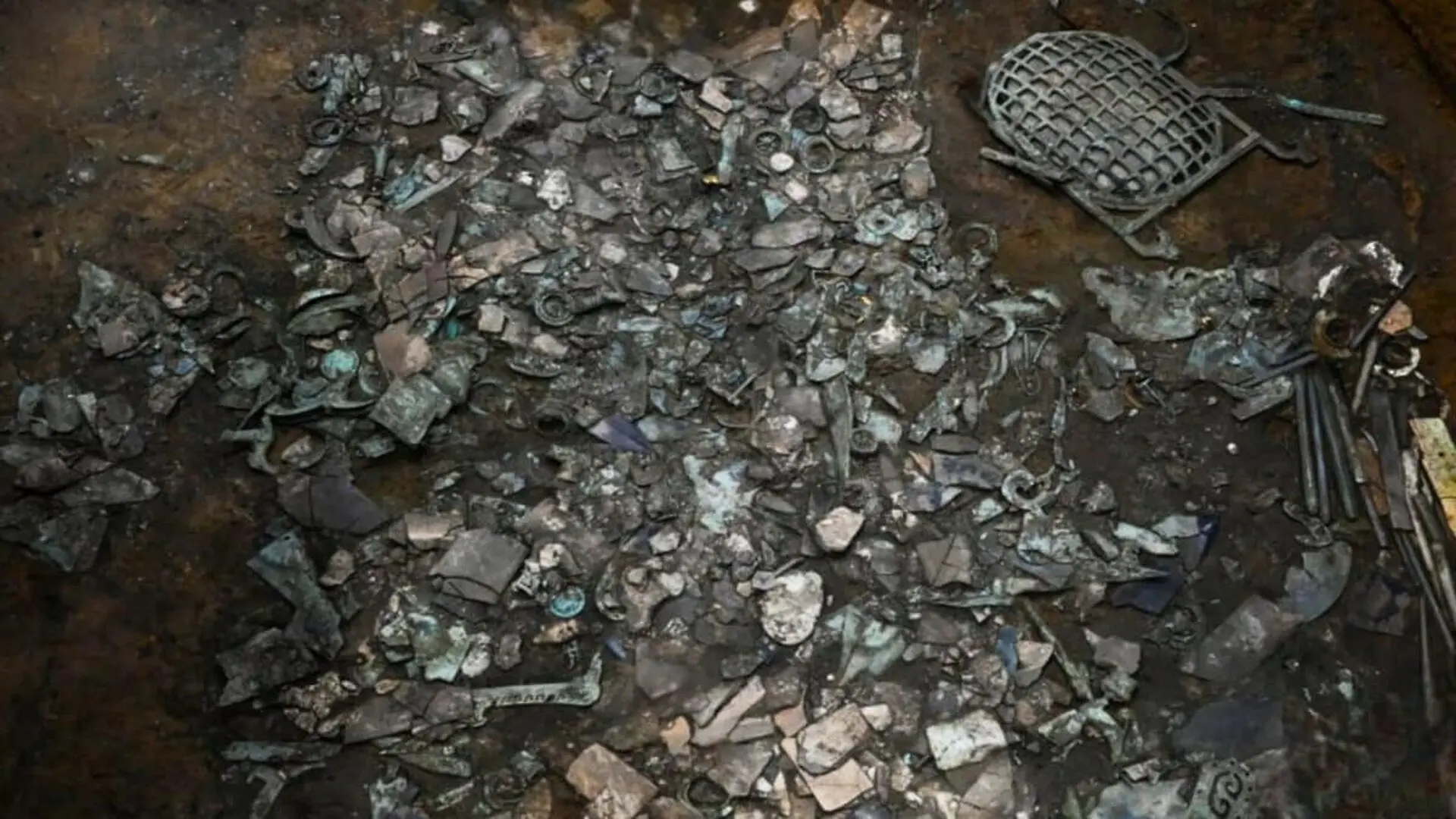
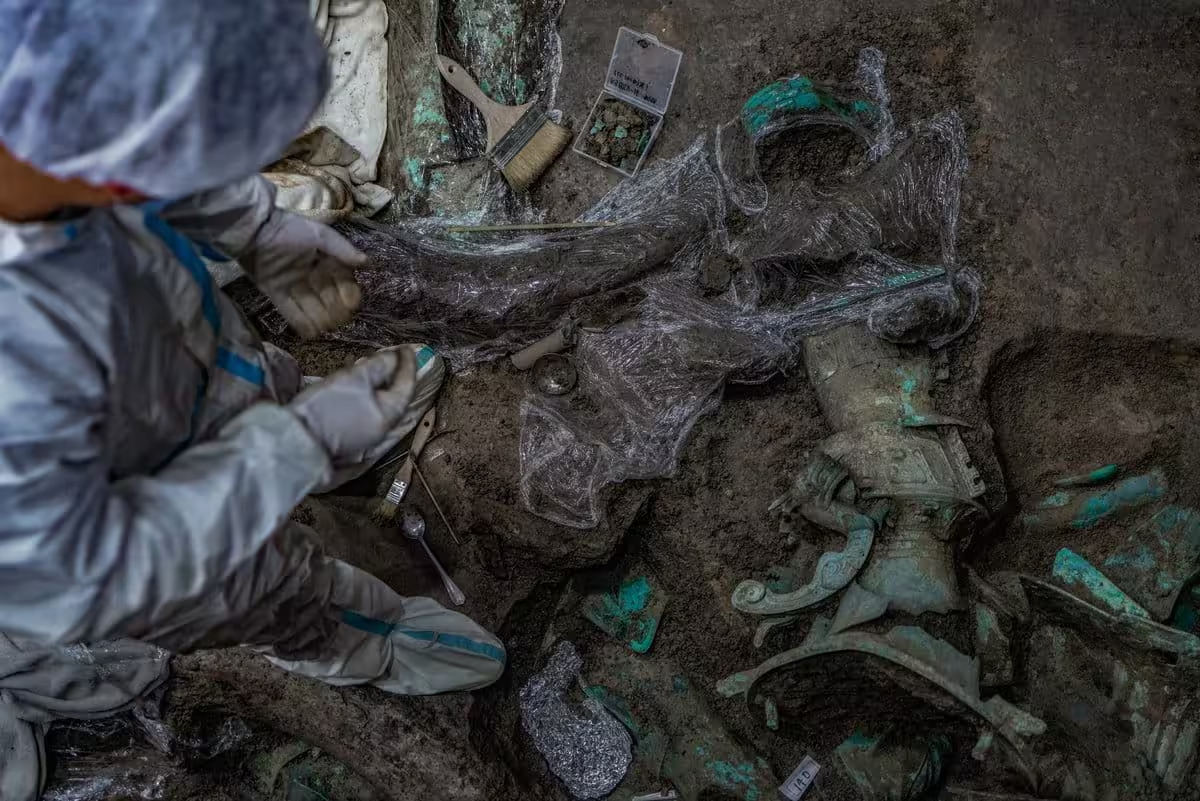
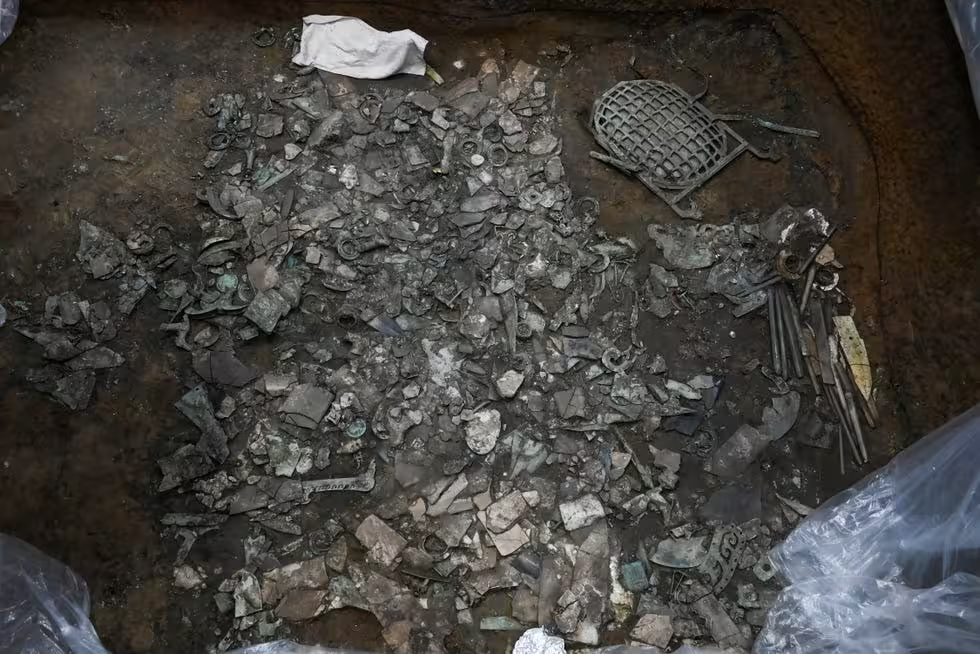
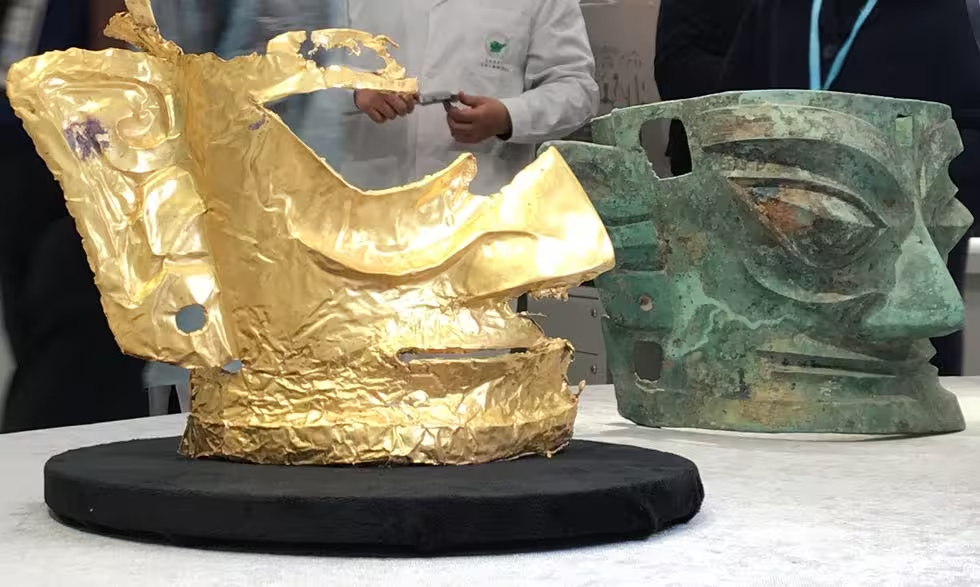
Archaeologists working at the Sanxingdui site in China’s Sichuan Province have unearthed an extraordinary artifact that defies the metallurgical conventions of the Bronze Age. Discovered embedded upright in the southern wall of Pit No. 7, the 20-centimeter, axe-shaped object has spent three millennia buried alongside thousands of ritual items, including iconic bronze masks and ivory carvings.
A recent analysis published in the journal Archaeological Research in Asia confirms that the tool was not forged from terrestrial ore. Instead, it was crafted from a meteorite, marking it as the largest meteoritic iron artifact ever recovered in China.
Extraterrestrial Origins Confirmed by Chemical Signature
Initial investigations using X-ray fluorescence revealed that the artifact is composed of at least 90 percent iron, with a significant 7.41 percent nickel content distributed uniformly throughout the metal. Further examination via electron microscopy identified nickel levels closer to 20 percent, a concentration significantly higher than the average found in other Chinese meteoritic iron relics.
The research team, led by Haichao Li of Sichuan University, noted that the metal’s crystalline grain structure is consistent with the exceptionally slow cooling processes that occur in space, rather than the rapid cooling seen in Earth-based smelting. During the late Shang period (roughly 1600 to 1050 BC), regional smiths had mastered sophisticated bronze production, but widespread iron smelting did not emerge in China until approximately 800 BC. The creators of this axe clearly possessed the skill to shape celestial iron, even without the high-temperature furnaces required to smelt terrestrial iron ore.
A Distinct Metallurgical Legacy
While thirteen meteoritic iron artifacts have been identified across China, the Sanxingdui find is unique. In the Central Plains, meteoritic iron was typically used as an inlay or a minor decorative component for elite burial goods. The Sanxingdui axe, conversely, is composed entirely of the space-faring material and lacks any decorative flourishes.
The researchers highlight that this discovery provides critical evidence of a distinct metallurgical tradition in Southwest China that differs markedly from its contemporaries. Whether the axe functioned as a practical tool for carving hard materials or served a purely symbolic, ritualistic purpose remains a subject of ongoing debate. Some evidence suggests that the extreme hardness of this meteoritic iron may have allowed it to be used as a cutting implement for the ornate bronze work found throughout the site.
Pinpointing the Source of the Celestial Metal
Despite the confirmation of its extraterrestrial origin, the specific classification of the meteorite remains elusive. Zishu Yang, a researcher involved in the study, noted that while current analysis offers preliminary insights, it is not yet sufficient to define the specific type of meteorite. The team plans to compare the artifact’s elemental composition against records of known meteor falls in the region to clarify its origins.
Because the object has suffered significant corrosion during its three millennia in the earth, researchers are exercising caution with further physical sampling. Future efforts will prioritize high-resolution characterization to better understand how this rare material was integrated into the daily and ritual life of the Sanxingdui civilization, ultimately filling a significant gap in the historical record of global metallurgy.
This article has been fact checked for accuracy, with information verified against reputable sources. Learn more about us and our editorial process.
Last reviewed on .
Article history
- Latest version
Reference(s)
- Li, Haichao., et al. “The earliest meteoritic iron artefact of the Chinese Bronze Age discovered at Sanxingdui, Southwest China.” Archaeological Research in Asia, vol. 46, June 1, 2026, pp. 100692 Elsevier BV, doi: 10.1016/j.ara.2026.100692. <https://doi.org/10.1016/j.ara.2026.100692>.
Cite this page:
- Posted by Vikram Desai