New Fossil Discovery Reveals Denisovan Anatomy Was Nothing Like Their Neanderthal Cousins
A tiny bone fragment discovered in a Chinese cave is rewriting the history of a mysterious human lineage, filling a decade-long gap in our understanding.
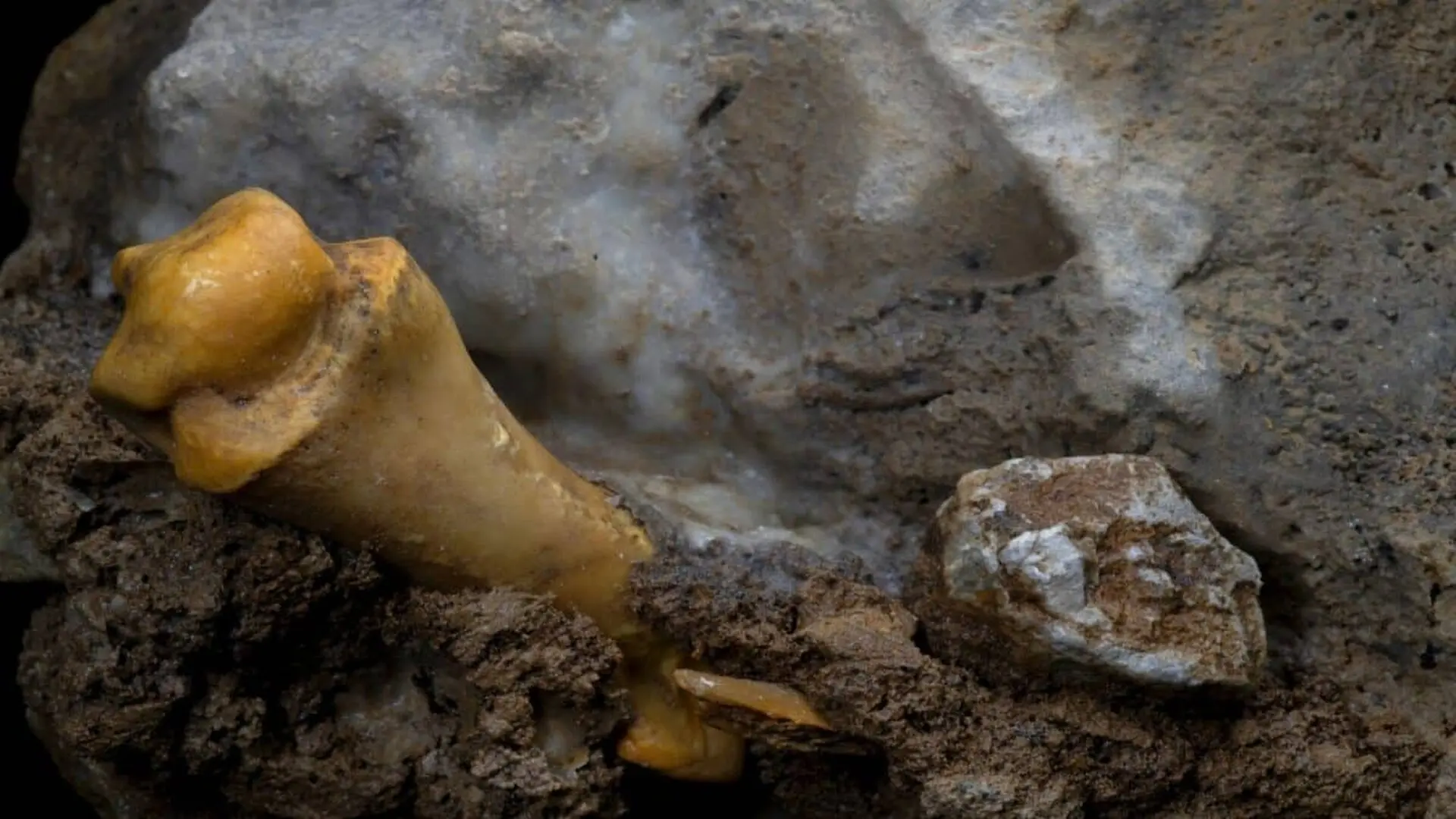
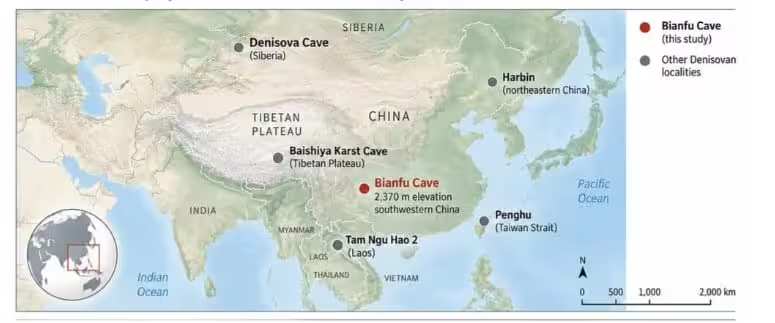
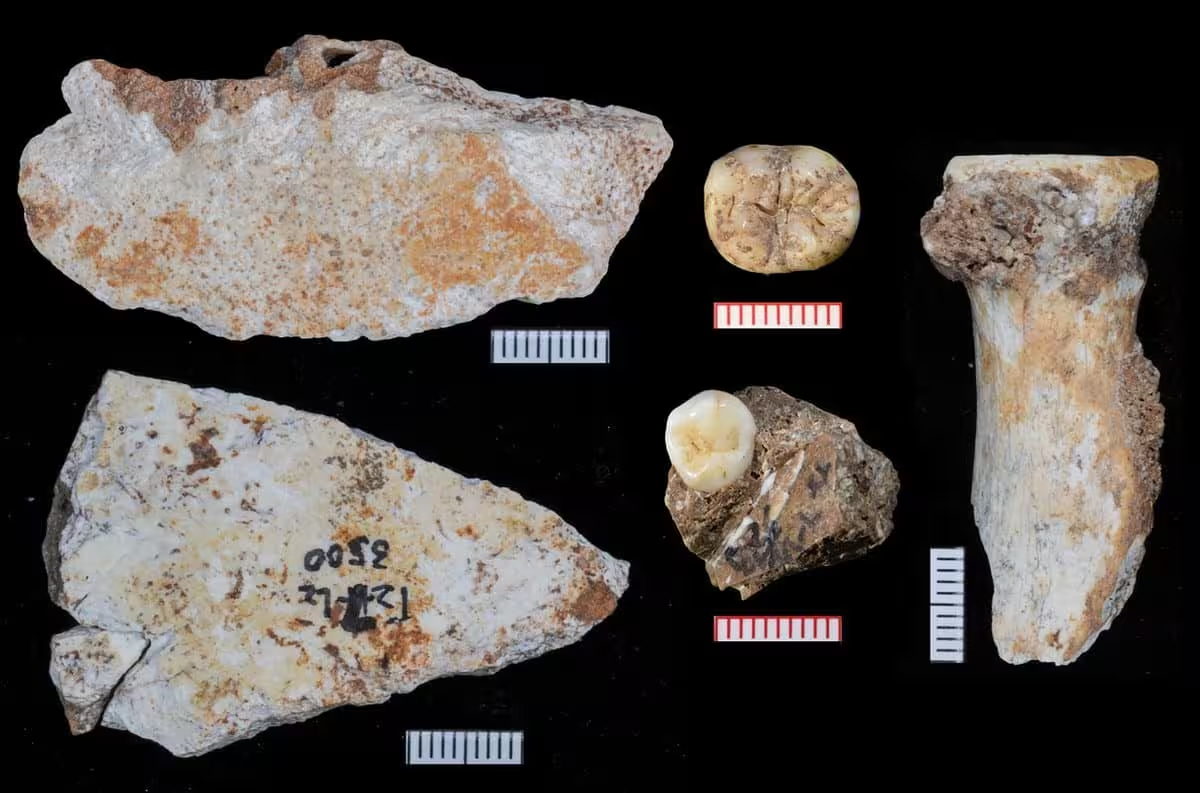
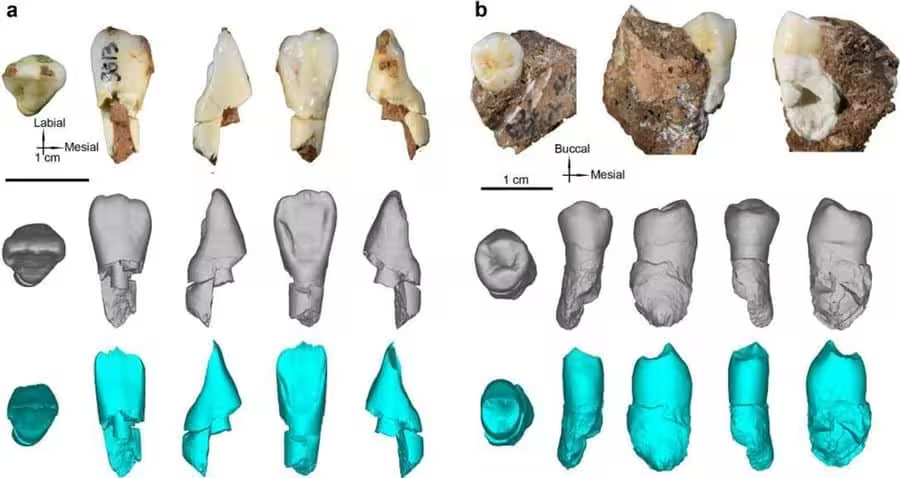
A slender, 4.5-centimeter segment of a forearm bone has provided researchers with a rare and unprecedented look at the skeletal structure of the Denisovans, an enigmatic group of archaic humans. Unearthed in a cave located in southwestern China, the fossilized radius belonged to an individual who lived approximately 134,000 to 142,000 years ago. The discovery was part of a broader excavation at Bianfu Cave in Yunnan Province, which also yielded skull fragments, teeth, stone implements, and a substantial collection of faunal remains.
For years, our understanding of Denisovans relied almost exclusively on genetic data recovered from a single finger bone identified in 2010. While the fossil record has gradually expanded through the discovery of dental remains and jaw pieces, physical evidence of their overall morphology has been scarce. This latest find, detailed in two new studies published in Nature, helps bridge the gap in our knowledge regarding their physiology and behavior.
Anatomical Clues from the Forearm
The newly identified radius fragment displays a unique blend of characteristics. While the joint surface connecting to the elbow shares features with Neanderthals, the geometry of the bone’s neck and its overall profile align more closely with those of modern humans. Researchers noted that the placement of the biceps attachment point suggests a distinct mechanical advantage for rotational movement, or supination, though they caution that this does not necessarily equate to exceptional upper-body strength.
This mosaic of traits suggests that Denisovan limb anatomy followed a distinct evolutionary trajectory separate from that of their closest relatives, the Neanderthals. This finding reinforces observations made during the initial analysis of the Denisovan pinky bone, which also exhibited dimensions distinct from those typically associated with Neanderthals.
Decoding Biology Through Ancient Proteins
Because the environmental conditions at Bianfu Cave were hostile to the survival of ancient DNA, researchers relied on proteomic analysis to identify the fossils. Geneticist Qiaomei Fu noted that the site’s climate made DNA recovery impossible. By analyzing ancient proteins, which are significantly more resilient, the team successfully screened over 60,000 bone fragments.
Mass spectrometry pinpointed three human bone fragments, including the radius, and confirmed their link to the Denisovan lineage through the identification of a specific collagen variant. This protein-based classification places the Bianfu fossils in the same evolutionary group as the Denisova 3 specimen from Siberia, which serves as the primary genetic benchmark for the population.
Evidence of Sophisticated Subsistence
The artifacts recovered from the cave offer a rare glimpse into the daily life of this population. The collection includes 1,366 stone implements, primarily simple flakes, scrapers, and choppers. The presence of these tools alongside butchered remains of deer and wild cattle strongly suggests that the Denisovans at Bianfu were active hunters who systematically processed game for meat and marrow.
The archaeological context at Bianfu Cave is significant because it provides a clear, documented association between the Denisovan occupants and the tools they manufactured. Evolutionary geneticist Svante Pääbo, while not involved in the study, highlighted the importance of this development, noting that concrete evidence regarding the lifestyle and technological capabilities of the Denisovans has been a long-awaited advancement in the field.
This article has been fact checked for accuracy, with information verified against reputable sources. Learn more about us and our editorial process.
Last reviewed on .
Article history
- Latest version
Cite this page:
- Posted by Vikram Desai