Massive 2,000 Year Old Roman Ship Found Intact With 6,000 Amphorae Still On Board
Archaeologists have discovered a massive, remarkably intact 2,000-year-old shipwreck resting on the seafloor off the coast of a Greek island.
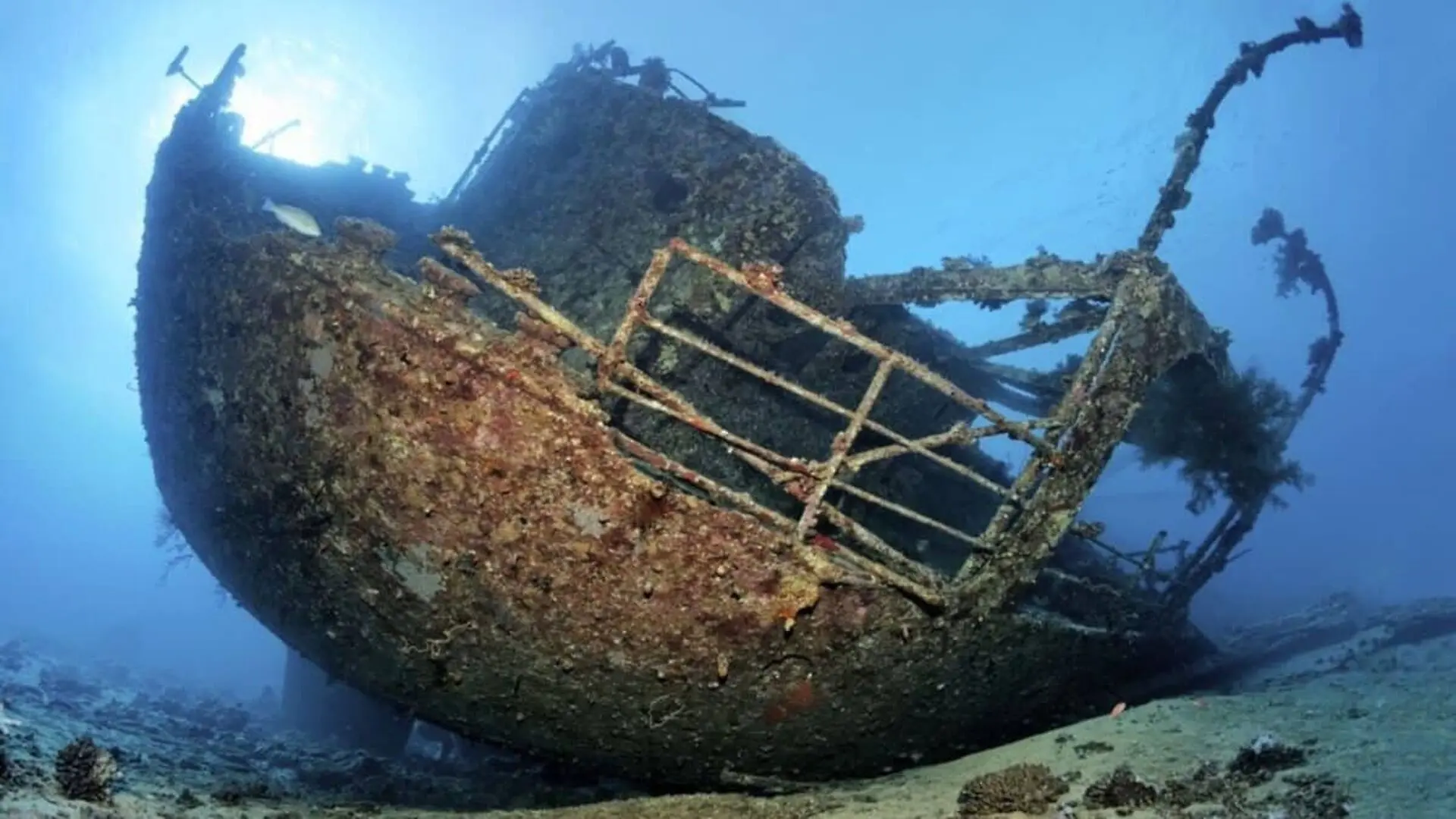
Marine archaeologists have identified one of the most significant maritime discoveries in the Mediterranean: a massive Roman merchant vessel resting on the seafloor near the Greek island of Kefallinia. The ship, which sank approximately 2,000 years ago, remains remarkably well-preserved, with its cargo of roughly 6,000 amphorae still largely intact.
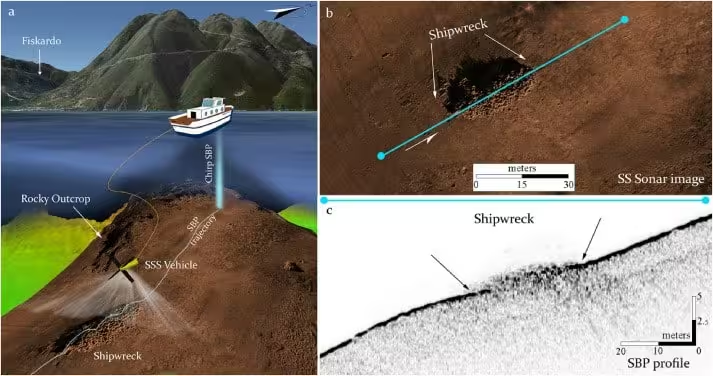
The wreckage was located during a 2013 cultural heritage assessment conducted by researchers from the University of Patras and the Aquatic Scuba Diving Club. Utilizing high-resolution sidescan sonar, the team discovered the vessel sitting in the Ionian Sea, approximately 2 kilometers (1.2 miles) from the entrance to the Fiskardo embayment.
Advanced Imaging Reveals Ancient Cargo
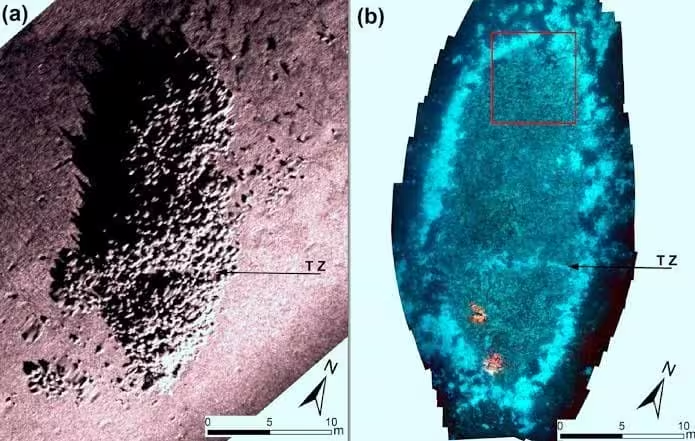
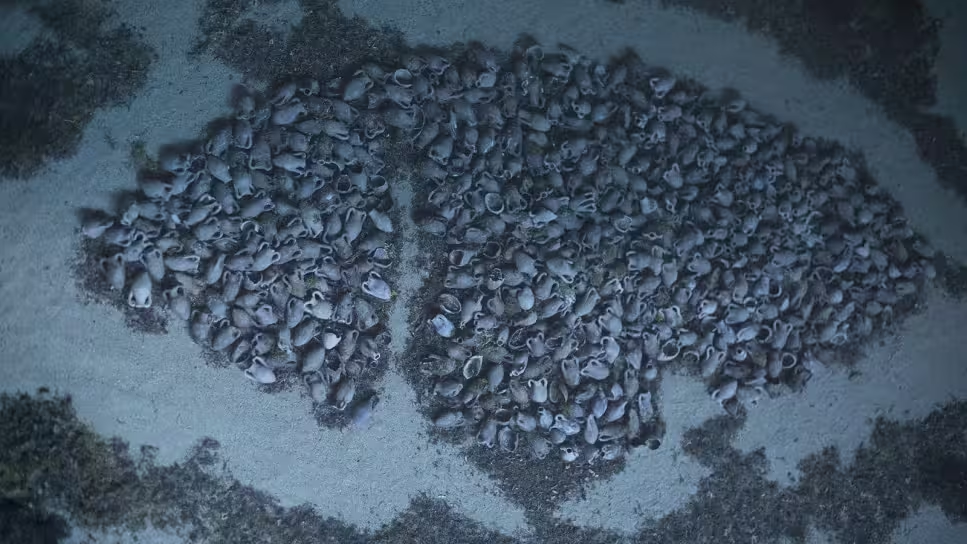
The findings, detailed in the Journal of Archaeological Science, provide a clear picture of the site. Geophysical data and orthophoto mosaics reveal an oval-shaped debris field where thousands of individual ceramic containers lie embedded in the muddy sand. A distinct, empty trench-like feature cuts through the center of the cargo, offering a stark visual contrast against the surrounding sediment.
A Record-Breaking Maritime Find
The sheer scale of the discovery is noteworthy. Measuring 34 meters (112 feet) in length and 13 meters (43 feet) in width, the vessel ranks among the four largest shipwrecks ever documented in the Mediterranean, and it holds the title of the largest found in the eastern region to date. Each individual amphora measures between 0.8 and 0.9 meters (2.6 to 3 feet) in height.
Based on the design of the ceramic vessels, the team—led by scholars including Dr. Xenophontas Dimas—has dated the wreck to a period between the 1st century BCE and the 1st century CE.
“The ‘Fiscardo’ shipwreck can be listed as one of the largest four found in the Mediterranean Sea and more specifically, the largest found to date in the eastern Mediterranean Sea.”
Clues to the Vessel’s Final Moments
The state of the wreckage provides researchers with a rare window into the ship’s final descent. Because the cargo mound maintains the structural outline of the vessel’s hull and the ship appears to have settled on its keel before slowly tilting to one side, experts believe the ship likely sank in calm conditions rather than being overwhelmed by a violent storm.
The geographical context of the find further solidifies the historical importance of the area. Given that other artifacts dating from 146 BCE to 330 CE have been recovered near the modern-day port of Fiscardo, researchers conclude that this site served as a vital commercial hub during the Roman era.
This article has been fact checked for accuracy, with information verified against reputable sources. Learn more about us and our editorial process.
Last reviewed on .
Article history
- Latest version
Reference(s)
- Ferentinos, George., et al. “Optimal sidescan sonar and subbottom profiler surveying of ancient wrecks: The ‘Fiskardo’ wreck, Kefallinia Island, Ionian Sea.” Journal of Archaeological Science, vol. 113, January 1, 2020, pp. 105032 Elsevier BV, doi: 10.1016/j.jas.2019.105032. <https://sciencedirect.com/science/article/pii/S0305440319301190?__cf_chl_tk=ENVeBsRdN8iiNciTh3OXPjtcFgkis4bgX71L_auXE5g-1789991633-1.0.1.1-MPDF9y7pmywfsR16wKv9dIvuOSEsEoaDWDg6Db5PEq8>.
- <https://www.researchgate.net/profile/Xenophon-Dimas>.
Cite this page:
- Posted by Vikram Desai