Stone Tools Suggest Neanderthals Ventured Far Deeper Into The Arabian Desert Than Thought
New stone tool evidence suggests Neanderthals inhabited Saudi Arabia 55,000 years ago, but experts are questioning if the findings truly confirm their presence.
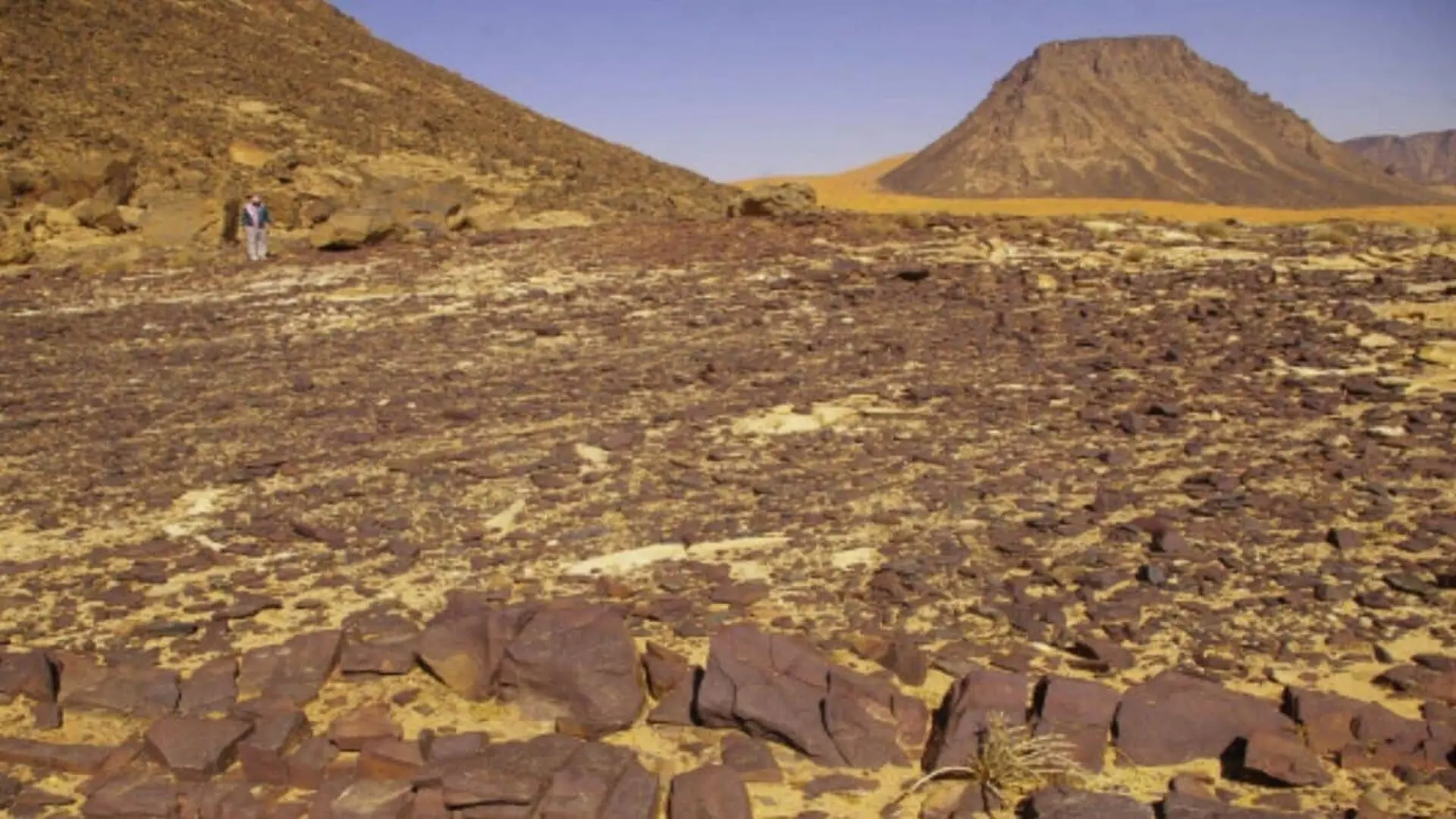
A new analysis of lithic artifacts discovered in Saudi Arabia’s Nefud Desert suggests that Neanderthals may have ventured significantly further south than previously assumed. Researchers believe these ancient hominins traversed the region approximately 55,000 years ago, pushing the known boundaries of their geographic range deep into the Arabian Peninsula.
The findings, published on August 12 in the journal Quaternary Science Reviews, center on an archaeological site known as Jebel Katefeh-1 (JKF-1), located near the city of Jubbah. While the lack of recovered bones or DNA means the conclusion remains speculative, the shape and construction of the tools provide a compelling case for a Neanderthal presence in an environment once thought too arid for their occupation.
Decoding the Stone Tool Record
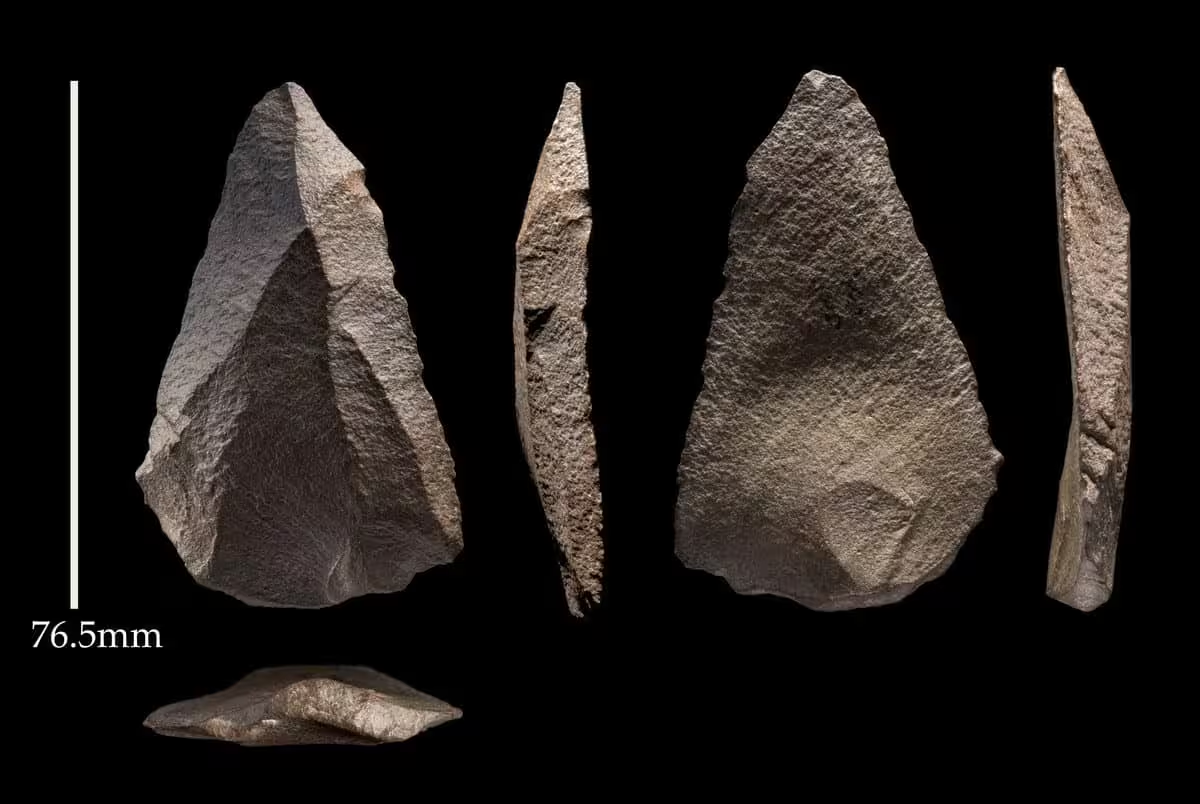
Historically, Neanderthals have been characterized as a species adapted to colder European climates, but recent discoveries in Siberia and the Middle East have challenged this view. The JKF-1 site, along with a nearby location designated as ALM-3, adds a new chapter to this narrative. Because organic remains were not found, the research team turned to statistical analysis to identify the creators of the group of tools unearthed there.
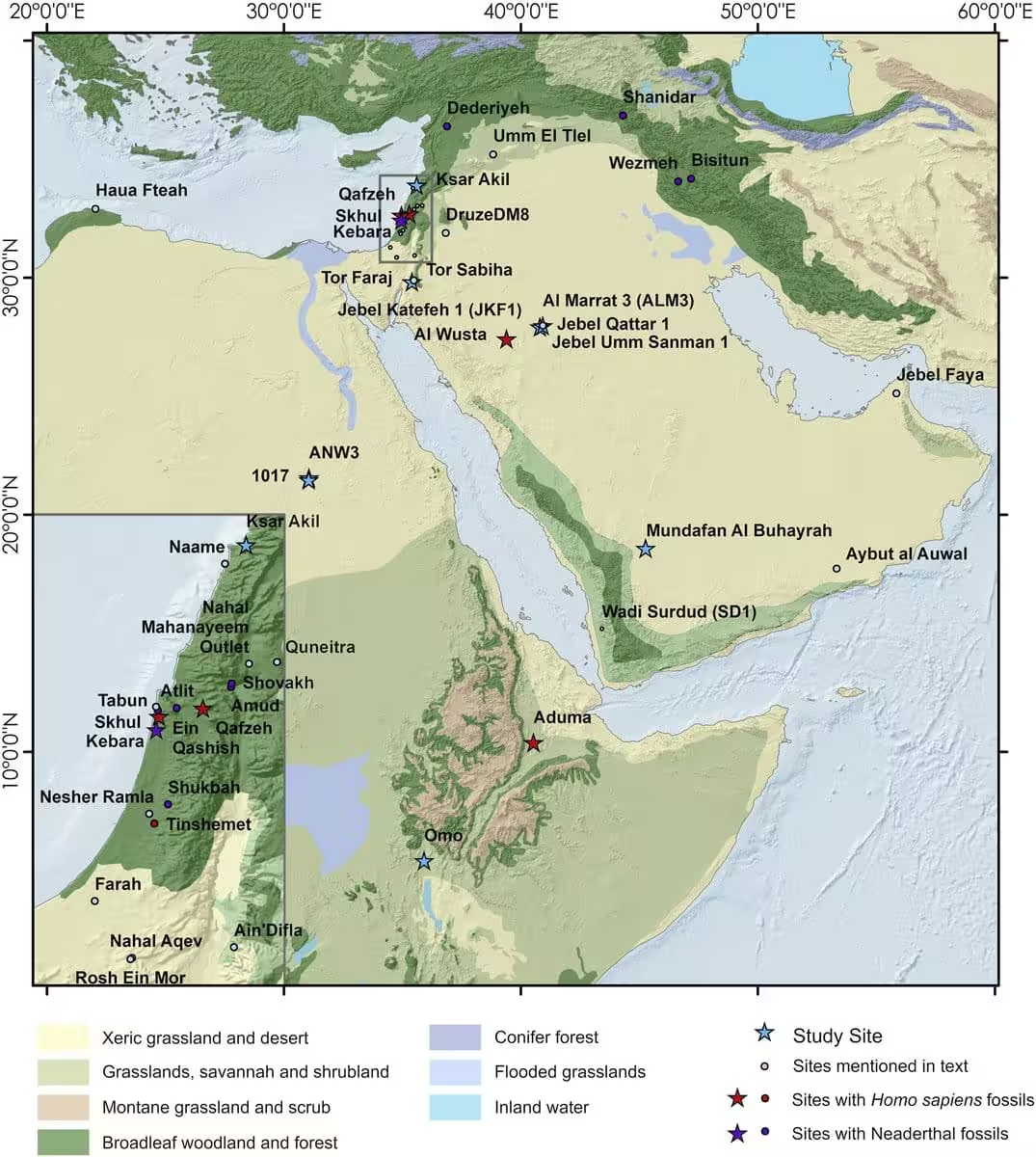
By comparing the morphological characteristics of these flakes with established tool kits from the Levant and northeast Africa, the researchers developed a model to distinguish between Neanderthal and Homo sapiens craftsmanship. The results strongly suggest that the artifacts were produced by Neanderthals.
“Our findings extend the Neanderthal range much further south than had been known, and into the much more open environments of Arabia,” said study co-lead author Huw Groucutt, an archaeologist at the University of Malta, in an email to Live Science.
Environmental Shifts and Migration Patterns
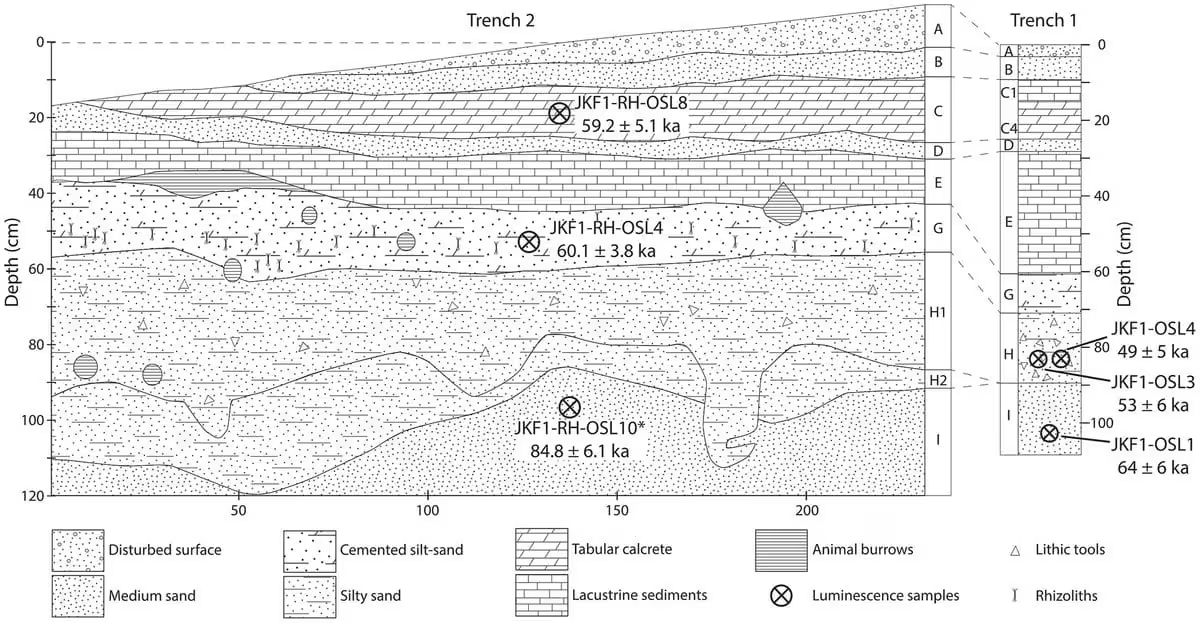
To pinpoint when these tools were created, the team employed optically stimulated luminescence, a dating technique that measures the last time sand grains were exposed to sunlight. Excavations revealed that the tools were deposited in a layer of earth transitioning from desert sand to lake sediment, dating to roughly 55,000 years ago. This timeframe coincides with a period when the Arabian climate was becoming significantly wetter.
Knut Bretzke, an archaeologist at the University of Tübingen who was not involved in the project, suggests that this environmental fluctuation may have been the catalyst for migration. As the region became more hospitable, it likely attracted grazing animals, which in turn would have drawn human groups—such as Neanderthals, who were the primary inhabitants of southwest Asia at that time—into the desert interior.
The Limits of Indirect Evidence
While acknowledging the strength of the new evidence, experts advise caution regarding the interpretation of surface-level artifacts used in the comparison models. Because such objects may accumulate over vast timescales, some argue that the evidence, while plausible, falls short of definitive proof.
“Do I believe there were any Neanderthals in northern Saudi Arabia? Yes,” Bretzke said. “Do I think we have solid evidence to prove that belief? No.”
Ultimately, the discovery of a fossil would be required to silence remaining doubts. However, given that Arabia’s harsh climate is notoriously poor at preserving skeletal remains and genetic material, archaeologists are currently reliant on stone tools to reconstruct the movements of early human populations across the peninsula.
This article has been fact checked for accuracy, with information verified against reputable sources. Learn more about us and our editorial process.
Last reviewed on .
Article history
- Latest version
Reference(s)
- Blinkhorn, James., et al. “Neanderthals in the desert? Population history best explains Middle Palaeolithic technological heterogeneity in Arabia.” Quaternary Science Reviews, vol. 390, October 1, 2026, pp. 110196 Elsevier BV, doi: 10.1016/j.quascirev.2026.110196. <https://www.sciencedirect.com/science/article/pii/S0277379126004051?via%3Dihub>.
- “Dr Huw S Groucutt - L-Università ta' Malta.” L-Università ta' Malta <https://www.um.edu.mt/profile/huwgroucutt>.
- Maule, Olivia. “Neanderthals may have trekked through the Saudi Arabian desert 55,000 years ago, farther south than experts thought possible.”, August 18, 2026 Live Science <https://www.livescience.com/archaeology/neanderthals/neanderthals-may-have-trekked-through-the-saudi-arabian-desert-55-000-years-ago-farther-south-than-experts-thought-possible>.
- “Dr. Knut Bretzke.” Philosophische Fakultät <https://www.gw.uni-jena.de/17735/dr-knut-bretzke>.
Cite this page:
- Posted by Hassan Raza