Scientists Discover Bizarre Single Celled Organism That Moves Ten Times Faster Than Muscle
A single-celled aquatic organism can shrink to a quarter of its size in five milliseconds, revealing remarkable biological force-generation mechanisms.
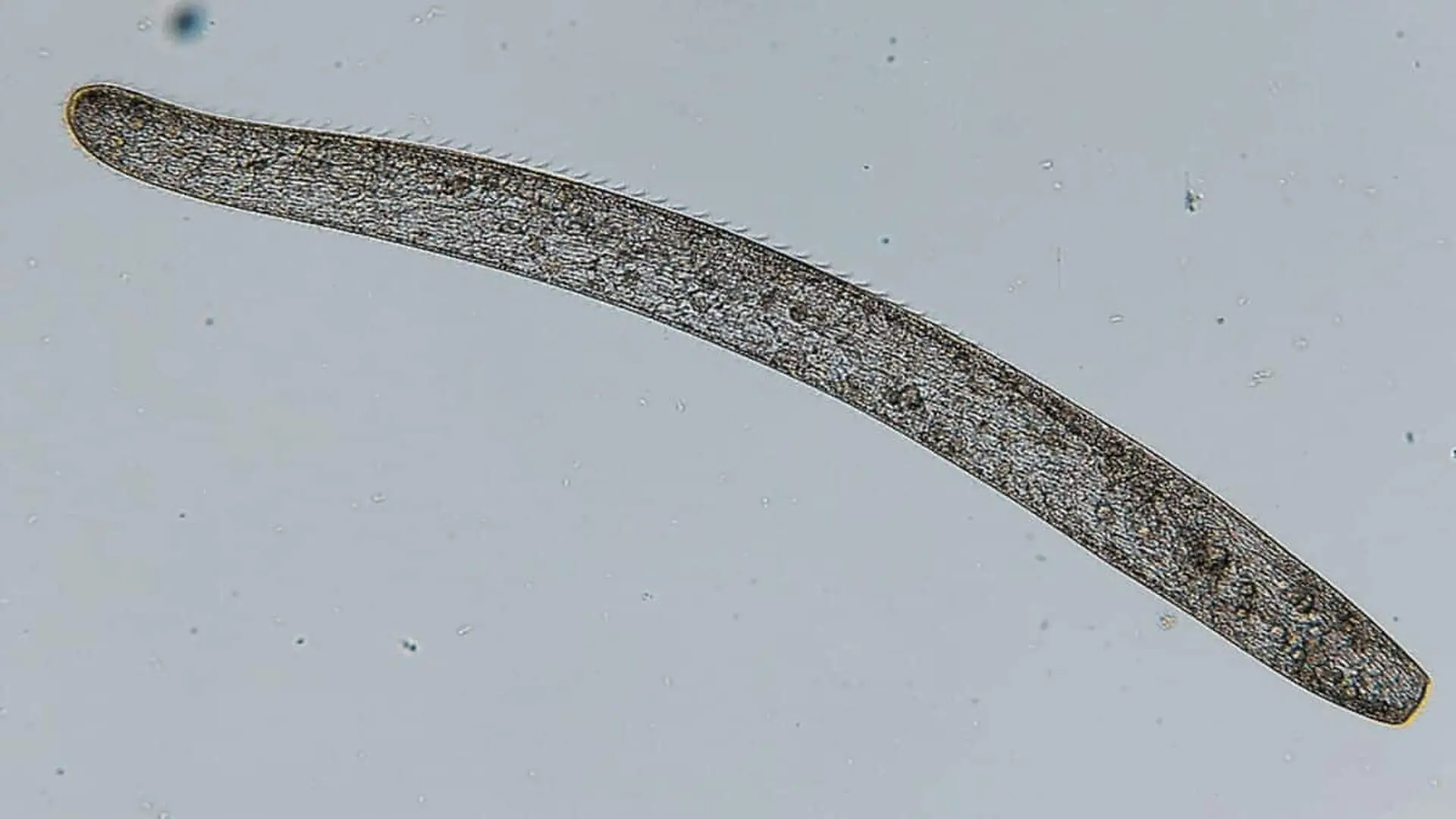
A single-celled organism, Spirostomum ambiguum, is challenging our understanding of biological motion by performing lightning-fast contractions that operate entirely outside the parameters of traditional muscle fibers. While animal muscles rely on the well-documented actomyosin system fueled by adenosine triphosphate (ATP), this giant ciliate utilizes a specialized calcium-triggered protein network to achieve its rapid movements.
The findings, published in the Proceedings of the National Academy of Sciences, highlight a biological feat of speed. Spirostomum, a ciliate blanketed in hair-like cilia for aquatic locomotion, can shrink from a length of approximately 1 millimeter to just 300 micrometers in under five milliseconds. This equates to a contraction speed of roughly 100 body lengths per second—a rate nearly ten times faster than that of individual muscle fibers of comparable scale.
Unlocking the Secrets of Cellular Force
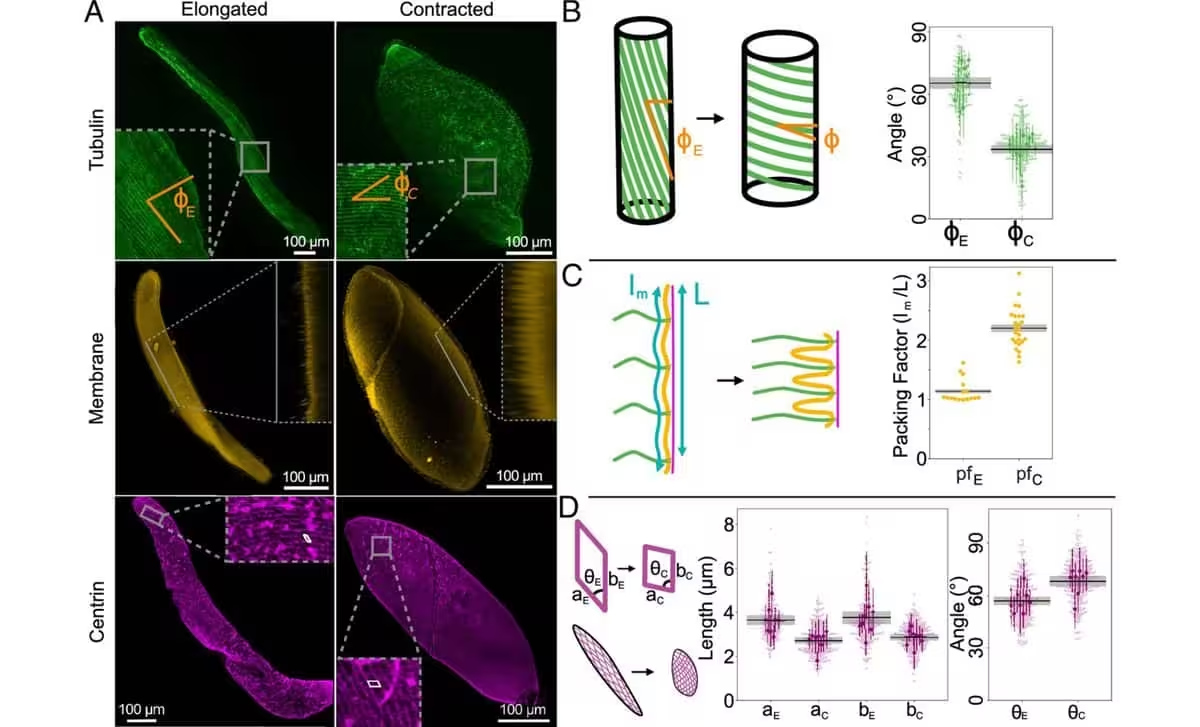
To uncover how this organism achieves such velocity, a team including researchers from North Carolina State University employed a combination of fluorescence imaging, electron microscopy, and computational modeling. They identified that the cell relies on fibrous structures known as myonemes. These structures are arranged in a fishnet-like mesh just beneath the cell surface.
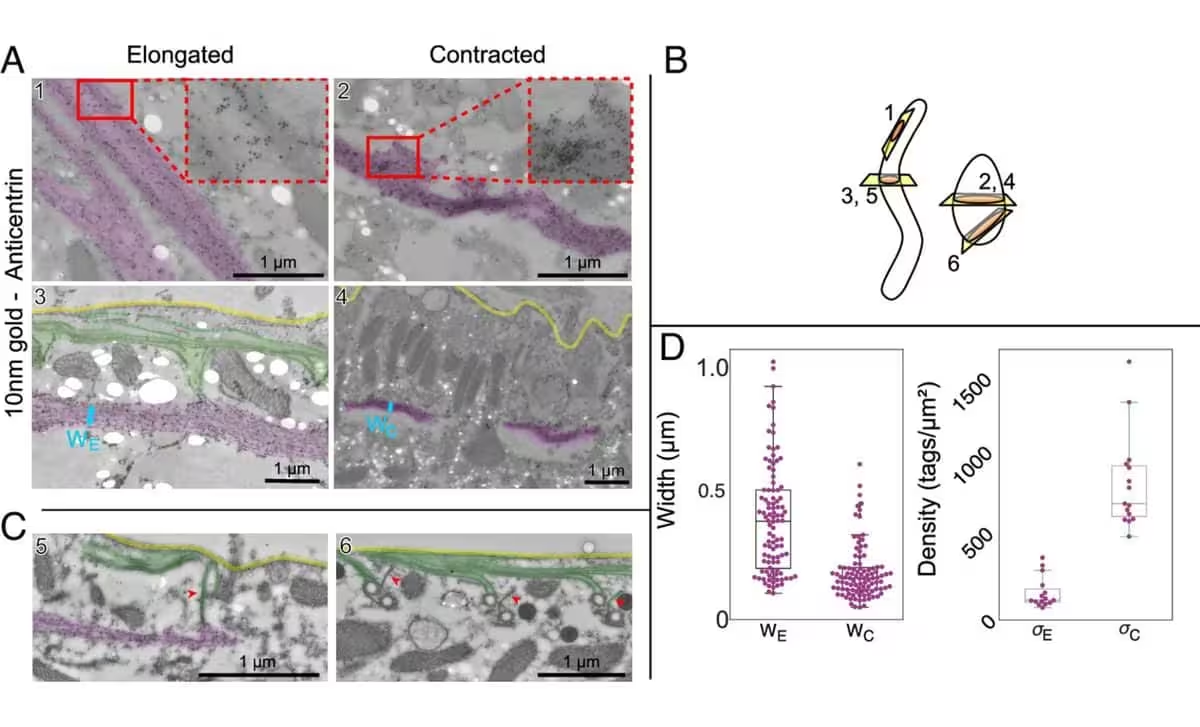
According to Mary Elting, associate professor of biophysics at North Carolina State University and co-corresponding author, the fundamental difference lies in the force-generating machinery. Within this fishnet, the proteins centrin and Sfi1 interact to reorganize the network upon sensing calcium ions. Computational simulations confirmed that this specific geometry, coupled with the conservation of internal volume, allows the cell to maintain its structural integrity while undergoing such extreme physical deformation.
The Sfi1 proteins observed in Spirostomum appear to possess unique, repetitive structural features that allow for bending and compaction—distinct from the behavior of related proteins found in other organisms. Laboratory analysis of these purified proteins confirmed that they undergo a physical state change when exposed to calcium, effectively acting as a trigger for the myoneme to snap shut.
Future Applications in Synthetic Materials
One of the most intriguing aspects of this mechanism is its repeatability. While many biological systems capable of high-speed movement are limited to a single contraction, Spirostomum is capable of resetting its internal state to perform the motion repeatedly. The exact molecular pathway for this recovery period remains a focus of ongoing research.
By defining the mechanics of this calcium-driven system, scientists hope to gain critical insights into how to engineer synthetic structures that mimic these rapid, repeatable contractions. The research represents a significant step forward in understanding non-muscular biological movement, offering a potential blueprint for developing new types of artificial cellular machinery or advanced, responsive materials.
This article has been fact checked for accuracy, with information verified against reputable sources. Learn more about us and our editorial process.
Last reviewed on .
Article history
- Latest version
Reference(s)
- Lannan, Joseph., et al. “A centrin–Sfi1 myoneme fishnet powers ultrafast calcium-triggered contraction in the giant ciliate Spirostomum ambiguum.” Proceedings of the National Academy of Sciences, vol. 123, no. 22, May 29, 2026 National Academy of Sciences, doi: 10.1073/pnas.2601408123. <https://www.pnas.org/doi/10.1073/pnas.2601408123>.
- “Mary Elting.” Department of Physics and Astronomy <https://physics.sciences.ncsu.edu/people/mmwillia/>.
Cite this page:
- Posted by Hassan Raza