Rare Footage Captures Humpback Whale Mother Mourning Her Stillborn Calf On The Seafloor
A boat crew’s discovery near humpback whales has revealed fascinating new insights into maternal behavior and seafloor interactions that are captivating experts.
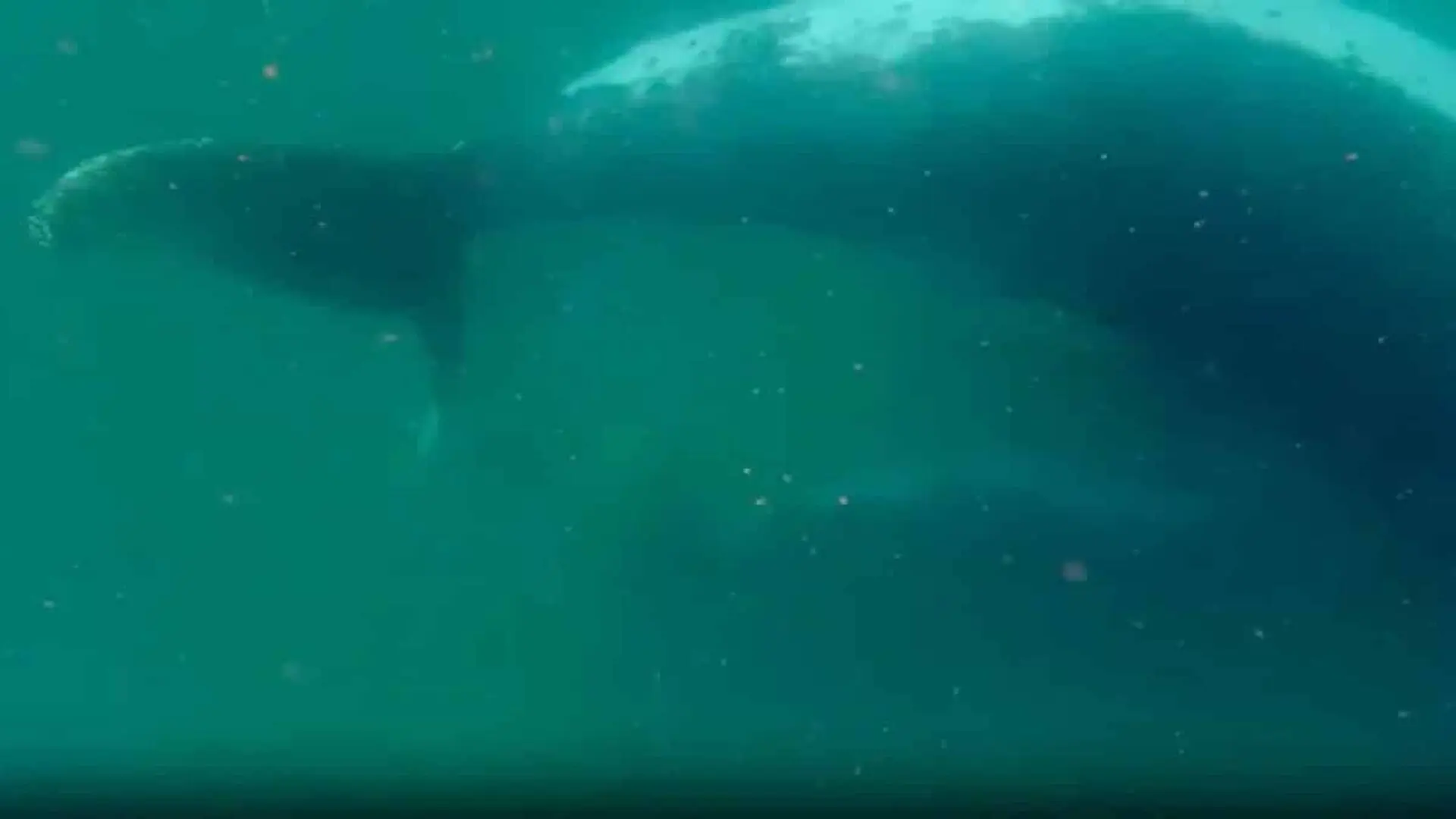
Marine biologists have captured rare and poignant footage of a female humpback whale repeatedly returning to her stillborn calf on the seafloor off the coast of Australia. This unprecedented observation, documented in July 2025 and recently detailed in the journal Discover Animals, offers a fleeting but significant glimpse into the complex maternal instincts of these massive baleen whales.
Witnessing a humpback birth in the wild is an exceedingly rare event, with fewer than 20 instances ever recorded in scientific literature. Prior to this encounter, researchers had never documented a stillbirth, likely because neonatal humpbacks lack sufficient body fat to remain buoyant, causing them to sink rapidly out of sight once they perish.
An Unexpected Encounter Underwater
The event was first detected by co-author Andrew Mulville, who noticed two adult humpbacks behaving unusually while aboard a private vessel. One whale appeared to be holding a vertical position with its tail breaking the surface, while fragments of amniotic membrane were spotted floating nearby. These indicators pointed to a recent birth, yet no calf was visible in the immediate vicinity.
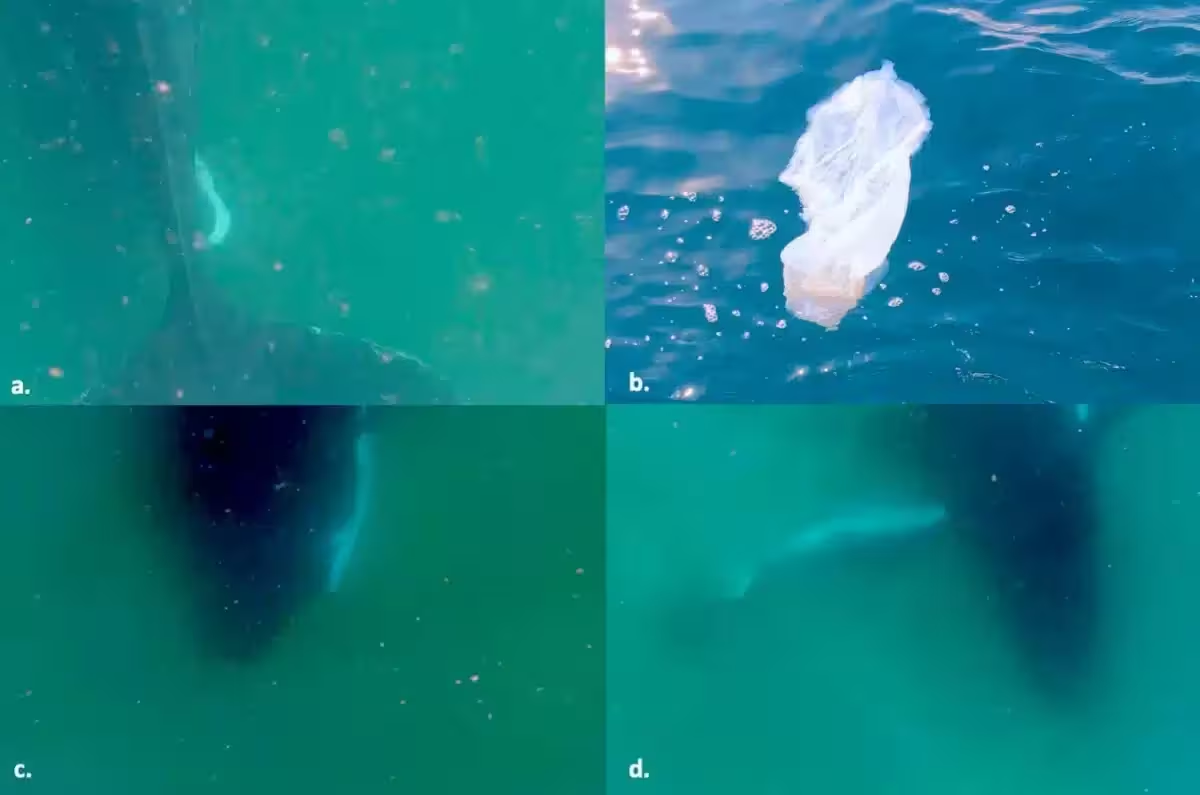
Deploying a GoPro camera, the researchers discovered the newborn resting motionless on the ocean floor. The mother remained in the area, performing a series of deep dives to return to her calf. Olaf Meynecke, a marine ecologist at Griffith University and lead author of the study, noted that the female would descend, linger beside the body, and even move her pectoral fin over the deceased calf.
Documenting Postmortem Attentive Behavior
The mother continued this cycle for at least 90 minutes. Unlike toothed whales, which have been observed attempting to push or carry deceased young to the surface, this humpback mother did not attempt to retrieve the calf, suggesting a potential understanding that the infant had not survived. A second adult, identified as an escort whale—a companion often found with migrating or breeding females—remained in the vicinity throughout the duration of the observation.
Scientists classify this response as “postmortem attentive behavior.” While it is impossible to quantify the emotional state of the animal, the persistent interaction underscores the profound bond between marine mammals and their offspring.
According to the research team, the continued presence of adult whales in the area for two days following the event indicates a significant behavioral reaction to the loss. Meynecke emphasized that the footage serves as a vital record, providing a rare window into the social complexities and responses of baleen whales when faced with the death of a calf.
This discovery adds to the growing body of evidence that humpback whales possess sophisticated social structures and demonstrate meaningful responses to members of their species, even in the depths of the ocean.
This article has been fact checked for accuracy, with information verified against reputable sources. Learn more about us and our editorial process.
Last reviewed on .
Article history
- Latest version
Reference(s)
- Meynecke, Jan-Olaf., et al. “First documentation of humpback whale (Megaptera novaeangliae) post-mortem attendance of a stillborn.” Discover Animals, vol. 3, no. 1, September 16, 2026 Springer Science and Business Media LLC, doi: 10.1007/s44338-026-00232-9. <https://link.springer.com/article/10.1007/s44338-026-00232-9>.
Cite this page:
- Posted by Hassan Raza