Scientists Have Finally Revealed How Zero Gravity Impacts The Human Genome
New research reveals critical insights into how space travel impacts the human body, helping scientists better understand the challenges of long-term missions.
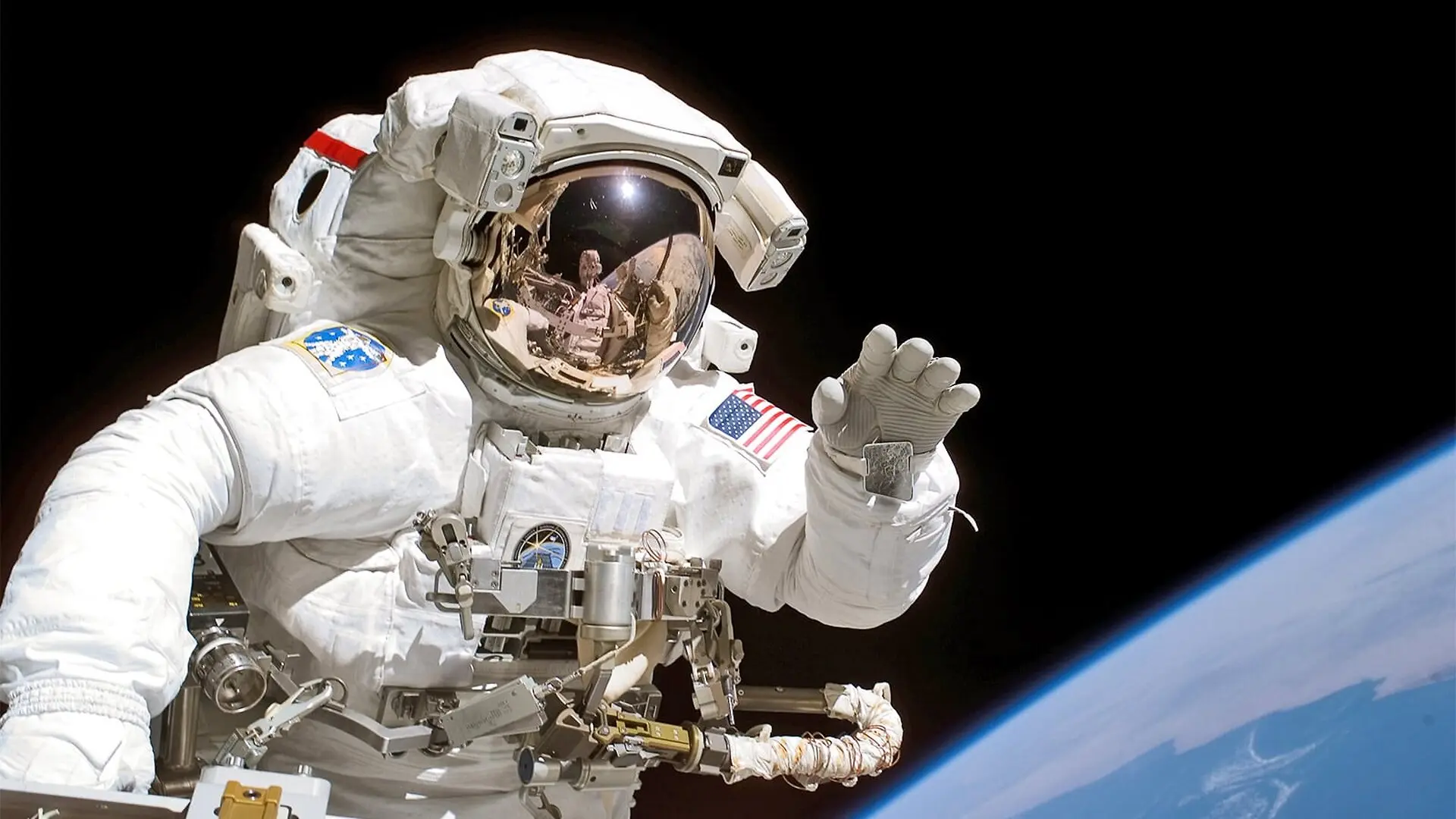
For decades, scientists have mapped the complex, hierarchical architecture of the human genome, but a fundamental question has persisted: what role does the constant, downward pull of Earth’s gravity play in maintaining the integrity of our genetic material? A new study published in Science Advances suggests that our genetic code is surprisingly resilient to the lack of gravity, a discovery that offers vital insights into the biological challenges of long-term space travel.
To investigate how cellular components respond to weightlessness, a team of researchers led by Alexandra Zidovska, an associate professor in the New York University department of physics, developed a custom-built laboratory device. This random positioning machine simulated microgravity by rotating live cells along two independent axes. Unlike previous attempts, the team engineered specialized algorithms to minimize fluid movement within the samples, a common byproduct of rotation that can skew data by physically stressing the cells.
The human genome is a marvel of biological engineering, packing two meters of DNA into a nucleus only 10 micrometers wide. Because this tight organization is critical for gene expression, any disruption can trigger developmental issues or diseases such as cancer. By removing gravity as a variable, the team could observe how the nucleus behaves in environments akin to deep space.
The study, which tracked cells over a 24-hour period, yielded several surprising findings:
- While strong fluid flows caused cells to elongate, simulated microgravity left the cell shape essentially unchanged.
- Exposure to zero-gravity conditions prompted the cell nucleus to increase in volume, suggesting that Earth’s gravity typically exerts a compressive force on this organelle.
- The thickness and structural integrity of the nuclear envelope remained stable regardless of the gravitational environment.
- Crucially, the genome’s internal organization and its characteristic motions remained robust, showing no significant signs of DNA damage after a day of weightlessness.
The research suggests that the human genome is fundamentally stable, at least in the short term, when removed from the mechanical stress of gravity. However, Zidovska cautions that these results provide only a snapshot. While a 24-hour window indicates high resilience, the team notes that even subtle changes observed in the nucleus could potentially compound over the extended durations required for interplanetary missions.
“Our data show that the genome, its organization, and dynamics are incredibly robust and seem unaffected by gravity, or lack thereof, after 24 hours,” Zidovska said. “However, such changes could occur during longer exposures and due to DNA damage occurring in space.”
Beyond the immediate implications for astronaut health, the study establishes a new framework for testing how physical forces influence biology. By effectively isolating gravity as a mechanical stressor, the researchers have provided a clearer picture of how our cells maintain their complex, life-sustaining order in the face of the most constant force on our planet.
Funding for this research was provided by the National Science Foundation and the National Institutes of Health.
This article has been fact checked for accuracy, with information verified against reputable sources. Learn more about us and our editorial process.
Last reviewed on .
Article history
- Latest version
Reference(s)
- Kanellakopoulos, Nikitas., et al. “The effect of microgravity and flows on the organization and dynamics of the human genome.” Science Advances, vol. 12, no. 39, September 25, 2026 American Association for the Advancement of Science (AAAS), doi: 10.1126/sciadv.aeh3116. <https://doi.org/10.1126/sciadv.aeh3116>.
Cite this page:
- Posted by Hassan Raza