Rare Dinosaur Fossils Stolen from Mongolia Finally Return Home After Decades
After being stolen from Mongolia in 2006, a collection of dinosaur fossils faced a complex, multi-year international journey to finally return home.
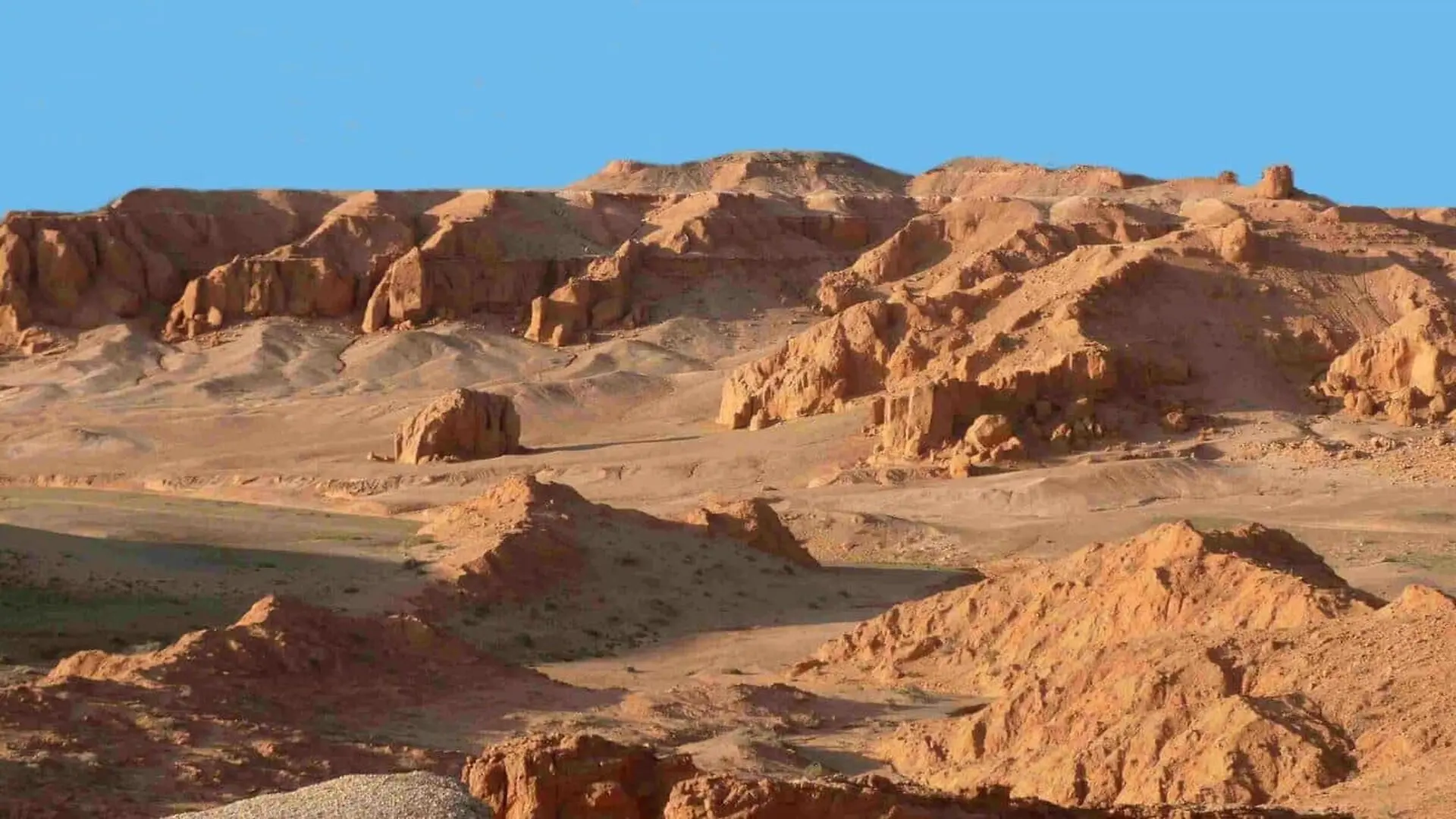
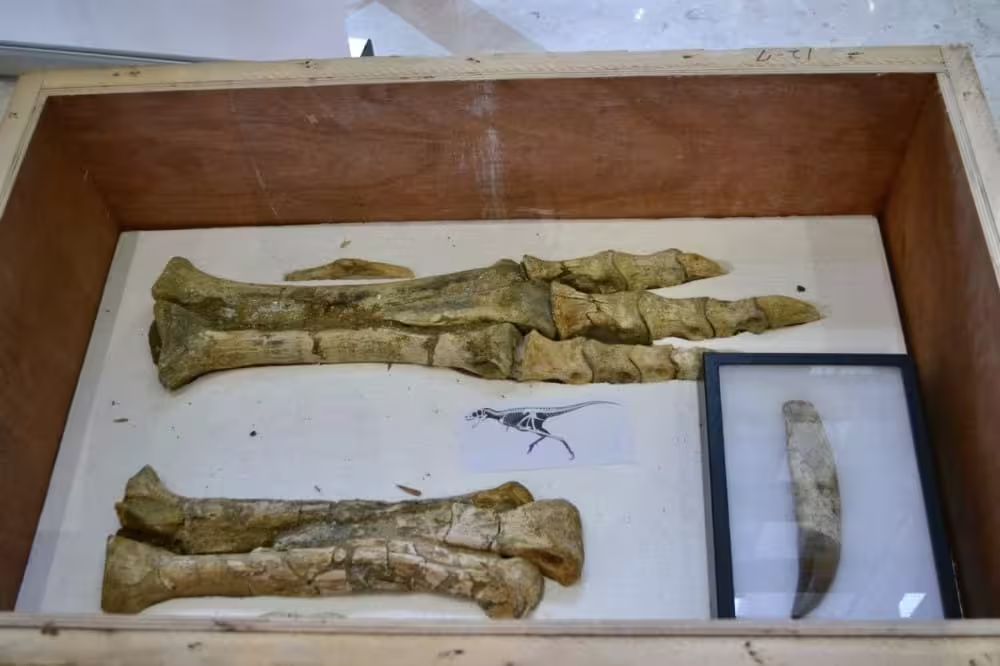
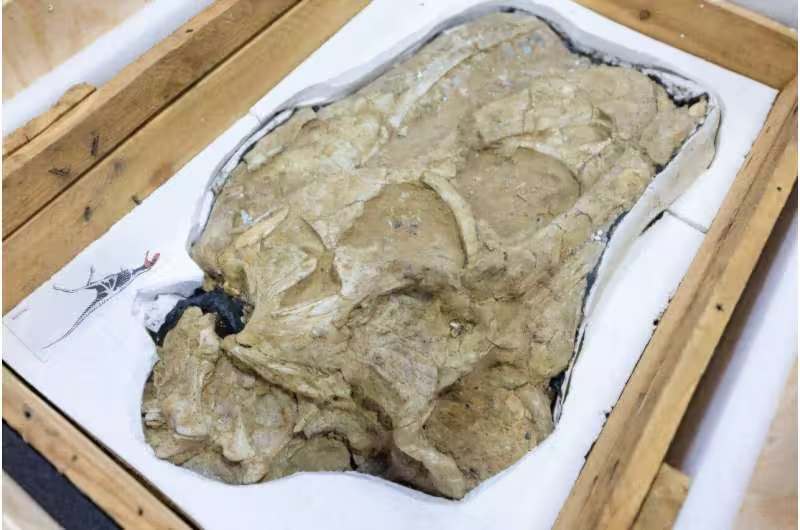
A collection of 29 sets of dinosaur fossils, illegally taken from Mongolia nearly two decades ago, has finally been returned to the capital city of Ulaanbaatar. The repatriated cache includes a remarkably well-preserved partial skeleton of Tarbosaurus bataar, a formidable relative of the Tyrannosaurus rex that once dominated the prehistoric landscapes of Central Asia.
Mongolia is recognized globally for its rich paleontological deposits, but this abundance has frequently made the nation a target for illicit fossil smuggling. The recovery of these specimens marks the conclusion of a long-standing effort involving international cooperation, French customs authorities, and rigorous legal proceedings regarding the protection of cultural heritage.
Decades-Long Path to Repatriation
The saga began in 2006, when the fossils were illicitly removed from Mongolia by smugglers seeking to profit from the international black market. The investigation gained significant traction in 2013, when French customs officials intercepted the first of the stolen items. Over the subsequent two years, authorities seized the remaining pieces, leading to a multi-year collaborative effort between the French and Mongolian governments to navigate international trafficking laws and facilitate the items’ return.
The process culminated in a formal ceremony held in Paris in December 2025, solidifying the legal transfer and ensuring these prehistoric remains could be reunited with their country of origin.
An Invaluable Scientific Trove
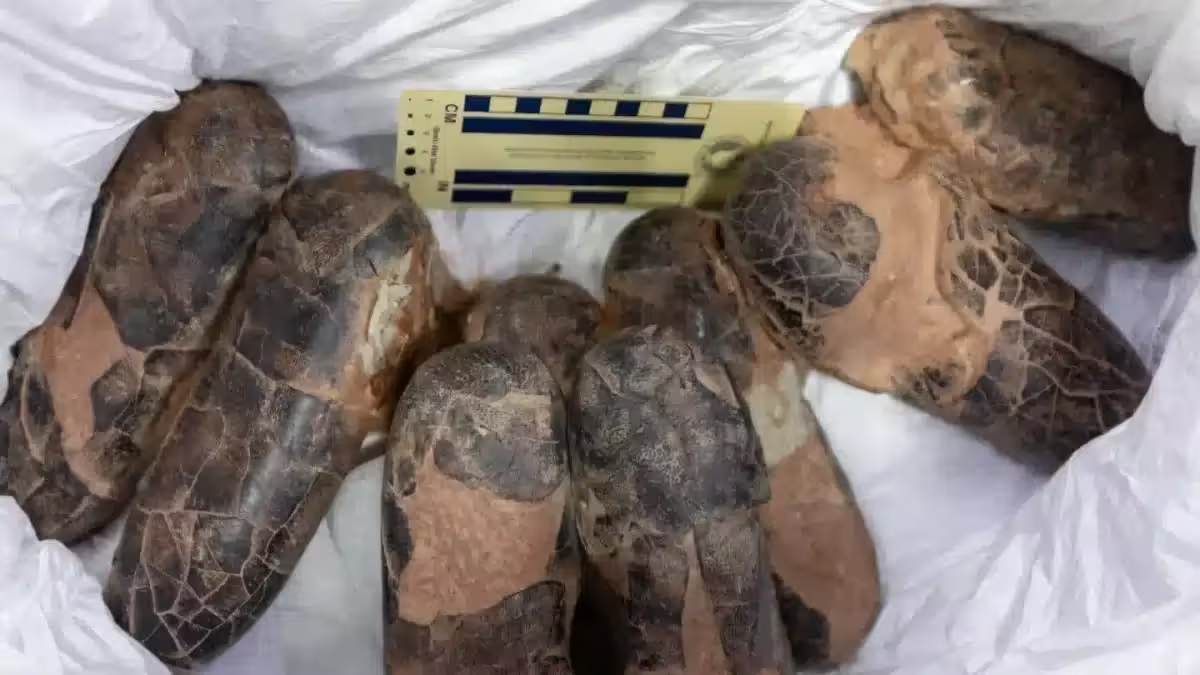
According to reports from Phys, the recovered collection represents a significant addition to Mongolia’s national archives. The hoard contains fragments of hadrosaurs, ornithomimosaurs, and various theropods, all of which date back to the Late Cretaceous period, roughly 65 to 70 million years ago, when they inhabited the lush floodplains of the ancient Gobi Desert.
Museum director Manchuk Nuramkhan emphasized the cultural and educational importance of the return, noting that the fossils represent a unique piece of national heritage. The recovery ensures that future generations will have direct access to study and appreciate these specimens within the borders of their home country.
The Apex Predator of the Ancient Gobi
The centerpiece of the repatriated items is the skeleton of Tarbosaurus bataar, a creature that once stood as the apex predator of its environment. Adult specimens were immense, potentially reaching lengths of 33 feet, heights of 10 feet, and weights exceeding five tons.
While the region is defined today by its arid climate, during the era of T. bataar, the Gobi was a dynamic landscape of river channels and forests. The taxonomy of the dinosaur remains a subject of academic debate, with some experts suggesting it is so closely related to the North American Tyrannosaurus rex that it should be classified as an Asian variant of the same genus.
This article has been fact checked for accuracy, with information verified against reputable sources. Learn more about us and our editorial process.
Last reviewed on .
Article history
- Latest version
Cite this page:
- Posted by Hassan Raza