New Cosmic Dust Type Links to Unknown Near‑Earth Asteroid, Study Finds
Scientists discover a mysterious batch of space dust that defies known sources, sparking a hunt for its elusive asteroid origin.
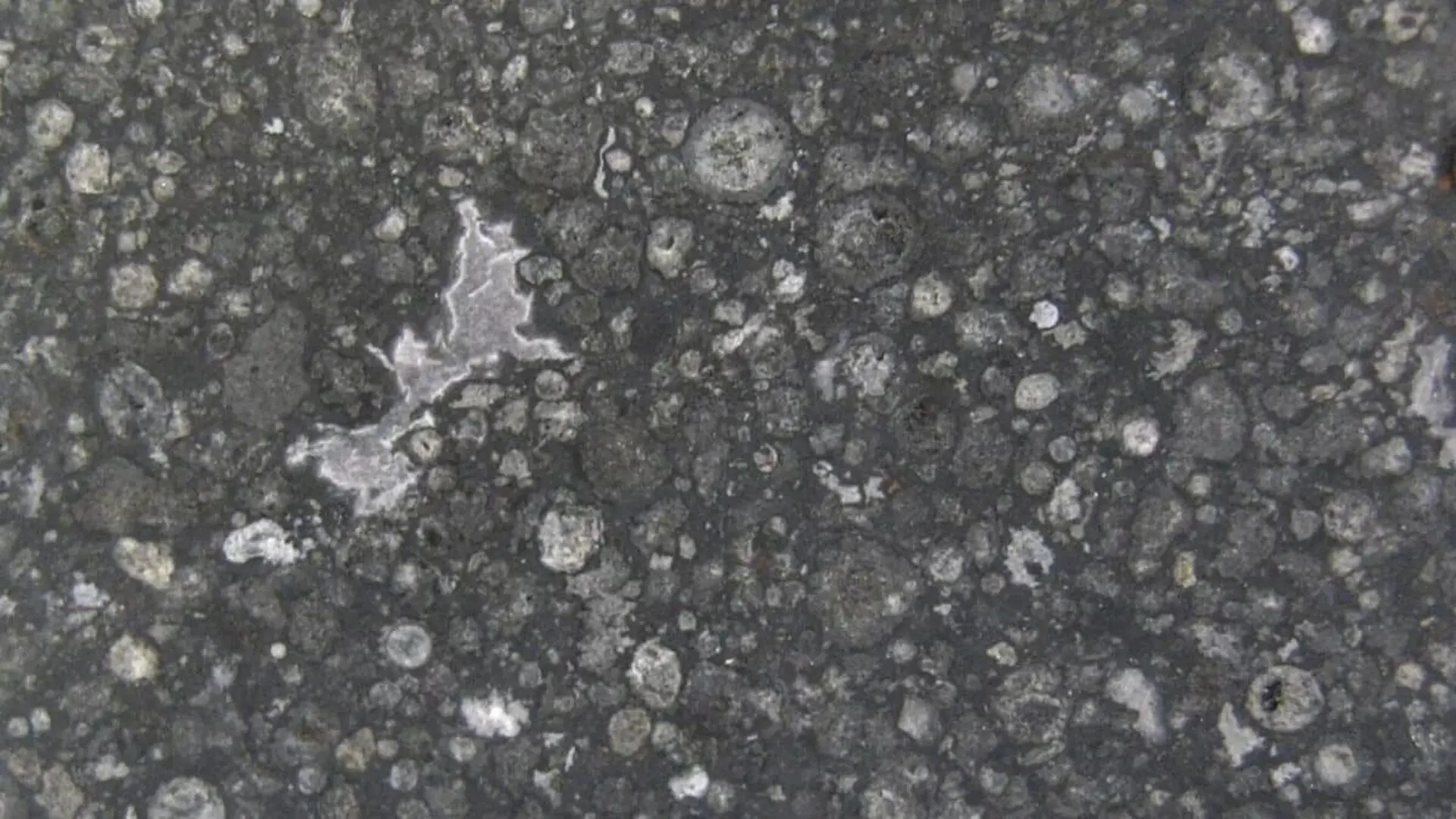
Analysis of microscopic particles recovered from Antarctic ice and city rooftops has uncovered a new class of cosmic dust that likely originates from a previously unidentified type of near‑Earth asteroid, according to research published in Science Advances. The findings suggest that the parent body of these particles is not represented among known meteorite specimens.
Tiny micrometeorites constantly rain onto Earth, delivering material from throughout the Solar System. Because they can be collected relatively easily, they provide a practical proxy for studying extraterrestrial matter without waiting for rare meteorite falls or launching expensive spacecraft.
When such particles melt during atmospheric entry and solidify as tiny spheres, they are classified as cosmic spherules. The intense heating erases much of their original mineralogy, making provenance determination challenging. Researchers therefore rely on the oxygen‑isotope composition of each spherule, which serves as a chemical fingerprint linking it to its source.
A Rare Subset of Cosmic Spherules Stands Out
The study details that roughly one‑tenth of all known cosmic spherules belong to “Group 4,” a classification distinguished by an oxygen‑16‑depleted isotope signature that does not match any recorded meteorite type.
Researchers zeroed in on a particular form called CumPo spherules, named for their characteristic crystal pattern. These particles exhibit clusters of olivine crystals that increase in size from one side of the sphere to the other, a feature that can reveal clues about the object’s pre‑Earth trajectory and entry velocity.
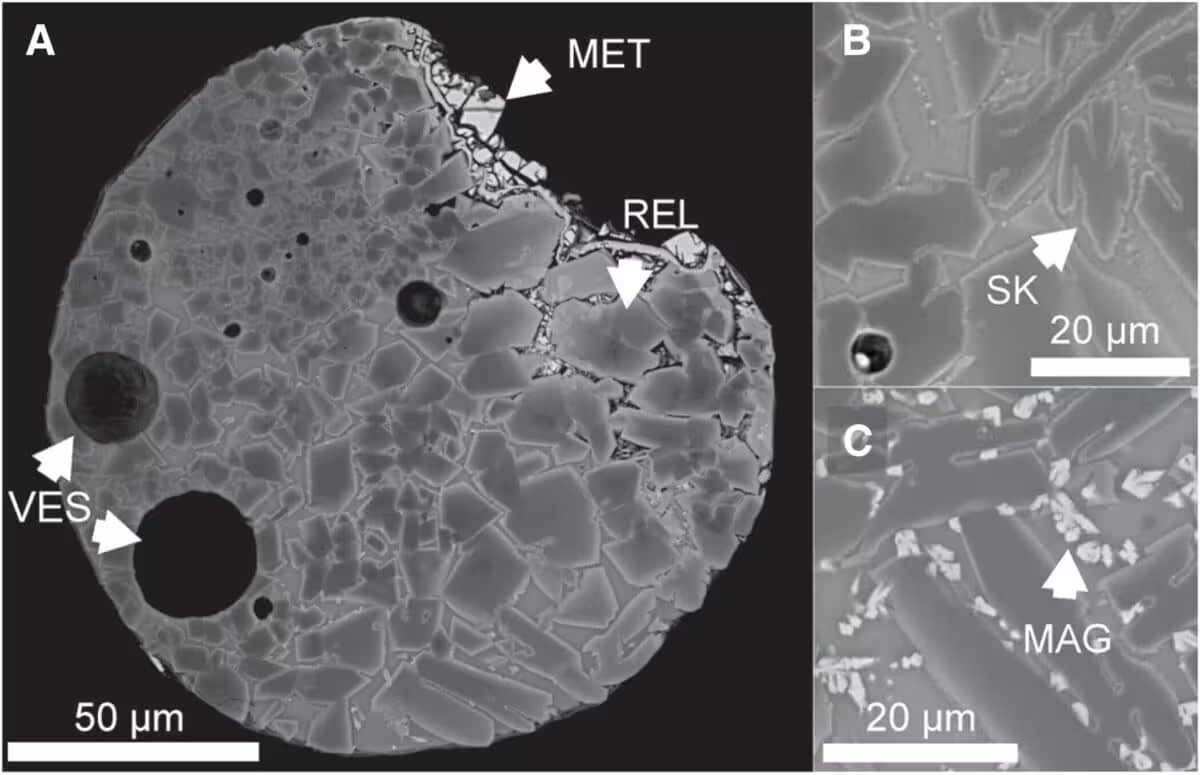
The team examined ten CumPo spherules sourced from Antarctica alongside comparable particles collected from urban rooftops. Advanced imaging and isotope measurements showed that both sample sets share a distinctive chemistry, prompting the authors to define a new sulfur‑rich subgroup they term SCumPo.
Unusual Chemistry Points to Mixed Origins
SCumPo particles display several rare traits: they contain minimal magnetite, frequently preserve iron‑nickel‑sulfur droplets, show consistently low nickel within olivine, and incorporate sulfur‑rich glass. Isotope data also reveal that individual spherules can host both oxygen‑16‑rich and oxygen‑16‑poor domains.
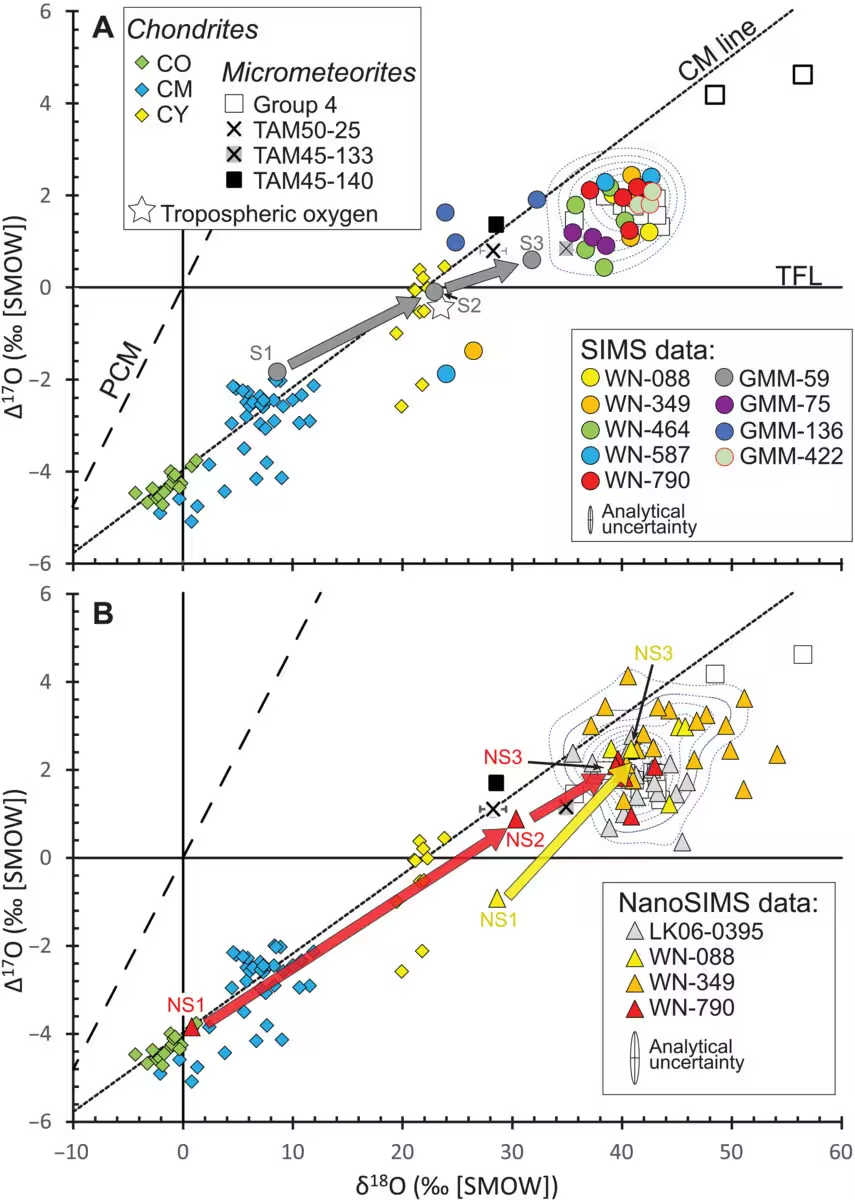
The authors argue that such a dual signature indicates the precursor dust was a blend of at least two distinct materials before encountering Earth’s atmosphere. One component carries an oxygen‑16‑rich fingerprint typical of anhydrous phases found in carbonaceous chondrites, while the other shows an oxygen‑16‑poor pattern that does not correspond to any known meteorite class but mirrors the fine‑grained matter associated with Group 4 spherules.
“We interpret this as strong evidence that the SCumPo precursors were composite materials containing at least two different components,” said the authors.
Modeling Atmospheric Entry Suggests Near‑Earth Origins
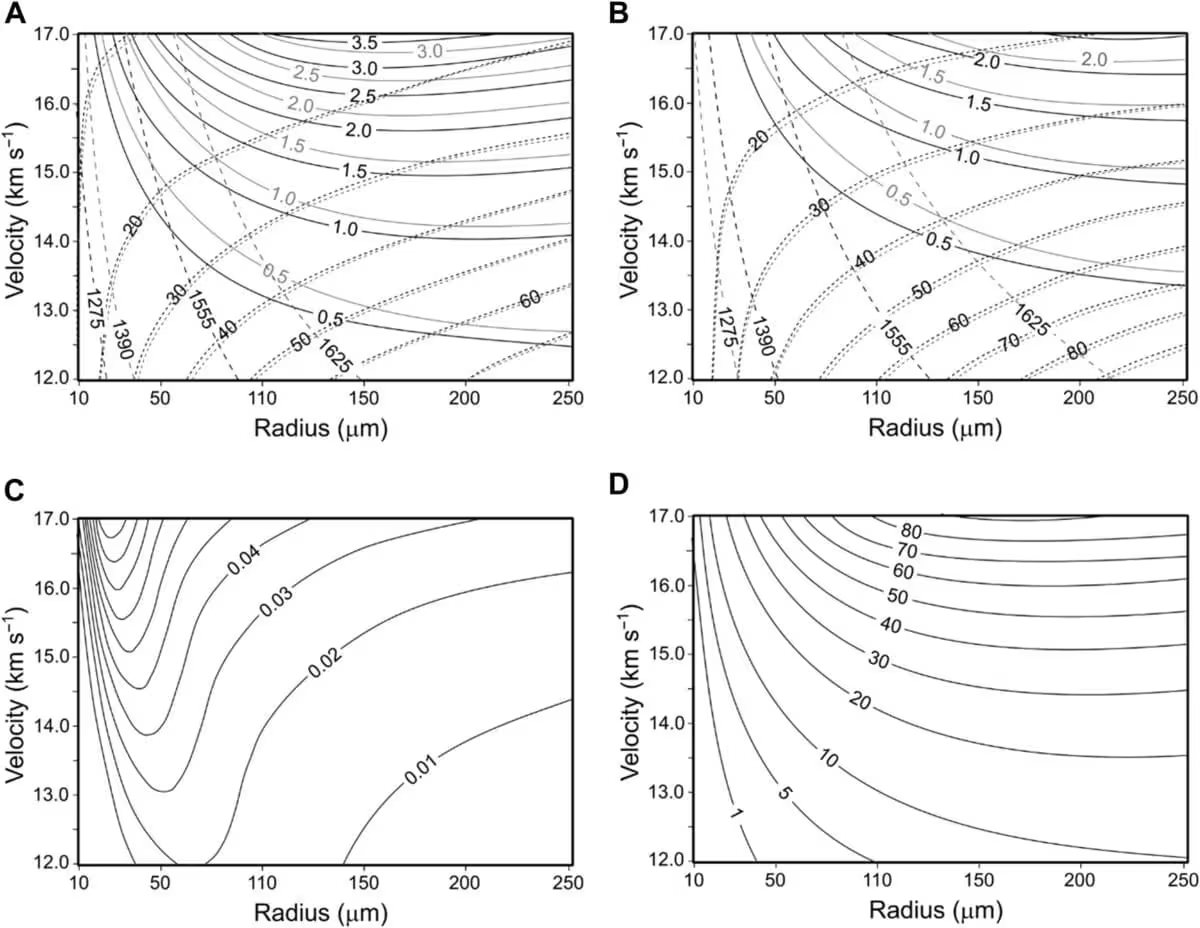
Computer simulations of the particles’ atmospheric entry indicate that the observed crystal textures are best reproduced at velocities of roughly 14–17 km s⁻¹. Such speeds are consistent with origins in near‑Earth objects rather than in the main asteroid belt.
Integrating laboratory data with dynamical modeling, the researchers propose that the dust derives from a primitive, sulfur‑rich carbonaceous asteroid related to the CM‑CO‑CY chondrite families. They suggest this parent body may have evolved from a water‑rich precursor before its orbit shifted into an Earth‑crossing trajectory.
The authors conclude that this source represents a previously unrecognized meteorite type. While micrometeorites bearing its signature have now been identified, no larger fall matching this composition has ever been recovered.
This article has been fact checked for accuracy, with information verified against reputable sources. Learn more about us and our editorial process.
Last reviewed on .
Article history
- Latest version
Reference(s)
- Van Ginneken, Matthias., et al. “16 O poor cosmic spherules from near-Earth CY chondrite asteroids.” Science Advances, vol. 12, no. 26, June 26, 2026 American Association for the Advancement of Science (AAAS), doi: 10.1126/sciadv.aed6340. <https://www.science.org/doi/10.1126/sciadv.aed6340>.
Cite this page:
- Posted by Karan Das