Rocket Lab’s New GHOST System Turns Shipping Containers Into Mobile Spaceports
Rocket Lab unveils GHOST, a portable spaceport system that broadens global launch access, enabling flexible, on‑demand satellite deployments.
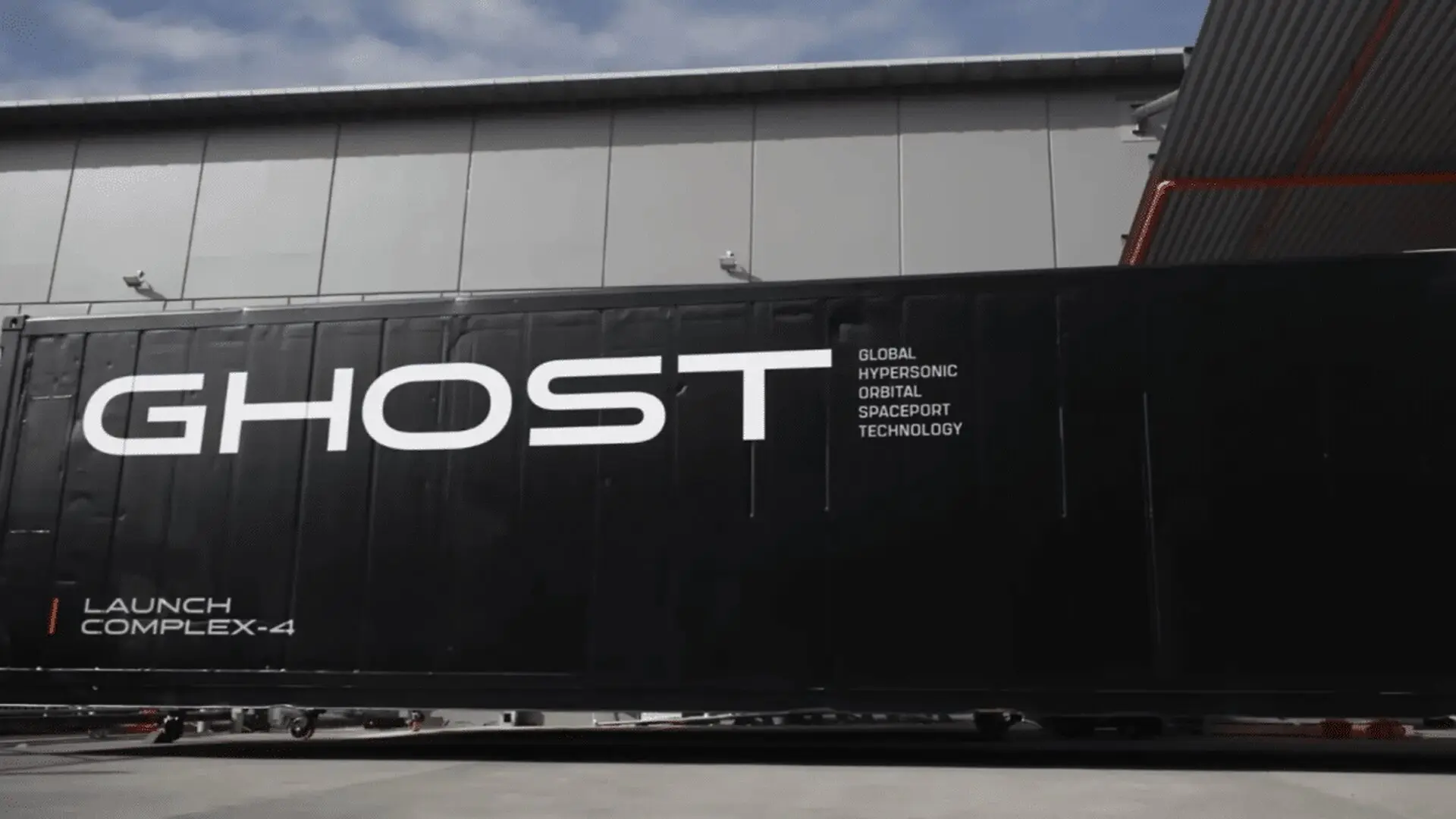
Rocket Lab announced the launch of GHOST, a compact, container‑based spaceport concept intended to enable rapid deployment of launch services worldwide.
Built around the company’s Electron small‑satellite launcher and the HASTE hypersonic test platform, the new system aims to bring launch capability closer to mission sites, reducing reliance on fixed‑site infrastructure for time‑critical or security‑sensitive operations.
A Containerised Launch Facility for Global Mobility
GHOST packages the essential components of a launch complex into standard shipping containers, allowing the entire suite – rockets, ground support equipment, and range‑control hardware – to be shipped by road, rail, or sea to any approved location.
Rocket Lab says the concept emerged after clients of the HASTE vehicle asked for a more portable launch solution. The company already runs launch sites in New Zealand and Virginia, and is expanding its footprint with the Pacific Spaceport Complex in Alaska.
“All the elements are housed in regular containers, so GHOST can establish a full launch site anywhere the mission demands,” a Rocket Lab spokesperson explained.
The mobile architecture is poised to support specialized launch windows, including defense‑related tests and governmental programs that require independent access to orbit without the constraints of permanent facilities.
This approach mirrors a growing industry trend toward adaptable launch infrastructure, as increasing numbers of satellite deployments, technology demonstrations, and security missions call for flexible, on‑demand solutions.
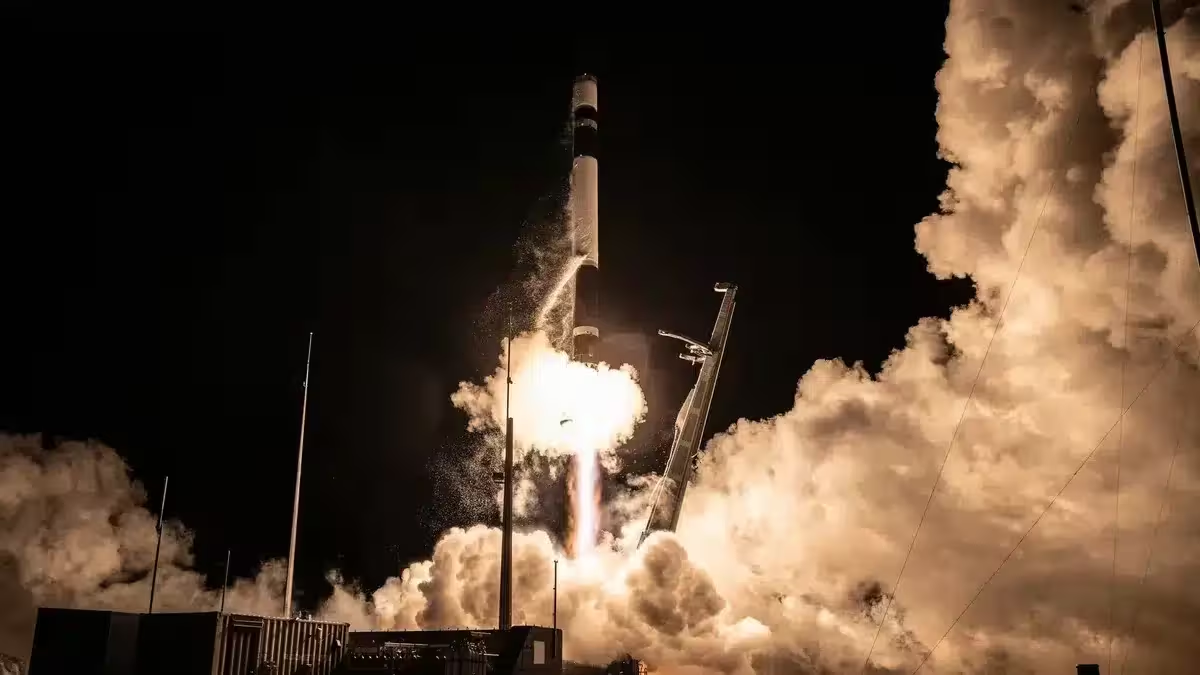
Electron and HASTE Form the Core of GHOST
GHOST leverages two proven Rocket Lab vehicles. The Electron rocket, a 59‑foot (18‑meter) small‑satellite launcher, has been operational since 2017 and completed numerous commercial and government missions.
The second element, HASTE (Hypersonic Accelerator Suborbital Test Electron), adapts Electron technology for sub‑orbital hypersonic experiments, providing a testbed for customers developing high‑speed flight systems.
During the second‑quarter 2026 earnings call, founder and CEO Peter Beck outlined plans to extend the reach of these vehicles through the deployable GHOST platform.
“Electron and HASTE have changed the landscape for small orbital launch and hypersonic testing. Now we’re simplifying their deployment, whether for missile‑defense trials or sovereign launch capability,” Beck said.
By integrating these vehicles with a containerised launch site, Rocket Lab hopes to give customers the ability to conduct missions without building dedicated ground infrastructure.
Introducing GHOST.
— Rocket Lab (@RocketLab) August 10, 2026
We’ve mastered the art of building launch sites. Now we’re making them deployable worldwide.
GHOST = Global Hypersonic & Orbital Spaceport Technology. A containerized, deployable launch site system that enables Electron and HASTE launches anywhere,… pic.twitter.com/6Za05Ov2Nn
Towards a Global Network of Deployable Launch Sites
Today, Rocket Lab conducts launches from its established pads in New Zealand and Wallops Island, Virginia, while also preparing facilities for its upcoming larger Neutron rocket.
GHOST is intended to complement this existing network, allowing the company to position launch capability nearer to customers, operational theatres, or strategic locales where permanent spaceports are infeasible.
“We’ve mastered the art of building launch sites,” Beck reiterated. “Now we’re making them deployable worldwide.”
The first GHOST‑based pads are slated for the Pacific Spaceport Complex in Alaska, demonstrating how the system can augment both traditional spaceports and new, temporary launch locations.
The rollout coincides with Rocket Lab’s preparation for the Neutron vehicle, a partially reusable rocket aimed at a different market segment. Although Neutron’s timeline has extended, the company reports that the vehicle has cleared key testing milestones and is nearing final hardware integration.
This article has been fact checked for accuracy, with information verified against reputable sources. Learn more about us and our editorial process.
Last reviewed on .
Article history
- Latest version
Reference(s)
- “https://twitter.com/RocketLab/status/2086911725186724293/video/1.” <https://t.co/6Za05Ov2Nn>.
Cite this page:
- Posted by Karan Das