The Only Two Survivors of Britain’s Most Ambitious Cold War Jet Project
The untold story of Britain’s vanished Cold War jet reveals a legacy of lost technology, shattered dreams, and the two survivors who witnessed it all.
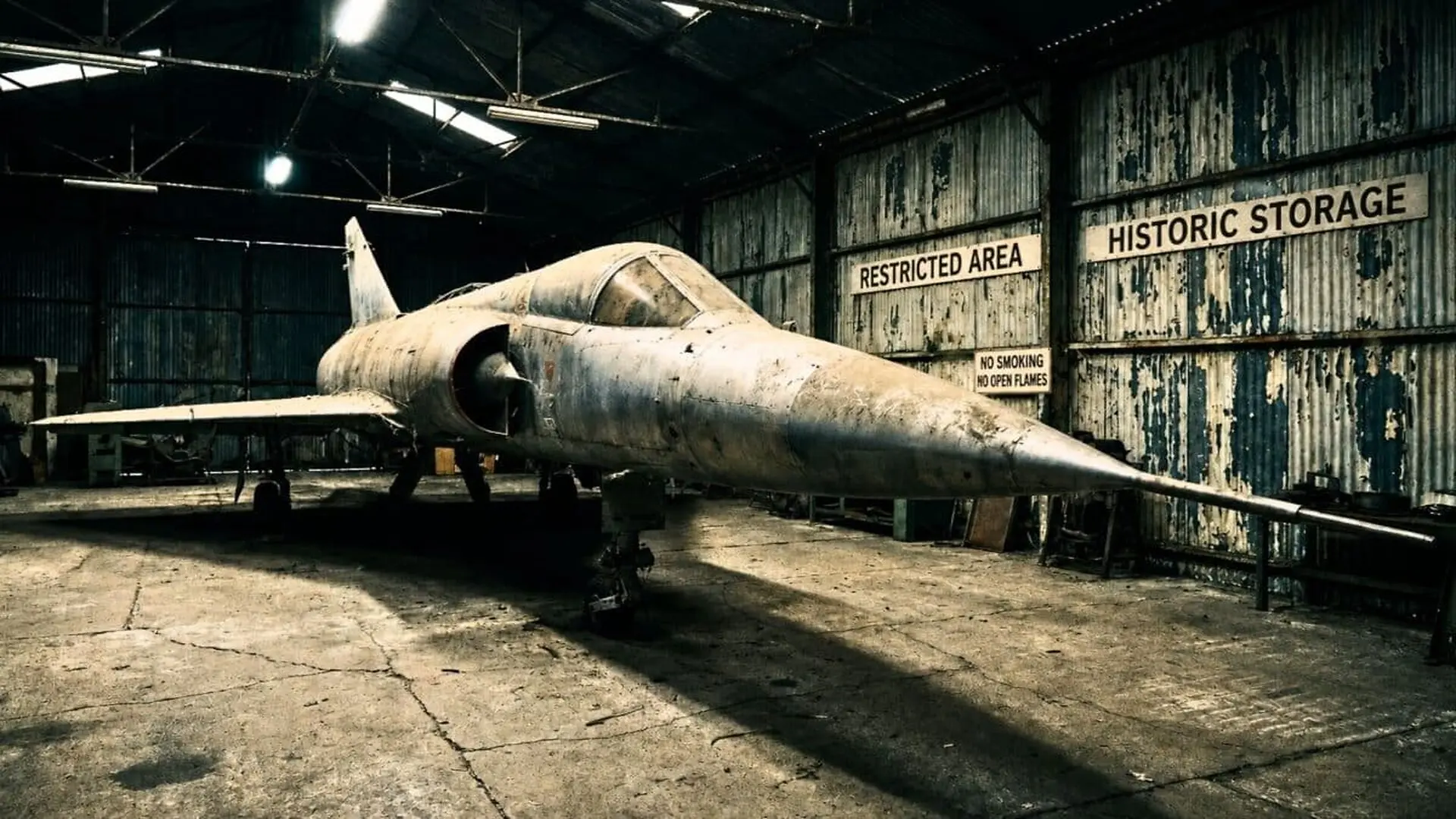
Most abandoned military aviation programs leave behind a legacy of blueprints, archives, and half-finished hulls that allow future engineers to pick up the pieces. Britain’s most ambitious Cold War venture, however, faced a more clinical end. When the government pulled the plug in 1965, it did not just halt production; it ordered the systematic destruction of the tools, jigs, and documentation required to build the aircraft ever again.
The BAC TSR-2 was designed to be a peerless strike and reconnaissance platform, capable of piercing heavily fortified airspace at supersonic speeds while hugging the earth. Only two of these machines, identified as XR220 and XR222, survived the purge, narrowly escaping the scrapyard to be preserved in British museum collections.
An Uncompromising Design Specification
The project’s challenges were baked into its origin. In 1956, the Royal Air Force released General Operational Requirement 339, a set of demands so steep they bordered on the impossible. The service required a platform that could exceed Mach 2 at altitude, sustain Mach 1.2 at sea level, deliver tactical nuclear payloads, and operate from short, potentially damaged runways.
To meet these requirements, the British Aircraft Corporation—a massive industrial consolidation involving Vickers-Armstrongs, English Electric, Bristol, and Hunting—pushed the limits of contemporary engineering. As detailed in historical accounts from MiGFlug, the design relied on two Bristol Siddeley Olympus 320 engines and advanced features like blown flaps to handle the stresses of austere airfield operations.
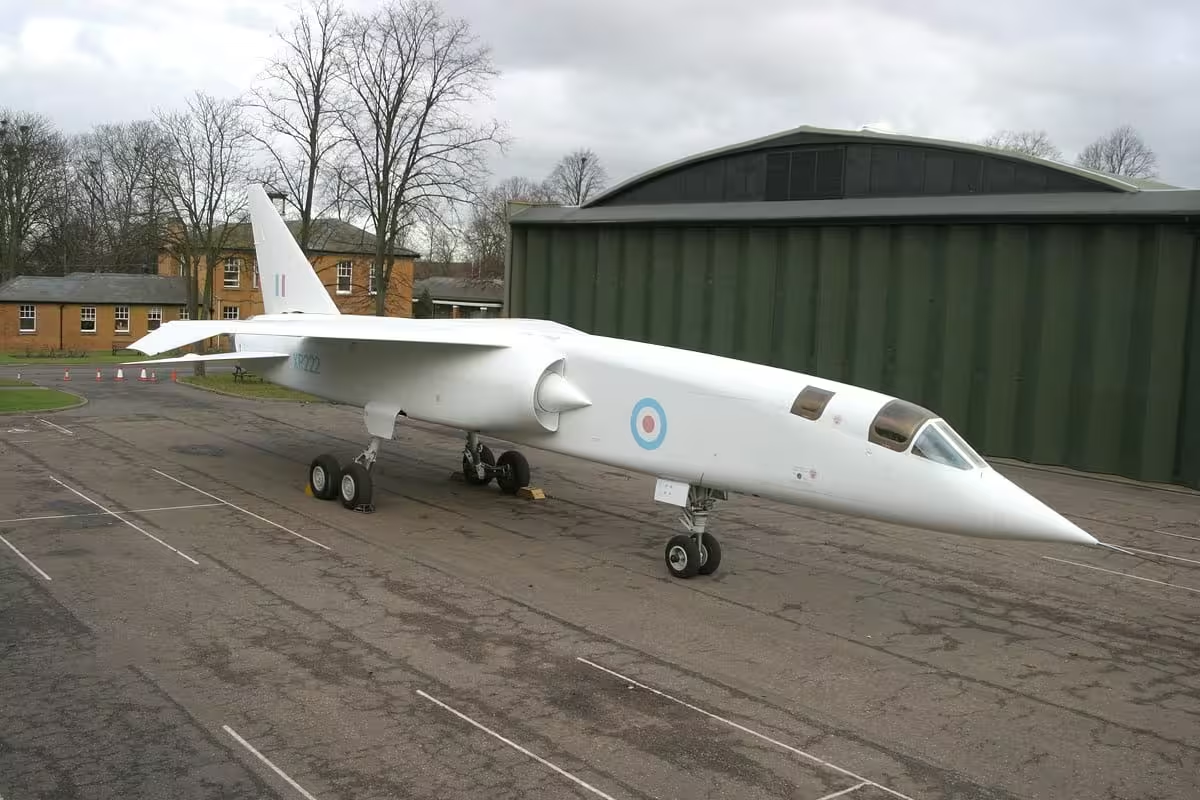
The project did eventually take to the skies. On September 27, 1964, pilot Roland “Bee” Beamont and navigator Don Bowen lifted the first prototype, XR219, from Boscombe Down for a cautious 15-minute maiden flight, keeping the landing gear extended and speed restricted.
Brief Flight Life and Sudden Termination
The test program, though short, showed genuine promise. The aircraft successfully broke the sound barrier in level flight without the use of afterburners by its 14th sortie. Engineers were also refining a terrain-following radar system that would have allowed the jet to automate high-speed, low-altitude flight.
However, the project was cut short after just 24 test flights. Because only the first prototype ever flew, the full performance envelope of the TSR-2 remains a subject of historical debate. It never reached the stage of operational maturity, nor did it survive the rigorous testing required to identify and solve the teething problems common in frontline combat aircraft.
Fiscal pressure ultimately killed the program. Initially estimated at £90 million, costs spiraled toward £195 million, placing the aircraft at the center of a volatile debate over defense spending. In April 1965, the government canceled the program, opting instead to seek the American F-111K—a purchase that would also collapse under its own financial weight years later. The RAF was forced to adapt existing platforms, such as the Buccaneer and Phantom, to fill the void left by the abandoned strike jet.
The Erasure of Evidence
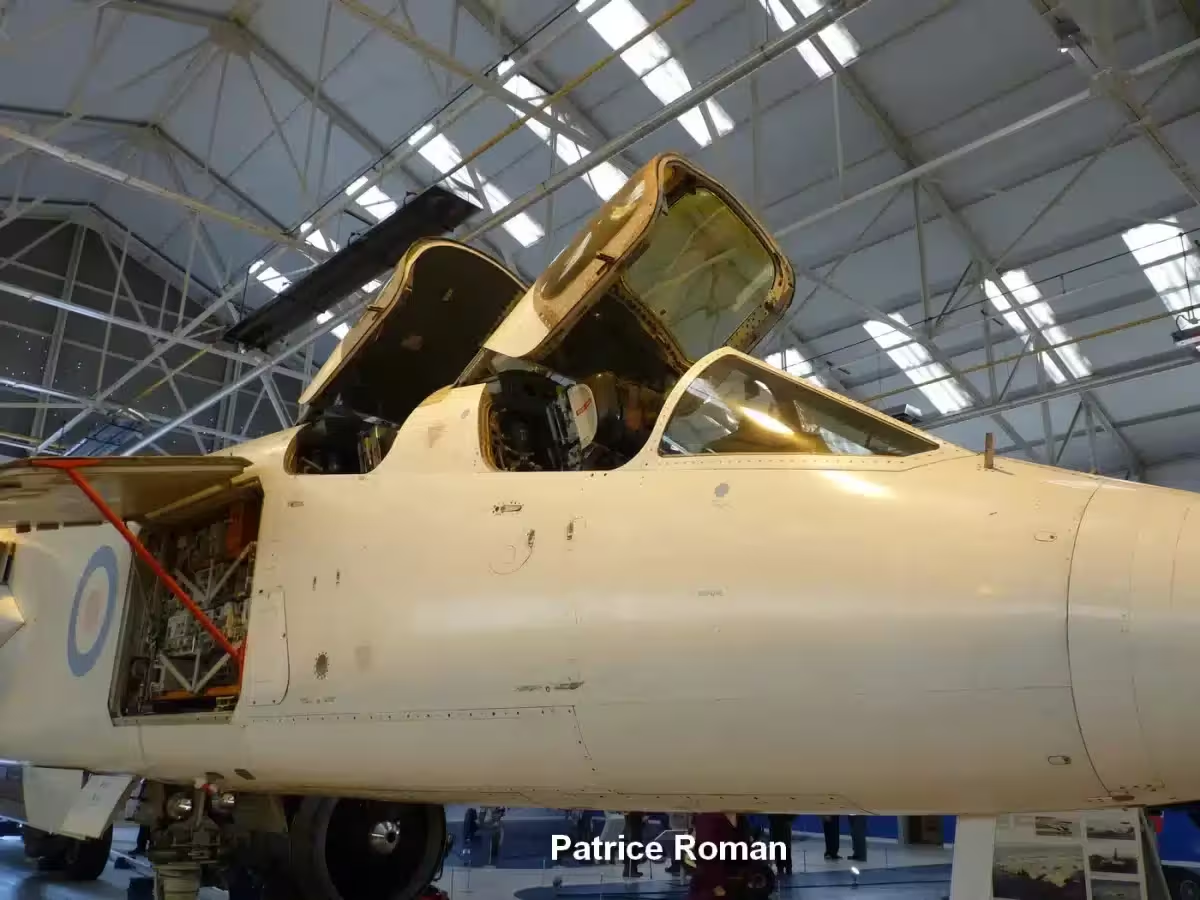
The cancellation was followed by an aggressive push to wipe the project from existence. The directive to dismantle production jigs and scrap hardware was largely successful, with rumors persisting that technical blueprints were incinerated to prevent any potential revival. Today, XR220 remains at the RAF Museum Cosford, while XR222 resides at the Imperial War Museum Duxford. Notably, XR220 was scheduled for a flight test on the very day the cancellation was announced.
A recent, detailed photographic survey by Master194 offers an unprecedented look at the surviving hardware. Photographer Patrice Roman’s work highlights the intricate component-level engineering, including the Bristol Siddeley Olympus 22R engine and the cramped, complex avionics bays, documenting a level of detail that would be impossible to reconstruct from incomplete paper records.
A Legacy of Unfulfilled Potential
These two survivors serve as the only tangible proof of the project’s scope. For historians, they offer a rare glimpse into the sophistication of 1960s British aerospace design. However, they also serve as a reminder that the TSR-2 never reached the stage where it had to face the harsh realities of service life, maintenance cycles, and operational fatigue.
While the mythology surrounding the aircraft often trends toward the legendary, the reality is a story of a bold, unfinished experiment. Britain committed to a high-speed strike platform, proved its baseline concept in two dozen flights, and then intentionally destroyed the infrastructure that could have brought it into the fleet. Six decades later, only the static frames in museums remain to tell the story.
This article has been fact checked for accuracy, with information verified against reputable sources. Learn more about us and our editorial process.
Last reviewed on .
Article history
- Latest version
Cite this page:
- Posted by Zara Tariq