Scientists Have Developed a New Rocket Fuel That Stays Stable for Over a Year
A new study challenges long-held beliefs about rocket fuel storage, revealing how hidden behaviors in propellant tanks could change future spacecraft design.

Engineers have long struggled with a fundamental paradox in aerospace propulsion: rocket fuel must remain stable and stationary within storage tanks, yet it must also flow effortlessly the moment an engine ignites. Researchers at Concordia University may have solved this design challenge with the development of a specialized kerosene-based gel that balances long-term storage stability with highly responsive flow characteristics.
Liquid propellants typically suffer from sloshing—a dangerous phenomenon where fuel moves unpredictably inside a tank, potentially compromising the flight control of a spacecraft. While thickening fuel into a gel can mitigate this motion, it traditionally creates a new bottleneck, as thick substances are notoriously difficult to pump or atomize for efficient combustion. The team behind this new study, published in Langmuir, suggests their unique mixture overcomes these traditional limitations.
Engineering a Dynamic Propellant
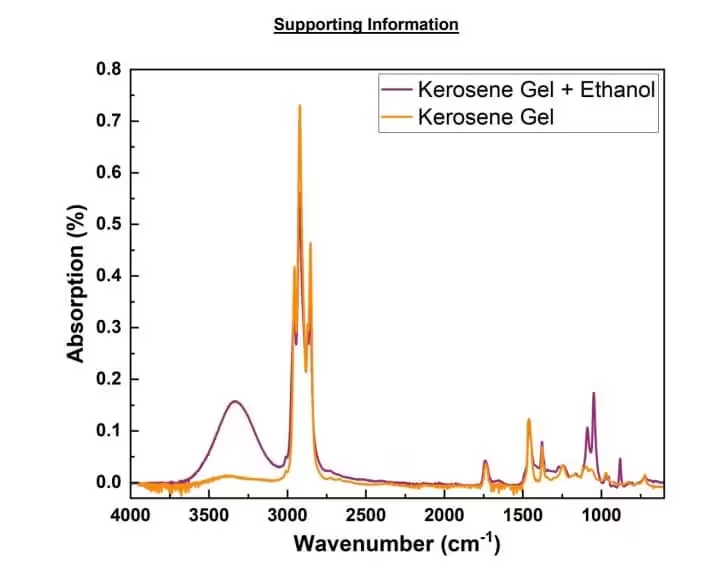
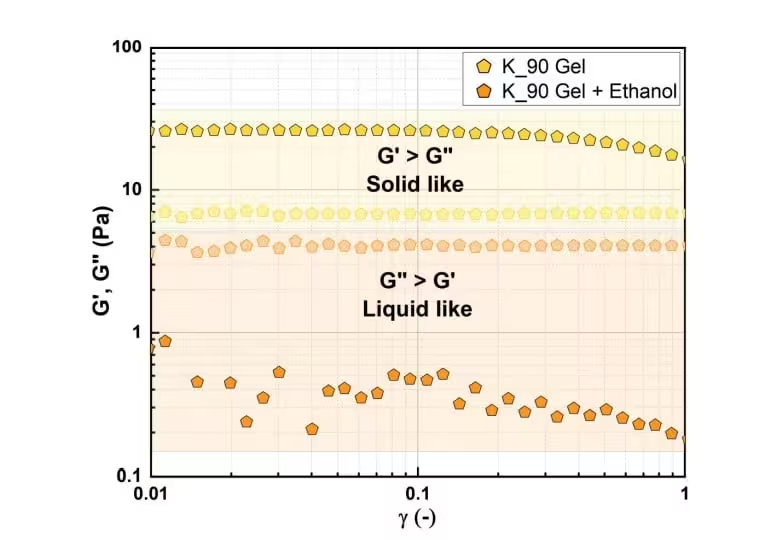
The researchers, Pranay Mudaliar and Jerin John, formulated their propellant using a combination of kerosene, lecithin, and calcium chloride. In this chemical matrix, the kerosene serves as the energy source, while lecithin acts as a thickening agent to create a stable gel structure. When at rest, the resulting material behaves like a soft solid, resisting the internal movement and leakage that often plague conventional liquid fuels.
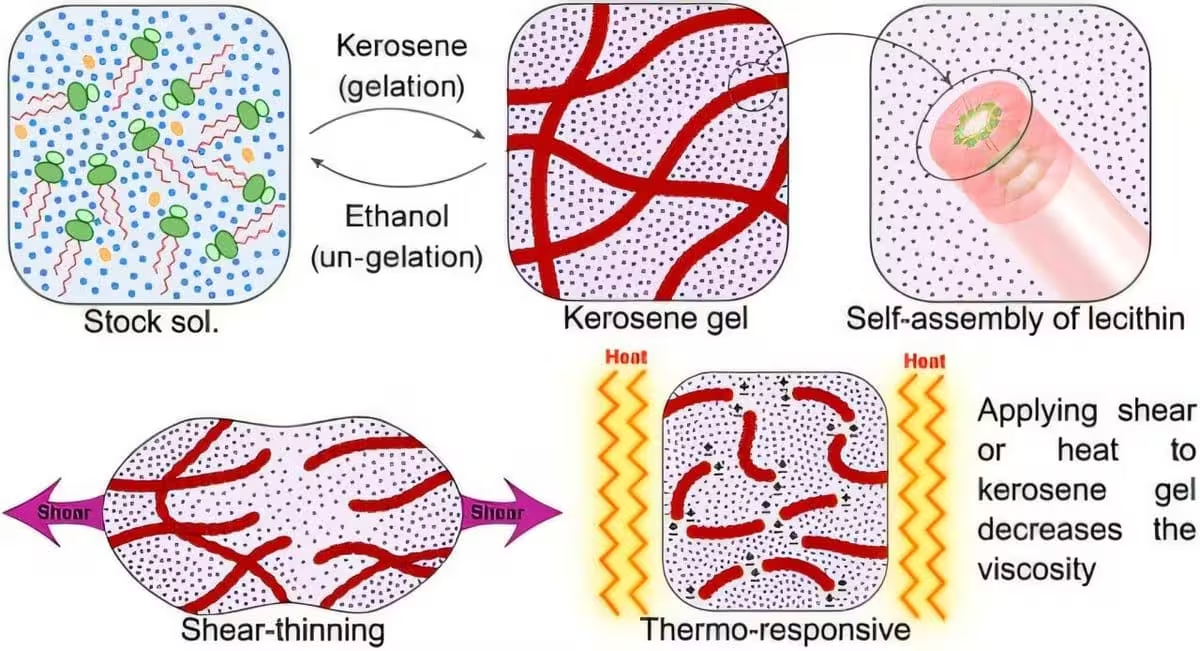
The innovation lies in the material’s reaction to mechanical force. Through a process known as shear thinning, the gel experiences a dramatic reduction in viscosity—approximately 100-fold—when subjected to pressure. This means that while the substance remains firm in the tank, it effectively transitions into a free-flowing liquid once it enters the delivery lines leading to the engine. This dual-state behavior makes it a promising candidate for next-generation fuel systems.
Transparency and Long-Term Durability
Beyond its rheological properties, the gel offers a practical advantage for laboratory research: it is transparent. This clarity allows scientists to observe the dynamics of the fuel in real-time, providing clearer insights into how it moves and burns under experimental conditions. Furthermore, the material appears exceptionally stable; tests revealed no visible separation of the mixture over more than a year of storage, indicating a potential shelf-life that could satisfy the stringent requirements of space missions.
While the initial findings from Concordia University are encouraging, the transition from lab-bench curiosity to space-ready technology remains the next major hurdle. The team notes that while the physical characteristics are well-documented, rigorous testing in actual propulsion environments is still required to confirm that the gel can maintain its performance and combustion reliability under the extreme conditions of a live rocket firing.
This article has been fact checked for accuracy, with information verified against reputable sources. Learn more about us and our editorial process.
Last reviewed on .
Article history
- Latest version
Cite this page:
- Posted by Zara Tariq