Supermassive Black Hole Triggers Mysterious Cosmic Radio Flare After 300 Day Delay
Astronomers have discovered a rare link between X-ray activity and delayed radio jets in a supermassive black hole located within the Perseus Cluster.
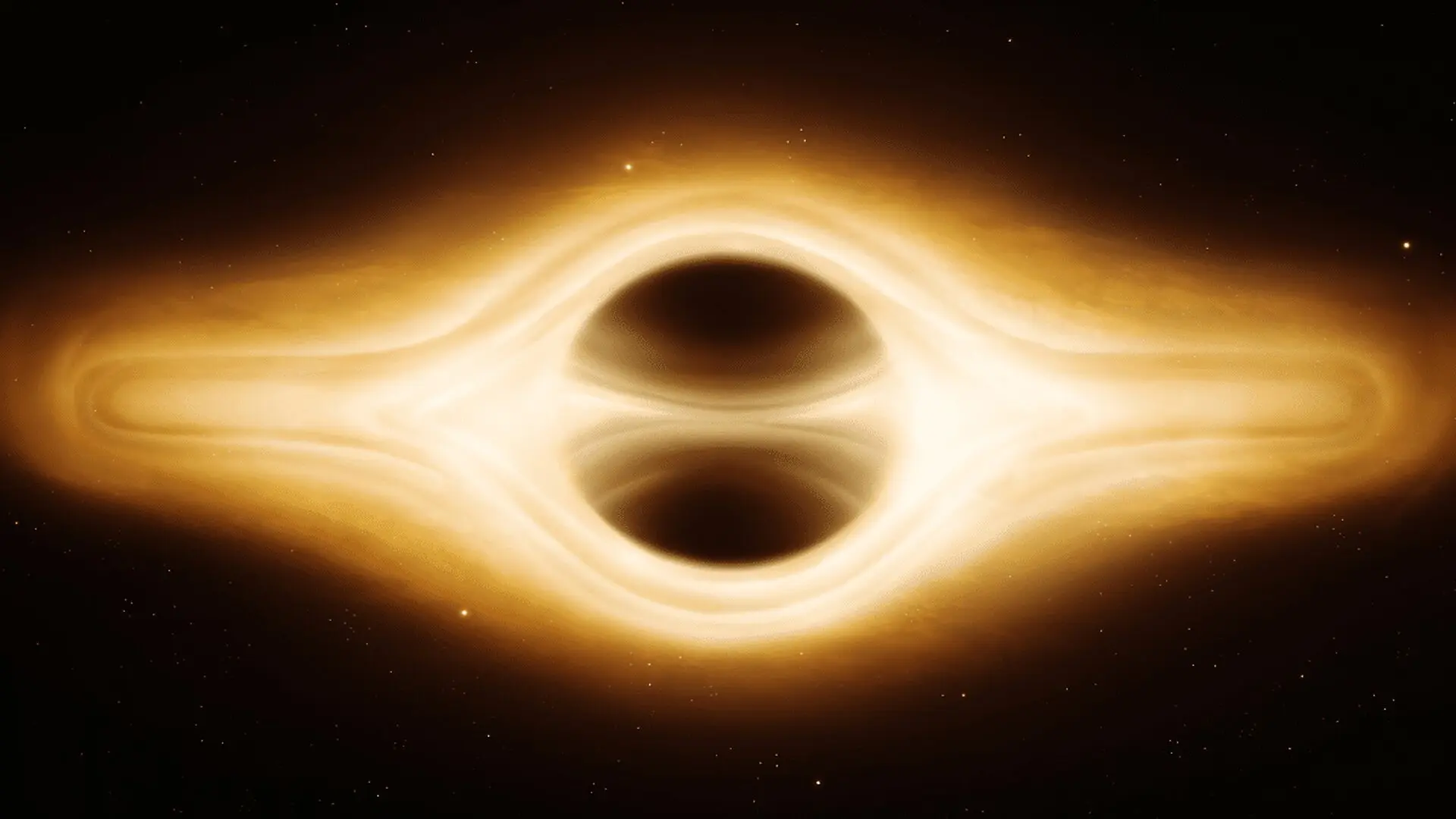
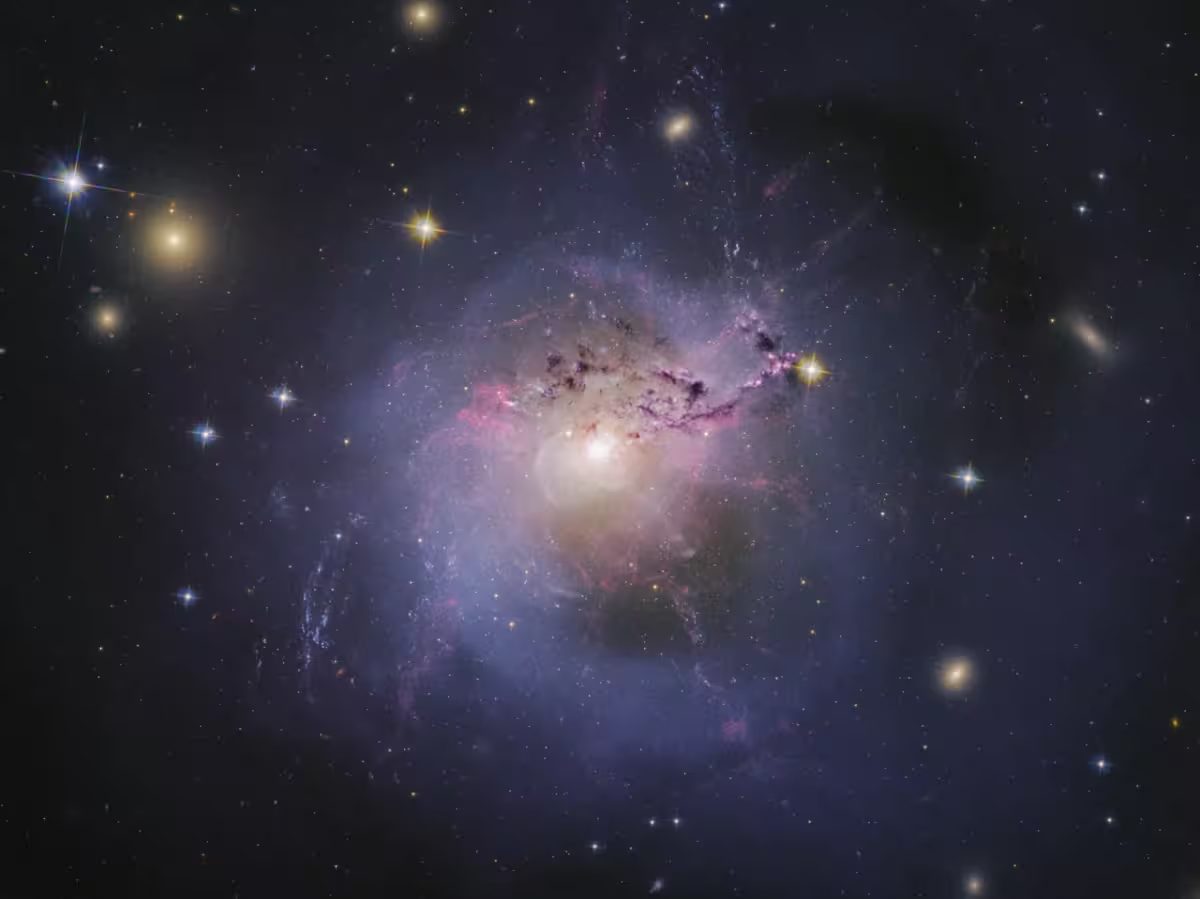
A supermassive black hole residing at the heart of the galaxy NGC 1275 has offered astronomers a rare glimpse into the complex mechanics of galactic engines. New research indicates that an intense burst of X-ray radiation was followed nearly 300 days later by a significant radio flare, providing a measurable link between the chaotic feeding processes occurring near the event horizon and the launch of powerful cosmic jets.
The findings, detailed in a study recently uploaded to the arXiv preprint server and slated for publication in the Astrophysical Journal Letters, leverage two decades of observation. Led by Sarah Ketchum of the University of Michigan, the team utilized long-term data from NASA’s Swift X-ray Telescope to track the activity of the black hole, which anchors the Perseus Cluster.
Tracking a Cosmic Eruption
While observatories like the Chandra X-ray Observatory provide unparalleled high-resolution imagery, they are often limited by strict scheduling. The Swift telescope, however, provided the necessary cadence to capture a record-breaking X-ray flare that ignited in early 2023. During this event, the brightness of the region surrounding the black hole surged by roughly a factor of two.
The activity spanned less than 60 days and consisted of two distinct bursts, each fluctuating over approximately five days. This rapid variability prompted researchers to evaluate the cause, including the potential for a tidal disruption event—a scenario where the black hole tears apart an incoming star. However, the data failed to show the signature decline in brightness associated with such events, leading the team to conclude that the flare was likely driven by shifts in accretion rates or internal disturbances within the jet structure.
Mapping the Jet’s Delayed Response
By cross-referencing their X-ray findings with radio monitoring data, the researchers identified a corresponding radio flare that emerged 296 days after the initial X-ray eruption. This nearly ten-month delay is highly significant, as it suggests a direct physical connection between the inner environment of the black hole and the outer regions where radio-emitting jets manifest.
The research team proposes that this timeframe may track the physical transit of material as it is ejected from the immediate vicinity of the black hole and travels outward. Alternatively, the delay could represent the time required for internal shocks or energy fluctuations to propagate through the existing jet outflow. Whether the X-rays originated from a hot corona surrounding the black hole or from the base of the jet remains a subject of ongoing investigation.
The Role of Black Holes in Galactic Evolution
The activity in NGC 1275 serves as a prime example of how supermassive black holes regulate the evolution of their host galaxies. By launching jets that extend thousands of light-years into space, these objects carve out massive cavities in the surrounding gas of the Perseus Cluster. These interactions play a critical role in cooling or heating the intergalactic medium, effectively dictating the fuel supply available for future star formation.
The study highlights the necessity of multi-wavelength, long-term monitoring to decode these cosmic signals. By coordinating X-ray and radio observations, scientists hope to move closer to a unified understanding of how black hole feeding cycles drive the expansive structures that shape the universe. Future observations will aim to confirm if this 300-day delay is a consistent feature of active galactic nuclei or a unique characteristic of this particular system.
This article has been fact checked for accuracy, with information verified against reputable sources. Learn more about us and our editorial process.
Last reviewed on .
Article history
- Latest version
Reference(s)
- Ketchum, Sarah. “X-ray Flaring and Variability in NGC 1275, the Heart of the Perseus Cluster.” arXiv.org, doi: 10.48550/arXiv.2608.13281. <https://doi.org/10.48550/arXiv.2608.13281>.
Cite this page:
- Posted by Farah Siddiqui