Astronomers Are Teaching Telescopes to Blink to Dodge Crowded Satellite Traffic
A new bio-inspired camera mimics the human eye to detect and mask satellite streaks, protecting stunning deep-space telescope images from interference.
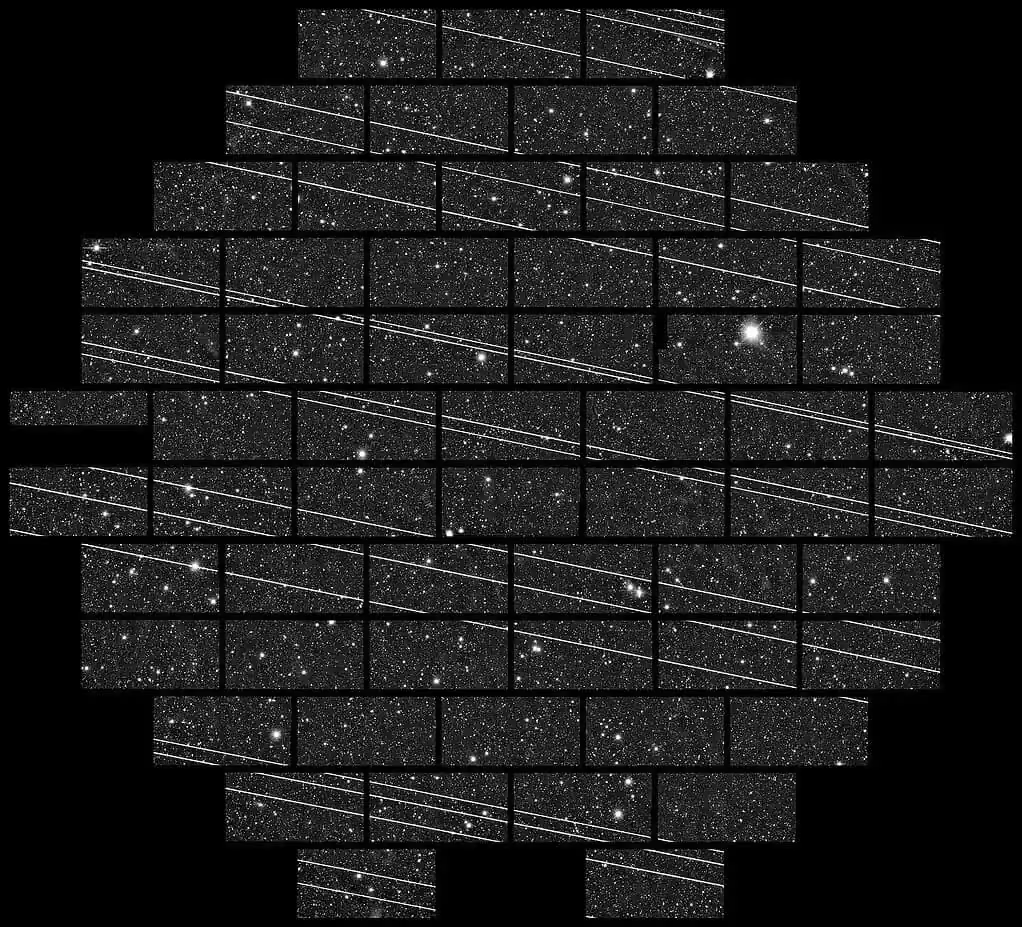
For astronomers, a multi-hour exposure capturing the faint light of a distant galaxy can be ruined in seconds by a single, bright streak of light. As the population of low Earth orbit continues to surge—with the European Space Agency reporting roughly 18,340 satellites currently in orbit as of June 2026—these photobombing spacecraft have become a critical obstacle for ground-based observatories. Researchers at the University of Warwick are now proposing a high-tech solution: a rapid-response camera system that allows a telescope to “blink” just as a satellite enters its line of sight.
Managing the New Era of Orbital Congestion
The utility of modern satellite constellations for global internet, weather forecasting, and GPS is undisputed, but their proliferation has fundamentally altered the night sky. Speaking at the UK’s National Astronomy Meeting 2026, space researcher James Blake emphasized that current space traffic management systems are struggling to keep pace with the sheer volume of new launches. The issue extends beyond visible streaks, as satellites also introduce radio frequency interference, creating what researchers describe as a broad-spectrum challenge for modern astronomy.
Currently, observatories often rely on predictive tracking to avoid satellites, but this method is prone to failure as orbital maneuvers and lack of uniform industry compliance make predictions unreliable. Mike Peel of Imperial College London noted that the prevalence of constellations like Starlink has made this a pervasive issue across the entire electromagnetic spectrum.
Bio-Inspired Sensors Offer a Real-Time Defense
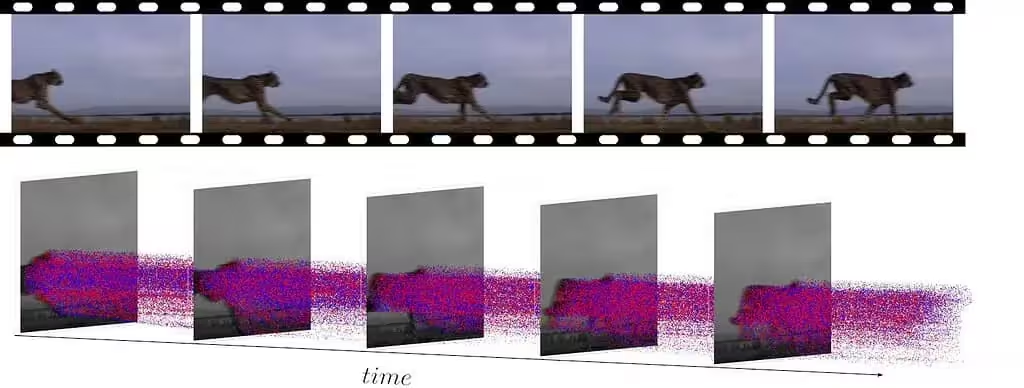
To overcome the limitations of static tracking, the Warwick team is looking to neuromorphic technology. Unlike standard digital cameras, which process entire frames regardless of content, an event-based camera functions similarly to a biological retina. It remains dormant during steady conditions but triggers immediately when it detects a shift in brightness. By placing this sensor alongside a telescope’s main instrument, the system can autonomously monitor the surrounding patch of sky for incoming movement.
“We have a responsive system, whereby in near real time you’re acting on what you’re seeing in the night sky rather than relying on old information,” Blake explained during the conference.
Future Implementation and Testing
The proposed system is designed to provide a critical buffer of a few seconds, allowing a telescope’s control software to pause an exposure, shutter the lens, or pivot to a different observation target before a streak occurs. While this reaction window is narrow, initial analyses suggest it is sufficient for automated intervention.
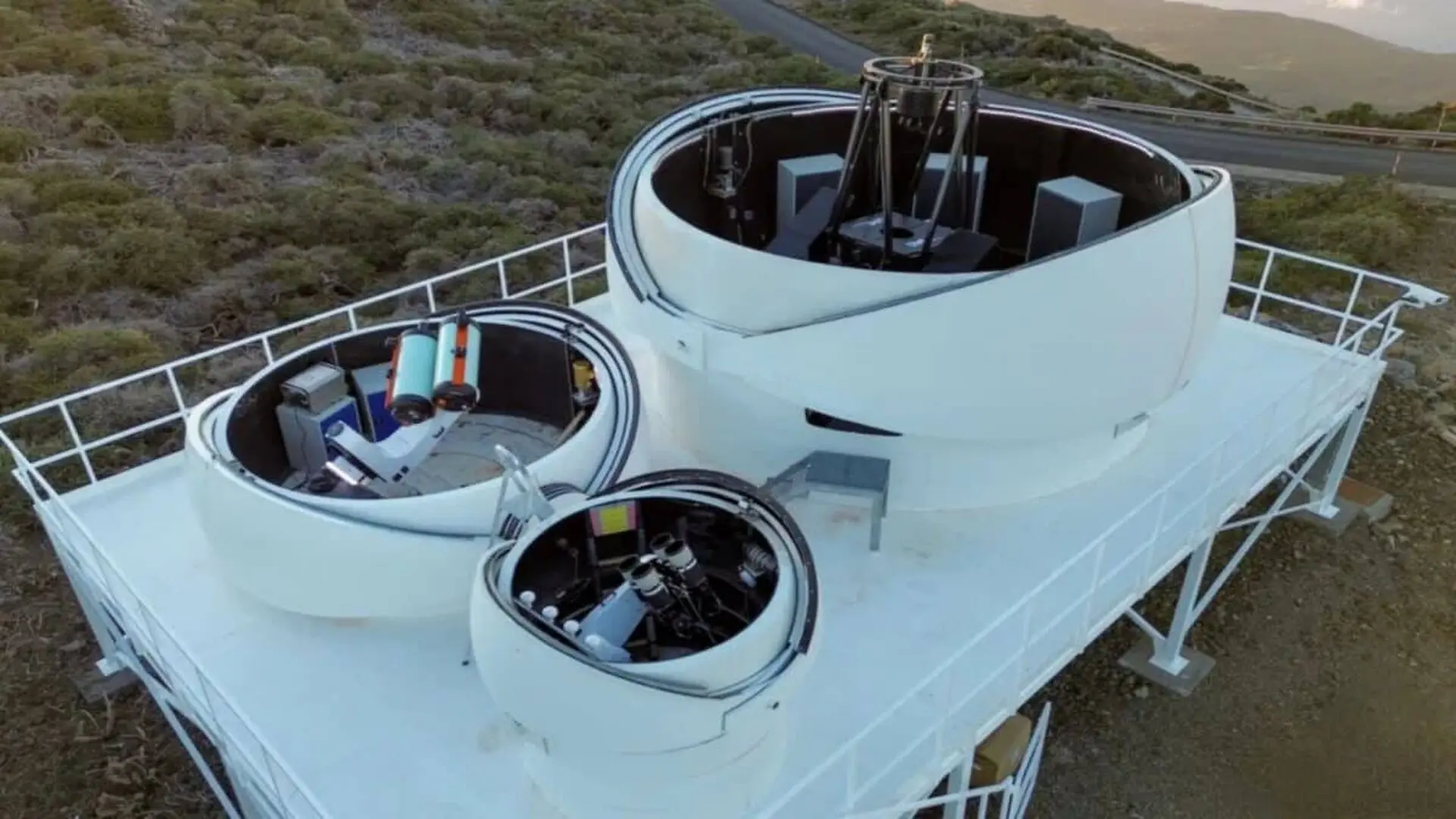
The research team plans to conduct preliminary testing at the university’s campus observatory before scaling the technology for deployment at major facilities on La Palma in the Canary Islands.
This article has been fact checked for accuracy, with information verified against reputable sources. Learn more about us and our editorial process.
Last reviewed on .
Article history
- Latest version
Reference(s)
- “James Blake.” <https://warwick.ac.uk/fac/sci/physics/research/astro/people/jamesblake/>.
- “Mike Peel.” Mike Peel <https://www.mikepeel.net/>.
Cite this page:
- Posted by Farah Siddiqui