SpaceX Finally Recovers Starship From The Indian Ocean To Unlock Vital Flight Data
SpaceX has successfully recovered its Starship vehicle following a precise ocean landing, providing critical data to advance future spaceflight missions.
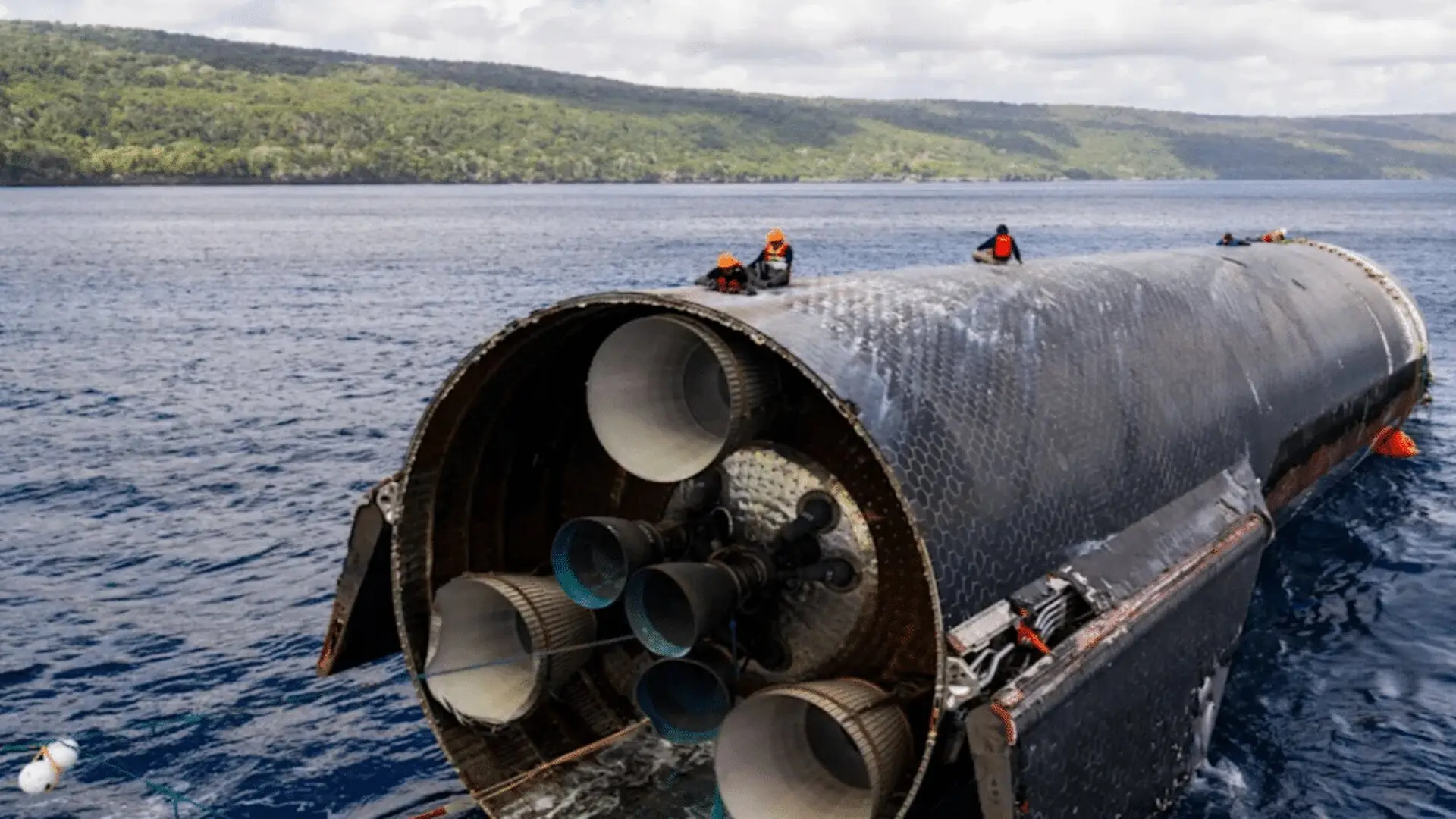
SpaceX has successfully retrieved its Starship spacecraft from the depths of the Indian Ocean, marking a significant milestone in the company’s push toward a fully reusable heavy-lift launch system. Following a controlled splashdown, recovery teams navigated demanding maritime conditions to secure the vessel, providing engineers with unprecedented physical access to flight-proven hardware.
This post-flight inspection offers the SpaceX engineering team a rare opportunity to examine how the vehicle’s systems endured the extreme thermal and mechanical stresses of atmospheric reentry. While telemetry provides vital digital snapshots of a mission, the ability to study physical components firsthand remains a cornerstone of the company’s rapid iterative development cycle.
Engineering Insights from a Successful Sea Recovery
The operation represents a critical advancement for the Starship program, which aims to normalize rapid, frequent space travel. By analyzing the physical state of the spacecraft, researchers can compare actual material performance against their existing computer models, refining the design for future iterations. According to reporting from Associated Press News, the data gathered from this mission is already influencing plans for upcoming vehicle builds.
SpaceX confirmed the successful recovery via X, commending the crew for overcoming the harsh environment of the Indian Ocean to secure the vessel. The company noted that this hands-on access provides the technical depth necessary to improve reliability and turnaround times for future flights.
“Congratulations to the entire SpaceX Recovery team for battling through challenging conditions to give our engineers access to a wealth of data to continue rapidly developing Starship,” the company said via X.
SpaceX engineers spent several days inspecting Ship 40 in the waters off Christmas Island. They collected heatshield samples and gained vital insight into how the vehicle handled reentry with improvements now planned on future vehicles pic.twitter.com/8NWXpmhlLi
— SpaceX (@SpaceX) August 27, 2026
A New Era for Deep Space Transportation
The overarching ambition of the Starship project is to drastically reduce the cost of space exploration by moving away from expendable rockets. By proving that the spacecraft can survive the journey to space and back, SpaceX is laying the groundwork for more complex missions, including long-term logistics for the Moon, Mars, and beyond.
The program is currently under intense scrutiny from both the aerospace industry and government partners, particularly given its role in NASA Artemis missions. As a planned human landing system, the Starship must demonstrate not only survivability but also the extreme reliability required to transport astronauts safely. The data harvested from this recent recovery will be instrumental in bridging the gap between experimental flight tests and a fully operational, crew-capable transportation fleet.
As the company prepares for its next series of launches, the findings from this ocean retrieval will serve as a foundational dataset, helping engineers fine-tune everything from structural integrity to precision landing maneuvers. With each mission, the barrier to deep-space exploration continues to lower, bolstered by the tangible lessons learned from every vehicle returned to shore.
This article has been fact checked for accuracy, with information verified against reputable sources. Learn more about us and our editorial process.
Last reviewed on .
Article history
- Latest version
Reference(s)
- “https://twitter.com/SpaceX/status/2092988521376059899/photo/1.” <https://t.co/8NWXpmhlLi>.
Cite this page:
- Posted by Divya Iyer