Deep Sea Creatures Found Living Inside Decaying Radioactive Waste Barrels on Atlantic Floor
Decades after radioactive waste was dumped in the Atlantic, scientists have finally investigated the barrels to reveal their current state and impact.
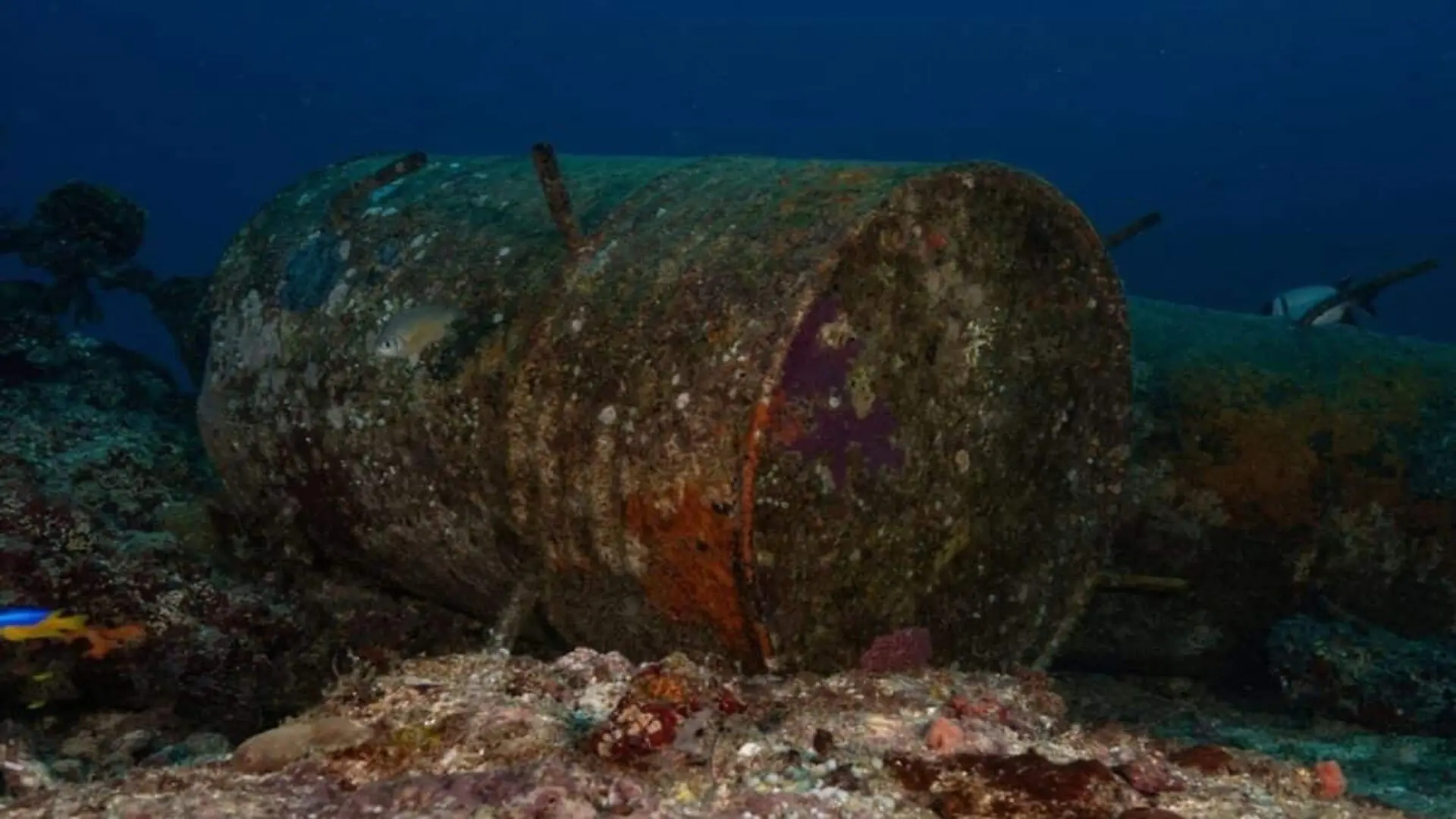
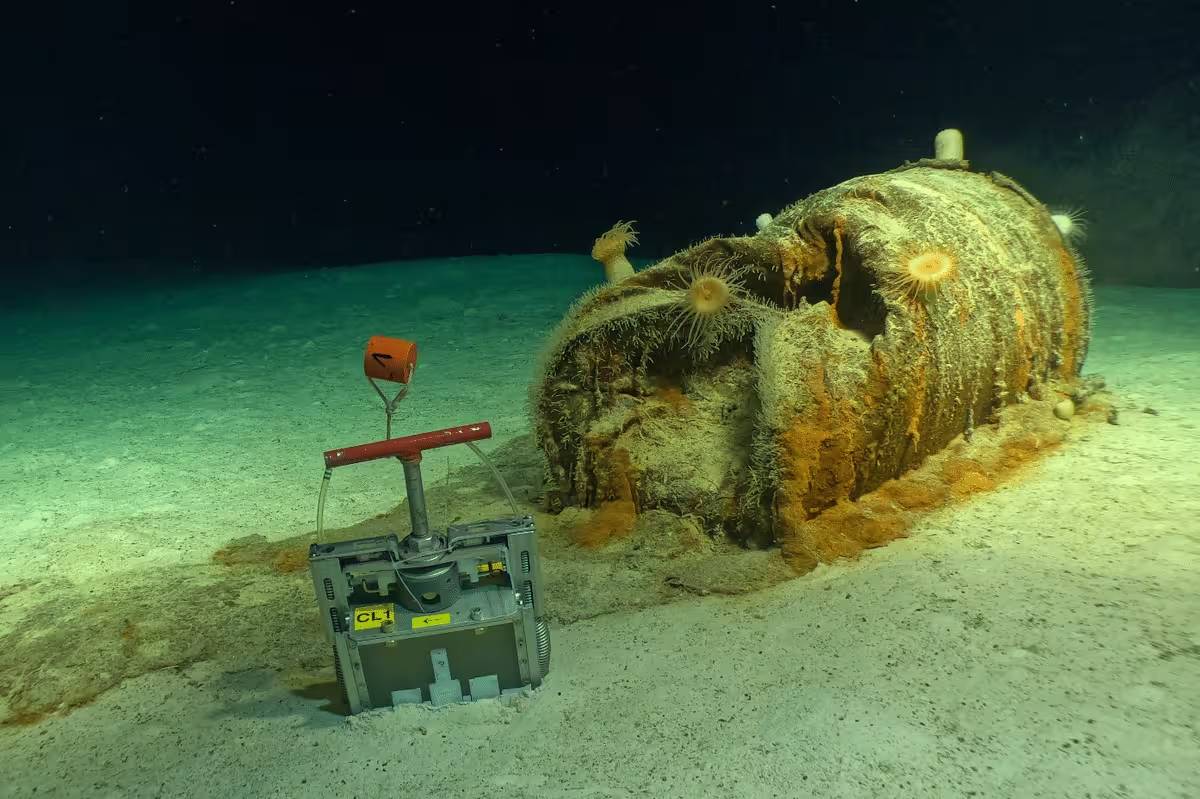
More than 200,000 barrels containing radioactive waste have rested on the floor of the Atlantic Ocean for decades, a silent legacy of mid-century industrial disposal. Recent deep-sea investigations have revealed that these containers are failing, with many showing advanced signs of corrosion, structural ruptures, and in some cases, the spill of their contents into the surrounding marine environment. Perhaps most unexpectedly, researchers have documented deep-sea organisms, including anemones, sponges, and crabs, colonizing these compromised vessels.
Deep-Sea Inspections Reveal Crumbling Containment
The findings stem from the NODSSUM mission, a project spearheaded by France’s National Center for Scientific Research (CNRS). In 2026, a research team utilized the crewed submersible Nautile to descend nearly 4,700 meters into the northeastern Atlantic. Their objective was to examine a sprawling, underwater dumping zone that spans approximately 14,500 square kilometers, with depths ranging between 3,000 and 5,000 meters.
This mission follows a preliminary survey conducted in 2025 aboard the vessel L’Atalante, where an autonomous underwater robot, UlyX, mapped 163 square kilometers of the site. That initial sweep identified 3,355 barrels, a figure representing only about 2% of the estimated waste present in the area. When the 2026 team returned with Nautile, they conducted 20 dives to capture high-resolution imagery of roughly 50 specific barrels. According to the French Oceanographic Fleet, the containers were never intended for recovery; they were encased in concrete or bitumen, with the assumption that the ocean would safely dilute any leaking material once the initial 20-year containment period passed.
A Legacy of Cold War Disposal
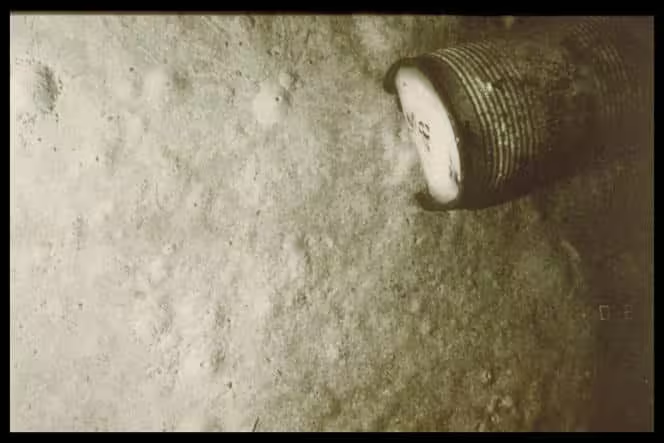
Between 1949 and 1990, 14 nations utilized the deep ocean for the disposal of radioactive materials, with the United Kingdom, France, and Belgium serving as the primary contributors. Although the 1972 London Convention eventually curtailed these practices, leading to a total ban in 1993, the barrels remained unmonitored for decades. As reported by CNRS, current measurements indicate levels of radioactivity that exceed previous expectations. While these readings do not indicate a catastrophic environmental event, they confirm that the integrity of the waste storage has significantly deteriorated.
Evaluating Potential Ecological Impacts
The colonization of these decaying containers by local fauna presents a pressing ecological question: to what extent are these organisms accumulating radionuclides in their tissues? To address this, the expedition team collected samples of the surrounding sediment, seawater, and biological specimens. Scientists are currently analyzing these samples to track the presence of radioactive isotopes within the deep-sea food web.
Data gathered during the NODSSUM mission is being integrated into ongoing assessments by OSPAR, an organization dedicated to the protection of the marine environment in the northeastern Atlantic. The findings are expected to inform future monitoring strategies, with comprehensive laboratory reports anticipated by early 2027. For now, the deep-sea site remains a focal point for understanding the long-term environmental consequences of legacy nuclear waste disposal.
This article has been fact checked for accuracy, with information verified against reputable sources. Learn more about us and our editorial process.
Last reviewed on .
Article history
- Latest version
Reference(s)
- <https://www.flotteoceanographique.fr/Toutes-les-actualites/Campagne-Nodssum-Cartographier-les-futs-de-dechets-radioactifs-immerges>.
- “Tracking radioactive barrels in the Atlantic.” CNRS News <https://news.cnrs.fr/articles/tracking-radioactive-barrels-in-the-atlantic>.
Cite this page:
- Posted by Divya Iyer