Researchers Drilled Through 2 Miles of Antarctic Ice and Reached a Lake Sealed for 15 Million Years
Discover the hidden Antarctic lake the size of Lake Ontario and the strange environment scientists uncovered above its ancient waters.
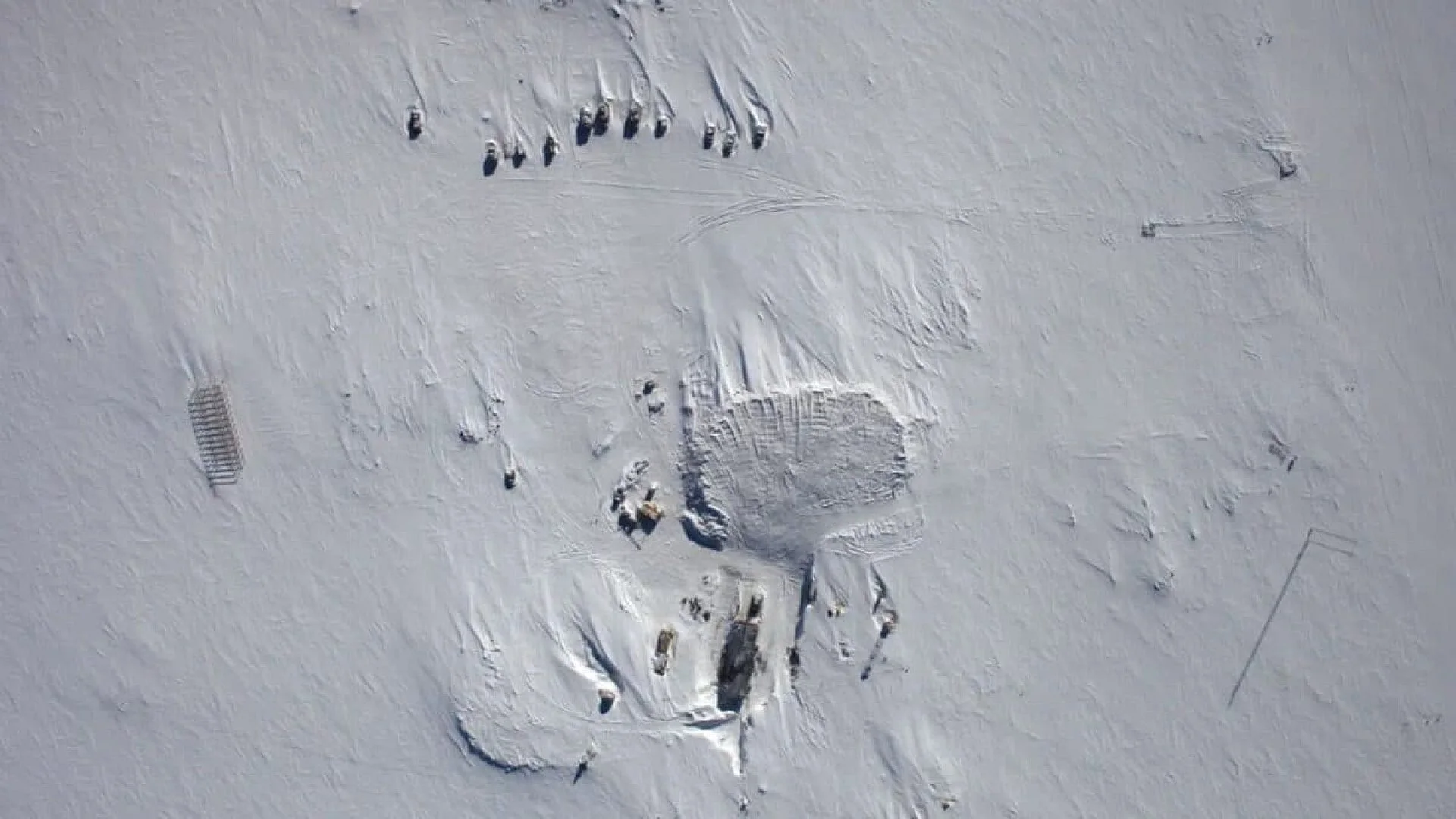
Lake Vostok lies beneath more than two miles of Antarctic ice, making it one of the most secluded water bodies on the planet. The lake is situated near Russia’s Vostok research station, roughly 800 miles from the South Pole, and stretches about 150 miles in length and 30 miles in width—comparable to Lake Ontario and the largest among Antarctica’s over 400 identified subglacial lakes.
Beyond its geological significance, analyses of ice that has melted from the lake reveal genetic material from more than 3,500 organisms, including fungi and bacteria. This makes Lake Vostok an exceptional natural laboratory for probing life in cold, dark, high‑pressure settings.
Unveiling the Hidden Giant Beneath Antarctica’s Ice Sheet
Scientists have operated at Vostok station since 1957, but the existence of a lake underneath was not apparent at first. In the 1960s a Russian geographer‑pilot observed a remarkably flat, smooth expanse of ice from the air, hinting that something unusual lay below.
The lake’s presence was confirmed in 1993 when satellite‑based radar capable of penetrating thick ice mapped a liquid reservoir beneath the surface. After nearly two decades of preparation, researchers finally penetrated the ice in 2012, turning a seemingly ordinary segment of the Antarctic plateau into a focal point for deep‑earth research.
Life Thriving in Eternal Darkness
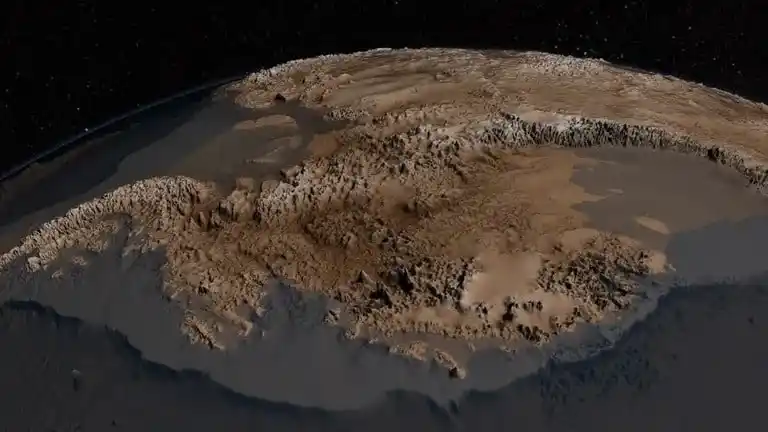
Lake Vostok was once an expansive surface lake before becoming encased by ice. The European Space Agency (ESA) estimates that its water volume could fill the Grand Canyon and exceed it by at least 25 percent. Live Science notes that the lake has been sealed for at least 15 million years, with some projections pushing the figure toward 20 million years or more. This prolonged isolation fuels scientific intrigue.
Temperatures hover around 27 degrees Fahrenheit (minus 3 degrees Celsius). The immense pressure from the overlying ice depresses the freezing point, allowing liquid water to persist. With no sunlight to power photosynthesis, resident microbes rely on mineral and chemical sources in the water and underlying rock for energy.
Analysis of the so‑called accretion ice—a frozen layer that forms atop the lake—uncovered genetic signatures from more than 3,500 organisms. The material includes fungi, bacteria and microbes typically found in fish digestive tracts, hinting that the lake may once have been linked to the ocean.
Subglacial Topography and Possible Heat Sources
Depth measurements reveal a southern basin about 0.6 miles deep, shallower toward the north and southwest. Mapping the lake floor uncovered a ridge that separates deep and shallow zones.
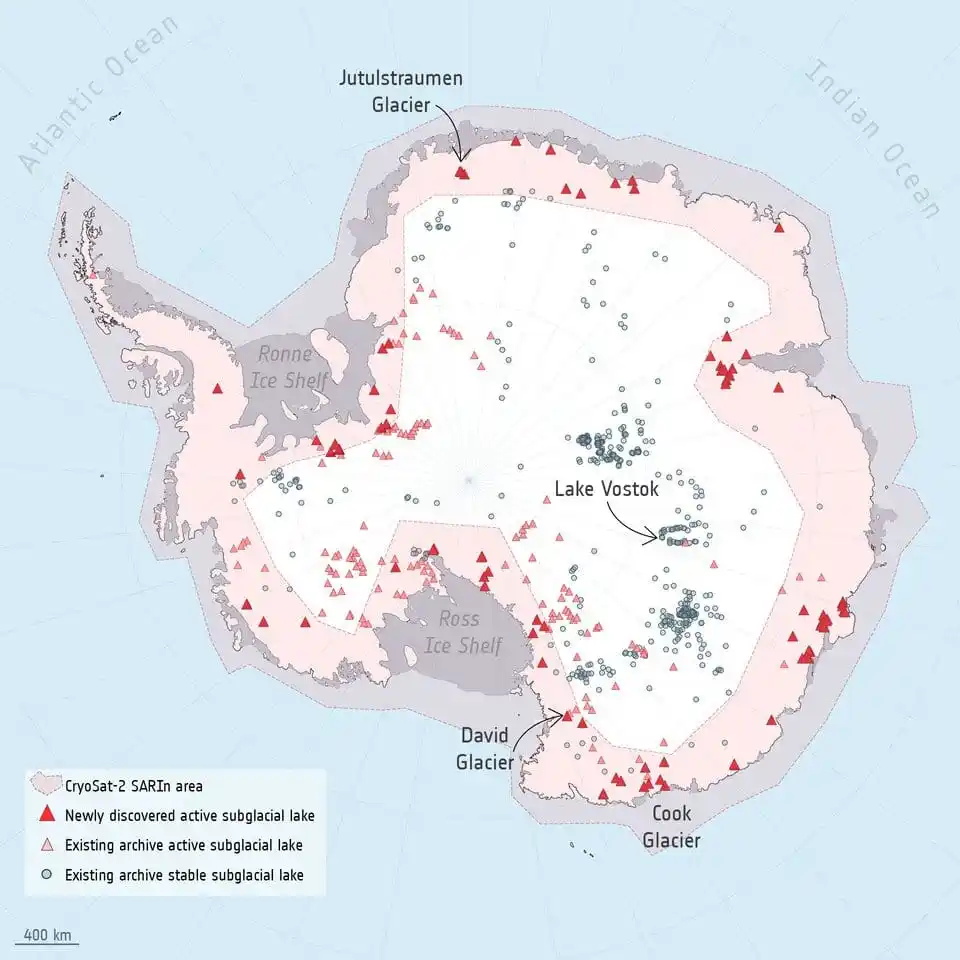
All of the lake’s water originates from melt of the overlying ice sheet, while modest geothermal heat from the Earth’s interior helps keep the lake from freezing solid and sustains other subglacial reservoirs across the continent.
“It was fascinating to discover that the subglacial lake areas can change during different filling or draining cycles. This shows that Antarctic subglacial hydrology is much more dynamic than previously thought, so we must continue to monitor these lakes as they evolve in the future,” stated Anna Hogg, a professor at the University of Leeds.
Implications for Extraterrestrial Habitability
The scientific relevance of the continent’s largest subglacial lake extends well beyond Antarctica. Its dark, pressurized waters serve as a tangible analogue for icy worlds elsewhere in the solar system, where liquid reservoirs may exist beneath thick ice shells.
Researchers suggest that ongoing study of Lake Vostok could shed light on potential habitats on moons such as Europa, where similar conditions of liquid water hidden under ice are suspected. In this way, the lake provides a real‑world case study of how life might endure in environments that appear, from the surface, nearly impossible.
This article has been fact checked for accuracy, with information verified against reputable sources. Learn more about us and our editorial process.
Last reviewed on .
Article history
- Latest version
Reference(s)
- “Tour Antarctica Research Stations: Vostok Research Station.” <https://lima.usgs.gov/vostok.php>.
- “85 new subglacial lakes detected below Antarctica.” <https://www.esa.int/Applications/Observing_the_Earth/FutureEO/CryoSat/85_new_subglacial_lakes_detected_below_Antarctica>.
- Pare, Sascha. “Lake Vostok: The 15 million-year-old lake buried miles beneath Antarctica's ice.”, February 14, 2025 Live Science <https://www.livescience.com/planet-earth/antarctica/lake-vostok-the-15-million-year-old-lake-buried-miles-beneath-antarcticas-ice>.
- “Professor Anna E. Hogg | School of Earth, Environment and Sustainability | University of Leeds.” <https://environment.leeds.ac.uk/see/staff/1330/professor-anna-e-hogg>.
Cite this page:
- Posted by Elizabeth Taylor