Scientists Discover 115 Million Year Old Chemical Traces Inside Dinosaur Bone
Paleontologists have identified a new juvenile dinosaur species from a 2008 fossil discovery in Brazil’s Romualdo Formation, offering insights into its growth.
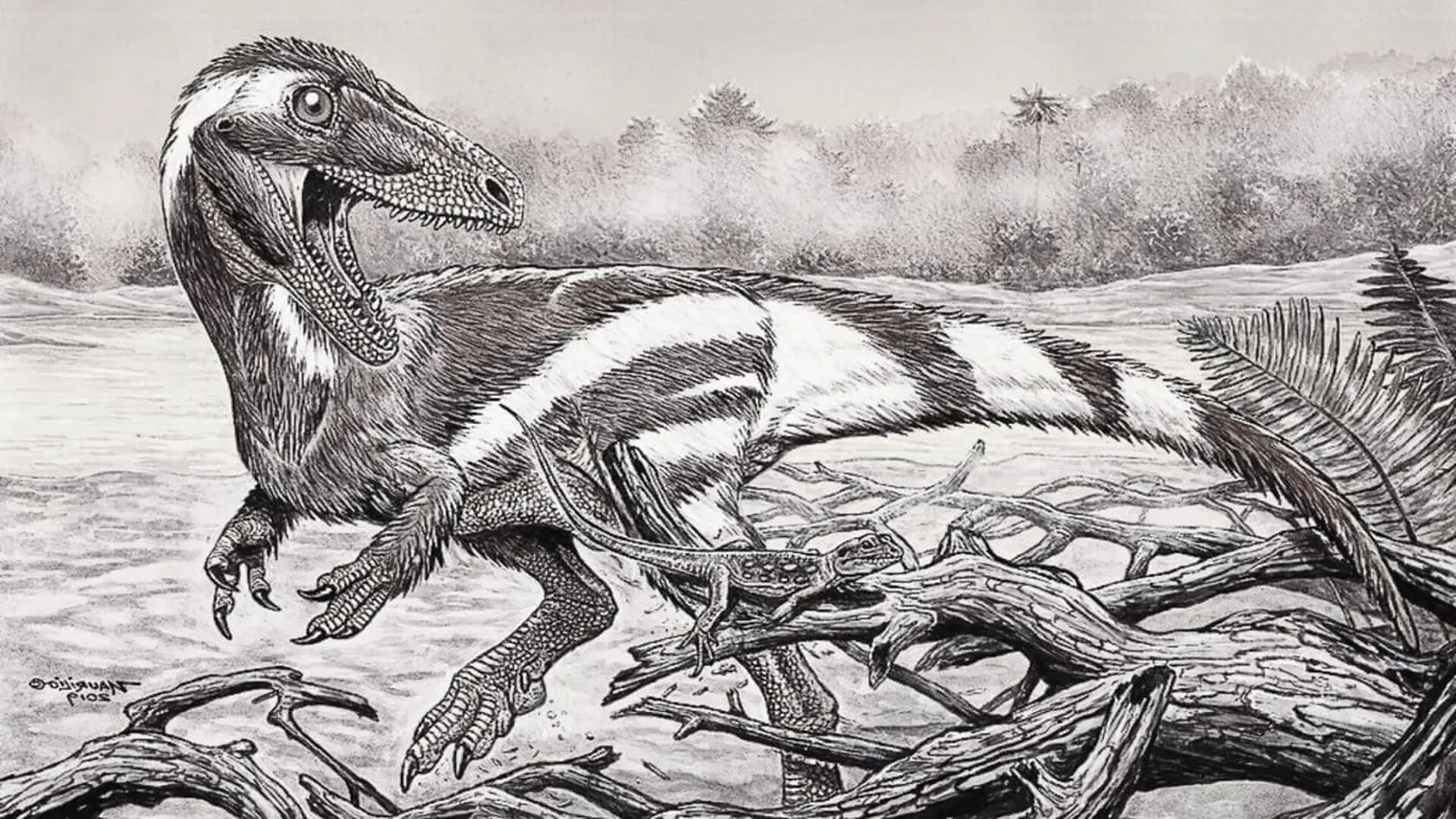
A team of international researchers has uncovered compelling evidence of organic molecules tucked away within a 115-million-year-old dinosaur bone discovered in Brazil. The study, which points to the survival of chemical traces associated with hemoglobin, challenges long-held assumptions about how biological material persists across geological timeframes.
The fossilized hind limb belonged to Aratasaurus museunacionali, a theropod that roamed during the Early Cretaceous period. Inside the bone’s vascular canals, researchers identified oval-shaped, microscopic structures measuring roughly 23 by 20 micrometers. While their location suggested they might be remnants of ancient blood cells, the team required more than just visual evidence to confirm their biological origin.
To verify the findings, the researchers, led by organic geochemist Kliti Grice of Curtin University, employed a sophisticated array of analytical tools, including Raman spectroscopy, mass spectrometry, and electron microscopy. Their study, published in the Proceedings of the National Academy of Sciences, confirmed the presence of heme B and 3,8-diethyl heme B—compounds directly linked to the breakdown of hemoglobin.
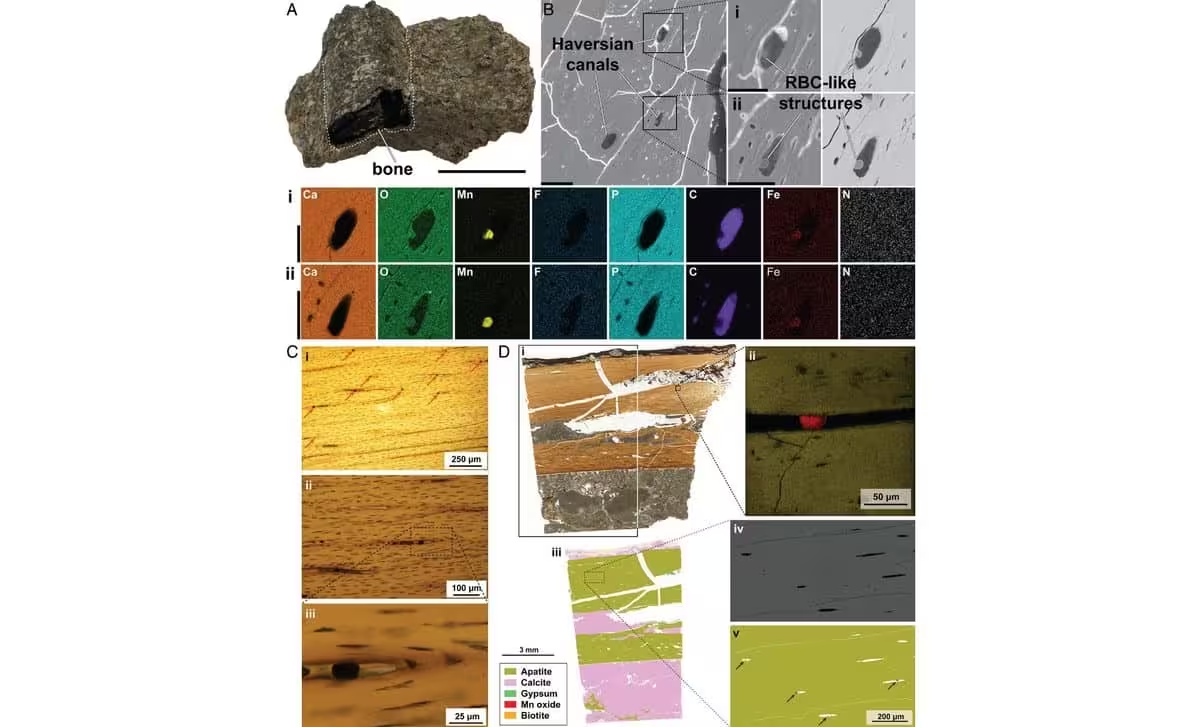
The chemical signatures were distinct from the surrounding sediment, which was rich in chlorophyll-related compounds rather than heme. Furthermore, the team identified the mineral hausmannite alongside the structures, suggesting that this manganese oxide may have acted as a stabilizing agent during the fossilization process. This preservation was likely bolstered by the animal’s burial in a low-oxygen environment characterized by microbial mats, which would have inhibited rapid decomposition.
Despite the robustness of the chemical data, the discovery has sparked a cautious debate within the paleontology community. Experts are weighing the possibility that these findings represent genuine cellular remnants against the chance that they are something else entirely.
Paleobiologist Maria McNamara of University College Cork, writing for Science, noted that while the methodology is among the most rigorous attempted, alternative explanations for the heme must be definitively ruled out. Other researchers, including Mary Schweitzer of North Carolina State University, pointed out discrepancies in the size and shape of the structures. In modern-day relatives of dinosaurs, such as birds and crocodilians, red blood cells are typically smaller, elongated, and contain a nucleus—features absent in the Aratasaurus samples.
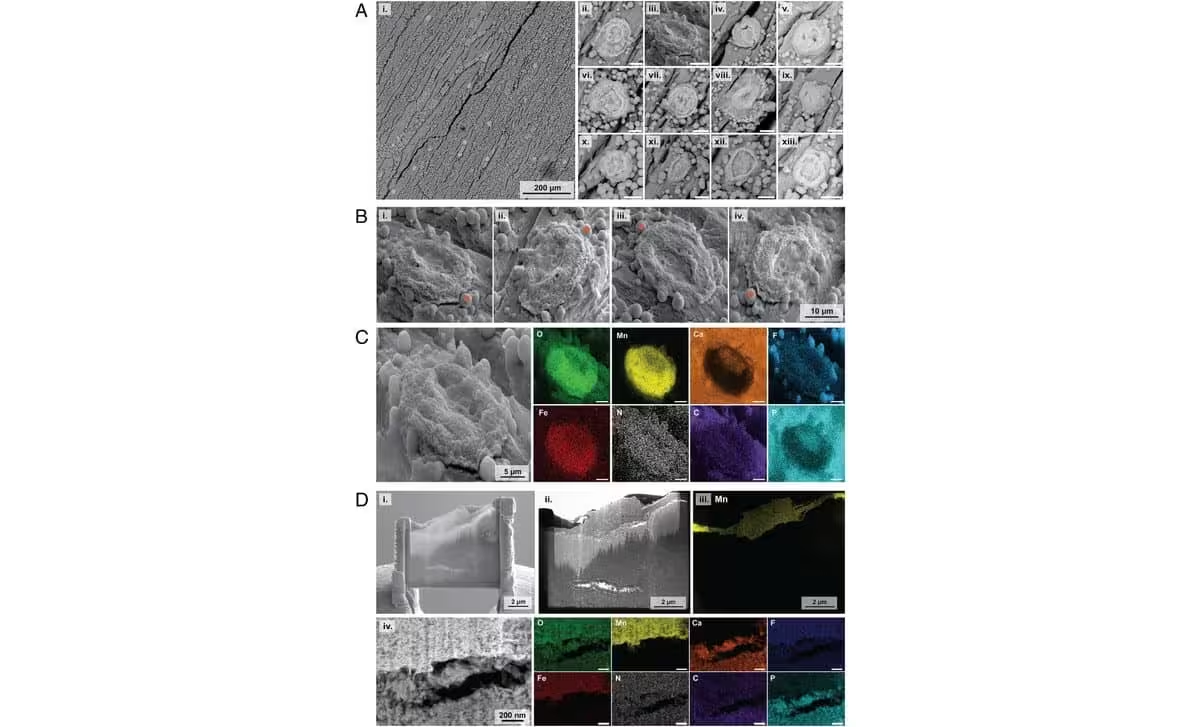
Additionally, Evan Saitta of the Field Museum questioned whether the structures might be mineral deposits of manganese oxide that merely mimic the appearance of cells. Grice and her team continue to stand by their interpretation, arguing that the convergence of spatial, chemical, and microscopic evidence is significant.
Beyond the realm of dinosaurs, the implications of this study reach into the field of astrobiology. According to Martin Van Kranendonk of Curtin University, understanding the mechanisms that allow organic signatures to survive for over a hundred million years is essential for refining how scientists search for evidence of ancient life in extraterrestrial contexts.
This article has been fact checked for accuracy, with information verified against reputable sources. Learn more about us and our editorial process.
Last reviewed on .
Article history
- Latest version
Reference(s)
- “Discovery.” <https://profiles.curtin.edu.au/3097-kliti-grice>.
- Grice, Kliti., et al. “Heme signatures in mineralized red blood cells within vascular canals of a 115-million-year-old dinosaur bone.” Proceedings of the National Academy of Sciences, vol. 123, no. 46, November 2, 2026 National Academy of Sciences, doi: 10.1073/pnas.2614248123. <https://www.pnas.org/doi/10.1073/pnas.2614248123>.
- “Prof. Maria McNamara | University College Cork.” University College Cork <https://www.ucc.ie/en/mariamcnamara/whoweare/maria/>.
- <https://www.science.org/content/article/did-scientists-just-find-115-million-year-old-dinosaur-blood>.
- “Mary Schweitzer.” Department of Biological Sciences <https://bio.sciences.ncsu.edu/people/mhschwei/>.
- <https://evansaitta.blog/>.
Cite this page:
- Posted by Priya Sharma