A Giant Supercomputer Just Solved One of the Universe’s Biggest Magnetic Mysteries
Universe’s magnetic fields forged by hidden plasma flows in cosmic chaos reveals massive simulation study
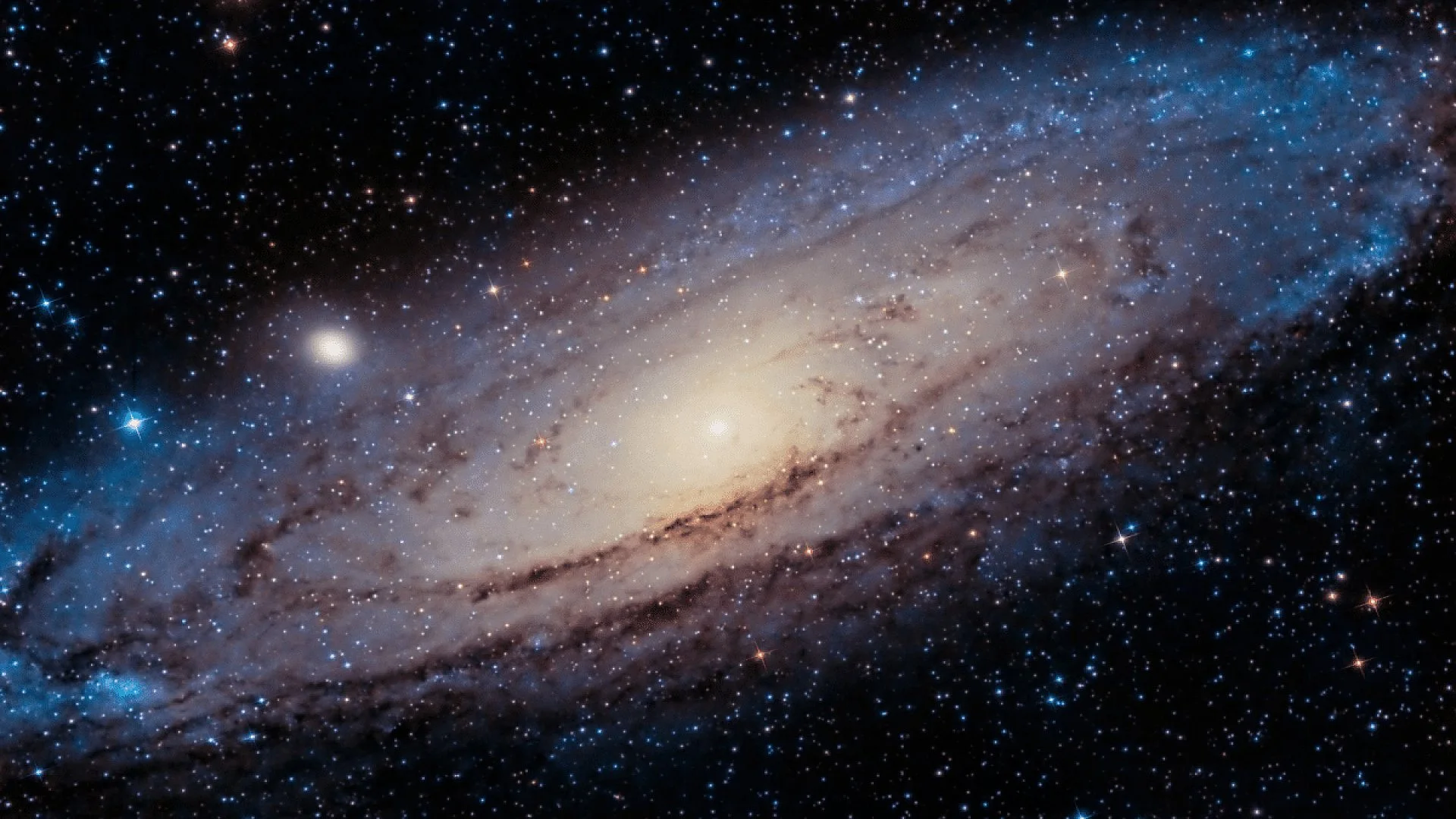
A recent article in Nature proposes a mechanism that could finally explain how the cosmos builds huge, coherent magnetic structures out of chaotic turbulence. By running some of the most detailed plasma simulations to date, the team showed that a persistent velocity shear inside turbulent plasma can gradually align magnetic activity into large‑scale patterns. The result may reshape our picture of phenomena ranging from black‑hole formation to neutron‑star collisions and solar storms that impact Earth.
Decades‑Long Hunt for the Origin of Cosmic Magnetism
Magnetic fields are detected everywhere—from planetary magnetospheres to interstellar clouds and entire galaxies. While observations have catalogued these fields for generations, a paradox has lingered: turbulence, which normally scrambles order, appears to coexist with magnetic structures that span astronomical distances in a highly organized fashion.
For almost seven decades, researchers have explored “magnetic dynamo” processes, wherein moving conductive fluids or plasma generate magnetic fields. Existing models reliably reproduce small, tangled magnetic knots but fall short of showing how such knots evolve into the vast, ordered fields observed across the universe. This disconnect has long been a thorn in astrophysical theory.
A collaborative effort led by scientists at the University of Wisconsin–Madison approached the problem from a fresh angle. Rather than treating turbulence as purely random, they examined whether a hidden, large‑scale flow could coax magnetic chaos into order. Their simulations indicated that when a stable velocity gradient threads the plasma, magnetic fields naturally begin to self‑organize over time.
“Magnetic fields across the cosmos are large-scale and ordered, but our understanding of how these fields are generated is that they come from some kind of turbulent motion,” explains lead author Bindesh Tripathi, a former UW‑Madison graduate student now completing a postdoctoral fellowship at Columbia University. “Given that turbulence is known to be a destructive agent, the question remains, how does it create a constructive, large-scale field?”
Supercomputer Experiments Reveal an Unforeseen Ordering Mechanism
The investigation leveraged Purdue University’s Anvil supercomputer, running one of the most extensive plasma‑simulation campaigns ever attempted. The calculations spanned 137 billion grid points in full 3‑D space, consumed close to 100 million CPU hours, and produced roughly 0.25 petabytes of data across about 90 separate runs.
Each simulation started with a plasma flow that possessed a steady velocity gradient—a condition where different layers move at distinct speeds. The team then introduced minute perturbations, allowing turbulence to develop organically. Over the course of the runs, tiny, disordered magnetic eddies merged, eventually giving rise to expansive, ordered magnetic fields that filled the simulated volume.
“We start our simulations with a flow that has a velocity gradient, then we add some tiny perturbations, like moving one fluid particle infinitesimally, we let that perturbation propagate over the system and grow, and then analyze the data over time,” Tripathi notes. “Initially, these perturbations lead to turbulent flows and magnetic fields in small‑scale structures, then, over time, they emerge into larger, ordered structures.”
Crucially, when the velocity gradient was omitted, the magnetic fields never progressed beyond chaotic turbulence, remaining tangled throughout the simulation. This contrast underscores the gradient’s role as the organizing agent.
“So that’s really the main key: to have a steady, large‑scale gradient in velocity,” he adds.
Broader Consequences for Astrophysics
The discovery reverberates beyond plasma theory. Large‑scale magnetic fields shape some of the universe’s most violent events, including the birth of black holes, the merger of neutron stars, and explosive outbursts from stars such as the Sun. A clearer grasp of magnetic‑field generation could refine models across these domains.
Earlier laboratory work at the Wisconsin Plasma Physics Laboratory in 2012 produced magnetic phenomena that existing dynamo theories could not fully explain. The new Nature paper argues that incorporating sustained velocity gradients brings simulations into much closer alignment with those experimental observations.
The findings also intersect with the expanding field of multimessenger astronomy, where researchers combine gravitational‑wave signals, electromagnetic radiation, and particle detections to probe cataclysmic cosmic episodes. Since magnetic fields heavily influence the emissions generated during neutron‑star collisions and black‑hole formation, the new mechanism may help decode those multimessenger signals.
“This work has the potential to explain the magnetic dynamics relevant in, for example, neutron star mergers and black hole formation, with direct applications to multimessenger astronomy,” Tripathi says. “It may also help better understand stellar magnetic fields and predict gas ejections from the Sun toward the Earth.”
Improved predictions of solar magnetic activity could have tangible benefits for modern infrastructure. Magnetic storms driven by the Sun can interfere with satellites, communication networks, navigation systems, and power grids. More accurate models of stellar magnetism may therefore enhance space‑weather forecasting and protect critical technologies.
This article has been fact checked for accuracy, with information verified against reputable sources. Learn more about us and our editorial process.
Last reviewed on .
Article history
- Latest version
Cite this page:
- Posted by Aisha Ahmed