NASA Just Sent New Experimental Tech to the Edge of Space on a High Altitude Balloon
NASA’s latest scientific balloon mission successfully tested compact space technologies and new instruments designed for future deep-space exploration.
NASA Leverages High-Altitude Ballooning to Fast-Track Space Technology
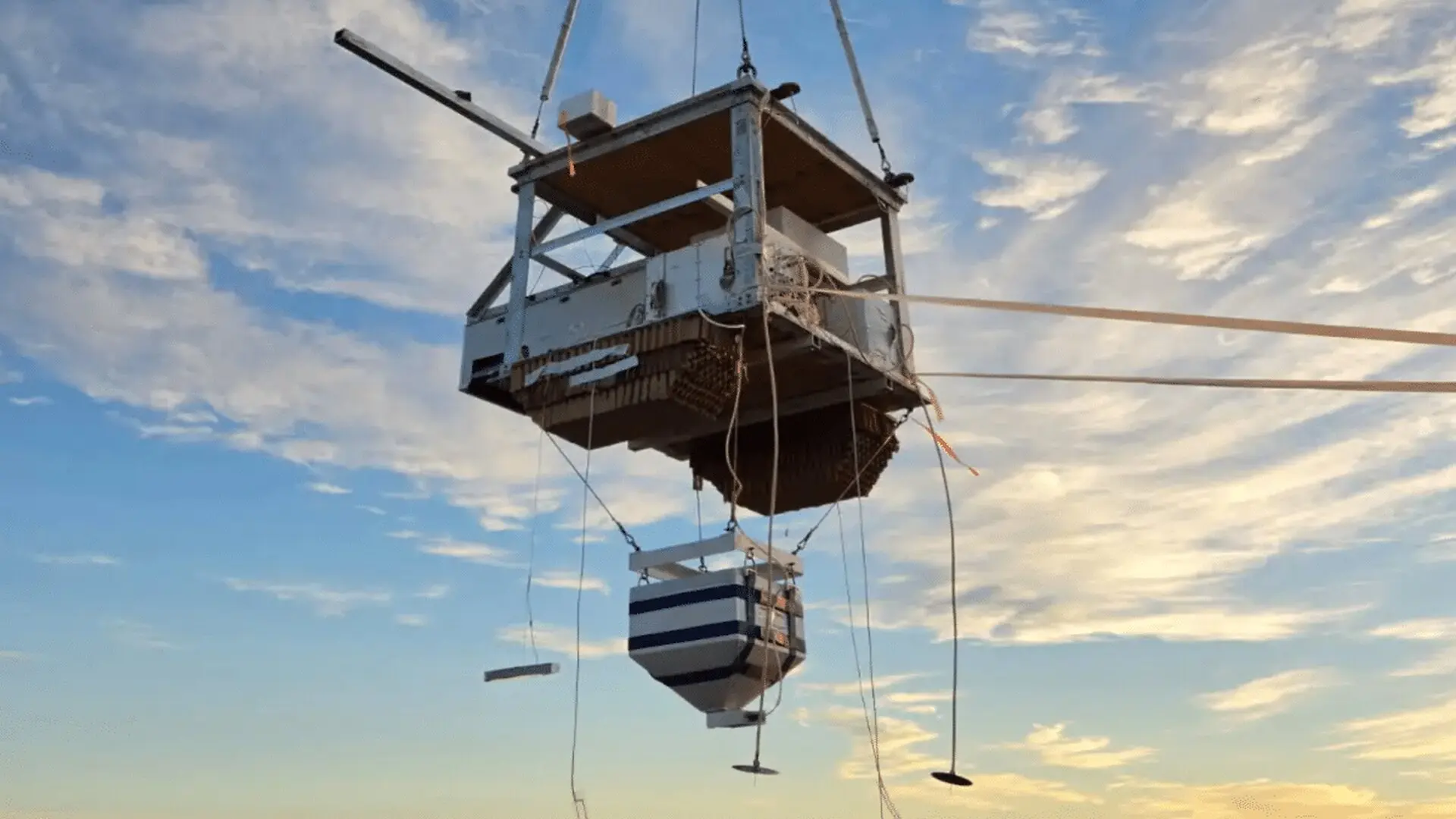
NASA has successfully completed its latest Balloon Optimization Opportunity Payload (BOOP!) mission, a streamlined testing program designed to put experimental hardware through its paces in the thin, harsh conditions of the upper atmosphere. By consolidating multiple technology demonstrations onto a single platform, the agency is accelerating the path from concept to spaceflight readiness.
The mission ascended from NASA’s launch facility in Fort Sumner, New Mexico, at 8:03 a.m. MDT on September 13, 2026. Over the course of a four-hour and 29-minute flight, the balloon reached a peak altitude of approximately 123,000 feet. This near-space environment provides a critical testing ground for instrumentation, allowing engineers to gather performance data in conditions that mimic the challenges of deep space.
Maximizing Research Efficiency in Near-Space
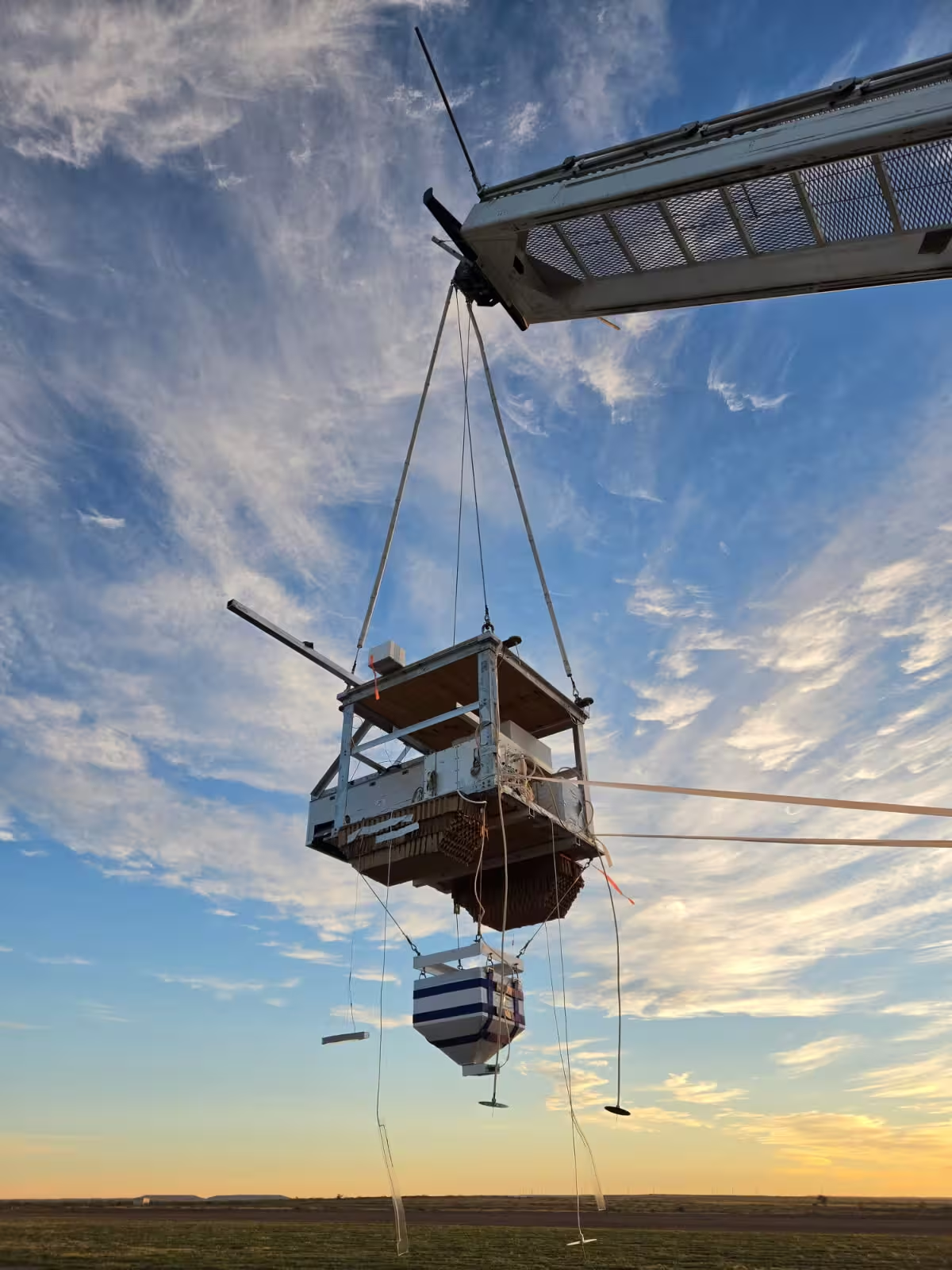
The BOOP! initiative, managed by NASA’s Balloon Program Office, addresses the practical need for cost-effective, high-frequency technology evaluation. By flying multiple experiments simultaneously, the program allows researchers to test various subsystems without the high costs or long wait times associated with individual orbital launches.
The recent flight carried a diverse array of experimental hardware. Key objectives included the evaluation of compact tools engineered for future planetary exploration, where minimizing mass and power consumption is vital. Other payloads focused on characterizing high-energy space radiation, providing essential data for scientists designing protective measures for astronauts and electronics. Additionally, the mission successfully tested a new flight camera system, verifying its durability and performance under extreme atmospheric conditions.
The Strategic Advantage of Balloon Platforms
Operating Earth’s atmosphere at such extreme altitudes offers a unique middle ground for aerospace research. While scientific balloons cannot replicate the weightlessness of orbit, they place instruments far above the obscuring effects of the lower atmosphere, providing a stable, high-altitude vantage point that is significantly easier to access and retrieve than space-based assets.
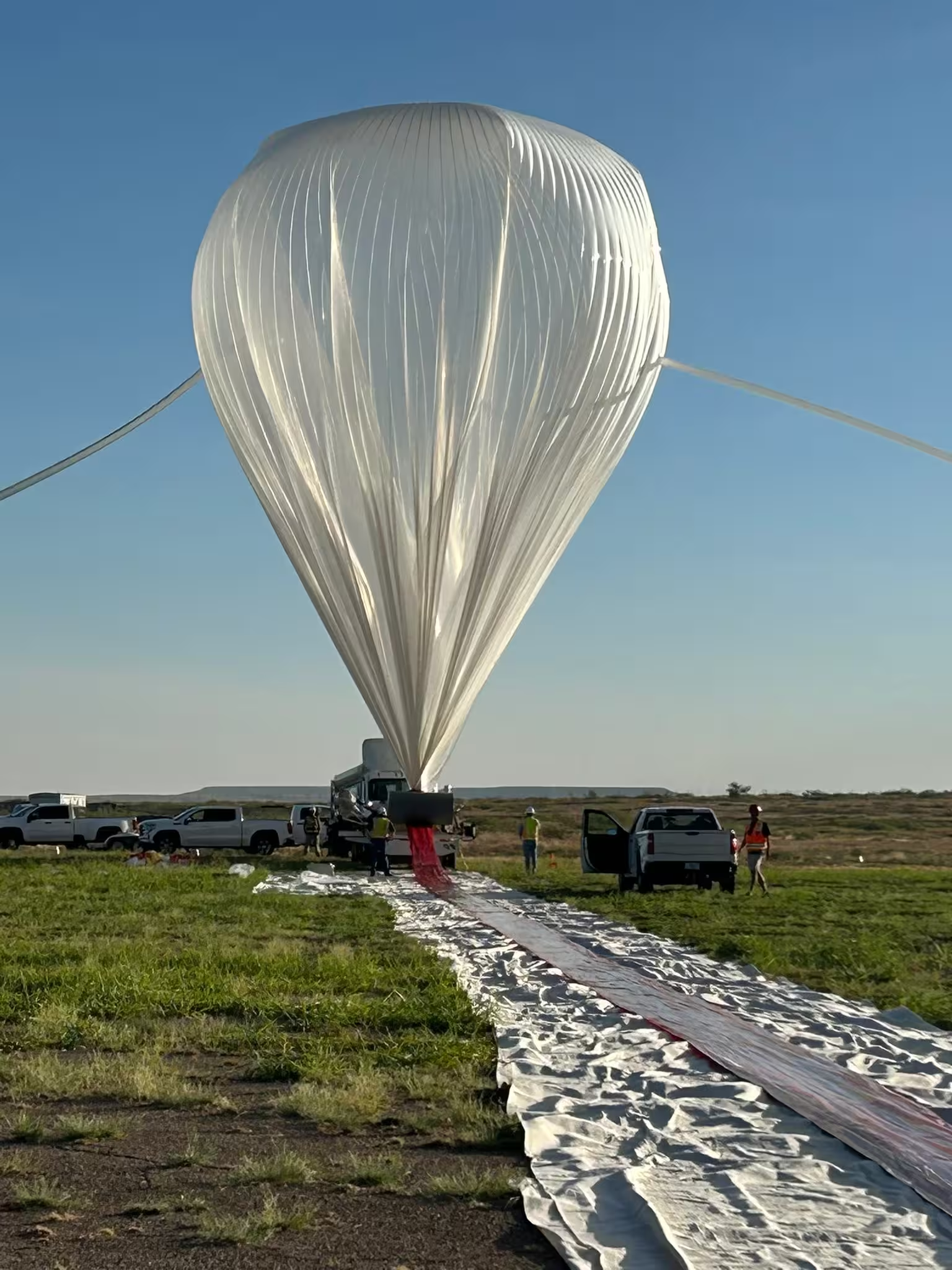
NASA continues to rely on these balloon-based testbeds to de-risk complex missions. By identifying potential failure points early and refining instrument performance in the field, researchers ensure that when these technologies are eventually deployed to the moon, Mars, or beyond, they have already proven their capability in the sky above New Mexico.
This article has been fact checked for accuracy, with information verified against reputable sources. Learn more about us and our editorial process.
Last reviewed on .
Article history
- Latest version
Reference(s)
- Barra, Amy. “Fifth Balloon of NASA Scientific Balloon Campaign Launches - NASA.”, September 29, 2026 NASA <https://www.nasa.gov/blogs/wallops/2026/09/29/fifth-balloon-of-nasa-scientific-balloon-campaign-launches/>.
Cite this page:
- Posted by Karan Das