NASA Is Studying Ancient Scottish Rocks to Decipher the Secrets of Mars’ Lost Past
NASA scientists are analyzing ancient Scottish rocks to unlock new clues for detecting signs of past life on Mars.
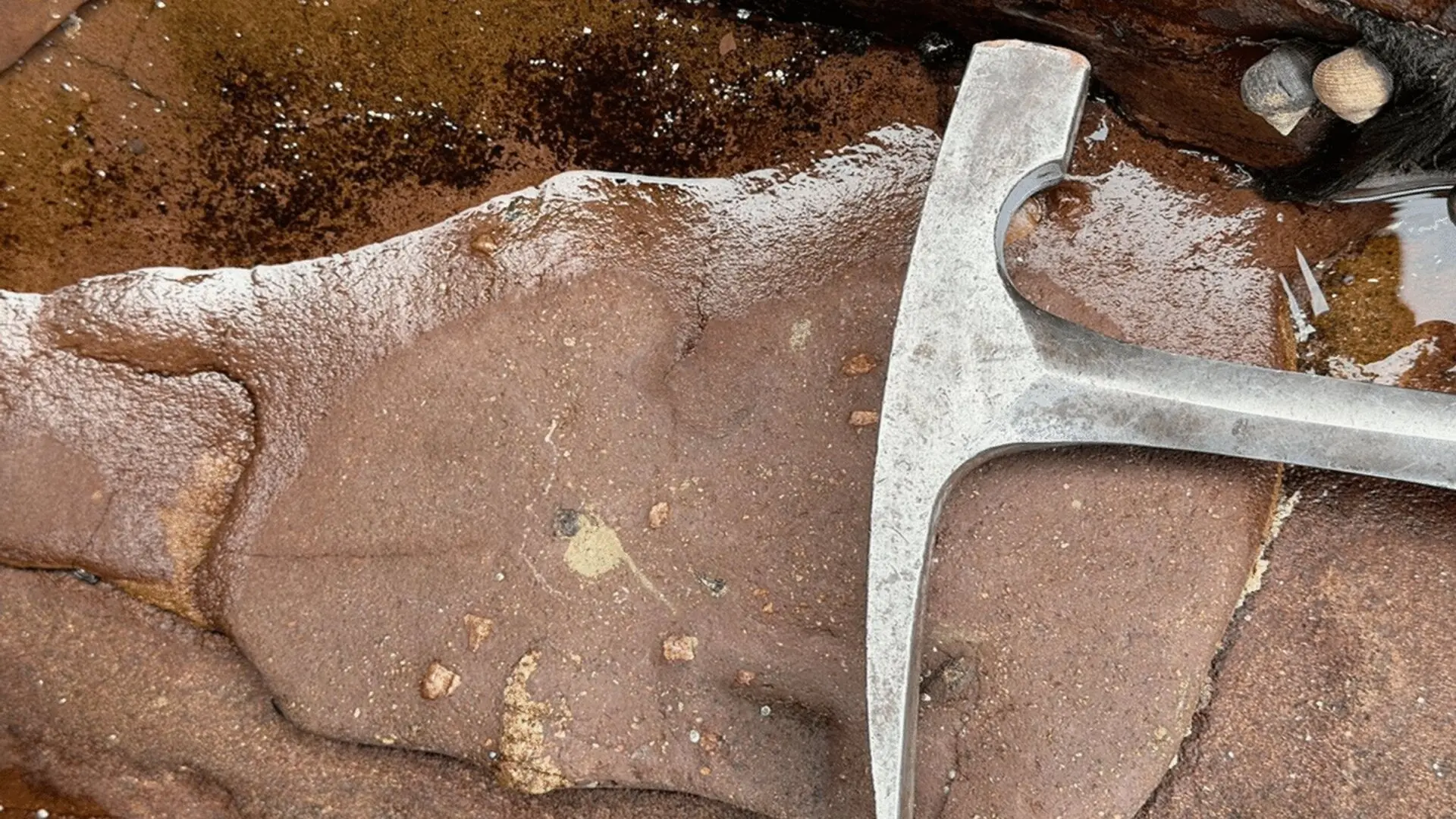
A team of NASA researchers has turned to the rugged coastline of the Scottish Highlands to unlock secrets about the geological past of Mars. By investigating the ancient Stoer formation, scientists are bridging the gap between Earth’s deep history and the alien landscapes discovered by rovers on the Red Planet.
The expedition focuses on sedimentary rocks dating back 1.2 billion years. These formations, located near the Clachtoll region, serve as a rare terrestrial analog for Martian environments. Much like the terrain explored by NASA’s Martian rocks missions, the Scottish landscape preserves chemical and mineralogical clues that may have been shaped by the interplay of ancient water and biological processes.
Decoding Geological Clues in the Scottish Highlands
While Mars is now a frigid, arid world, planetary scientists have gathered significant evidence suggesting it once hosted extensive river networks and lake systems. The mudstones and siltstones found in the Stoer formation provide a comparable record of how these environments evolve over time. For researchers, these rocks offer a critical baseline to distinguish between signatures left by living organisms and those created by purely abiotic chemical reactions.
The Goddard Instrument Field Team, led by experts from NASA’s Goddard Space Flight Center, navigated the challenging coastal topography to conduct their analysis. Working around the significant tidal shifts of the area, the researchers utilized a suite of portable instruments to probe the mineral composition of the cliffs, selecting samples that could hold evidence of long-term environmental shifts.
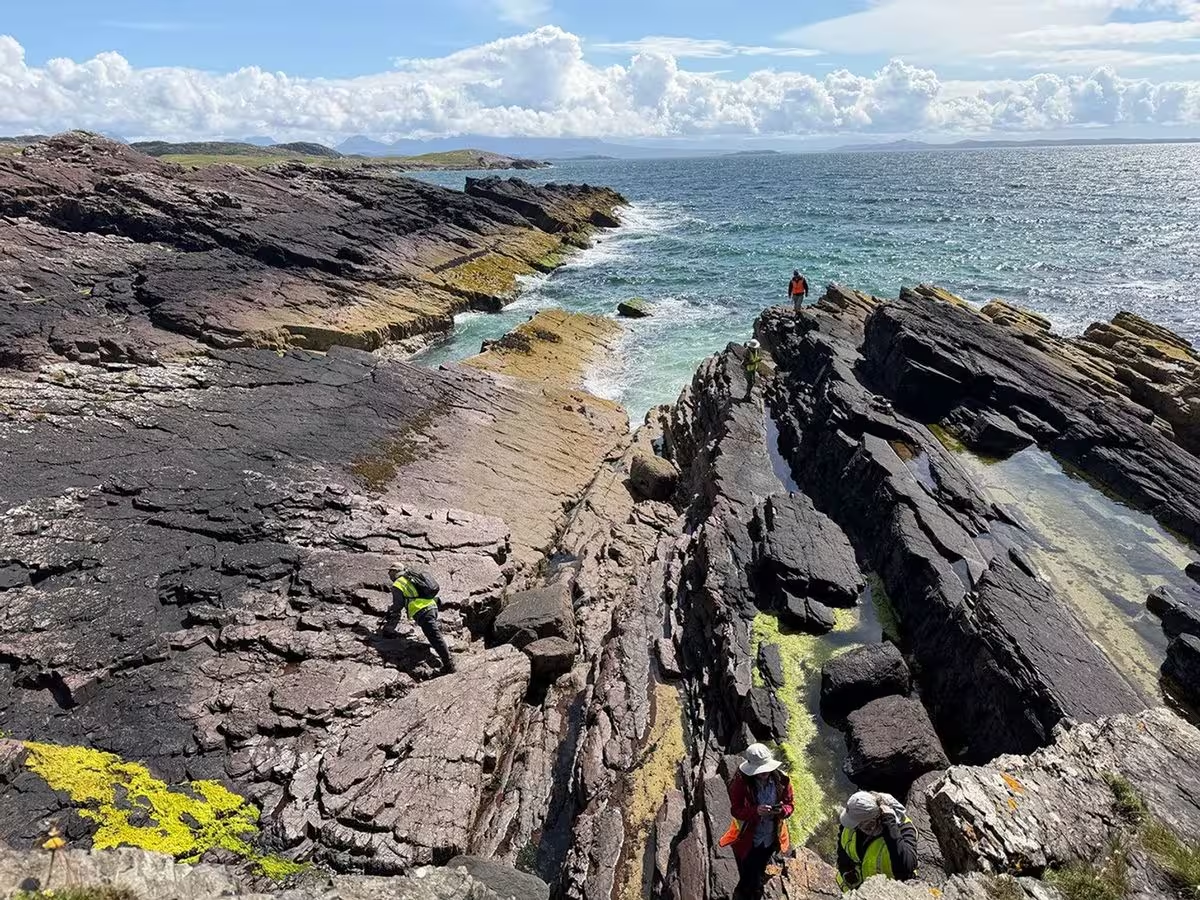
Lessons from the Jezero Crater
The impetus for this research follows recent findings from the Perseverance rover, which identified intriguing NASA-reported “reduction spots” within the rocks of Jezero Crater. These chemical anomalies are key targets for scientists attempting to map out the historical habitability of Mars. By examining similar geological markers in Scotland, the team aims to refine the interpretation of the rover’s remote sensing data.
This interdisciplinary effort includes collaboration with a broad network of academic and research institutions, including the University of Glasgow, the University of Maryland, Purdue University, Stony Brook University, and the University of Cambridge, as well as NASA’s Johnson Space Center. The findings collected during the expedition will be subjected to rigorous laboratory testing, providing a foundational data set for future planetary missions.
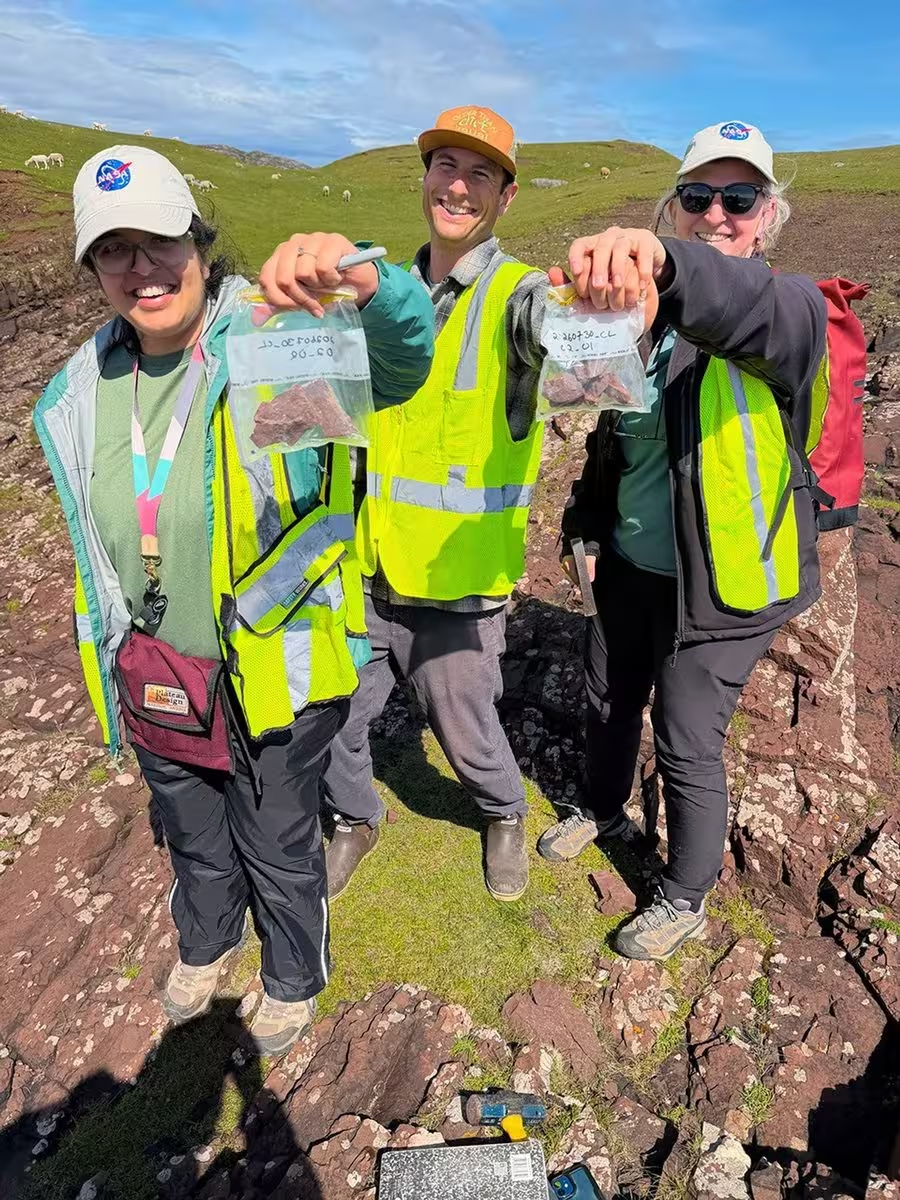
Because mission constraints limit the equipment that can be deployed to Mars, such analog research is vital. It allows scientists to simulate the decision-making process required when analyzing samples on the Martian surface, ensuring that the robotic explorers of tomorrow are better equipped to identify signs of life or significant environmental history.
This article has been fact checked for accuracy, with information verified against reputable sources. Learn more about us and our editorial process.
Last reviewed on .
Article history
- Latest version
Reference(s)
- Barry, Caela. “In Scotland, NASA Scientists Search for Clues About Mars' Past - NASA Science.”, September 29, 2026 NASA <https://science.nasa.gov/blogs/planetary-expeditions/2026/09/29/in-scotland-nasa-scientists-search-for-clues-about-mars-past/>.
Cite this page:
- Posted by Karan Das