Archaeologists May Have Finally Located the Lost Ancient Egyptian City of Mesen
Archaeologists have uncovered a 3,200-year-old site buried in Egypt’s eastern sands, potentially solving a long-lost historical mystery.
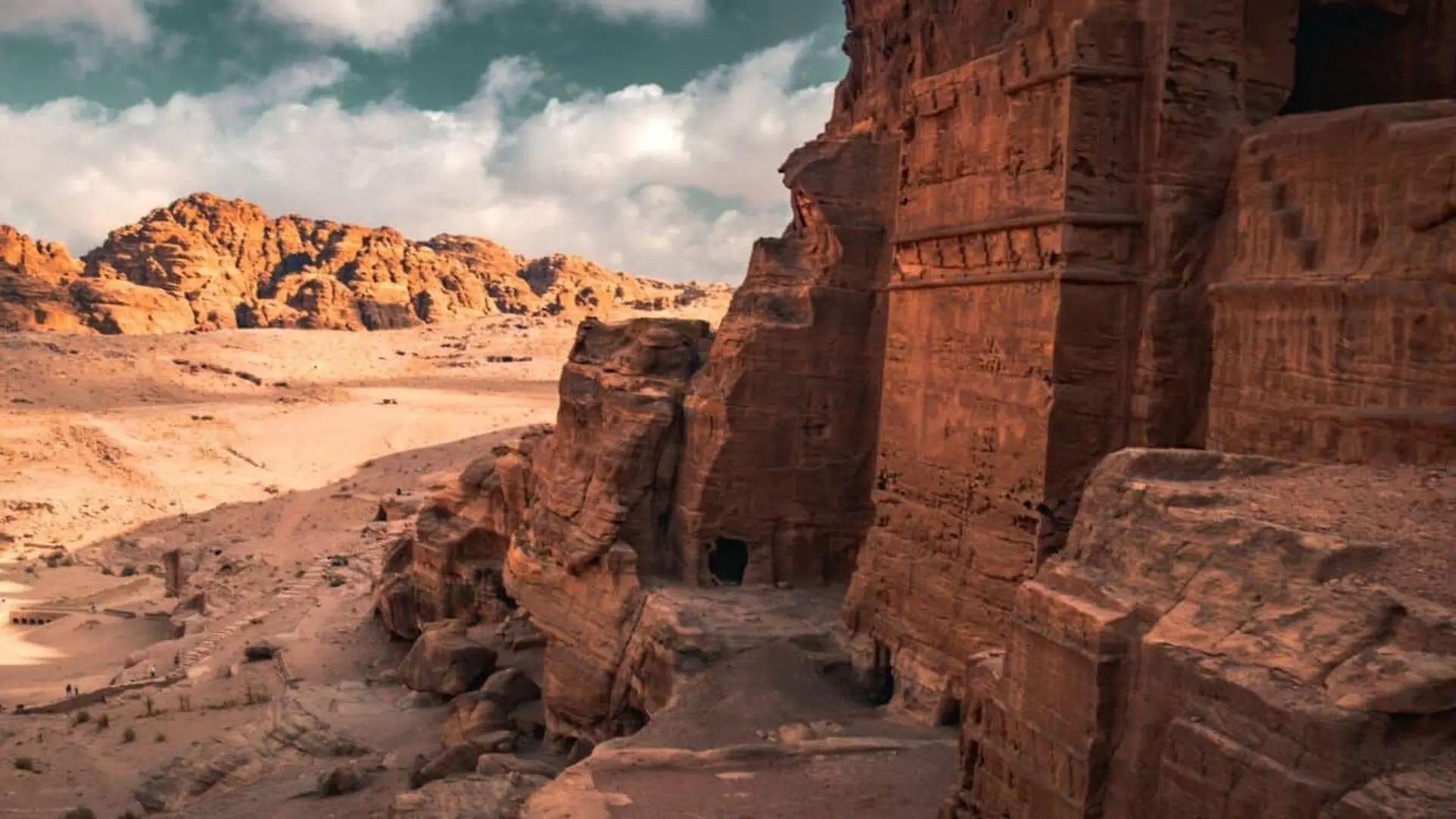
Archaeologists working along Egypt’s eastern frontier may have finally located the long-lost city of Mesen, a site that has existed primarily in ancient texts for generations. Excavations at Tell Abu Seifi have unearthed stone inscriptions identifying the falcon-headed deity Horus as the protector of a city named Mesen, providing the strongest physical link yet to the legendary settlement.
The discovery is part of an ongoing initiative to map the Way of Horus, an ancient, heavily fortified network of roads that served as the primary eastern gateway for Egypt’s military and trade interests. The Egyptian Ministry of Tourism and Antiquities has highlighted this find as a potential breakthrough, suggesting that Tell Abu Seifi aligns with historical records of Mesen from the New Kingdom era, roughly 1570 to 1069 BCE.
Infrastructure Built for Defense and Devotion
The site reveals a complex landscape, featuring two stone-paved thoroughfares accompanied by storage units and service chambers. These architectural signatures are typically found in temple complexes, suggesting that Mesen was not merely a military checkpoint. Instead, researchers believe it functioned as a vital hub that blended administrative and religious life, serving as both a strategic defense post and a sanctuary under the auspices of Horus.
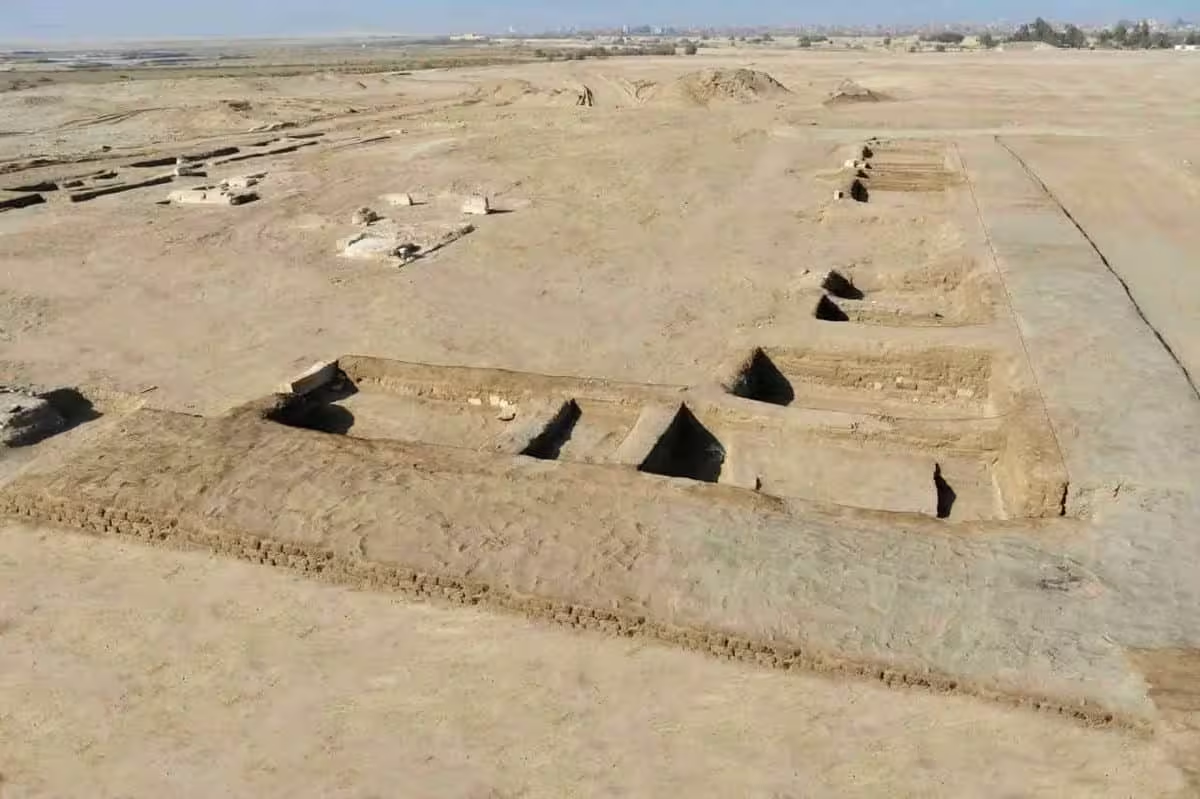
The physical remnants at Tell Abu Seifi have faced significant challenges, particularly due to heavy construction during the Roman period, which obscured much of the site’s original layout. Despite this, the recovered artifacts offer a compelling narrative of a location that maintained its importance across several distinct historical eras.
Evidence Linked to the Reign of Ramses II
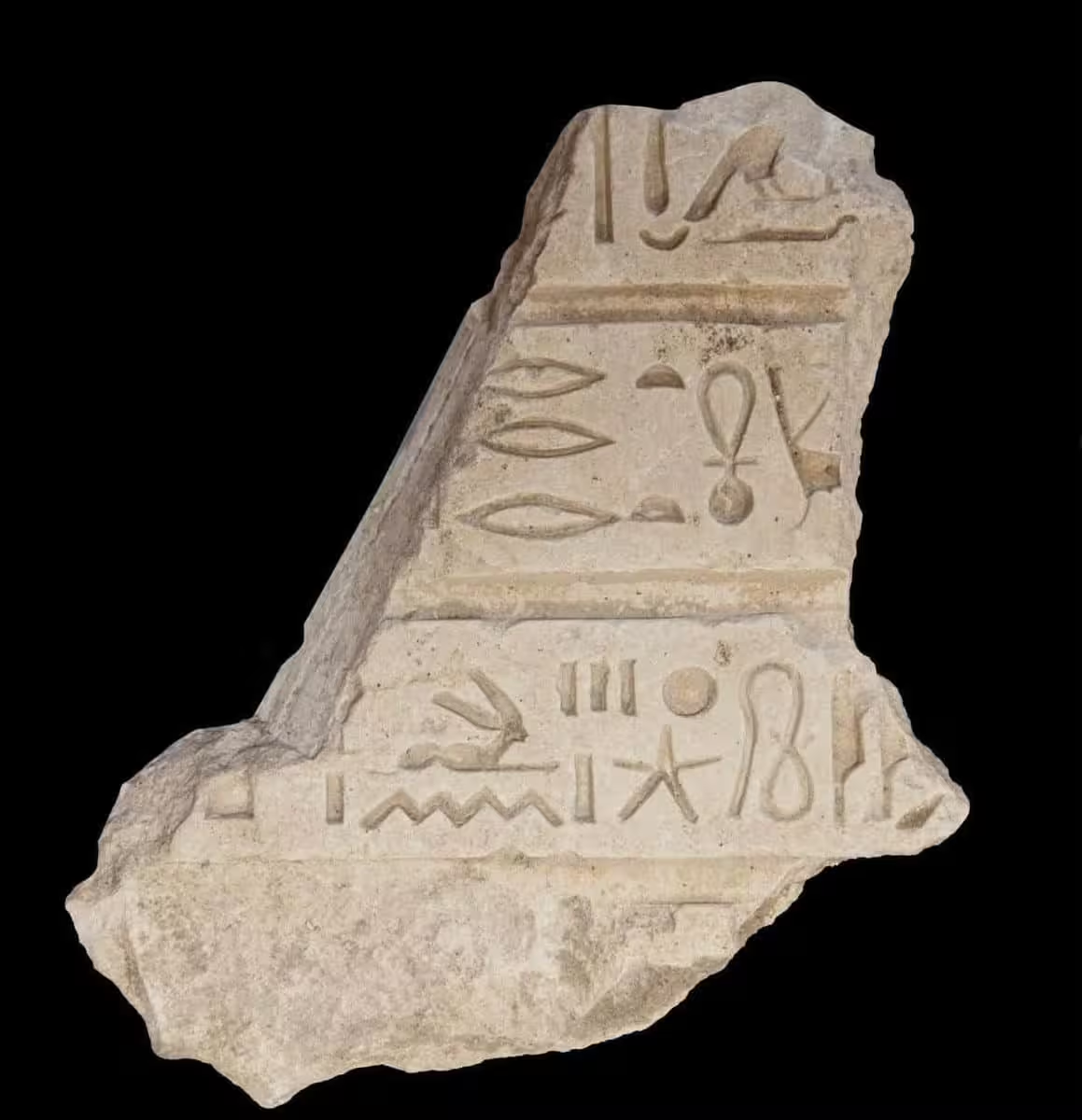
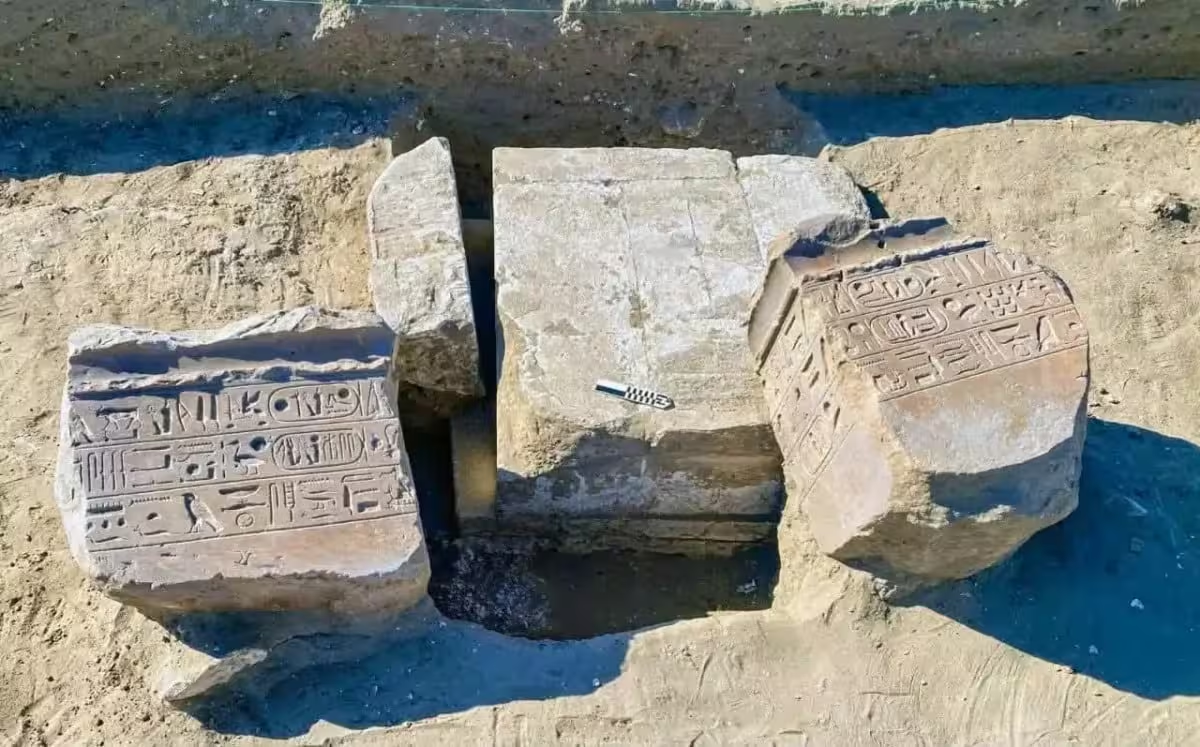
Central to the researchers’ optimism are sandstone fragments bearing the name of Pharaoh Ramses II, who reigned from 1279 to 1213 BCE. Perhaps even more definitive is a separate inscription that details the restoration of a statue of Horus, explicitly naming the god as the Lord of the City of Mesen. This explicit pairing of the deity with the city’s name provides a compelling geographical anchor for the site.
The Quest for Definitive Confirmation
While the findings are significant, experts emphasize that identifying ancient sites requires a high burden of proof. Hesham Hussein, who leads archaeology for the Delta and Sinai, notes that further analysis is required before the site can be formally classified as the lost Mesen. The archaeological community is now looking toward the recovery of additional diagnostic materials, such as chronologically distinct pottery, to build a more comprehensive timeline.
For Egyptian officials, including Minister of Tourism and Antiquities Sherif Fathy, the site represents more than just a historical puzzle; it is a testament to the enduring strategic and cultural significance of the Sinai frontier throughout the long arc of Egyptian history.
This article has been fact checked for accuracy, with information verified against reputable sources. Learn more about us and our editorial process.
Last reviewed on .
Article history
- Latest version
Cite this page:
- Posted by Zara Tariq