Deep-Sea Vent Minerals Convert Glycine Into Cyanide And Rewriting The Origins Of Life
Isotopic labeling confirms that copper-rich hydrothermal minerals drive hydrogen cyanide formation at cool temperatures.
Researchers from the Institute of Science Tokyo discovered that copper-rich natural minerals from deep-sea hydrothermal vents can convert the amino acid glycine into 451.42 nM of hydrogen cyanide at 25 °C within 24 hours. This surprising chemical reaction challenges long-held assumptions about whether essential origin-of-life molecules could ever form in the deep ocean.
For decades, scientists debated how life’s earliest building blocks emerged. While laboratory experiments frequently utilized hydrogen cyanide to synthesize vital nucleic acids and proteins, researchers assumed that deep-sea hydrothermal vents were entirely hostile to free cyanide. This belief stemmed from two major obstacles, specifically the prevalence of carbon dioxide-rich atmospheres in Earth’s early history that limited atmospheric cyanide production, and the tendency of iron-rich ocean waters to trap dissolved cyanide into stable complexes. Because hydrothermal fluids lacked the ultraviolet light found in shallow lakes or ponds to break down those complexes, experts considered the deep sea a dead end for cyanide-dependent chemistry.
To investigate whether an independent local source of cyanide could exist, Zening Yang and colleagues collected a natural sulfide mineral sample from a 1,009.4 meter deep seafloor site at the Iheya North Field in the Mid-Okinawa Trough, as detailed in a study published in Communications Chemistry. The researchers carefully ground the inner core of this mineral chimney into a fine powder and exposed it to a solution containing glycine under anaerobic, alkaline conditions. Using carbon-13 isotopic labeling, the team confirmed that the resulting cyanide originated directly from the glycine reacting with the mineral.
How Do Copper Minerals Drive Chemical Reactions?
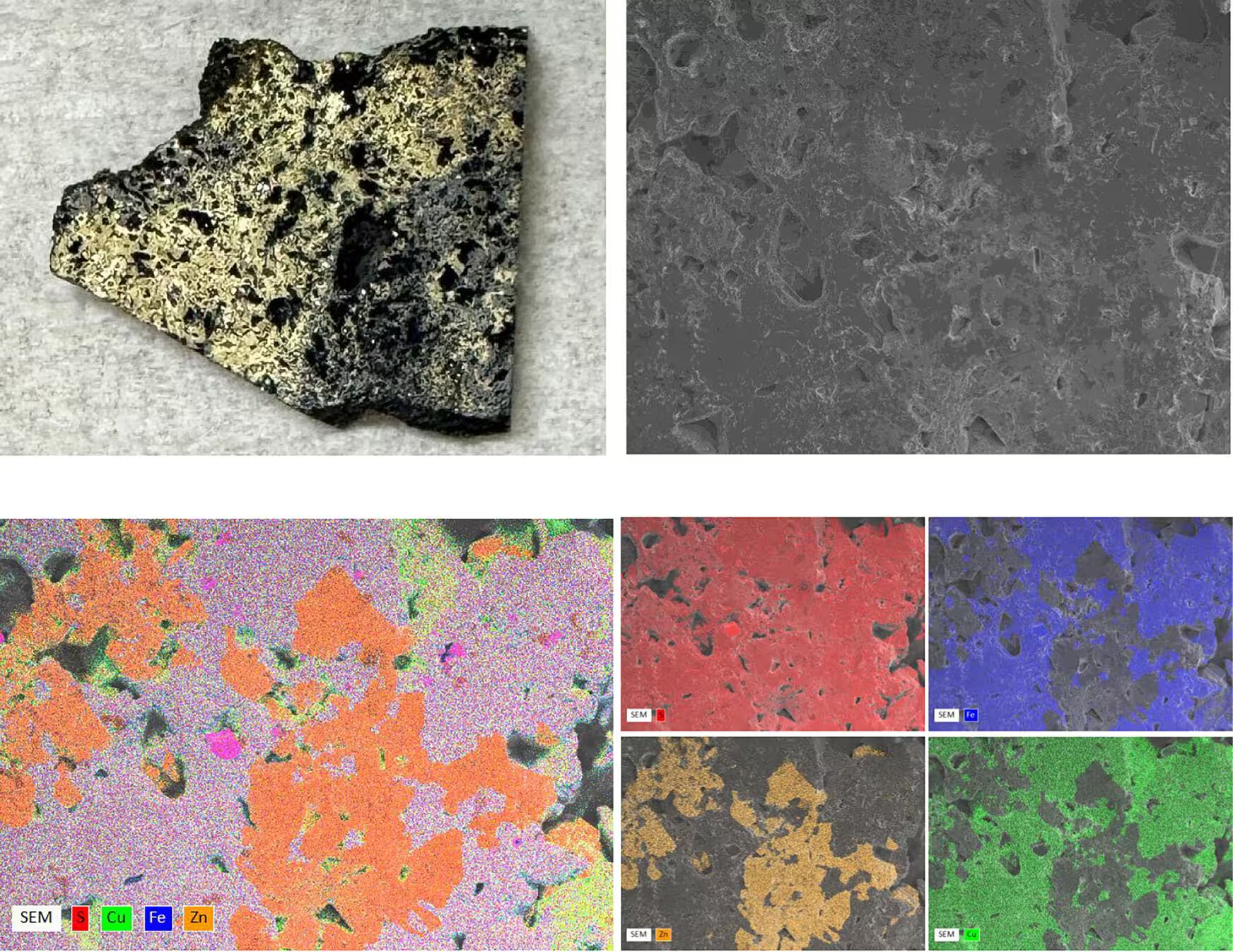
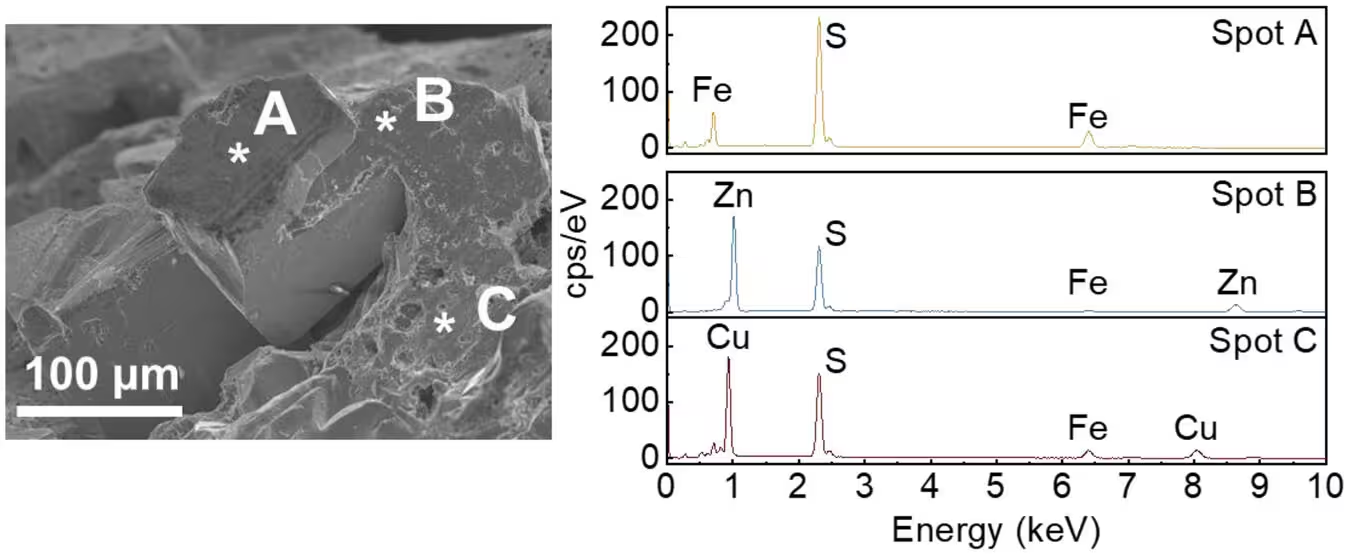
Mineralogical characterization using X-ray diffraction and electron microscopy revealed that the chimney sample was dominated by chalcopyrite, pyrite, and sphalerite. When the researchers introduced glycine to the mineral powder, metal leaching analysis demonstrated a massive spike in dissolved copper concentrations. Further tests involving synthetic copper compounds confirmed that copper in the oxidation state of plus two acts as an oxidant to drive the conversion of glycine into cyanide.
Temperature experiments yielded another unexpected result, showing that lower temperatures actually enhanced the reaction. When the temperature was dropped to 10 °C, the hydrogen cyanide yield increased threefold compared to tests conducted at 25 °C. Additional tests at 50 °C and 80 °C confirmed that cyanide formation could occur across a broad temperature range relevant to natural deep-sea environments.
Why Are Free Cyanide Yields Hard to Measure?
Although the team detected measurable amounts of free cyanide, spiking experiments using potassium cyanide indicated that much of the newly formed cyanide was quickly bound or depleted by iron and other metals present in the chimney sample. Because these metals have a high affinity for cyanide, the researchers noted that their reported measurements represent conservative estimates of what was actually produced in the solution.
The discovery of local cyanide generation expands the chemical diversity accessible in vent environments. Furthermore, these findings suggest that similar alkaline hydrothermal systems on ocean worlds elsewhere in the solar system, such as Enceladus, might also support complex prebiotic chemistry.
The research was published in Communications chemistry on November 25, 2026.
This article has been fact checked for accuracy, with information verified against reputable sources. Learn more about us and our editorial process.
Last reviewed on .
Article history
- Latest version
Reference(s)
- Yang, Zening., et al. “Copper derived from deep-sea hydrothermal vent minerals facilitates hydrogen cyanide formation from glycine in alkaline aqueous environment.” Communications Chemistry, vol. 9, no. 1, November 25, 2026 Springer Science and Business Media LLC, doi: 10.1038/s42004-026-02263-5. <https://doi.org/10.1038/s42004-026-02263-5>.
Cite this page:
- Posted by Divya Iyer